
Pork Shoulder vs Boston Butt: Which Cut Delivers Better Value for Pulled Pork?
Boston butt beats pork shoulder for pulled pork value. Compare prices, cooking results, and yields to make smarter BBQ buying decisions.
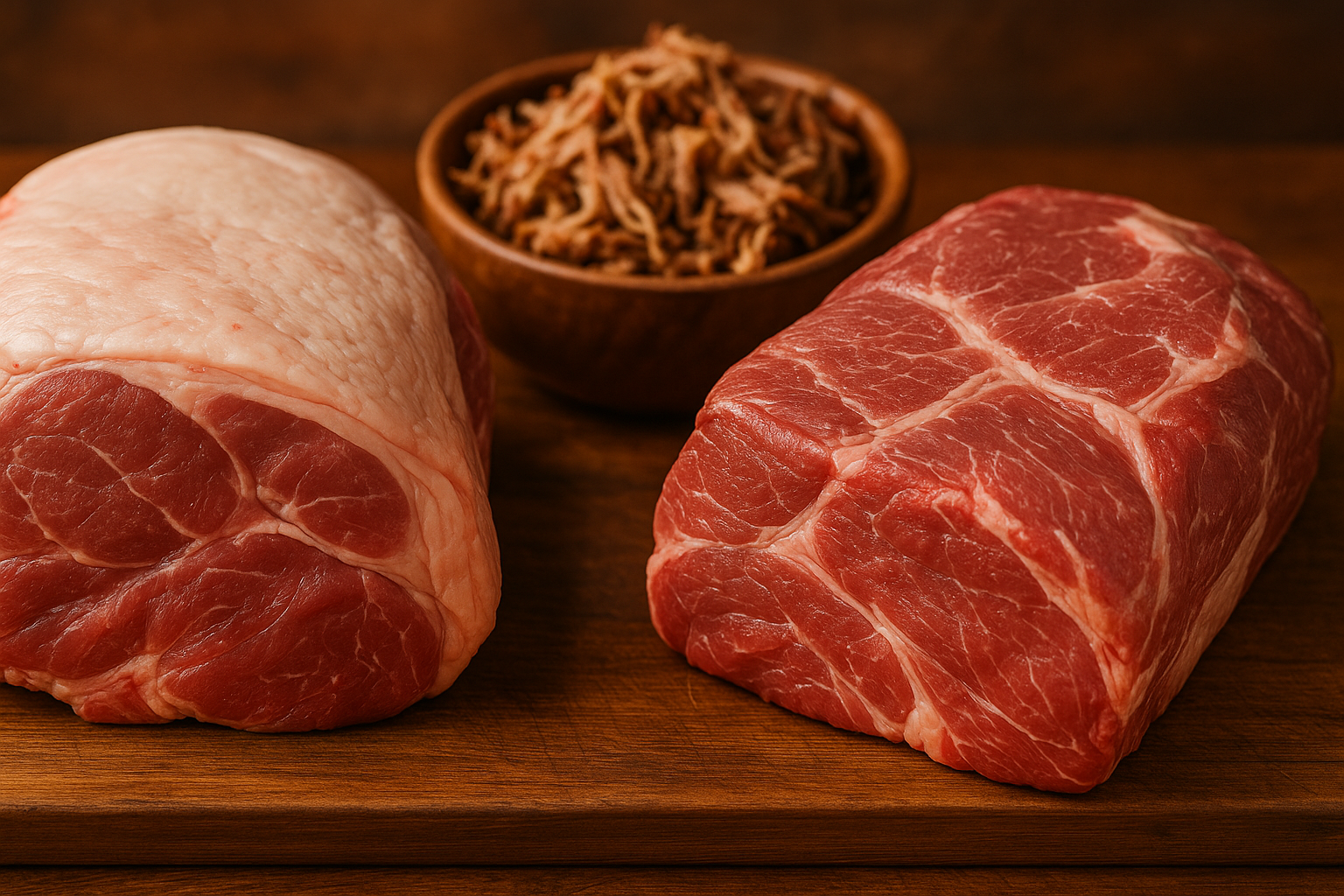
Both pork shoulder and Boston butt will make excellent pulled pork, but Boston butt delivers better value for your barbecue dollar. While these cuts are often confused or used interchangeably, understanding their differences helps you make smarter buying decisions and achieve better results on your smoker.
Disclosure: As an Amazon Associate, this site earns from qualifying purchases. Thank you!
Understanding the Anatomy: Pork Shoulder vs Boston Butt
Boston butt isn’t actually from the pig’s rear end. This cut comes from the upper portion of the front shoulder, while pork shoulder (also called picnic shoulder) comes from the lower part of the same front leg. Both cuts originate from the shoulder area, which explains why grocery stores often label them similarly.
The Boston butt sits higher on the pig and contains more marbling throughout the meat. You’ll find a nice fat cap on top, but the intramuscular fat distribution makes it superior for low and slow cooking. The picnic shoulder includes more connective tissue and often comes with the skin still attached.
Boston butt typically weighs between 4-8 pounds, while whole pork shoulders can reach 12-20 pounds. Most backyard pitmasters find the Boston butt size more manageable for weekend cooking sessions.
Price Comparison: Getting the Most Meat for Your Money
Boston butt usually costs $0.50 to $1.00 more per pound than picnic shoulder, but this price difference is misleading. Boston butt gives you more usable meat per pound because it contains less bone and skin waste.
Picnic shoulder appears cheaper at $2.50-4.00 per pound compared to Boston butt’s $3.00-5.00 per pound. However, you’ll lose significant weight to the large bone that runs through the center and any skin that needs trimming. Boston butt contains only a small blade bone that’s easily removed.
Your actual cost per serving favors Boston butt. A 6-pound Boston butt yields approximately 3.5-4 pounds of pulled pork after cooking and shredding. A similarly priced picnic shoulder gives you about 2.5-3 pounds of usable meat due to higher bone and skin waste.
Cooking Performance: Fat Content and Flavor Differences
Boston butt wins the pulled pork competition because of its superior fat distribution. The marbling throughout the meat keeps it moist during long cooking times and creates that perfect pulled pork texture you’re seeking.
The fat content in Boston butt ranges from 20-25%, compared to picnic shoulder’s 15-18%. This extra fat renders slowly during cooking, basting the meat from the inside and preventing the dreaded dry pulled pork that ruins backyard barbecues.
Flavor differences are subtle but noticeable. Boston butt delivers a richer, more consistent taste throughout the meat. Picnic shoulder can be slightly more intense in flavor but tends to have drier and fattier sections that don’t pull apart as uniformly.
Both cuts benefit from the same cooking approach: low temperature (225-250°F) until the internal temperature reaches 203-205°F. Boston butt typically takes 1.5 hours per pound, while picnic shoulder may take slightly longer due to its denser muscle structure.
This comprehensive guide from Hey Grill Hey shows exactly how to smoke pork butt for perfect pulled pork results.
Preparation and Trimming Requirements
Boston butt requires minimal preparation, which saves you time and reduces waste. You’ll typically need to trim only excess fat from the cap, leaving about 1/4 inch for moisture and flavor. The small blade bone pulls out easily after cooking.
Picnic shoulder demands more prep work. You’ll need to remove the skin (unless you want crackling), trim irregular fat deposits, and work around the larger bone structure. This extra trimming means you’re paying for weight you’ll ultimately discard.
The bone situation alone makes Boston butt more beginner-friendly. New pitmasters struggle with the picnic shoulder’s bone placement, which can create uneven cooking and difficult carving. Boston butt cooks more uniformly and shreds more predictably.
Best Uses for Each Cut
Choose Boston butt for pulled pork, especially if you’re cooking for a crowd or want consistent results. Its superior fat content and even cooking make it perfect for sandwiches, tacos, and meal prep portions. The meat pulls apart beautifully and reheats well for leftovers.
Picnic shoulder works better for different applications. Consider it for carnitas where you want some crispy edges, or for dishes where you’ll be cutting the meat rather than pulling it. Some pitmasters prefer picnic shoulder for competition barbecue because the skin can create an impressive presentation.
For beginners learning to smoke pork, Boston butt offers more forgiveness. The higher fat content means you’re less likely to overcook it into dryness, and the predictable cooking behavior builds confidence.
Storage and Leftover Considerations
Boston butt’s higher fat content helps it maintain moisture during refrigeration and reheating. Pulled pork from Boston butt stays tender for 3-4 days refrigerated and freezes well for up to 3 months without significant texture loss.
Picnic shoulder leftovers tend to dry out faster and don’t reheat as successfully. The leaner sections become tough when reheated, while the fattier portions can become greasy.
Where to Buy and What to Look For
Most grocery stores carry both cuts, but Boston butt has better availability year-round. Look for Boston butt with good marbling visible throughout the meat and a fat cap that’s not overly thick or thin.
Wholesale clubs like Costco and Sam’s Club often offer better pricing on larger Boston butts, typically selling 2-packs that you can separate and freeze. You can check current prices on vacuum sealer bags to properly store the extra portions.
Avoid Boston butts that look dry or have dark edges, which indicate poor handling or extended display time. The meat should have a fresh red color with white fat marbling.
Smoking Equipment Recommendations
Both cuts work well on any smoker, but Boston butt’s compact size fits better in smaller units. You’ll want a reliable thermometer system to monitor both chamber temperature and internal meat temperature throughout the long cook.
A good wireless meat thermometer eliminates guesswork and prevents overcooking. The consistent shape of Boston butt makes probe placement easier and more accurate than with irregularly shaped picnic shoulders.
Consider your fuel costs too. Boston butt’s shorter cooking time (due to smaller size) uses less charcoal or wood than larger picnic shoulders, adding to its overall value proposition.
Nutritional Comparison
Both cuts provide similar nutritional profiles per serving of cooked meat, but Boston butt delivers more consistent nutrition due to its uniform fat distribution. You’ll get approximately 25-30 grams of protein per 4-ounce serving from either cut.
The higher fat content in Boston butt means slightly more calories per serving, but the difference is minimal when you account for the trimming waste from picnic shoulder. Digestibility of pork vs beef shows how pork generally processes easier than beef regardless of the specific cut.
Both cuts provide essential B vitamins, zinc, and iron. The cooking method (low and slow smoking) preserves more nutrients compared to high-heat cooking methods.
Frequently Asked Questions
Can you substitute picnic shoulder for Boston butt in pulled pork recipes?
Yes, but expect different results. Picnic shoulder will take longer to cook and may produce drier pulled pork. Increase your cooking time by 30-45 minutes per pound and consider injecting with apple juice or broth for extra moisture.
Which cut is better for beginners?
Boston butt is much more forgiving for new pitmasters. The higher fat content prevents overcooking disasters, and the uniform shape cooks more predictably. Start with Boston butt until you master temperature control and timing.
How much pulled pork does each cut yield?
Boston butt yields about 60-65% of its raw weight in pulled pork, while picnic shoulder yields 50-55% due to bone and skin waste. A 6-pound Boston butt feeds 10-12 people, while you’d need an 8-pound picnic shoulder for the same serving size.
Does the cooking method change between cuts?
The basic method stays the same, but picnic shoulder needs 25-30% longer cooking time due to its denser muscle structure and larger bone. Both cuts benefit from wrapping in foil or butcher paper during the stall phase around 160°F internal temperature.
Boston butt delivers superior value for pulled pork despite its higher per-pound price. You’ll get more usable meat, better texture, and more consistent results with less waste and preparation time. Unless you specifically need the larger size of a whole pork shoulder or want to experiment with skin-on preparations, Boston butt is your best choice for backyard barbecue success. The extra dollar per pound pays for itself in better yields and fewer cooking failures.
This article contains affiliate links. If you purchase through these links, we may earn a small commission at no extra cost to you.


