
How to Butcher a Whole Chicken: Step-by-Step Guide to Maximize Value
Learn how to butcher a whole chicken with this detailed guide. Save 50-60% on chicken costs with proper cutting techniques and maximize meat yield.
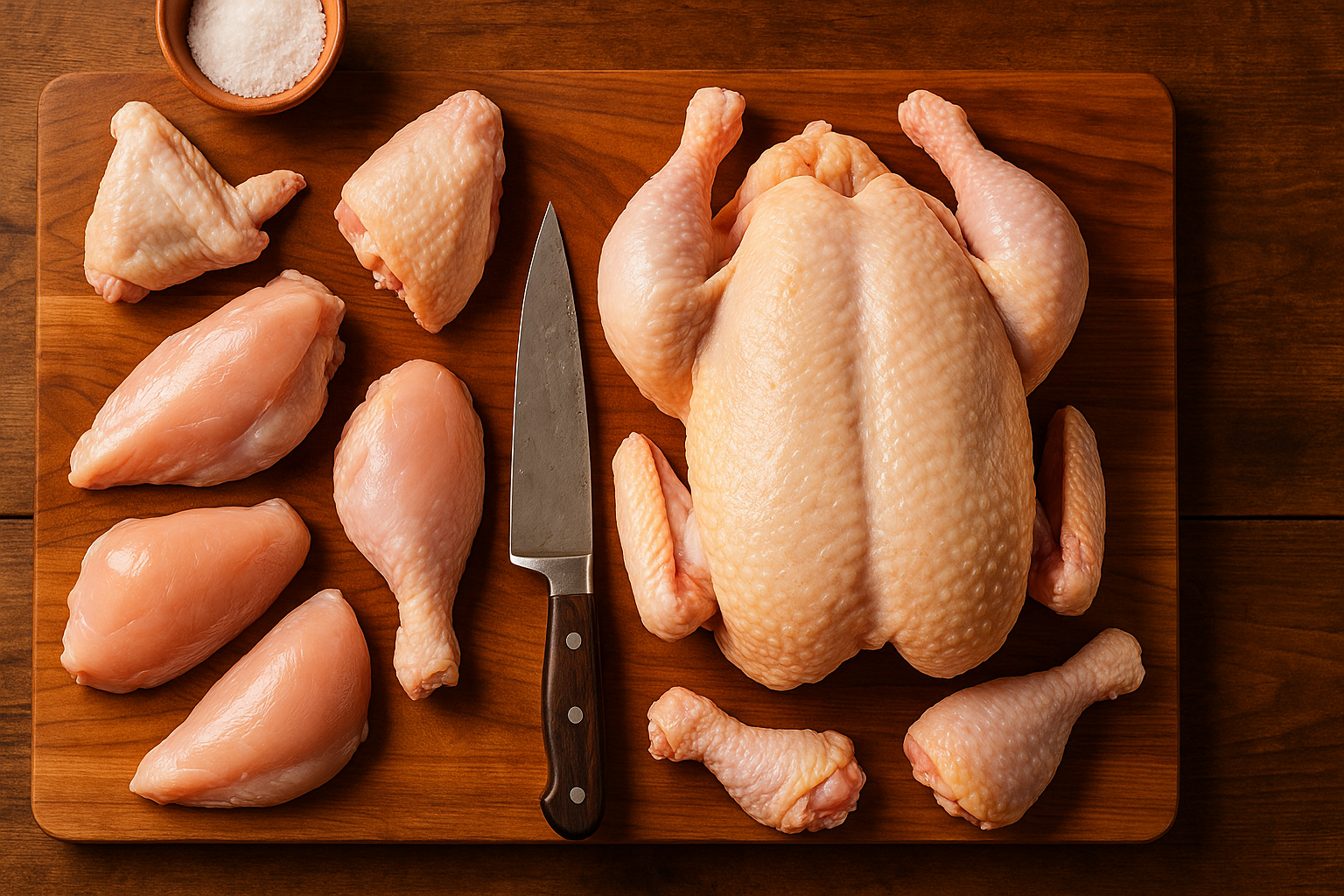
Learning how to butcher a whole chicken saves serious money and gives you complete control over your cuts. You’ll pay $3-4 per pound for a whole bird versus $6-8 for pre-cut parts, plus you get the backbone for stock.
Disclosure: As an Amazon Associate, this site earns from qualifying purchases. Thank you!
Why Break Down Your Own Chicken
Buying whole chickens makes financial sense. A 4-pound bird costs around $5-6, while the same amount of pre-cut pieces runs $12-15. That’s double the price for five minutes of knife work.
You also get better quality control. Pre-cut chicken often sits longer on store shelves, and you can’t see what’s happening under those foam trays. Breaking down your own bird means fresher meat and the ability to trim exactly how you want.
The backbone, wingtips, and giblets make excellent stock. That’s another $3-4 value you’d normally throw away or never receive with store-bought parts.
Essential Tools for Chicken Butchering
You need three basic tools: a sharp boning knife, kitchen shears, and a sturdy cutting board. Don’t skimp on knife quality here.
A flexible 5-6 inch boning knife works best. The thin blade follows joints and curves around bones easily. Check current prices on Amazon for quality options from Wusthof or Victorinox.
Kitchen shears handle cartilage and small bones that resist knife cuts. Heavy-duty poultry shears cut through the backbone and rib cage without struggle.
Your cutting board should be large enough for the whole bird with room to maneuver. Plastic boards clean easier than wood for raw poultry, and you can throw them in the dishwasher.
Step-by-Step Chicken Breaking Guide
Step 1: Remove the Legs and Thighs
Place the chicken breast-side up on your cutting board. Pull one leg away from the body until you see the skin stretch tight. Cut through the skin between the leg and breast, following the natural seam.
Pop the thigh joint by bending the leg back until you hear it crack. This exposes the joint completely. Cut through the joint where the thigh bone meets the hip socket.
Repeat on the other side. You’ll have two whole leg-thigh pieces.
Step 2: Separate Drumsticks from Thighs
Find the joint between the drumstick and thigh by bending them against each other. You’ll see a line of fat that marks the joint location.
Cut through this joint with your knife. Don’t try to chop through bone, just slice between the joint surfaces. Proper technique requires no force.
Step 3: Remove the Wings
Pull each wing away from the body and cut through the skin around the shoulder joint. Bend the wing back to pop the joint, then cut through the exposed cartilage.
Wings have three sections. You can leave them whole or separate at the joints using the same bending and cutting technique.
Step 4: Remove the Breast Meat
Turn the remaining carcass so the backbone faces up. Cut along both sides of the backbone with kitchen shears. Remove the backbone completely, this goes into your stock bag.
Open the bird like a book and remove the breastbone by cutting the cartilage connections. You can leave the breast whole or cut it in half down the center.
For individual breast portions, slice each side off the bone by following the rib cage curve with your knife.
Step 5: Save Everything for Stock
Don’t waste the backbone, neck, wingtips, and any trim pieces. These make incredible chicken stock that costs $4-5 per container in stores.
Store stock bones in freezer bags until you have enough for a big batch. Chicken gizzards from the giblet package add extra richness to homemade stock.
Professional Cutting Techniques
Keep your knife sharp. Dull knives slip and tear meat instead of making clean cuts. A sharp blade glides through skin and cartilage effortlessly.
Let the knife do the work. You shouldn’t need to apply pressure except when cutting through skin. Joints separate easily once you find the right angle.
Follow the bird’s anatomy. Chickens have natural seam lines where different muscles connect. Cutting along these seams gives you cleaner pieces and wastes less meat.
Work on a stable surface. Your cutting board shouldn’t slide around while you’re working with sharp tools. Place a damp towel underneath if needed.
This professional technique video shows exactly how to break down a chicken efficiently.
Maximizing Your Meat Yield
Trim properly around joints. Small pieces of meat often get left behind where the thigh connects to the backbone. Scrape these clean with your knife tip.
Remove the tenderloins from each breast. These small strips often stick to the ribcage and get thrown away with the bones. They’re perfect for stir-fries or chicken tenders.
Save the skin if you’re not using it immediately. Chicken skin renders into excellent cooking fat and adds flavor to roasted vegetables or potatoes.
Consider your cooking methods when cutting. Bone-in pieces cook more evenly and stay juicier than boneless cuts. Leave bones in unless your recipe specifically requires boneless meat.
Storage and Food Safety
Clean your workspace thoroughly with bleach solution after handling raw chicken. This includes your cutting board, knife, and any surfaces the chicken touched.
Store cut pieces in the refrigerator for up to 2 days or freeze for up to 6 months. Wrap individual pieces in plastic wrap, then place in freezer bags to prevent freezer burn.
Label everything with the date. Frozen chicken parts look similar after a few months, and you’ll want to know what you’re thawing.
Keep different cuts separate. Dark meat takes longer to cook than white meat, having them pre-separated makes meal planning easier.
Cost Comparison: Whole vs. Parts
Here’s what you typically save by breaking down whole chickens yourself:
A 4-pound whole chicken costs about $1.25 per pound on sale. The same bird broken into parts would cost roughly $2.00 per pound for thighs and drumsticks, $2.50 per pound for wings, and $3.50 per pound for boneless breasts.
You’re looking at $5 for the whole bird versus $10-12 for the equivalent in parts. That’s 50-60% savings for 10 minutes of work.
Over a year, families who eat chicken twice weekly save $300-400 by buying whole birds. Vacuum sealing bags help preserve your cut pieces longer and maximize these savings.
Common Mistakes to Avoid
Don’t hack through bones with your knife. This dulls the blade and creates bone splinters in your meat. Use kitchen shears for anything requiring real cutting force.
Avoid cutting against the grain on breast meat. Chicken breast has a visible grain pattern, cutting with it keeps the meat tender.
Don’t rush the joint separation. Taking time to find the actual joint saves meat and makes cleaner cuts. Force means you’re probably cutting in the wrong spot.
Never skip the hand washing. Raw chicken harbors salmonella and other bacteria. Wash your hands every time you touch something else during the process.
Advanced Techniques
French the drumsticks by scraping meat down toward the thick end, creating a clean bone handle. This presentation technique works great for dinner parties.
Butterfly the breast meat by cutting horizontally through thick portions without cutting completely through. This creates thinner, more even pieces that cook faster.
Remove the wishbone before cutting breast meat. This makes carving easier and gives you cleaner breast portions without torn meat.
Create your own chicken cutlets by pounding breast meat between plastic wrap until it’s evenly thin. These cook in 3-4 minutes per side.
What to Do With Each Cut
Thighs work best for braising, roasting, or grilling. The dark meat stays moist during longer cooking times and has more flavor than breast meat.
Drumsticks are perfect for kids’ meals, buffalo chicken, or slow cooking. They’re nearly impossible to overcook due to the connective tissue.
Wings obviously make great appetizers, but they also add richness to soups and stews. Don’t overlook them for cooking applications beyond game day.
Breast meat cooks quickly and works well for stir-fries, grilling, or any recipe requiring white meat. Just don’t overcook it, breast meat dries out fast.
The backbone and scraps make stock that’s far superior to store-bought versions. Simmer with vegetables and herbs for 2-3 hours for liquid gold.
Equipment Upgrades Worth Considering
A dedicated poultry cutting board keeps raw chicken separate from other foods. Color-coded boards help prevent cross-contamination in busy kitchens.
Upgraded kitchen shears with spring-loaded handles reduce hand fatigue when breaking down multiple birds. Heavy-duty options from OXO or Shun handle bones and cartilage easily.
A boning knife with a curved blade follows chicken contours better than straight knives. The curve matches the bird’s natural shape for more efficient cutting.
Non-slip cutting board feet or mats keep your workspace stable during aggressive cutting motions. Safety should always come first with sharp knives.
Frequently Asked Questions
How long does it take to break down a whole chicken?
Experienced home cooks can break down a chicken in 5-7 minutes. Beginners should expect 10-15 minutes until they develop muscle memory for finding joints. Speed comes with practice, focus on technique first.
Can I break down a frozen chicken?
Partially thawed chickens actually cut easier than fully thawed ones. The meat stays firmer and doesn’t slide around as much. Just make sure it’s thawed enough that joints bend freely.
What’s the best way to sharpen my boning knife?
Use a honing steel before each session to maintain the edge. For actual sharpening, whetstones work better than pull-through sharpeners on thin boning knife blades. Professional sharpening services cost $5-10 and last 6-12 months with regular home use.
Should I remove the skin before cutting?
Keep the skin on during cutting. It protects the meat and makes handling easier. Remove it after cutting if your recipe calls for skinless pieces. The skin also helps identify different cuts and muscle groups.
Breaking down whole chickens transforms your cooking budget and gives you restaurant-quality control over your cuts. Master these techniques and you’ll never pay premium prices for pre-cut chicken again. The time investment pays for itself after just a few birds, and you’ll have better-tasting chicken plus homemade stock as bonus rewards.
This article contains affiliate links. If you purchase through these links, we may earn a small commission at no extra cost to you.


