Chuck Roast vs Brisket: Which Cut Delivers Better BBQ Value?
Chuck roast delivers 80% of brisket quality at 50% the cost. Complete comparison of price, flavor, cooking time and BBQ value for budget-conscious pitmasters.
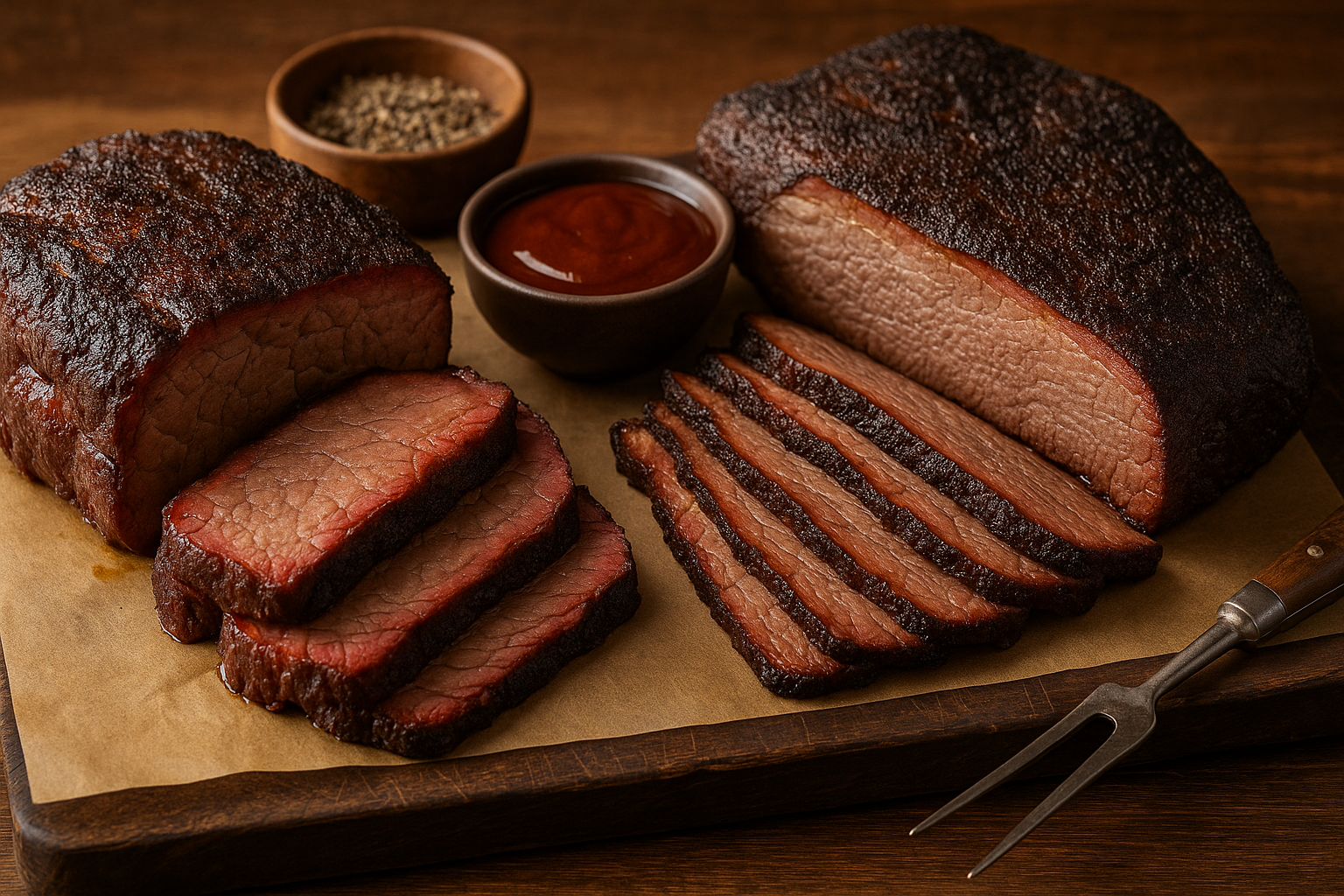
Chuck roast costs about half the price of brisket and delivers surprisingly similar BBQ results when smoked properly. This budget-friendly cut has earned the nickname “poor man’s brisket” for good reason.
Both cuts come from hardworking muscle groups that benefit from low and slow cooking, but they differ significantly in price, cooking time, and final texture. Understanding these differences helps you choose the right cut for your BBQ goals and budget.
Disclosure: As an Amazon Associate, this site earns from qualifying purchases. Thank you!
Price Comparison: Chuck Roast Wins by a Mile
Chuck roast typically costs $4-7 per pound at most grocery stores, while brisket runs $8-15 per pound for similar quality grades. This price difference means you can feed the same number of people for roughly half the cost.
Prime grade chuck roast still costs less than choice grade brisket in most markets. You’re looking at genuine savings without sacrificing much in terms of final eating quality.
The grass-fed versus grain-fed debate applies to both cuts, but chuck roast gives you more flexibility to experiment with premium options without breaking your budget.
Anatomy and Marbling: Different Muscles, Similar Fat Content
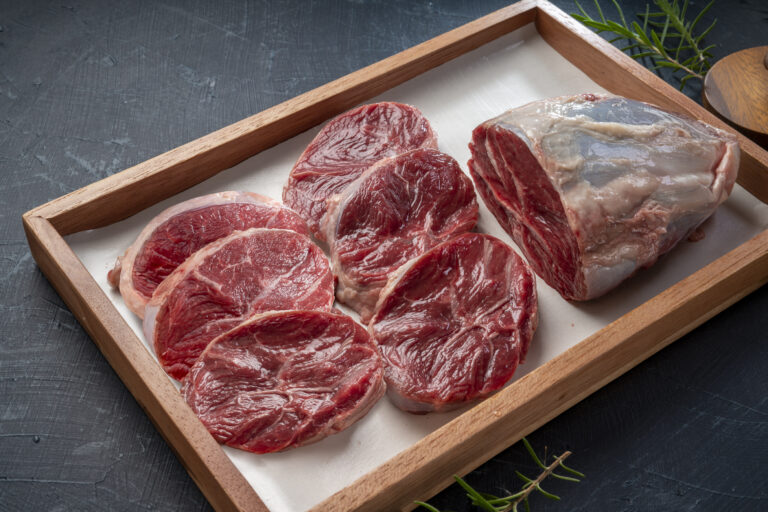
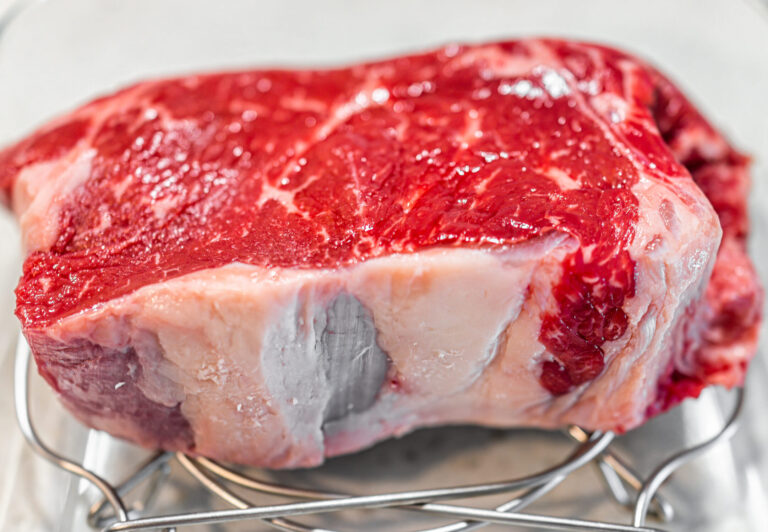
Chuck roast comes from the shoulder area of the cow, specifically the chuck primal. This heavily exercised muscle develops excellent marbling and connective tissue that breaks down beautifully during long cooks.
Brisket comes from the breast area and consists of two distinct muscles: the flat and the point. The point contains more marbling, while the flat tends toward leaner meat with long muscle fibers.
Both cuts contain enough intramuscular fat and collagen to stay moist during extended smoking sessions. Chuck roast actually has more consistent marbling throughout the entire cut, while brisket’s fat distribution varies between the two muscle groups.
Connective Tissue Breakdown
Chuck roast contains more collagen per pound than brisket, which converts to gelatin during slow cooking. This creates incredibly tender, juicy meat that practically falls apart.
Brisket’s connective tissue breaks down more gradually and maintains some texture even when fully cooked. This gives you the classic “bark and pull” experience that brisket fans love.
Cooking Methods: Similar Techniques, Different Timelines
Both cuts respond well to the same basic smoking approach: 225-250°F with indirect heat until the internal temperature reaches 195-205°F. The main difference lies in cooking time and preparation.
Chuck roast typically weighs 3-5 pounds and takes 6-8 hours to reach target temperature. Brisket weighs 10-15 pounds and requires 12-16 hours for full cooking.
Seasoning and Prep Work
Chuck roast needs minimal trimming compared to brisket. You’ll remove any silver skin and excess hard fat, but most of the work involves seasoning rather than knife skills.
Apply your rub 2-4 hours before cooking or overnight for deeper penetration. Simple salt, pepper, and garlic powder work perfectly, though you can use any brisket rub recipe.
Brisket requires more extensive trimming to remove thick fat caps and shape the meat properly. This prep work adds 30-45 minutes but creates more even cooking.
The Stall and Wrapping
Chuck roast hits its stall around 160-170°F, similar to brisket. You can power through unwrapped or use the Texas crutch (butcher paper or foil wrapping) to speed things up.
Wrapping chuck roast in butcher paper at 165°F typically shaves 1-2 hours off total cook time while maintaining good bark formation. Quality butcher paper makes a noticeable difference in final texture.
Flavor Profile: Chuck Roast Takes the Crown
Chuck roast delivers more intense beef flavor than brisket due to higher fat content and different muscle composition. The shoulder muscles work harder than chest muscles, developing more complex flavor compounds.
Brisket offers a more subtle, clean beef taste that lets smoke flavor shine through. Many pitmasters prefer brisket specifically because it showcases their wood selection and smoking technique.
Both cuts pair well with oak, hickory, or cherry wood. Chuck roast can handle stronger smoke flavors like mesquite better than brisket due to its more robust base flavor.
Texture Differences
Properly cooked chuck roast has a softer, more tender texture that shreds easily. You can slice it against the grain for serving, but it naturally wants to pull apart.
Brisket maintains more structure and slices cleanly when cooked correctly. The flat portion gives you perfect sandwich slices, while the point works better for chopping or burnt ends.
Cooking Equipment Considerations
Chuck roast’s smaller size fits easily on any smoker, including compact models and kettle grills. You can cook multiple roasts simultaneously to feed large groups.
Brisket requires adequate smoker space and consistent temperature control over long periods. Your choice between electric and gas equipment matters more for 15-hour brisket cooks than 7-hour chuck roast sessions.
Temperature monitoring becomes critical for both cuts, but brisket’s longer cook time increases the chances of temperature swings. A reliable wireless thermometer helps maintain consistent results.
Serving and Yield Comparison
A 4-pound chuck roast yields approximately 2.5-3 pounds of cooked meat, serving 6-8 people generously. The higher fat content means less dramatic weight loss during cooking compared to leaner cuts.
A 12-pound brisket yields 6-8 pounds cooked, serving 12-16 people. You’ll lose more weight to trimming and rendering, but the total yield still favors brisket for large gatherings.
Cost per serving strongly favors chuck roast even accounting for different yields. You’ll spend roughly $1.50-2.50 per serving for chuck roast versus $3-5 per serving for brisket.
Leftover Versatility
Chuck roast leftovers excel in sandwiches, tacos, and mixed dishes where the meat gets incorporated rather than served as slices. The tender texture works perfectly for pulled beef applications.
Brisket leftovers maintain their slicing quality when properly stored and reheated. This makes brisket superior for meal prep and formal leftover presentations.
Both cuts freeze well for up to 3 months when vacuum sealed or wrapped tightly. Chuck roast’s smaller original size makes it easier to portion for future meals.
Common Mistakes and How to Avoid Them
The biggest chuck roast mistake involves undercooking. Don’t pull it at 185°F just because it “looks done.” Push through to 200-205°F for proper connective tissue breakdown.
Overcooking brisket happens more frequently due to the extended cook time. Monitor temperatures closely during the final hours and pull it as soon as it probes tender.
Both cuts benefit from proper resting. Wrap finished meat in towels and rest in a cooler for 1-2 hours minimum. This redistributes juices and makes slicing much easier.
Wood Selection Impact
Chuck roast’s robust flavor pairs excellently with stronger woods like hickory and oak. Avoid delicate fruit woods unless you want subtle smoke flavor.
Brisket showcases wood selection more clearly, making it perfect for experimenting with different smoke profiles. Your choice of charcoal also impacts final flavor significantly.
When to Choose Chuck Roast vs Brisket
Choose chuck roast for weeknight smoking sessions, budget-conscious meals, or when you want maximum flavor per dollar. It’s also better for smaller gatherings and casual family meals.
Choose brisket for special occasions, competition cooking, or when presentation matters most. The classic slicing presentation and traditional BBQ appeal make brisket worth the extra cost and time investment.
Weather considerations matter too. Chuck roast’s shorter cook time works better during temperature swings or when you can’t monitor a smoker for 15+ hours straight.
Alternative Cuts Worth Considering
Chuck eye roast offers even more marbling than regular chuck roast and costs only slightly more. This cut delivers the closest approximation to brisket texture and flavor.
Bottom round roast provides another budget option, though it requires more careful temperature control to avoid drying out. Beef shank offers similar value with different cooking requirements.
Tri-tip bridges the gap between quick-cooking steaks and slow-smoking roasts, though it doesn’t quite match either chuck roast or brisket for low-and-slow applications.
Equipment Recommendations
A basic offset smoker or pellet grill handles both cuts excellently. Chuck roast’s forgiving nature makes it perfect for beginners learning temperature control.
Pellet grills excel at maintaining consistent temperatures for brisket’s longer cook times. The automated temperature control reduces the risk of overnight temperature swings.
Quality grill grates matter less for these low-temperature cooks compared to direct grilling applications. Focus your budget on temperature control and monitoring equipment instead.
FAQ
Can you cook chuck roast exactly like brisket?
Yes, chuck roast responds excellently to traditional brisket cooking methods. Use the same temperature range (225-250°F), similar rubs, and cook to the same internal temperature (200-205°F). The main difference is chuck roast’s shorter cooking time due to smaller size.
Does chuck roast taste as good as brisket?
Chuck roast actually has more intense beef flavor than brisket due to higher fat content and different muscle composition. While brisket offers more traditional BBQ presentation and texture, chuck roast delivers superior flavor per dollar spent.
How much money can you save choosing chuck roast over brisket?
Chuck roast typically costs 40-50% less than brisket per serving. A family of six can expect to save $15-25 per meal choosing chuck roast, while still getting excellent BBQ results. Annual savings for regular BBQ families easily reach $200-400.
Which cut is better for BBQ beginners?
Chuck roast is significantly more forgiving for beginners due to higher fat content, shorter cook time, and less precise trimming requirements. The reduced time commitment also makes it easier to maintain consistent temperatures throughout the cook.
Chuck roast wins this comparison for most home BBQ situations. You’ll get 80% of brisket’s satisfaction at 50% of the cost and time investment. Save brisket for special occasions and use chuck roast for your regular BBQ rotation.
This article contains affiliate links. If you purchase through these links, we may earn a small commission at no extra cost to you.