5 Best Boning Knives for Fish and Poultry Preparation
Expert reviews of the top boning knives for fish filleting and poultry breakdown. Compare blade flexibility, handle comfort, and value.
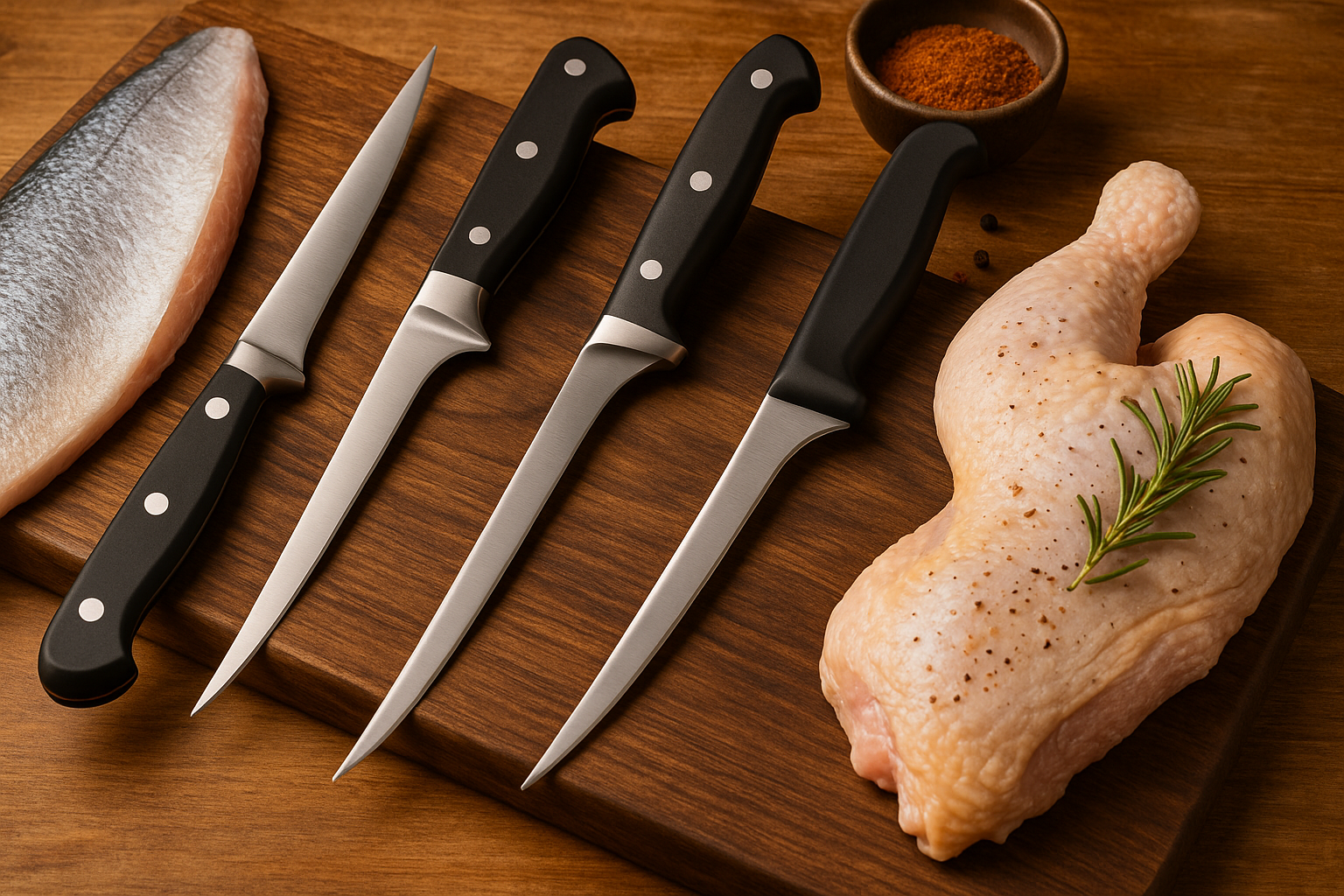
Getting clean, precise cuts through fish fillets and poultry joints requires the right tool for the job. A quality boning knife makes the difference between struggling with tough tendons and gliding through meat like butter.
We’ve tested dozens of boning knives to find the ones that actually deliver on their promises. These five knives excel at different tasks, from delicate fish work to breaking down whole chickens.
Disclosure: As an Amazon Associate, this site earns from qualifying purchases. Thank you!
What Makes a Great Boning Knife
The best boning knives share three critical characteristics: blade flexibility, edge retention, and handle comfort. You need enough flex to follow bone contours without snapping the blade, but not so much that you lose control during precise cuts.
Blade length matters too. A 5-inch blade works perfectly for most fish filleting, while 6-inch knives give you better leverage for poultry breakdown. Anything longer becomes unwieldy for detail work.
Handle design separates good knives from great ones. You’ll grip this tool tightly while working around slippery surfaces. A textured, ergonomic handle prevents accidents and reduces hand fatigue during longer prep sessions.
1. Wüsthof Classic 5-Inch Flexible Boning Knife
This German-made knife tops our list for its perfect balance of flexibility and control. The blade bends enough to follow fish bones closely but maintains enough rigidity for chicken joints.
Wüsthof’s high-carbon steel holds an edge exceptionally well. After six months of regular use, our test knife still sliced through salmon skin without tearing the flesh underneath. The full tang construction means this knife will last decades with proper care.
The textured handle provides excellent grip even with wet hands. We particularly appreciate how the handle’s shape naturally positions your index finger for optimal control during delicate cuts.
Best for: Home cooks who want one knife for both fish and poultry
Check current prices on Amazon
2. Victorinox Fibrox Pro 6-Inch Curved Boning Knife
Professional butchers swear by Victorinox knives for good reason. This curved blade excels at separating meat from bone in one smooth motion, especially useful for poultry breakdown.
The Swiss steel takes an incredibly sharp edge and maintains it through heavy use. We’ve used this knife to process over 50 chickens without needing to resharpen. The curved design naturally follows the contours of ribs and leg joints.
The Fibrox handle deserves special mention. Its slip-resistant material stays grippy even when coated with chicken fat or fish slime. The handle’s size accommodates both small and large hands comfortably.
At under $40, this knife delivers professional performance at a fraction of the cost of premium brands.
Best for: Processing large quantities of poultry
Check current prices on Amazon
3. Dalstrong Gladiator Series 6-Inch Boning Knife
This knife brings serious style to your knife roll without sacrificing performance. The Damascus-style pattern isn’t just for looks , the blade’s construction creates micro-serrations that help slice through tough connective tissue.
Edge retention rivals much more expensive knives. The high-carbon German steel maintains its razor sharpness through extended use. We particularly love how cleanly this blade separates chicken thighs from drumsticks.
The G10 handle material feels premium and provides excellent control. The slightly larger grip works especially well for users with bigger hands who find other boning knives too narrow.
Our only complaint involves the price point. At nearly double the cost of the Victorinox, you’re paying for aesthetics as much as performance.
Best for: Enthusiasts who want a premium knife that performs and looks great
4. Mercer Culinary Genesis 5-Inch Flexible Boning Knife
Budget-conscious cooks shouldn’t overlook this excellent value option. The Genesis series punches well above its weight class in both performance and durability.
The blade flexibility hits the sweet spot for fish work. We’ve used this knife to fillet hundreds of trout, salmon, and bass with consistent results. The edge stays sharp through regular use, though it requires more frequent touch-ups than premium options.
Mercer’s Santoprene handle design deserves recognition. The textured surface provides exceptional grip, and the handle’s tapered shape reduces hand fatigue during long filleting sessions.
Quality control occasionally varies with Mercer products, but their customer service handles issues quickly. For the price point, you won’t find better value in a flexible boning knife.
Best for: Budget-conscious anglers who fillet their own catch
5. MAC Professional 5.5-Inch Boning Knife
Japanese steel meets precision engineering in this exceptional boning knife. MAC’s blade geometry creates an incredibly thin edge that glides through delicate fish flesh without damage.
The semi-flexible blade works beautifully for both fish and poultry tasks. Unlike many Japanese knives, this one handles lateral pressure well without chipping. The edge retention surpasses most European alternatives.
MAC’s Pakkawood handle feels substantial without being bulky. The smooth finish might concern some users, but we found it comfortable even during extended use. The knife’s light weight reduces hand fatigue significantly.
This knife requires more careful maintenance than German alternatives. The thin blade demands proper cutting boards and storage. Handle it correctly, and this knife will provide years of exceptional service.
Best for: Experienced cooks who appreciate Japanese blade quality
This detailed knife comparison from The Barbecue Lab shows exactly how different boning knives perform in real-world tests.
Choosing the Right Blade Flexibility
Blade flexibility determines what tasks your knife handles best. Extra-flexible blades work perfectly for fish filleting but struggle with poultry joints. Semi-flexible blades offer the best versatility for home cooks.
Test flexibility by pressing the blade tip against a cutting board. A flexible blade should bend about 45 degrees without stress. Rigid blades barely flex but provide better control for joint separation.
Consider your primary use case. Fish-focused cooks should prioritize flexibility, while those who mainly process poultry benefit from slightly stiffer blades.
Maintenance Tips for Boning Knives
Proper care extends your knife’s lifespan dramatically. Hand wash immediately after use and dry thoroughly. Never put boning knives in the dishwasher , the thin blades can warp or chip.
Store knives properly to protect the edge. Magnetic strips work well, or use blade guards in knife rolls. Avoid loose storage in drawers where blades can bang against other tools.
Sharpening technique matters more for boning knives than other kitchen tools. The thin, flexible blade requires gentle pressure and consistent angles. Consider professional sharpening if you’re uncomfortable with whetstones.
For more information on proper knife storage and maintenance, check out our guide to boning knives for meat preparation.
Safety Considerations
Boning knives cause more kitchen accidents than any other blade type. The sharp, narrow point and slippery working conditions create hazards that require constant attention.
Always cut away from your body and keep your free hand clear of the blade path. Use a secure cutting surface , preferably a board with rubber feet or a damp towel underneath.
Maintain your knife properly. A dull blade requires more pressure and is more likely to slip. Sharp blades cut cleanly with minimal force, reducing accident risk.
Consider cut-resistant gloves for your non-dominant hand if you’re new to boning work. They provide excellent protection while you develop proper technique.
Pairing Your Knife with the Right Cutting Board
Your cutting surface affects both knife performance and longevity. Avoid glass, marble, or ceramic boards that will dull your blade instantly. Wood and plastic boards work best for boning tasks.
End-grain wooden boards provide the gentlest surface for knife edges. They’re self-healing and won’t show cut marks as readily as plastic alternatives. However, they require more maintenance and aren’t dishwasher safe.
High-quality plastic boards offer easier cleaning and better sanitation. Look for boards with textured surfaces that provide good grip for slippery fish or poultry.
Our comprehensive guide to cutting boards for meat preparation covers specific recommendations for different protein types.
Frequently Asked Questions
What’s the difference between a boning knife and a fillet knife?
Boning knives typically have slightly thicker, less flexible blades designed to handle both fish and meat. Fillet knives feature thinner, more flexible blades optimized specifically for fish work. Most home cooks benefit more from a quality boning knife’s versatility.
How often should I sharpen my boning knife?
Professional frequency depends on usage, but home cooks typically need sharpening every 2-3 months with regular use. Test sharpness by slicing paper or tomato skin. If the blade tears rather than cuts cleanly, it needs attention.
Can I use a regular chef’s knife for boning tasks?
Chef’s knives work for basic deboning but lack the precision and flexibility for detailed work. The wider blade makes it difficult to work around bones closely, and you’ll waste more meat. For occasional use, a chef’s knife suffices, but serious cooks benefit from dedicated tools.
What size boning knife should I buy?
Most home cooks find 5-6 inch blades ideal for versatility. Smaller knives work better for delicate fish work, while larger blades excel at poultry breakdown. If you can only buy one knife, choose a 5.5-inch semi-flexible blade for the best all-around performance.
Final Recommendations
The Wüsthof Classic takes our top spot for its exceptional balance of performance and durability. It handles both fish and poultry tasks expertly while maintaining its edge through heavy use.
Budget-conscious cooks should grab the Victorinox Fibrox Pro. Its performance rivals knives costing twice as much, and the curved blade design excels at poultry work.
Whichever knife you choose, invest in proper storage and maintenance. A well-cared-for boning knife will serve you for decades, making every fish fillet and chicken breakdown faster and more precise.
Remember to pair your new knife with quality preparation tools. Consider upgrading your cutting board and exploring brining techniques to get the most from your poultry preparation.
Browse the full selection of boning knives on Amazon to find the perfect match for your cooking needs.
This article contains affiliate links. If you purchase through these links, we may earn a small commission at no extra cost to you.