5 Best Oyster Shucking Knives for Safe and Easy Opening
Expert reviews of top oyster knives comparing blade strength, handle safety, and ease of use. Find the perfect knife for safe, professional shucking.
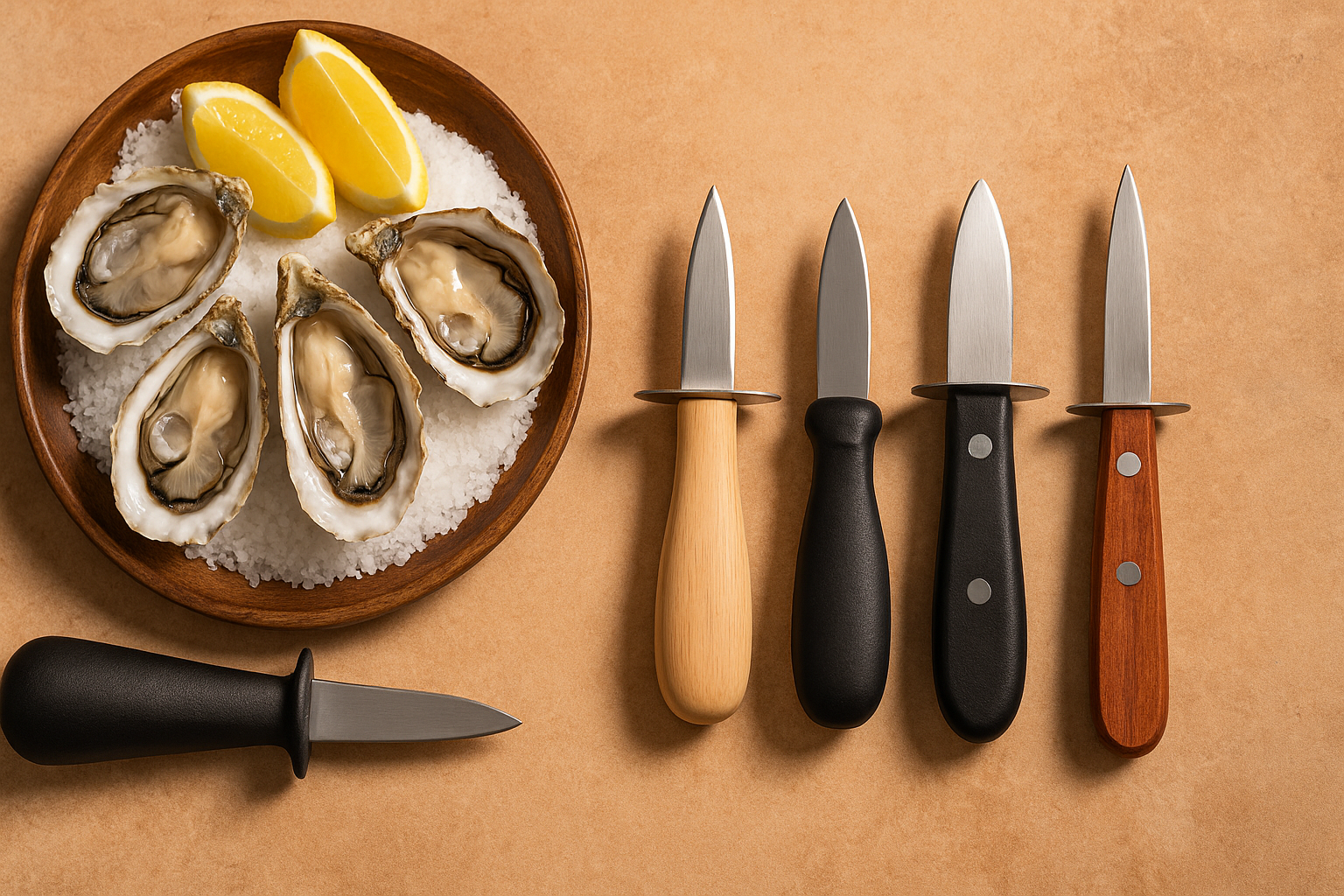
Oyster shucking doesn’t have to leave you with bandaged fingers and frustration. The right knife makes all the difference between a dangerous wrestling match and smooth, professional-looking shucks that preserve every drop of precious oyster liquor.
After testing dozens of oyster knives across different price points and handle styles, I’ve identified five standout options that excel in blade strength, handle safety, and overall ease of use. These knives will transform your oyster experience whether you’re tackling a dozen Blue Points or preparing for a raw bar party.
## What Makes a Great Oyster Shucking Knife
The best oyster knife combines three critical elements: a sturdy blade that won’t snap under pressure, a handle that protects your hands, and the right blade shape for your skill level.
**Blade thickness matters more than you think.** Thin, flexible blades bend and break. You need at least 2-3mm of steel thickness to handle stubborn shells without flexing. Carbon steel holds a sharper edge but requires more maintenance, while stainless steel offers durability with less upkeep.
**Handle design directly impacts your safety.** A proper guard between the blade and handle prevents slipping. Textured grips give you control even with wet hands. The handle should feel substantial enough to provide leverage without being bulky.
**Blade shape affects your technique.** Narrow, pointed tips work well for beginners who need to find the hinge easily. Wider blades with rounded tips suit experienced shuckers who prefer to pop shells open with twisting motions.
## 1. R. Murphy New Haven Oyster Knife – Best Overall
The R. Murphy New Haven oyster knife represents old-school American craftsmanship at its finest. This knife features a 3-inch carbon steel blade that’s thick enough to handle the toughest East Coast oysters without bending.
The wooden handle provides excellent grip even when wet, and the brass bolster creates a solid barrier between your hand and the blade. Carbon steel takes a razor-sharp edge that glides through oyster meat cleanly.
**What sets this knife apart:** The blade geometry is perfect for the classic hinge-entry technique. The pointed tip finds the gap easily, while the blade widens enough to provide good leverage for twisting open stubborn shells.
**Drawbacks:** Carbon steel requires more maintenance than stainless options. You’ll need to dry it thoroughly after each use and oil it occasionally to prevent rust. The wooden handle isn’t dishwasher safe.
This knife excels with East Coast oysters like Blue Points, Kumamotos, and other smaller varieties. For larger West Coast oysters, you might prefer something with a wider blade. Check current prices for the R. Murphy New Haven on Amazon.
## 2. Victorinox Swiss Army Oyster Knife – Best for Beginners
Victorinox brings Swiss precision to oyster shucking with their stainless steel oyster knife. The 2.75-inch blade strikes the perfect balance between strength and maneuverability for new shuckers.
The black polymer handle features subtle texturing that provides secure grip without being overly aggressive. A small finger guard helps prevent slipping, though it’s not as pronounced as some other options.
**Why beginners love this knife:** The blade tip is sharp enough to find the hinge quickly but not so pointed that it’s dangerous if you slip. Stainless steel means zero maintenance beyond normal washing.
**Performance notes:** This knife handles medium-sized oysters beautifully. Very large oysters might require more leverage than the handle provides, but for standard restaurant-sized shellfish, it’s excellent.
The blade holds its edge well through dozens of oysters. You can sharpen it with any standard knife sharpening system. Dishwasher safe construction makes cleanup effortless after messy shucking sessions.
## 3. Dexter-Russell Traditional Oyster Knife – Best Heavy-Duty Option
Built for commercial kitchens and serious home shuckers, the Dexter-Russell traditional oyster knife features a 3.25-inch high-carbon stainless steel blade that laughs at difficult shells.
The white polymer handle is designed for professional use, with deep finger grooves and a substantial guard. This isn’t the prettiest knife, but it’s engineered for performance and durability above all else.
**Heavy-duty advantages:** The extra blade length provides more leverage for large Pacific oysters. High-carbon stainless steel combines edge retention with rust resistance. The handle design works well with protective gloves for added safety.
**Consider this if:** You regularly shuck large quantities of oysters or prefer bigger West Coast varieties. The professional-grade construction justifies the higher price if you use it frequently.
The blade shape works well for both hinge-entry and side-entry techniques. Professional shuckers appreciate the consistent geometry that allows muscle memory to develop quickly. Find the Dexter-Russell knife on Amazon.
## 4. HiCoup Kitchenware Oyster Knife Set – Best Value
This affordable set includes an oyster knife, cut-resistant glove, and cleaning brush. The stainless steel blade measures 2.8 inches with a comfortable ergonomic handle.
The included glove provides excellent protection for your holding hand. Made from cut-resistant materials, it gives confidence to beginners who worry about slipping.
**Value proposition:** Getting a quality knife, protective glove, and cleaning brush for under $20 makes this set hard to beat for occasional use. The knife performs surprisingly well for the price point.
**Build quality:** While not as robust as professional options, the blade handles typical home use without issues. The handle feels solid and provides adequate grip.
The knife works best with small to medium oysters. Extremely large or difficult shells might challenge the blade, but for most home shucking scenarios, it performs admirably. Perfect starter set for those new to oyster preparation.
## 5. Case Cutlery Oyster Knife – Best Premium Option
Case brings their legendary American knife-making expertise to oyster tools with this premium carbon steel option. The 3-inch blade features their signature fit and finish.
The genuine wood handle showcases beautiful grain patterns and feels substantial in your hand. Each knife includes Case’s lifetime warranty, reflecting their confidence in the construction quality.
**Premium features:** Hand-forged carbon steel blade takes an incredibly sharp edge. The wood handle ages beautifully with use. Traditional American craftsmanship that’s built to last decades.
**Investment considerations:** This knife costs significantly more than other options, but the build quality and warranty justify the premium for serious oyster enthusiasts.
The blade geometry favors experienced shuckers who appreciate precise control. Carbon steel requires proper care but rewards you with superior edge retention and easy resharpening. A true buy-it-for-life option.
## Proper Oyster Shucking Technique
Having the right knife is only half the battle. Proper technique keeps you safe and preserves the oyster’s quality.
**Setup matters.** Work over a large bowl to catch shells and liquor. Place a damp towel under your cutting board to prevent slipping. Keep your work area clean and organized.
**Hold the oyster correctly.** Curved side down, hinge toward your knife hand. Wrap the oyster in a kitchen towel or wear a cut-resistant glove on your holding hand.
**Find the hinge.** Look for the small gap where the shells meet at the narrow end. Insert your knife tip at a 45-degree angle, not straight down. Apply steady pressure rather than force.
**Twist, don’t pry.** Once the tip enters, twist the blade to pop the shell. Slide the blade along the top shell to cut the adductor muscle. Keep the oyster level to preserve the liquor.
This technique works for most oyster varieties, though you might need to adjust your approach for particularly large or stubborn shells. Practice makes perfect, and the right knife makes practice much more enjoyable.
## Maintenance and Care Tips
Proper knife care extends your blade’s life and maintains its performance. Carbon steel and stainless steel require different approaches.
**For carbon steel knives:** Wash immediately after use with warm soapy water. Dry completely and apply a thin coat of mineral oil if storing for extended periods. These knives can develop a patina that actually helps protect against rust.
**For stainless steel options:** Regular washing is usually sufficient. These knives handle dishwasher cycles well, though hand washing preserves the edge longer. Check for any shell fragments stuck in crevices.
**Sharpening considerations:** Oyster knives don’t need razor-sharp edges like butchery knives. A moderately sharp blade with a strong tip works better than an extremely sharp but fragile edge.
Store your oyster knife in a knife block or sheath to protect the tip. A damaged tip makes hinge entry much more difficult and potentially dangerous.
## Safety Equipment and Accessories
Even with the best knife, oyster shucking carries inherent risks. Proper safety equipment makes the process much more enjoyable.
**Cut-resistant gloves** are essential for your holding hand. Modern materials provide excellent protection without sacrificing dexterity. Look for gloves rated Level 3 or higher for cut resistance.
**Stable cutting boards** prevent dangerous slipping. A board with rubber feet or a damp towel underneath stays put during aggressive shucking motions. Some specialized oyster boards include built-in shell holders.
**First aid supplies** should be readily available. Even experienced shuckers occasionally slip. Keep bandages and antiseptic nearby, especially during large shucking sessions.
Consider the same safety mindset you’d apply to other kitchen tasks. Good lighting, clean workspace, and proper technique prevent most injuries.
This detailed tutorial demonstrates professional shucking techniques and compares different knife styles in action.
## Pairing Your Oyster Knife with Other Tools
A complete oyster setup includes more than just the knife. Consider these complementary tools for better results.
**Oyster boards** with shell holders stabilize your work and protect your countertops. Some include built-in compartments for shells and rejected oysters.
**Specialized brushes** clean shells before shucking. Removing mud and debris makes finding the hinge easier and prevents contamination.
**Quality storage solutions** keep oysters fresh until serving. Proper storage maintains their flavor and safety. Our guide to storage solutions for raw ingredients covers the essential techniques.
**Serving accessories** complete the experience. Crushed ice, mignonette sauce, and proper serving plates elevate your presentation.
Think of oyster preparation as part of a larger entertaining strategy, similar to planning your barbecue tool setup for grilling events.
## Regional Oyster Considerations
Different oyster varieties require slightly different approaches and sometimes different knives. Your local oyster selection influences which knife works best.
**East Coast oysters** like Blue Points, Wellfleets, and Malpeques tend to be smaller with harder shells. Narrow-bladed knives with sharp tips excel here. The hinge-entry method works well.
**West Coast varieties** such as Kumamotos and Pacific oysters often grow larger with different shell shapes. Wider blades provide better leverage for these substantial shellfish.
**Gulf Coast oysters** typically have softer shells that open more easily. Almost any quality oyster knife handles these well, making them perfect for practicing your technique.
**Imported varieties** like Belons or other European oysters may have unique characteristics. Research specific techniques for unusual varieties you encounter.
Understanding your local oyster scene helps you choose the most appropriate knife and develop the right techniques for your regional preferences.
## Frequently Asked Questions
### What’s the difference between an oyster knife and a regular kitchen knife?
Oyster knives have specific design features that regular knives lack: thick, sturdy blades that won’t bend under pressure, specialized tips for finding the hinge, and handles designed for the twisting motions required to open shells. Regular kitchen knives can break or slip dangerously.
### How do I know which blade shape is right for me?
Beginners should start with pointed-tip knives that make finding the hinge easier. Experienced shuckers often prefer wider blades with rounded tips for better leverage and faster opening. Your dominant technique (hinge-entry vs. side-entry) also influences the ideal blade shape.
### Can I put my oyster knife in the dishwasher?
Stainless steel oyster knives with synthetic handles typically handle dishwasher cleaning fine. Carbon steel blades and wooden handles should always be hand washed and dried immediately to prevent damage. Check manufacturer recommendations for your specific knife.
### How often should I replace my oyster knife?
A quality oyster knife can last decades with proper care. Replace it if the blade develops chips that affect performance, the handle becomes loose or damaged, or if rust compromises the metal. Most issues can be prevented with proper maintenance and storage.
The R. Murphy New Haven oyster knife remains my top recommendation for serious shuckers who want professional results. Its carbon steel blade and traditional construction deliver the performance that makes oyster preparation genuinely enjoyable rather than a dangerous chore.
For those just starting their oyster journey, the Victorinox Swiss Army option provides excellent value and forgiving handling characteristics. Pair it with a cut-resistant glove and proper technique, and you’ll be opening oysters like a pro in no time.
This article contains affiliate links. If you purchase through these links, we may earn a small commission at no extra cost to you.