
Spatchcock Turkey with Herb Butter: Faster Roasting, Crispier Skin
Learn how to spatchcock a turkey to cut roasting time 40% and get perfectly crispy skin. Complete recipe with garlic-herb butter and step-by-step guide.
“`html
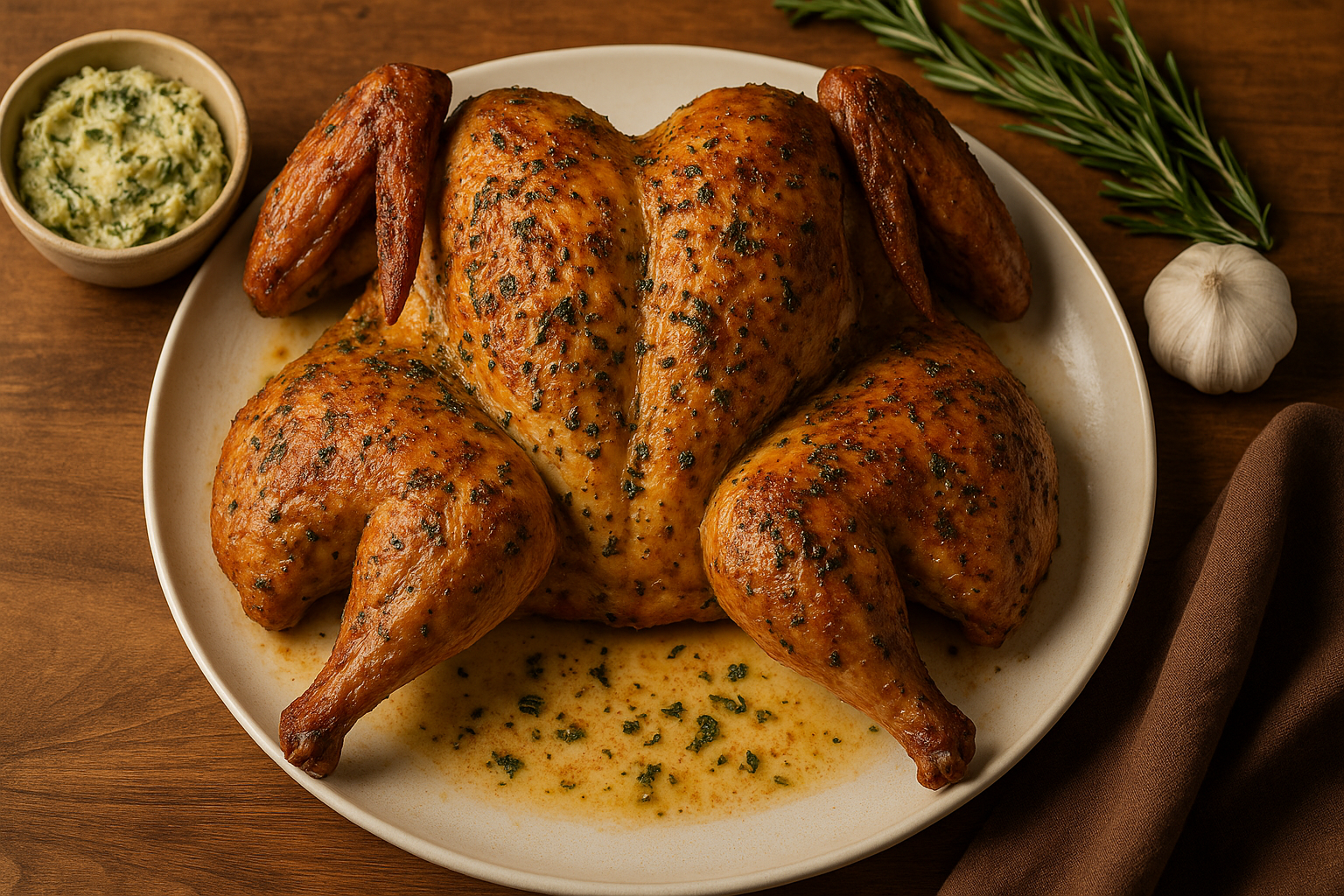
Spatchcocking a turkey cuts roasting time by 40%, delivers crispier skin, and guarantees even cooking from breast to thigh. This technique, also called butterflying, involves removing the backbone and flattening the bird so it cooks faster and browns more uniformly than a traditional whole turkey.
You’ll master this method in less than 10 minutes with kitchen shears or a sharp knife. Once you try it, you’ll never go back to standard roasting.
Disclosure: As an Amazon Associate, this site earns from qualifying purchases. Thank you!
Why Spatchcock Turkey Beats Traditional Roasting
A 12-pound turkey typically roasts in 3 to 3.5 hours. Spatchcock that same bird and it finishes in 90 minutes at 450°F. This speed advantage isn’t just about convenience. Faster cooking means less moisture loss and juicier meat.
The flattened shape also solves the classic turkey problem: overcooked breast meat while you wait for thighs to reach safe temperature. When the turkey lies flat, the dark meat (which takes longer) sits closer to the heat source in most ovens. The breast, which cooks faster, stays on top where it’s slightly cooler.
Crispy skin lovers win big here too. Maximum surface area touches hot oven air, creating golden, crackling skin on nearly every inch of the bird. Traditional roasting leaves the bottom soggy and pale. With spatchcocking, you get crispy skin everywhere except the very underside.
Equipment You Need
Heavy-duty kitchen shears make this job easiest. You need shears that can cut through poultry bones without bending or straining your hands. Heavy-duty poultry shears on Amazon come in various styles, but look for ones with spring-loaded handles and notched blades for gripping bones.
Alternatively, a sharp chef’s knife or boning knife works fine. You’ll just need more hand strength and patience working through the joints.
For roasting, use a large rimmed baking sheet or roasting pan. The turkey needs to lie completely flat. A wire rack that fits inside elevates the bird slightly, promoting air circulation underneath for even crisping. A standard half-sheet pan (18×13 inches) works perfectly for turkeys up to 16 pounds.
How to Spatchcock a Turkey
Remove the giblets and neck from the cavity. Pat the entire turkey dry with paper towels. Moisture prevents browning, so get it as dry as possible.
Place the turkey breast-side down on your cutting board. Locate the backbone running down the center. You’ll cut along both sides of this bone to remove it completely.
Starting at the tail end, cut along one side of the backbone using your shears or knife. Stay as close to the spine as possible. You’ll cut through ribs and cartilage. This takes some force, but the shears should handle it without excessive struggle.
Repeat on the other side of the backbone. Remove and discard the backbone (or save it for stock).
Flip the turkey over so it’s breast-side up. Press down firmly on the breastbone with both hands. You’ll hear a crack as the breastbone breaks and the turkey flattens. This step is crucial for even cooking.
The whole process takes 5 to 10 minutes once you’ve done it once. Watch this video demonstration for visual guidance:
Garlic-Herb Compound Butter Recipe
Compound butter under the skin bastes the meat from the inside as it melts. This method keeps white meat moist while adding tremendous flavor.
Ingredients
- 8 tablespoons (1 stick) unsalted butter, softened to room temperature
- 4 cloves garlic, minced or pressed
- 2 tablespoons fresh thyme leaves, chopped
- 2 tablespoons fresh rosemary, minced
- 1 tablespoon fresh sage, minced
- 1 teaspoon lemon zest
- 1 teaspoon kosher salt
- 1/2 teaspoon black pepper
Mix all ingredients in a bowl until thoroughly combined. The butter should be soft enough to spread but not melted. Room temperature butter (around 65-68°F) has the right consistency.
You can make this butter up to 3 days ahead. Store it covered in the refrigerator, then let it come to room temperature before using. If you’re looking to experiment with different flavor profiles, check out our guide to cooking with spices for inspiration.
Applying Butter Under the Skin
Gently separate the skin from the breast meat using your fingers. Start at the cavity end near the legs and work your way toward the neck. Be careful not to tear the skin, but don’t stress if you get a small rip. It won’t ruin anything.
You can also loosen skin over the thighs and drumsticks, though this takes more finesse. The breast is the priority since that meat dries out fastest.
Spread about two-thirds of your compound butter directly on the meat under the skin. Use your hands (outside the skin) to massage and distribute it evenly. Rub the remaining butter all over the outside of the skin.
This two-layer approach delivers flavor and moisture to the meat while promoting browning on the surface.
Complete Roasted Spatchcock Turkey Recipe
Ingredients
- 1 whole turkey (12-14 pounds), spatchcocked
- 1 batch garlic-herb compound butter (recipe above)
- 2 tablespoons olive oil
- Additional kosher salt and black pepper to taste
- 1 lemon, halved (optional)
- 6-8 sprigs fresh thyme and rosemary (optional)
Instructions
Preheat your oven to 450°F. Position a rack in the lower third of the oven.
Pat the spatchcocked turkey completely dry again. Apply the compound butter under and over the skin as described above.
Drizzle olive oil over the skin and season generously with additional salt and pepper. Don’t be shy here. A 14-pound turkey can handle 2 to 3 tablespoons of kosher salt total.
Place the turkey skin-side up on a wire rack set in a large roasting pan or rimmed baking sheet. Tuck the wing tips behind the breast. If using, scatter lemon halves and herb sprigs around the turkey in the pan.
Roast at 450°F for 20 minutes. This initial high heat jump-starts the skin crisping process.
Reduce temperature to 400°F and continue roasting. A 12-pound turkey needs about 70 more minutes. A 14-pound bird needs closer to 85 minutes.
Check the internal temperature starting at the 60-minute mark. You’re aiming for 165°F in the thickest part of the breast and 175°F in the thigh. Use an instant-read thermometer inserted into the meat, avoiding bone.
Rotate the pan halfway through cooking for even browning. If the skin browns too quickly, tent loosely with aluminum foil.
When the turkey reaches temperature, remove it from the oven and let it rest for 15 to 20 minutes before carving. Resting allows juices to redistribute throughout the meat.
Temperature and Timing Guidelines
According to USDA food safety guidelines, turkey must reach 165°F internally to be safe. I recommend pulling the breast at 160-162°F. It will coast up to 165°F during resting while the thighs hit 175°F, which is ideal for dark meat texture.
Here’s a quick timing reference for spatchcocked turkeys at 400°F (after the initial 450°F blast):
- 10-12 pounds: 60-75 minutes
- 12-14 pounds: 75-90 minutes
- 14-16 pounds: 90-105 minutes
Every oven runs differently. Use these times as starting points but rely on your thermometer for the final call. An instant-read digital thermometer is essential for turkey. Check current prices on instant-read thermometers if you don’t own one.
Carving a Spatchcocked Turkey
Carving is actually easier than with a traditional roast turkey. The backbone removal creates natural separation points.
Start by removing the legs. Cut through the skin connecting the leg to the breast, then pop the hip joint and slice through it. Separate the drumstick from the thigh if desired.
Remove the wings by cutting through the shoulder joint.
Slice the breast meat. You can either cut it on the bone or remove the entire breast half and slice it against the grain on your cutting board. I prefer the latter for neater, more uniform slices.
Make-Ahead Tips and Storage
You can spatchcock the turkey up to 24 hours before roasting. Store it uncovered in the refrigerator on a baking sheet. This dry-brining period actually improves the final result by drying the skin (for better crisping) and allowing salt to penetrate the meat.
Apply the compound butter 2 to 4 hours before roasting for maximum flavor penetration. Or do it right before cooking if you’re short on time.
Leftover turkey keeps for 3 to 4 days refrigerated in airtight containers. The meat stays moist thanks to the butter and faster cooking method. Use it in sandwiches or try our turkey sausage recipes for another way to enjoy turkey throughout the week.
Common Mistakes to Avoid
Don’t skip the backbone removal step. Some people try to just flatten the turkey without removing the spine. This doesn’t work. You need that backbone out for proper flattening.
Avoid roasting at too low a temperature. Some recipes suggest 350°F or 375°F. These temperatures work but sacrifice the crispy skin that makes spatchcocking worthwhile. Stick with 400-450°F.
Don’t overcrowd the pan. The turkey needs breathing room. If your pan is too small, drippings will steam the underside instead of letting it crisp. Use a larger pan or roast vegetables separately.
Stop basting. You don’t need to baste a spatchcocked turkey. Opening the oven repeatedly drops the temperature and prolongs cooking. The compound butter under the skin does all the basting work internally.
Variations and Flavor Options
The herb butter recipe adapts easily to different flavor profiles. Try these variations:
Cajun-style: Replace herbs with 2 tablespoons Cajun seasoning, 1 tablespoon paprika, and 1 teaspoon cayenne pepper.
Mediterranean: Use oregano and parsley instead of thyme and rosemary. Add 1 tablespoon sun-dried tomato paste and 2 teaspoons dried basil.
Asian-inspired: Mix softened butter with 2 tablespoons soy sauce, 1 tablespoon fresh ginger, 2 cloves garlic, and 1 teaspoon five-spice powder.
You can also experiment with different fats. Some people use softened bacon fat or a mixture of butter and duck fat for extra richness. If you’re interested in cooking with alternative fats, read our article on frying with lard for more context on different cooking fats.
Choosing the Right Turkey
Fresh turkeys work better than frozen for spatchcocking. Frozen birds can be harder to cut through while still partially frozen, and if fully thawed, they’ve already lost some moisture.
Natural or heritage breed turkeys deliver better flavor than conventional birds. These cost more but the difference is noticeable. Our guide to turkey brands breaks down which producers offer the best quality.
Size matters for spatchcocking. Stay in the 10-16 pound range. Larger birds won’t fit in standard home ovens when flattened. If you need to feed a crowd, roast two smaller spatchcocked turkeys instead of one massive bird.
Avoid self-basting or pre-brined turkeys. These already contain added solutions that can make the skin soggy and harder to crisp. You want a natural bird that you can season yourself.
Side Dishes That Pair Well
The drippings from a spatchcocked turkey make incredible gravy. Pour the pan juices through a strainer into a fat separator. Use the separated drippings to make a simple roux-based gravy with flour and stock.
Root vegetables roast beautifully in the same pan under the turkey. Add halved potatoes, carrots, and onions around the bird at the start. They’ll cook in the drippings and develop amazing flavor.
Keep other sides simple since this turkey delivers bold flavors. Classic mashed potatoes, green beans, or a simple salad balance the rich, herb-forward turkey without competing.
Cost Comparison and Value
Spatchcocking doesn’t change the price of the turkey itself, but it does save energy costs. Cutting cooking time by 40% means significantly less oven use.
The technique also reduces the risk of mistakes. Faster cooking means less chance of drying out the meat or having uneven doneness. You’re less likely to ruin an expensive bird.
You’ll get better yield per pound too. Even cooking means you won’t have overdone, inedible breast meat that goes to waste. The juicier meat also reheats better, making leftovers more valuable.
Tools Worth Investing In
Beyond good poultry shears, a roasting rack specifically designed for poultry helps immensely. Look for V-shaped racks or flat racks with crossbars that can support a flattened turkey. Browse roasting racks on Amazon to find one that fits your preferred pan size.
A reliable instant-read thermometer is non-negotiable. Digital models with thin probes give accurate readings in 2-3 seconds. This speed matters when you’re checking multiple spots on the turkey.
Heavy-duty roasting pans withstand high heat without warping. Thin pans can buckle at 450°F, causing uneven cooking and making the pan hard to remove from the oven safely.
Scaling for Different Occasions
This method works beautifully for weeknight dinners with smaller birds. A 6-8 pound turkey (sometimes labeled as a “turkey breast roast” with legs) spatchcocks and cooks in just 45-60 minutes.
For large gatherings, roast two 12-pound spatchcocked turkeys instead of one 24-pounder. They’ll finish at the same time (since size is similar) and you’ll have twice the crispy skin. Place them on separate pans on different oven racks, rotating positions halfway through.
This technique also works for turkey breasts, chickens, and even game hens. The principles remain identical: remove the backbone, flatten the bird, roast at high heat. Adjust timing based on weight.
Frequently Asked Questions
Can you stuff a spatchcocked turkey?
You cannot stuff a spatchcocked turkey in the traditional sense because there’s no cavity. The bird lies flat. Instead, make your stuffing separately in a casserole dish, which actually gives you better texture and food safety. You can tuck aromatics like lemon, onion, and herbs under the turkey for flavor, but they won’t become traditional stuffing.
How long does spatchcocked turkey need to rest?
Rest your spatchcocked turkey for 15-20 minutes after removing it from the oven. This resting period allows juices to redistribute, keeping the meat moist when you carve. Tenting loosely with foil helps retain heat but isn’t necessary. The turkey will stay plenty hot enough for serving even without foil.
Can you smoke a spatchcocked turkey?
Spatchcocked turkeys smoke exceptionally well. The flattened shape means more surface area for smoke exposure, creating deeper flavor. Smoke at 275-300°F for about 2.5-3 hours for a 12-14 pound bird. Use fruit woods like apple or cherry for milder smoke, or hickory for stronger flavor. If you’re setting up for outdoor cooking, our charcoal chimney starter guide can help you get your smoker or grill ready efficiently.
Does spatchcocking work for frozen turkey?
Thaw the turkey completely before attempting to spatchcock it. Cutting through frozen or partially frozen bones is difficult, dangerous, and can damage your tools. Follow safe thawing methods: refrigerator thawing (24 hours per 5 pounds) or cold water thawing (30 minutes per pound) as recommended by the USDA.
Final Recommendation
Spatchcocking transforms turkey roasting from an all-day stress into a manageable 90-minute project. You’ll get juicier meat, crispier skin, and even cooking without complicated techniques or special equipment. The garlic-herb compound butter adds restaurant-quality flavor with minimal effort.
Start with this method for your next turkey dinner. After experiencing the results, traditional roasting will feel outdated and inefficient. The time savings alone justify learning this technique, but the superior texture and flavor make it the only way I prepare whole turkeys anymore.
This article contains affiliate links. If you purchase through these links, we may earn a small commission at no extra cost to you.


