
Smoked Salmon vs Cured Salmon: Methods, Flavor Profiles, and Best Uses
Compare smoked and cured salmon methods including gravlax, lox, hot smoking and cold smoking. Learn flavor profiles, textures, shelf life and ideal uses.
“`html
Smoked salmon and cured salmon aren’t the same thing, even though people use the terms interchangeably at the deli counter. Both methods preserve the fish and create completely different textures and flavors, but the techniques, time investment, and final products couldn’t be more different.
Understanding these differences helps you pick the right salmon for your bagels, charcuterie boards, or recipe needs. Let’s break down what makes each method unique and where each one shines.
Disclosure: As an Amazon Associate, this site earns from qualifying purchases. Thank you!
What Makes Cured Salmon Different from Smoked Salmon
Cured salmon relies purely on salt, sugar, and time to transform raw fish. You’re essentially pulling moisture out of the salmon through osmosis, which firms up the texture and adds flavor. The fish stays raw throughout the entire process, just like sushi-grade salmon, but the curing changes its texture dramatically.
Smoked salmon, on the other hand, involves both curing AND smoking. You cure the fish first (usually with a simpler salt-based cure), then expose it to wood smoke. Depending on the temperature, you can cold smoke or hot smoke the salmon, which creates entirely different end products.
The key distinction: cured salmon never sees heat or smoke. Smoked salmon always gets cured first, then smoked. Think of curing as the foundation technique, while smoking builds on top of it.
Traditional Curing Methods: Gravlax and Lox
Gravlax represents the Nordic approach to salmon curing. You pack the fish in a mixture of coarse salt, sugar, fresh dill, and usually some crushed peppercorns. The cure sits weighted in your refrigerator for 24 to 72 hours, depending on the thickness of your fillet.
The result tastes herbal and slightly sweet with a firm, silky texture. Gravlax slices cleanly and tastes phenomenal on rye bread with mustard sauce or cream cheese. I prefer gravlax for homemade preparations because you control the salt level and can adjust the sweetness to your preference.
Lox technically refers to salmon cured in a straight salt brine without sugar or aromatics. Traditional lox comes out much saltier than gravlax, with a texture closer to silken sashimi. Most modern “lox” you find at bagel shops is actually cold-smoked salmon, which causes confusion at breakfast counters everywhere.
Real belly lox packs an intense salt punch that pairs perfectly with cream cheese and capers. The fattiness of salmon belly balances out that aggressive salinity. You won’t find authentic lox as easily anymore, but specialty Jewish delis sometimes carry it.
How to Make Basic Gravlax at Home
Making gravlax requires minimal equipment and delivers restaurant-quality results. Here’s what works best:
- 1 pound center-cut salmon fillet, skin on, pin bones removed
- 1/4 cup kosher salt
- 1/4 cup granulated sugar
- 1 tablespoon crushed black peppercorns
- Large bunch fresh dill, roughly chopped
Mix your salt, sugar, and pepper together. Spread half the cure mix in a glass dish, lay down half the dill, place the salmon skin-side down, then cover with remaining cure and dill. Wrap tightly in plastic wrap, weigh it down with cans or a small plate, and refrigerate for 48 hours. Flip the package once at the 24-hour mark.
After curing, rinse off all the cure under cold water and pat completely dry. The salmon keeps for about 5 days refrigerated. Slice it thinly on a bias for the best presentation.
Hot Smoked vs Cold Smoked Salmon Techniques
Cold smoking happens between 70°F and 90°F, which means the fish never actually cooks. You’re flavoring the salmon with smoke while the temperature stays too low to denature the proteins. Cold smoking takes anywhere from 12 to 24 hours and requires specialized equipment or a cold smoke generator attachment for your regular smoker.
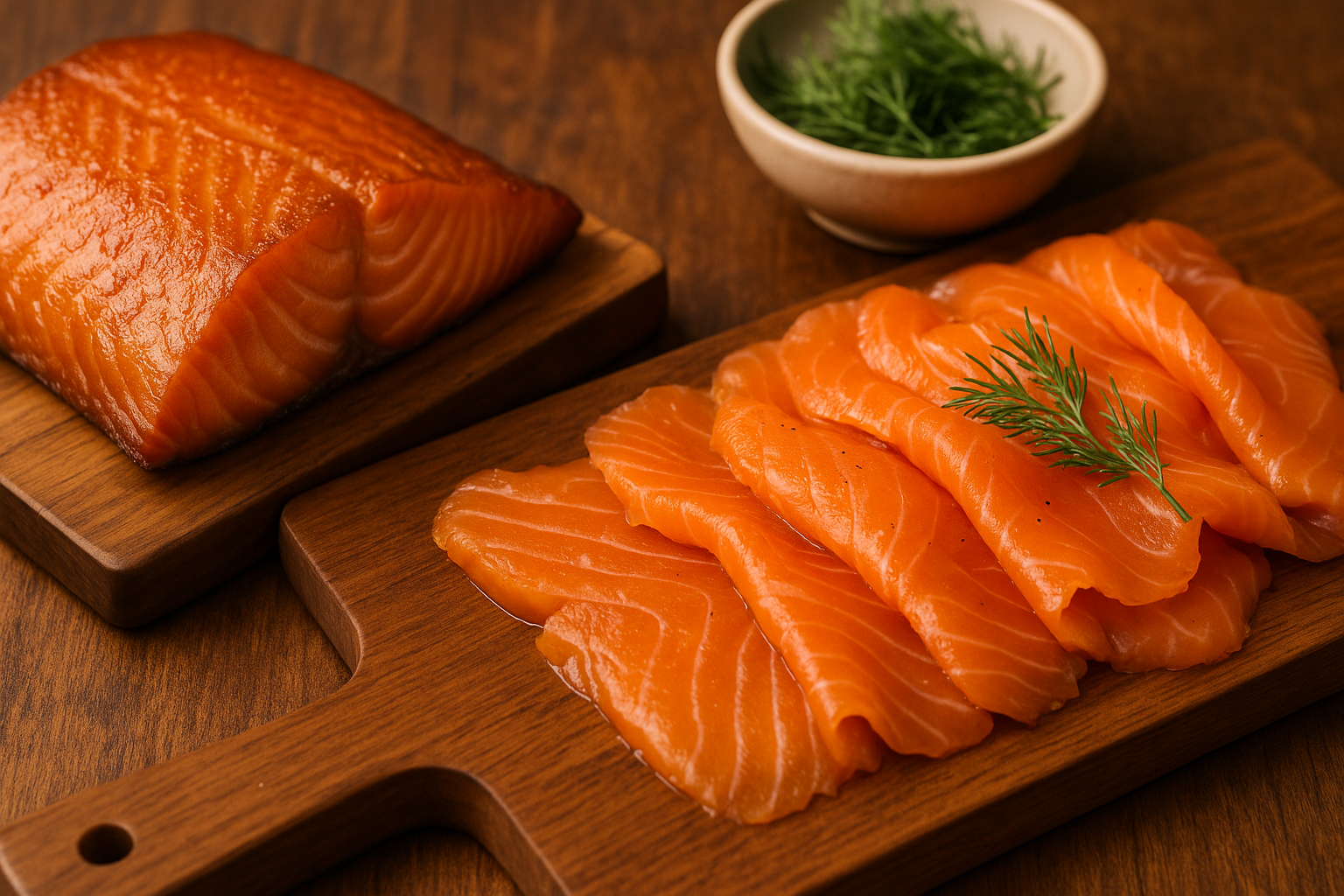
The texture stays silky and translucent like sashimi, but you get that unmistakable smoky flavor. Cold-smoked salmon is what most people call “lox” these days, even though that’s technically incorrect. It slices paper-thin and works beautifully on bagels or crackers.
Hot smoking cooks the salmon all the way through at temperatures between 120°F and 180°F. Most pitmasters aim for around 150°F to 160°F for that perfect flaky texture. Hot smoking only takes 2 to 4 hours depending on fillet thickness, making it much faster than cold smoking.
Hot-smoked salmon develops a completely different character. The flesh turns opaque and flaky, similar to baked salmon but with deep smoke flavor. You can flake it into salads, pasta, or eat it straight with your fingers. I prefer hot-smoked salmon for everyday eating because the cooked texture feels more substantial.
Best Woods for Smoking Salmon
Salmon takes smoke differently than beef or pork. The delicate fish fat absorbs smoke flavor quickly, which means you need milder woods. Alder is the traditional Pacific Northwest choice and delivers a light, slightly sweet smoke that doesn’t overpower the fish.
Apple and cherry woods also work beautifully with salmon. They add subtle fruity notes that complement the natural richness. Avoid heavy woods like hickory or mesquite unless you want your salmon tasting like a smokehouse explosion. Those stronger woods work better for beef.
Maple gives you a mild, sweet smoke that splits the difference between alder and fruitwoods. I keep all four woods on hand and sometimes blend apple with alder for a more complex smoke profile.
Flavor Profiles: What to Expect from Each Method
Gravlax tastes bright and herbal with pronounced dill flavor and a balanced salt-sweet combination. The texture stays buttery and dense, almost like a very high-quality sashimi. You taste the salmon itself more clearly than with smoked varieties because smoke doesn’t mask any of the natural flavor.
Cold-smoked salmon brings woody, sometimes slightly bacon-like smoke notes while maintaining that raw, silky texture. The smoke flavor varies wildly depending on wood choice and smoking time. Quality cold-smoked salmon should taste smoky but not bitter, with the salmon flavor still coming through clearly.
Hot-smoked salmon delivers the most intense smoke flavor of any preparation. The cooked texture changes how you experience the smoke, making it taste more integrated rather than a coating on raw fish. Good hot-smoked salmon tastes moist and flaky with smoke penetrating throughout, not just on the surface.
For pure salmon flavor, gravlax wins every time. For smoke lovers who want cooked fish, hot smoking takes the crown. Cold smoking sits in the middle, giving you smoke flavor with raw fish texture.
Texture Differences and How They Affect Use
Texture determines how you should serve each salmon style. Gravlax and cold-smoked salmon both slice thin because of their firm, raw texture. They drape beautifully on bread or crackers and literally melt on your tongue.
Hot-smoked salmon flakes apart instead of slicing cleanly. You can’t get those pretty translucent sheets like you do with cold preparations. This makes hot-smoked salmon perfect for mixing into dishes but less ideal for elegant presentations.
The raw texture of gravlax and cold-smoked salmon feels more luxurious to most people. That silky mouthfeel reads as premium and special occasion. Hot-smoked salmon feels more casual and everyday, even though the flavor can be just as complex.
Shelf Life and Food Safety Considerations
Gravlax keeps for 5 to 7 days refrigerated after curing. The salt content inhibits bacterial growth but doesn’t eliminate it completely. Always use sushi-grade salmon for gravlax and keep it consistently cold.
Cold-smoked salmon lasts about 2 weeks refrigerated because the combination of salt and smoke provides better preservation than curing alone. However, cold smoking doesn’t kill parasites or bacteria since the temperature never reaches cooking levels. Commercial producers freeze the salmon first to kill parasites, which you should do at home too.
Hot-smoked salmon wins the shelf life battle, lasting 2 to 3 weeks refrigerated because it’s fully cooked. The high temperature kills bacteria and parasites, making it the safest option for home preparation. You can also freeze hot-smoked salmon for up to 3 months without significant quality loss.
All three types freeze reasonably well, but texture suffers most with gravlax. The freezing process ruptures some of those delicate muscle fibers that give it that signature silkiness. Hot-smoked salmon handles freezing best since the cooked texture is already less delicate.
Equipment Requirements for Each Method
Gravlax needs almost nothing beyond what’s already in your kitchen. A glass or plastic container, plastic wrap, and something to weight down the fish. That’s it. You don’t need any special curing equipment unless you want to get fancy.
Cold smoking requires more specialized gear. You need either a dedicated cold smoker or a cold smoke generator attachment for your existing smoker. The challenge is generating smoke while keeping temperatures below 90°F, which standard smokers struggle with. Check out cold smoke generators on Amazon if you want to try this method.
Hot smoking works with any smoker you already own. Whether you’ve got a pellet smoker, electric smoker, or charcoal setup, you can hot smoke salmon successfully. Temperature control matters more than equipment type. A reliable probe thermometer helps you maintain that sweet spot between 150°F and 160°F.
Best Culinary Applications for Each Style
Gravlax belongs on bread, crackers, or blinis with simple accompaniments. Serve it with mustard-dill sauce, capers, thinly sliced red onion, and cream cheese. The clean flavor works best when you don’t bury it under heavy sauces or strong cheeses.
Cold-smoked salmon shines in the same applications as gravlax but handles slightly bolder flavors. The smoke stands up to everything bagels, horseradish cream, or sharp cheddar. This is your brunch showstopper for bagel spreads and appetizer platters.
Hot-smoked salmon goes in directions the raw-textured preparations can’t. Flake it into scrambled eggs, toss it with pasta and cream sauce, or fold it into dips and spreads. The cooked texture means you can heat it without ruining the consistency. I love hot-smoked salmon in fish chowder or mixed with roasted vegetables.
You can also eat hot-smoked salmon straight from the package as a protein-rich snack. Try that with gravlax or cold-smoked salmon and you’ll want bread or crackers immediately. The flaky texture and full cooking makes hot-smoked salmon more versatile overall.
Cost Comparison and Value Considerations
Making gravlax at home costs less than buying any prepared salmon product. A decent salmon fillet plus basic pantry ingredients gives you premium results for a fraction of deli prices. The time investment is minimal since you’re mostly just waiting.
Cold smoking requires equipment investment upfront, which changes the value equation. Once you have the gear, the actual salmon and wood costs stay reasonable. Commercial cold-smoked salmon commands premium prices at retail because the process takes time and expertise.
Hot smoking delivers the best balance of cost, time, and equipment accessibility. Most BBQ enthusiasts already own a smoker, and the faster process means you can prepare salmon more frequently. You’ll find smoking woods and chips readily available at any hardware store or online.
For budget-conscious home cooks, I’d recommend starting with gravlax to learn curing basics, then moving to hot smoking once you catch the bug. Cold smoking makes sense only if you’re already deep into charcuterie and preservation projects.
Regional Variations and Traditional Preparations
Scandinavian countries claim gravlax as their heritage preparation. Swedish, Norwegian, and Finnish versions differ slightly in sugar ratios and aromatics, but the core technique stays consistent. Some traditional recipes bury the salmon in sand or earth during curing, though modern home cooks skip that step for obvious reasons.
Scottish and Irish cold-smoked salmon often uses peat in addition to wood, creating a distinctive earthy undertone. This style pairs beautifully with Irish whiskey or peaty Scotch. The traditional Scottish cure tends toward less sugar than Nordic preparations.
Pacific Northwest hot smoking developed around Native American techniques using alder and cedar. The original methods involved slow smoking over low fires for preservation during salmon runs. Modern versions cook faster but maintain that characteristic alder smoke flavor. Different Alaskan salmon species each bring unique fat content and flavor to the smoking process.
Eastern European preparations lean heavily salted with minimal sugar, creating intensely flavored salmon that you serve in tiny portions. These styles work best with vodka and dark bread rather than American-style bagel presentations.
Common Mistakes and How to Avoid Them
Over-curing ranks as the number one gravlax mistake. Leave the salmon in cure too long and you’ll end up with fish jerky that’s unpleasantly salty. Stick to the recommended times based on fillet thickness. A 1-inch fillet needs 48 hours maximum.
Using too much smoke ruins both hot and cold preparations. Salmon absorbs smoke flavor aggressively, especially the fatty belly sections. Start with less smoke than you think you need. You can always smoke longer next time, but you can’t remove smoke from over-smoked fish.
Temperature fluctuations during cold smoking create food safety risks. Keep that salmon consistently below 90°F throughout the entire smoking process. Above that temperature, you enter the danger zone where bacteria multiply rapidly on raw fish.
Not drying the surface before smoking prevents proper smoke adhesion. After curing, let the salmon air-dry in the refrigerator for 2 to 4 hours until a tacky pellicle forms on the surface. This sticky layer helps smoke particles stick to the fish instead of just rolling off.
Nutritional Differences Between Methods
All salmon preparations deliver excellent omega-3 fatty acids, high-quality protein, and B vitamins. The preparation method doesn’t significantly change the nutritional profile since you’re working with the same raw ingredient.
Sodium content varies dramatically between methods. Gravlax contains the most salt because the cure is mostly sodium. Rinse it thoroughly after curing to remove surface salt, but the flesh will still absorb significant sodium. Cold-smoked salmon comes in second for sodium content, while hot-smoked salmon typically contains less because the briefer cure time means less salt absorption.
Hot smoking creates slightly more advanced glycation end products (AGEs) due to the cooking process, but the levels remain far lower than grilled or seared salmon. The lower temperature and smoke exposure actually keeps AGE formation minimal compared to high-heat cooking methods.
Gravlax and cold-smoked salmon preserve more of the delicate omega-3 fatty acids since they never get heated. High temperatures can oxidize some of these beneficial fats, though hot smoking temperatures stay low enough to minimize this effect.
Which Method Should You Choose?
Pick gravlax if you want the purest salmon flavor with minimal equipment investment. It’s perfect for special occasion brunches, gives you complete control over salt and sugar levels, and costs almost nothing to make. The 48-hour wait time is the only real downside.
Cold smoking makes sense if you’re already into charcuterie, have or want to invest in cold smoking equipment, and love that combination of raw texture with smoke flavor. This is your move for impressive bagel spreads and holiday entertaining.
Choose hot smoking for the most versatile, safest, and most practical option for regular home cooking. You get bold smoke flavor, fully cooked fish that keeps longer, and applications beyond just serving on bread. The equipment accessibility and shorter time investment make this the winner for most home cooks.
Personally, I keep a hot smoker running and make gravlax occasionally for variety. Cold smoking requires too much fuss for what you get, especially since quality cold-smoked salmon is widely available at decent quality. Hot smoking gives you restaurant results with backyard equipment, which fits perfectly with the DIY spirit of serious home cooks.
Frequently Asked Questions
Can you eat cold-smoked salmon without cooking it further?
Yes, cold-smoked salmon is ready to eat straight from the package. The combination of curing and smoking preserves the fish safely, though it remains technically raw. Always buy from reputable sources that freeze the salmon first to kill any parasites. Commercial producers follow strict safety protocols that make cold-smoked salmon safe for direct consumption.
How long does homemade gravlax stay safe in the refrigerator?
Homemade gravlax keeps for 5 to 7 days when stored properly in an airtight container. The high salt content inhibits bacterial growth, but you’re still working with raw fish. Use sushi-grade salmon from trusted suppliers, keep it consistently cold, and trust your nose. If it smells off or develops a slimy texture, throw it out immediately regardless of the timeline.
Which smoking method produces less fishy-tasting salmon?
Hot smoking produces the mildest fishy taste because the cooking process changes the protein structure and fat distribution. The higher temperature also allows more of the fishy-tasting compounds to volatilize and escape. Cold smoking and gravlax both preserve more of the raw fish character, which some people perceive as fishier. Using very fresh, high-quality salmon matters more than the preparation method for avoiding fishy flavors.
Can you hot smoke salmon that’s already been cured for gravlax?
You can, but the results won’t be ideal. Gravlax cure contains much more sugar than standard smoking cure, which can cause excessive browning and potentially burnt surface during hot smoking. If you want to hot smoke salmon, use a lighter cure specifically designed for smoking with a 2:1 salt to sugar ratio instead of the 1:1 ratio common in gravlax recipes. Cure for 8 to 12 hours rather than the full 48 hours.
This article contains affiliate links. If you purchase through these links, we may earn a small commission at no extra cost to you.


