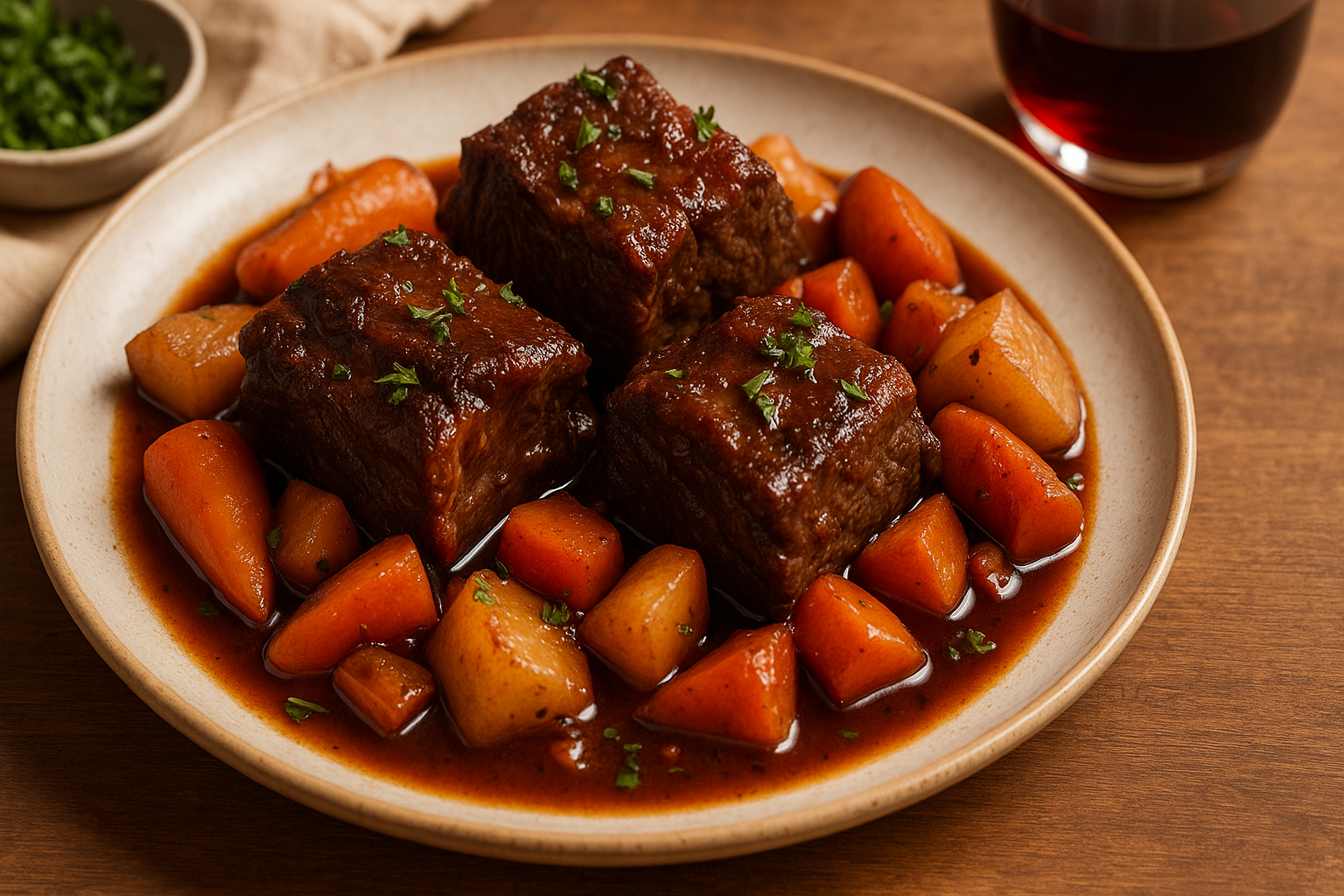
Braised Short Ribs with Red Wine and Root Vegetables Recipe
Master restaurant-quality braised short ribs with red wine and root vegetables. Step-by-step guide for tender, fall-off-the-bone results every time.
“`html
Braised short ribs transform tough, collagen-rich meat into fork-tender perfection through low and slow cooking in red wine and aromatic vegetables. This recipe delivers restaurant-quality results at home with minimal hands-on time and maximum flavor payoff.
Disclosure: As an Amazon Associate, this site earns from qualifying purchases. Thank you!
Why Red Wine Makes Short Ribs Extraordinary
Red wine isn’t just for drinking alongside your meal. It’s a critical component that breaks down the tough connective tissue in short ribs while building complex, savory depth that you can’t replicate with stock alone.
The acidity in wine helps tenderize the meat during the long braise. Meanwhile, the tannins and fruit notes meld with the beef’s natural richness to create that signature restaurant-style sauce. You’ll want a decent dry red with good body, like Cabernet Sauvignon, Merlot, or Côtes du Rhône.
Don’t waste an expensive bottle here, but don’t use something you wouldn’t drink either. If it tastes like vinegar in the glass, it’ll taste like vinegar in your braising liquid. Stick to something in the middle range that you’d actually enjoy with dinner.
Selecting the Right Short Ribs
You have two main options: English-cut and flanken-cut short ribs. For braising, you want English-cut every single time. These are thick, rectangular pieces cut parallel to the bone, usually 2 to 3 inches long. Each piece has one bone running through it with plenty of meat surrounding it.
Flanken-cut ribs are sliced across the bones and work better for grilling or Korean BBQ applications. They’re too thin for a proper braise and won’t give you that falling-off-the-bone texture you’re after.
Look for ribs with good marbling throughout and a thick cap of meat. Bone-in is non-negotiable. The bone adds flavor and helps the meat stay moist during cooking. You’ll need about 10 to 12 ounces per person, which typically means 2 to 3 ribs depending on size.
Check current prices at your local butcher or on Amazon Fresh for quality beef short ribs. Butcher shops often have better selection and can cut them to your preferred thickness.
Essential Ingredients and Equipment
Here’s what you need for 4 servings:
- 4 pounds bone-in English-cut beef short ribs
- 2 tablespoons neutral oil (vegetable or canola)
- 1 large yellow onion, roughly chopped
- 3 medium carrots, peeled and cut into 2-inch pieces
- 2 parsnips, peeled and cut into 2-inch pieces
- 1 medium celery root, peeled and cut into chunks
- 6 garlic cloves, smashed
- 3 tablespoons tomato paste
- 2 cups dry red wine
- 3 cups beef stock
- 4 sprigs fresh thyme
- 2 bay leaves
- Kosher salt and black pepper
For equipment, a heavy Dutch oven is your best friend. Cast iron works perfectly because it distributes heat evenly and can go from stovetop to oven without issue. You need something with a tight-fitting lid that holds at least 6 quarts.
If you don’t have a Dutch oven, a 7-quart enameled cast iron Dutch oven is worth the investment for braising projects. It’ll last decades and perform better than cheaper alternatives.
The Searing Step You Can’t Skip
Pull your short ribs out of the fridge 30 minutes before cooking. Cold meat won’t sear properly and you’ll just steam it instead of building that crucial caramelized crust.
Pat the ribs completely dry with paper towels. Any moisture on the surface will prevent browning. Season them aggressively with kosher salt and fresh black pepper on all sides.
Heat your Dutch oven over medium-high until it’s genuinely hot, about 3 to 4 minutes. Add the oil and wait until it shimmers. Working in batches to avoid crowding, sear the short ribs until deep brown on all sides, about 3 to 4 minutes per side.
Don’t rush this step. You’re building the foundation of flavor for the entire dish. That dark brown crust isn’t just for looks. It’s where the Maillard reaction creates hundreds of flavor compounds that’ll carry through the final sauce.
Transfer the seared ribs to a plate and resist the urge to wipe out the pot. All those browned bits stuck to the bottom are pure gold.
Building the Braising Base
Reduce the heat to medium and add your chopped onions to the pot. They’ll start releasing moisture immediately and help deglaze some of those fond bits. Cook for 5 minutes until softened and starting to color.
Add the carrots, parsnips, and celery root. These root vegetables can handle long cooking times without turning to mush, and they’ll sweeten naturally as they braise. Stir everything together and cook for another 3 to 4 minutes.
Push the vegetables to the sides and add the tomato paste to the center of the pot. Let it cook undisturbed for about 2 minutes until it darkens a shade. This caramelizes the sugars in the paste and removes any raw, tinny flavor. Stir it into the vegetables along with the smashed garlic.
Pour in the red wine and increase the heat to high. Use a wooden spoon to scrape up all the browned bits from the bottom of the pot. This deglazing step is critical for flavor development. Let the wine bubble rapidly for 4 to 5 minutes to cook off the harsh alcohol and concentrate the flavors.
The Low and Slow Braise
Add the beef stock, thyme sprigs, and bay leaves. Nestle the seared short ribs back into the pot, bone-side up if possible. The liquid should come about three-quarters of the way up the ribs, not covering them completely.
Bring everything to a gentle simmer, then cover the pot with the lid and transfer it to a 300°F oven. This temperature is perfect for breaking down collagen without drying out the meat.
Braise for 3 hours, checking once at the halfway point to make sure the liquid is barely bubbling. If it’s boiling hard, reduce the oven to 275°F. After 3 hours, the meat should be completely tender and pulling away from the bones.
You can go longer if needed. Some ribs take up to 3.5 hours depending on their thickness. The meat is done when a fork slides in with almost no resistance. For more guidance on achieving perfect tenderness, check out our guide to cooking methods for short ribs.
Ina Garten’s approach to red wine-braised short ribs demonstrates the classic technique beautifully.
Finishing the Sauce
Carefully transfer the ribs to a serving platter and tent with foil. They’ll be incredibly tender and might fall apart, which is actually a good sign. Just handle them gently with tongs or a large spoon.
Strain the braising liquid through a fine-mesh sieve into a fat separator or large measuring cup. Press on the vegetables to extract all their flavor, then discard them. They’ve given everything they have to the sauce.
Let the liquid sit for 5 minutes so the fat rises to the top. Skim it off or pour the defatted liquid back into the pot, leaving the fat behind. You want some fat for richness, but not the greasy layer that collects on top.
Bring the sauce to a boil over high heat and reduce it by about half, 10 to 15 minutes. It should coat the back of a spoon and have a glossy, rich appearance. Taste and adjust the seasoning with salt and pepper.
If your sauce seems thin, you have two options. Keep reducing it longer, or make a quick slurry with 1 tablespoon cornstarch mixed with 2 tablespoons cold water. Whisk the slurry into the simmering sauce and it’ll thicken in about a minute.
Make-Ahead Strategy
This dish actually improves when made a day ahead. The flavors meld overnight and the fat solidifies on top for easy removal. Cook the ribs completely, let everything cool to room temperature, then refrigerate in the braising liquid.
The next day, scrape off the solid fat layer and discard it. Reheat the ribs in their liquid in a 300°F oven for about 45 minutes until heated through. This gentle reheating keeps the meat tender.
You can also freeze braised short ribs for up to 3 months. Pack them in their sauce in an airtight container, leaving some headspace for expansion. Thaw overnight in the fridge before reheating.
Serving Suggestions
Short ribs need something to soak up all that incredible sauce. Creamy mashed potatoes are the classic choice and for good reason. The starch cuts through the richness perfectly.
Polenta is another excellent option. Whether you serve it soft and creamy or let it firm up and pan-fry slices, it pairs beautifully with the wine sauce. Egg noodles work well too, especially the wide kind that can hold onto the sauce.
Keep the vegetable sides simple since you’ve already got root vegetables in the braise. A bitter green salad with a sharp vinaigrette provides contrast, or roasted Brussels sprouts add a nice textural change.
Garnish with fresh chopped parsley or thyme right before serving. That hit of fresh herb brightness balances the deep, rich flavors of the braise.
Common Problems and Solutions
Tough, chewy meat after 3 hours means you need more time. Don’t panic. Just put the pot back in the oven and check every 30 minutes until the meat is tender. Some cuts have more connective tissue and need the extra cooking.
Burnt bits on the bottom during searing usually happen because the heat is too high or the pot wasn’t quite hot enough before adding the meat. Aim for a steady medium-high heat and make sure the oil is shimmering before the ribs go in.
Greasy sauce is easily fixed. Just refrigerate the whole pot overnight and the fat will solidify for removal. Or use a fat separator immediately after straining. A little fat is good, but too much makes the dish heavy.
Bland sauce typically means underseasoning or not reducing enough. The braising liquid needs significant reduction to concentrate flavors. Don’t be shy with salt and pepper at the end either. Taste and adjust.
Wine Pairing Recommendations
Serve the same style of wine you cooked with, just a better bottle. If you braised with Cabernet Sauvignon, pour a nice Cab with the meal. The flavors will mirror each other perfectly.
Alternatively, try a Syrah or Côtes du Rhône. These wines have the body and structure to stand up to rich braised meat without overwhelming the dish. Look for something with good fruit and moderate tannins.
A bold Malbec works surprisingly well too. The dark fruit notes complement the caramelized vegetables and the wine’s natural acidity cuts through the richness.
Scaling the Recipe
This recipe doubles easily if you’re feeding a crowd. Just make sure your Dutch oven is large enough to hold everything. You might need to sear the ribs in more batches, but the cooking time stays the same.
For smaller portions, cut the recipe in half but use a 4 to 5 quart pot. The braising time might decrease slightly to 2.5 hours, depending on the thickness of your ribs. Check for tenderness at the 2 hour mark.
Don’t try to cram too many ribs into the pot. They need some breathing room for the heat to circulate properly. Better to make two pots than overcrowd one.
Cost Considerations
Short ribs can be pricey, but you’re getting a restaurant-quality dish at home. Compare what you’d pay for this at a steakhouse and the value becomes clear. Watch for sales during winter months when braising cuts are more popular.
You can make this more budget-friendly by using beef shanks instead of short ribs, though the presentation won’t be quite as impressive. The technique remains identical.
Buying larger quantities and freezing portions helps spread the cost. Cook a double batch, enjoy half fresh, and freeze the rest for an easy impressive dinner down the road.
Alternative Braising Liquids
While red wine is traditional and delicious, you have other options. A dark beer like porter or stout creates a different but equally rich sauce with malty sweetness.
For an Asian-inspired version, use soy sauce, rice wine, star anise, and ginger. This transforms the whole character of the dish while keeping the same braising technique.
Balsamic vinegar mixed with beef stock makes an interesting variation too. The vinegar’s sweetness and acidity work similarly to wine. Use about 1 cup balsamic to 4 cups stock.
Professional Chef Tips
Serious Eats’ Food Lab research shows that searing temperature matters more than most people think. You need genuine high heat to trigger the Maillard reaction properly. A barely-hot pan just steams the meat and draws out moisture.
The USDA confirms that braising temperatures between 275°F and 325°F are ideal for breaking down collagen into gelatin. This transformation is what makes tough cuts tender and gives the sauce body.
Season the ribs at least 30 minutes before cooking, preferably overnight. This gives the salt time to penetrate the meat through osmosis, seasoning it throughout rather than just on the surface.
Always bring braised dishes back up to temperature slowly. Blasting them with high heat can tighten the meat fibers and undo all your careful work. Low and gentle wins every time.
Tools That Make a Difference
A reliable instant-read thermometer helps you monitor oven temperature and liquid temperature. Ovens can run hot or cold, and knowing the actual temperature prevents overcooking or undercooking.
Quality tongs with a good grip are essential for handling the ribs without tearing the meat. Look for tongs with scalloped edges that grab securely.
A fine-mesh strainer makes a huge difference in sauce texture. It removes all the vegetable solids and gives you a silky-smooth result.
Consider a fat separator pitcher for easy sauce defatting. These clever tools pour from the bottom, leaving the fat layer behind. They’re inexpensive and work better than skimming with a spoon.
Similar Braising Techniques
Once you master this recipe, you can apply the same technique to other tough cuts. Beef cheeks braise beautifully with incredible results, though they’re harder to find.
Lamb shanks follow an identical method with slightly different aromatics. Try rosemary and white beans for a Mediterranean take.
Pork shoulder benefits from this treatment too. The long braise turns it into pull-apart tender meat perfect for sandwiches or tacos.
Storage and Food Safety
Cool braised short ribs quickly by spreading them in a shallow container rather than leaving them in a deep pot. This gets them through the danger zone temperature range faster and reduces bacterial growth risk.
Refrigerate within 2 hours of cooking. They’ll keep for 4 days in an airtight container with their sauce. The sauce acts as a protective barrier and keeps the meat moist.
Reheat to 165°F internal temperature, measured with an instant-read thermometer. This ensures food safety while bringing the dish back to serving temperature.
Frequently Asked Questions
Can I make braised short ribs in a slow cooker instead of the oven?
Yes, but you’ll sacrifice some quality. Sear the ribs on the stovetop first, then transfer everything to your slow cooker. Cook on low for 7 to 8 hours. The downside is less evaporation and flavor concentration compared to oven braising. You’ll need to reduce the sauce on the stovetop afterward. Check out our guide on slow cooker braised beef for more details.
Why are my short ribs falling apart too much?
You’ve overcooked them. While tender is good, there’s a point where the meat becomes stringy and loses its texture. This usually happens after 4 hours at 300°F. Start checking at 2.5 hours and pull them when they’re tender but still holding together. Different cuts have different collagen content, which affects cooking time.
Can I substitute beef stock with chicken or vegetable stock?
You can, but beef stock adds depth that lighter stocks can’t match. If you must substitute, use chicken stock mixed with a tablespoon of soy sauce to add umami. Vegetable stock works but produces a much lighter sauce. Better to use water than vegetable stock honestly. The meat and wine provide enough flavor.
What’s the best way to remove excess fat from the sauce?
Refrigerate the whole pot overnight and the fat will solidify into a layer you can lift off and discard. For same-day serving, pour the sauce into a fat separator and let it sit for 5 minutes. The fat rises to the top and the separator pours from the bottom, leaving fat behind. You can also skim with a ladle, tilting the pot to pool the fat on one side.
Final Thoughts
Braised short ribs with red wine deliver impressive results with surprisingly little active cooking time. The key is patience during the braise and not skipping the searing step. Make this dish a day ahead for even better flavor and easier fat removal.
The technique translates to countless other cuts and flavor profiles once you understand the basics. Master this recipe and you’ve mastered braising, which opens up an entire category of budget-friendly tough cuts that become restaurant-worthy meals.
Start with quality meat, season aggressively, sear properly, and let time do the rest. You’ll have a dish that tastes like you spent all day in the kitchen when you really didn’t.
This article contains affiliate links. If you purchase through these links, we may earn a small commission at no extra cost to you.