What Is Andouille Sausage? Cajun Origins, Flavor, and Cooking Uses
Discover authentic andouille sausage’s history, smoky flavor, and how it differs from regular smoked sausage. Learn cooking tips for gumbo and jambalaya.
“`html
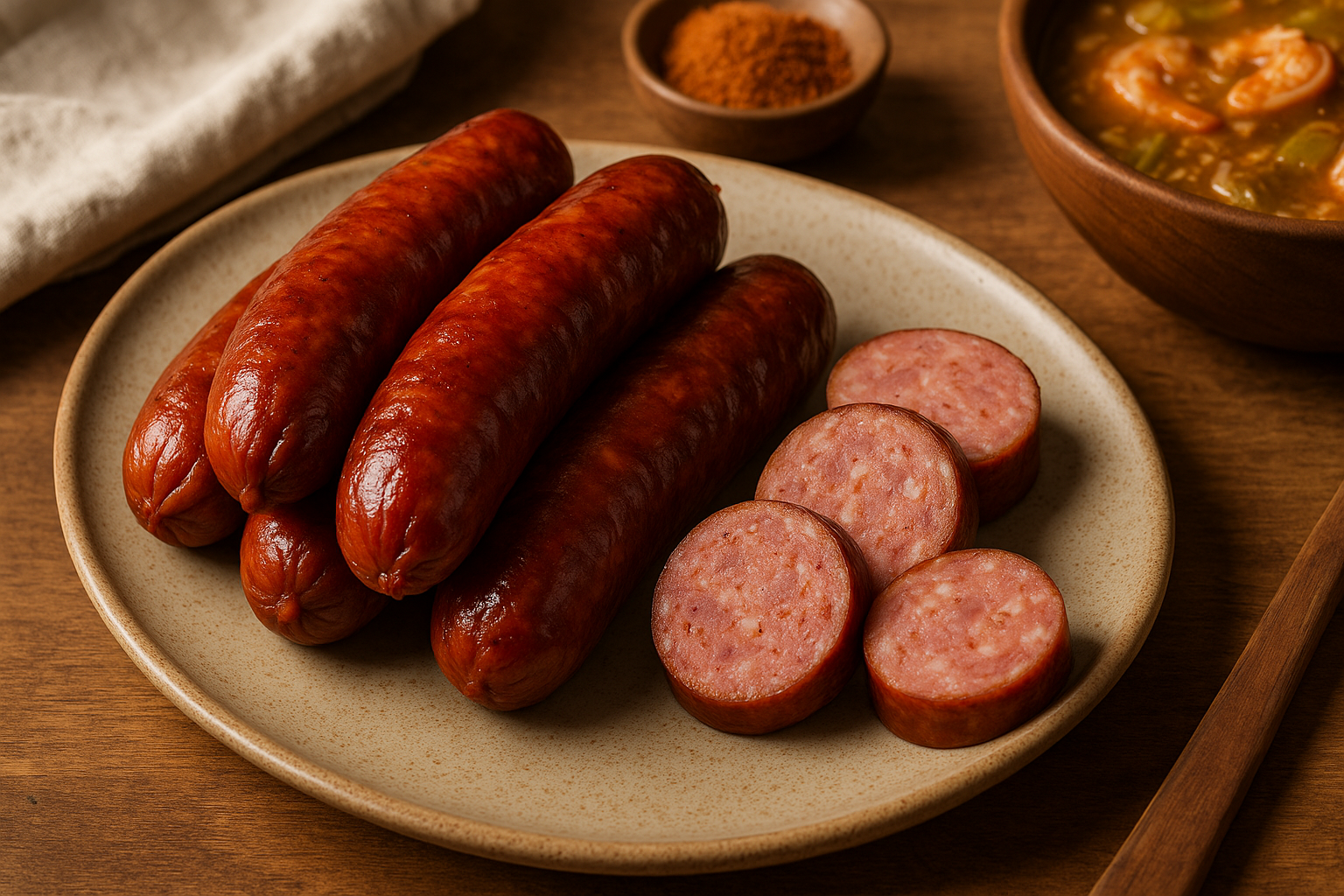
Andouille sausage is a coarse-grained, heavily smoked pork sausage with a spicy kick that defines Louisiana Cajun cooking. Unlike mild smoked sausages you’ll find at most grocery stores, authentic andouille gets its flavor from a double smoking process and a generous dose of garlic and cayenne pepper.
This distinctive sausage originated in France but became something entirely different once Cajun cooks in Louisiana got their hands on it. The French version is mild and meant for slicing cold. The Cajun version is bold, smoky, and built to stand up to long simmering in dishes like gumbo and jambalaya.
Disclosure: As an Amazon Associate, this site earns from qualifying purchases. Thank you!
The History Behind Cajun Andouille
French settlers brought andouille to Louisiana in the 18th century, but the modern version you know today was perfected by German immigrants in LaPlace, Louisiana. They applied their sausage-making expertise to local ingredients and Cajun flavor preferences, creating something distinctly American.
The traditional smoking process involves hanging the sausages in smokehouses over pecan wood or sugar cane for hours. Some makers smoke the meat before grinding and stuffing, then smoke the finished sausages again. This double smoking creates the deep mahogany color and intense smoky flavor that makes andouille irreplaceable in Cajun dishes.
LaPlace still calls itself the “Andouille Capital of the World” and hosts an annual festival celebrating this sausage. While you can find andouille nationwide these days, Louisiana versions remain the gold standard for authenticity and flavor.
What Makes Andouille Different From Other Smoked Sausages
The biggest difference between andouille and regular smoked sausage comes down to texture and intensity. Andouille has a coarse grind that gives it a chunky, almost rustic texture. Regular smoked sausage typically has a finer grind that creates a smoother bite.
Andouille also packs significantly more heat. Most versions include cayenne pepper, black pepper, and crushed red pepper flakes, giving it a spicy warmth that builds as you eat. Standard smoked sausage tends toward mild and slightly sweet, making it more of a breakfast item than a cooking ingredient.
The smoking process differs too. Regular smoked sausage might spend a few hours in a smokehouse at most. Authentic andouille undergoes that double smoking technique that can take a full day or longer, resulting in a much more pronounced smoke flavor.
You’ll also notice andouille holds its shape and texture better during cooking. Because it’s meant to simmer in stews and rice dishes for extended periods, it’s made to withstand heat without falling apart or turning mushy. Regular smoked sausage can disintegrate if you cook it too long in liquid.
The Distinctive Flavor Profile of Authentic Andouille
Authentic andouille hits you with smoke first, followed by garlic, then a slow-building heat from the peppers. The pork flavor itself is secondary to these bold seasonings, which is intentional since the sausage needs to contribute flavor to an entire pot of gumbo or jambalaya.
Good andouille should have a firm snap when you bite into it, releasing juices flavored with those aromatics. The garlic presence is unmistakable but not overwhelming. You should taste individual pepper notes rather than just generic spiciness.
The quality of the smoke matters enormously. Authentic versions smoked over pecan or fruitwood have a sweet, clean smoke flavor. Mass-produced versions sometimes rely on liquid smoke, which creates a harsher, more chemical taste that doesn’t compare.
Pay attention to the fat content too. Proper andouille contains enough fat to keep it juicy during cooking but not so much that it makes your gumbo greasy. The fat should be evenly distributed throughout the sausage rather than pooling in pockets.
How to Cook With Andouille Sausage
Andouille is technically fully cooked since it’s smoked, but you’ll rarely eat it straight from the package. The sausage reaches its potential when you use it as a cooking ingredient that flavors an entire dish.
For gumbo, slice the andouille into rounds about a quarter-inch thick and add them during the last 30 minutes of cooking. This timing lets the sausage warm through and release its flavors into the broth without overcooking. You can also brown the slices in your pot before building the gumbo to add even more depth.
In jambalaya, cut the sausage into larger half-inch pieces and brown them first. Remove the pieces while you cook your vegetables and rice, then add them back in the final stages. This technique builds layers of flavor and prevents the sausage from getting tough.
You can also grill andouille whole over medium heat until the casing gets crispy and charred. Serve it on a bun with mustard and sauerkraut, or slice it and toss it into pasta dishes. The sausage pairs particularly well with beans, whether you’re making red beans and rice or a hearty white bean soup.
For breakfast, dice andouille and cook it with eggs, peppers, and onions for a spicy hash. The bold flavors wake up your palate better than mild breakfast sausage ever could. Just remember that andouille brings heat, so you might want to dial back other spicy ingredients in your recipes.
Here’s a technique that works beautifully: simmer andouille slices in beer or chicken stock for about 15 minutes before serving. This gentle cooking method keeps the sausage tender while the liquid picks up its flavors, creating a simple but delicious sauce.
This video walks through the traditional process of making Cajun andouille from scratch, showing you exactly what gives this sausage its distinctive character.
Buying Authentic Andouille Sausage
Your best option for authentic andouille is ordering directly from Louisiana producers who still use traditional methods. Jacob’s, Comeaux’s, and Savoie’s all ship nationwide and produce versions that taste like the real deal.
If you’re buying from a regular grocery store, read the ingredient list carefully. You want to see pork, garlic, pepper (multiple kinds), and salt near the top. Avoid versions with lots of fillers like corn syrup solids or mechanically separated chicken.
The sausage should have a deep reddish-brown color, almost mahogany. Light pink or pale brown sausages haven’t been properly smoked. You should also see visible spices and pepper flakes throughout the meat when you look at the cross-section.
Check if the label mentions double smoking or smoking over specific woods. These details indicate a producer who cares about traditional methods. Generic “smoked sausage” labels that happen to say “andouille style” usually disappoint.
You can check current prices on Amazon for various andouille brands, including some Louisiana producers who sell through the platform. Look for options that emphasize natural smoking and traditional Cajun recipes.
Fresh andouille from a butcher case often tastes better than vacuum-sealed versions, though the sealed packages work fine for most cooking applications. Fresh sausage will have a softer texture and more vibrant flavors, but it also needs to be used within a few days.
Making Andouille Work in Classic Dishes
Gumbo represents the ultimate test for andouille. The sausage needs to hold up through long simmering while contributing enough flavor to balance the roux, vegetables, and stock. Use about one pound of andouille for every six to eight servings of gumbo.
Add the sliced sausage after your gumbo has cooked for at least an hour. This prevents the meat from getting tough while still giving it plenty of time to flavor the broth. Some cooks like to brown their andouille separately and add the drippings to the roux for extra richness.
For jambalaya, the ratio shifts to about one pound of andouille per four servings since the sausage plays a more prominent role. Brown the pieces well before adding your rice and liquid. Those caramelized bits stuck to the bottom of your pot will add tremendous flavor once you deglaze with stock.
Red beans and rice needs andouille to be authentic. Simmer one to two pounds of sliced sausage with your beans during the last hour of cooking. The fat from the sausage enriches the bean liquid and makes it creamy without adding dairy.
You can adapt these classic techniques to other dishes too. Try adding andouille to cornbread stuffing, potato soup, or mac and cheese for a Cajun twist. The key is giving the sausage enough time to share its flavors with the other ingredients. Understanding slow cooking meat techniques helps you get the timing right.
Andouille Substitutes When You Can’t Find the Real Thing
Kielbasa comes closest in texture, though it lacks the heat and intense smoke flavor of andouille. If you’re using kielbasa as a substitute, add extra garlic, cayenne, and smoked paprika to your dish to compensate. Some cooks also add a few drops of liquid smoke, though this should be a last resort.
Spanish chorizo works better than kielbasa for spice level but has a completely different flavor profile with paprika and wine instead of garlic and smoke. Use it if you want heat but don’t mind changing the character of your dish.
Mexican chorizo doesn’t work as a substitute. It’s too soft, too greasy, and the flavor profile is all wrong for Cajun cooking. You’ll end up with something that tastes more Tex-Mex than Louisiana.
Hot Italian sausage can work in a pinch, especially if you brown it well to develop smoky notes and add extra garlic to your recipe. It won’t taste like authentic Cajun food, but it’ll produce a tasty dish that captures some of the spirit.
Honestly though, andouille ships well and keeps for weeks in the refrigerator or months in the freezer. Rather than settling for substitutes, order the real thing and keep it on hand. The difference in your finished dishes will justify the effort.
Storing and Handling Andouille Properly
Store unopened andouille in your refrigerator for up to three weeks from the purchase date. Once you open the package, use the sausage within five to seven days for best quality. The heavy smoking preserves it better than most fresh sausages, but it will eventually dry out.
Freeze andouille for up to three months without significant quality loss. Slice it before freezing if you typically use it in recipes, or freeze whole links if you prefer grilling. Wrap individual portions in plastic wrap, then place them in a freezer bag to prevent freezer burn.
Thaw frozen andouille in the refrigerator overnight rather than using the microwave, which can create tough spots. You can also add frozen slices directly to soups and stews, though you’ll need to add a few minutes to your cooking time.
Keep andouille away from delicate items in your refrigerator since its strong aroma can transfer to other foods. Store it in an airtight container or sealed bag on the bottom shelf where any potential drips won’t contaminate other ingredients.
Nutritional Considerations
Andouille is high in protein but also high in sodium and saturated fat, which is true of most smoked sausages. A typical three-ounce serving contains about 250 calories, 20 grams of fat, and 800-1000 milligrams of sodium.
The sausage provides iron, B vitamins, and zinc along with that protein. But because it’s heavily seasoned and preserved, you shouldn’t treat it as an everyday protein source. Think of andouille as a flavoring ingredient rather than the main component of your meal.
If you’re watching sodium, look for reduced-sodium versions, though these are harder to find and may sacrifice some flavor. A better approach is using less andouille and bulking up your dishes with vegetables and beans.
The spices in andouille, particularly garlic and cayenne, offer some health benefits. Garlic supports cardiovascular health, while capsaicin from peppers may boost metabolism. These benefits don’t outweigh the high sodium content, but they’re worth noting. Check out essential spices for home cooking to learn more about the health properties of common seasonings.
Regional Variations and Specialty Types
Louisiana andouille varies by region and maker. Southwest Louisiana versions tend to be spicier than those from the New Orleans area. LaPlace andouille is considered the standard bearer, with a perfect balance of smoke, garlic, and heat.
Some producers now make chicken or turkey andouille for people avoiding pork. These versions can be surprisingly good if they’re properly smoked and seasoned, though they lack the rich fat content that makes pork andouille so satisfying. The texture tends to be drier, and you may need to add extra fat to your recipes.
Boudin is sometimes confused with andouille, but they’re completely different products. Boudin is a rice-stuffed sausage with liver and vegetables, typically eaten as a snack or appetizer. Andouille is pure pork with seasonings, made for cooking.
Creole andouille exists as a less common variation that includes wine and different spice blends. It’s closer to the French original and doesn’t work as well in traditional Cajun dishes. Stick with Cajun-style andouille for authentic results.
Pairing Andouille With Other Ingredients
Andouille loves ingredients that can stand up to its bold personality. Bell peppers, onions, and celery form the holy trinity of Cajun cooking and provide the perfect foundation. These vegetables soften the heat while adding sweetness and depth.
Rice absorbs the flavors of andouille beautifully, whether you’re making jambalaya, dirty rice, or a simple pilaf. The neutral grain lets the sausage shine while providing substance. Pasta works similarly, particularly in cream-based sauces where the richness balances the spice.
Beans and andouille create magical combinations. Red beans, white beans, black-eyed peas, and lentils all benefit from the sausage’s smoky heat. The beans’ earthiness complements the pork while their creamy texture contrasts with the sausage’s snap.
Seafood pairs surprisingly well with andouille in dishes like gumbo and étouffée. Shrimp is the most common combination, but crawfish, crab, and even oysters work. The key is balancing the portions so neither the seafood nor the sausage overpowers the other.
Tomatoes in any form love andouille. The acidity cuts through the fat while the sweetness tempers the heat. Use andouille in tomato-based sauces for pasta, add it to shakshuka, or include it in vegetable stews.
Tools and Equipment for Cooking With Andouille
A sharp knife makes slicing andouille much easier and safer. The firm texture can be tough to cut with a dull blade, and you want clean cuts that help the pieces cook evenly. A heavy chef’s knife works better than a serrated knife for this task.
Cast iron cookware is ideal for browning andouille before adding it to dishes. The even heat distribution creates a good sear without burning, and the pan’s seasoning adds another layer of flavor. A Dutch oven works perfectly for making gumbo or jambalaya from start to finish.
If you’re making your own andouille, you’ll need a meat grinder with a coarse plate, sausage casings, and a smoker that can maintain steady temperatures for hours. This is a serious investment, but quality kitchen gadgets pay off if you cook regularly.
A good instant-read thermometer helps ensure your dishes reach safe temperatures, especially important when combining andouille with raw meats like chicken in jambalaya. You want everything to hit at least 165°F.
For grilling andouille, grab a grill basket if you’re working with slices. This prevents small pieces from falling through the grates while still giving you those attractive grill marks. For whole links, a simple pair of long tongs works fine.
Common Mistakes to Avoid
Don’t add andouille too early in long-cooking dishes. The sausage is already fully cooked, and extended simmering makes it tough and dry. Wait until the last 30-45 minutes of cooking time for soups and stews.
Avoid cutting the slices too thin. Quarter-inch rounds are ideal for most applications. Thinner pieces fall apart during cooking and lose their texture. Thicker pieces don’t heat through evenly and can create cold spots in your dish.
Don’t skip browning the sausage when recipes call for it. Those caramelized surfaces add complexity and depth that you can’t get from just simmering. Take the extra five minutes to brown properly, and your final dish will taste noticeably better.
Stop using too much andouille in an attempt to boost flavor. The sausage is potent, and a little goes a long way. Overloading your dish creates greasiness and makes the heat overwhelming. Follow the ratios suggested in tested recipes until you develop a feel for the right amounts.
Never microwave andouille to reheat it. The microwave turns the sausage rubbery and concentrates the saltiness unpleasantly. Reheat it gently in a pan with a little liquid, or warm it in a low oven until heated through.
Beyond Traditional Cajun Recipes
Andouille makes an excellent addition to non-Cajun dishes once you understand its flavor profile. Try it in split pea soup instead of ham for a smokier, spicier version. The sausage’s richness replaces the ham hock while adding more interest.
Pizza topped with andouille, bell peppers, and onions creates a Cajun-inspired pie that’s different from the usual pepperoni. The sausage releases flavorful oils as it bakes, seasoning the entire pizza. Just slice it thin so it crisps up properly.
Breakfast scrambles and frittatas benefit from diced andouille. Cook the sausage first to render some fat, then scramble your eggs in that fat for extra flavor. Balance the heat with cheese and vegetables.
Grilled cheese sandwiches get an upgrade with thin slices of andouille tucked inside. The heat from grilling crisps the sausage edges while melting the cheese. Add some caramelized onions and you’ve got a seriously satisfying sandwich.
Potato dishes love andouille too. Add it to hash browns, scalloped potatoes, or potato salad for a Southern twist. The starchy potatoes absorb the sausage’s flavors while tempering its intensity. These applications show how understanding ancient cooking methods influences modern flavor combinations.
Making Your Own Andouille at Home
Creating authentic andouille requires time and equipment, but the results beat most commercial versions. You’ll need pork shoulder for the meat, pork fat to achieve the right texture, and natural hog casings for stuffing.
The spice blend typically includes coarse black pepper, cayenne, crushed red pepper, garlic powder, paprika, and thyme. Some recipes add mustard seeds or bay leaf powder. The exact ratios vary by maker, but the garlic should be prominent and the heat should build gradually rather than hitting immediately.
Grind your meat and fat through a coarse plate, about 3/8-inch holes. Mix in your spices thoroughly, then stuff the mixture into casings. The sausages need to cure in the refrigerator for 12-24 hours before smoking to let the flavors develop.
Smoke the links at 175-200°F over pecan or fruitwood until they reach an internal temperature of 155°F. This typically takes 3-4 hours. Some traditionalists smoke the meat before grinding, then smoke again after stuffing, but the single-smoke method produces excellent results for home cooks.
Let the finished sausages cool completely before refrigerating. They’ll keep for two weeks in the fridge or three months in the freezer. Making andouille shares techniques with other low and slow cooking methods that develop deep flavors.
FAQ
Can you eat andouille sausage raw?
Andouille is fully cooked during the smoking process, but you shouldn’t eat it cold directly from the package. While it’s technically safe, the sausage tastes much better when heated. The fat needs to warm up to release its flavors properly. Heat it in a pan, grill it, or add it to cooked dishes for the best experience. Cold andouille has a waxy texture and muted flavors that don’t showcase what makes the sausage special.
What’s the difference between Polish sausage and andouille?
Polish sausage (kielbasa) has a finer grind, milder flavor, and less smoke than andouille. Kielbasa typically contains marjoram and garlic but lacks the cayenne and heavy seasoning that define andouille. The texture is softer and more uniform. While both are smoked pork sausages, andouille is specifically designed to flavor other dishes and stand up to long cooking, while kielbasa is meant to be the main protein. You can substitute one for the other, but expect significantly different results.
How long does andouille sausage last in the fridge?
Unopened andouille keeps for about three weeks in the refrigerator thanks to the heavy smoking and curing process. Once opened, use it within five to seven days for best quality. The sausage will dry out gradually even in an airtight container. You’ll notice the texture becoming firmer and the edges darkening as it ages. Freeze andouille if you won’t use it within that timeframe. Properly wrapped frozen andouille maintains quality for up to three months without significant flavor loss.
Can you use andouille in place of Italian sausage?
Andouille can replace Italian sausage in some recipes, but expect dramatically different results. Italian sausage has fennel and wine-based flavors that taste nothing like the smoky, garlicky heat of andouille. The substitution works better in rustic dishes like pasta with beans or vegetable stews where bold flavors are welcome. Don’t use andouille in delicate Italian dishes or anywhere the fennel flavor is important. If you’re making something like pasta puttanesca or cacciatore, stick with Italian sausage for authentic results.
Andouille sausage deserves a permanent spot in your cooking rotation once you understand how to use it properly. The investment in finding authentic Louisiana andouille pays off in every pot of gumbo, every batch of jambalaya, and every creative application you dream up. Start with the classic Cajun dishes to learn how the sausage behaves, then branch out into your own experiments. Just remember that less is often more with this bold ingredient, and proper timing during cooking makes the difference between tough, dry sausage and perfectly flavored bites. Order authentic Louisiana andouille and discover what real Cajun cooking tastes like.
This article contains affiliate links. If you purchase through these links, we may earn a small commission at no extra cost to you.