How to Make Beef Tallow: Rendering, Storing, and Cooking Applications
Learn how to render beef fat into shelf-stable tallow. Step-by-step wet and dry methods, storage tips, and cooking applications for this versatile fat.
Disclosure: As an Amazon Associate, this site earns from qualifying purchases. Thank you!
Why Make Your Own Beef Tallow
Rendering beef fat into tallow gives you one of the most versatile cooking fats you can keep in your kitchen. You’ll transform scraps that most people throw away into a shelf-stable product perfect for high-heat frying, making flaky pie crusts, or seasoning cast iron. It’s also incredibly budget-friendly since you can often get beef fat from your butcher for very little.
The process couldn’t be simpler. You’re just melting fat and filtering out the protein bits. The result is a pure, creamy white fat that can sit in your pantry for over a year when stored properly.
Sourcing the Right Beef Fat
You want either suet or beef fat trimmings. Suet is the hard white fat from around the kidneys and loins, and it makes the highest quality tallow with a mild flavor and high smoke point. Fat trimmings from other cuts work too, but they might have a slightly beefier taste.
Call ahead to your local butcher and ask them to save you some suet or fat trimmings. Most will happily set it aside since they’d otherwise discard it. Make sure they know you want clean fat without too much meat attached. Grass-fed beef fat will give you a tallow richer in nutrients like CLA and omega-3s, but conventional beef fat works perfectly fine for cooking purposes.
You can also collect and freeze fat trimmings whenever you prepare beef roasts or steaks at home. Once you’ve accumulated a few pounds, you’re ready to render. Just keep the frozen fat in an airtight container or freezer bag until you have enough.
Preparing the Fat for Rendering
Start by cutting the fat into small chunks, about 1-inch cubes or smaller. The smaller you cut it, the faster it melts and the more tallow you’ll extract. You can also grind the fat in a food processor if you want to speed up the process even more.
Remove any large pieces of meat, gristle, or bloody spots. A little bit of connective tissue won’t hurt anything, but chunks of meat will give your tallow an off flavor and reduce its shelf life. Keep everything cold while you’re cutting it, this makes the fat much easier to handle.
Some people freeze the fat partially before cutting to make it firmer and easier to cube. This works especially well if you’re dealing with softer trimmings rather than firm suet.
The Wet Rendering Method
Wet rendering produces the cleanest, whitest tallow with the mildest flavor. This method involves adding water to the fat as it melts, which helps prevent scorching and filters out impurities.
Place your cubed fat in a large pot or slow cooker and add enough water to just cover the bottom, about 1 cup of water for every 2-3 pounds of fat. Set your burner to the lowest heat setting, or use a slow cooker on low. You’re looking for a gentle simmer, never a hard boil.
The fat will slowly melt over 3-6 hours depending on how much you’re rendering. Stir occasionally to make sure nothing sticks to the bottom. As the fat melts, the water will evaporate and you’ll see the liquid fat separate from the crispy brown bits (called cracklings).
You’ll know it’s done when the cracklings float to the top and turn golden brown, and the liquid fat looks clear. The water should have completely evaporated by this point. If you still see water in the pot, keep cooking until it’s gone, but watch carefully to avoid burning.
This video shows the wet rendering process in detail:
The Dry Rendering Method
Dry rendering is faster and produces a tallow with slightly more beef flavor. You simply melt the fat without any added water. This method works best if you’re planning to use your tallow for savory cooking applications where a bit of beef taste is welcome.
Put your cubed fat in a heavy pot, Dutch oven, or slow cooker. Use low heat on the stovetop (around 225°F) or set your slow cooker to low. The fat will begin releasing liquid after about 30 minutes.
Stir every 20-30 minutes to prevent scorching and ensure even melting. The process takes 2-4 hours depending on your heat source and the amount of fat. Watch carefully toward the end because the fat can burn once most of it has rendered out.
The dry method gives you crunchier cracklings that many people prefer for snacking. Just season them with salt while they’re still hot. They taste like beef-flavored pork rinds and make an excellent zero-carb snack.
Straining and Filtering Your Tallow
Once your fat has fully melted, you need to filter out all the solid bits. Set a fine-mesh strainer over a heat-safe container and line it with several layers of cheesecloth or a coffee filter. Pour the hot liquid fat through slowly.
For ultra-clean tallow, let it cool and solidify, then repeat the melting and straining process one more time. This second strain removes any remaining particles that might cause your tallow to go rancid faster. Professional tallow makers often do three strains to get perfectly white, odorless tallow.
Glass jars work great for storage, but make sure they’re genuinely heat-safe. Mason jars are perfect. You can also use stainless steel containers. Never pour hot tallow into cold glass, it can crack. Warm your jars with hot water first, or wait until the tallow cools to around 140°F before pouring.
Fill your containers leaving about half an inch of space at the top. The tallow will shrink slightly as it cools and solidifies.
Understanding Tallow Grades and Quality
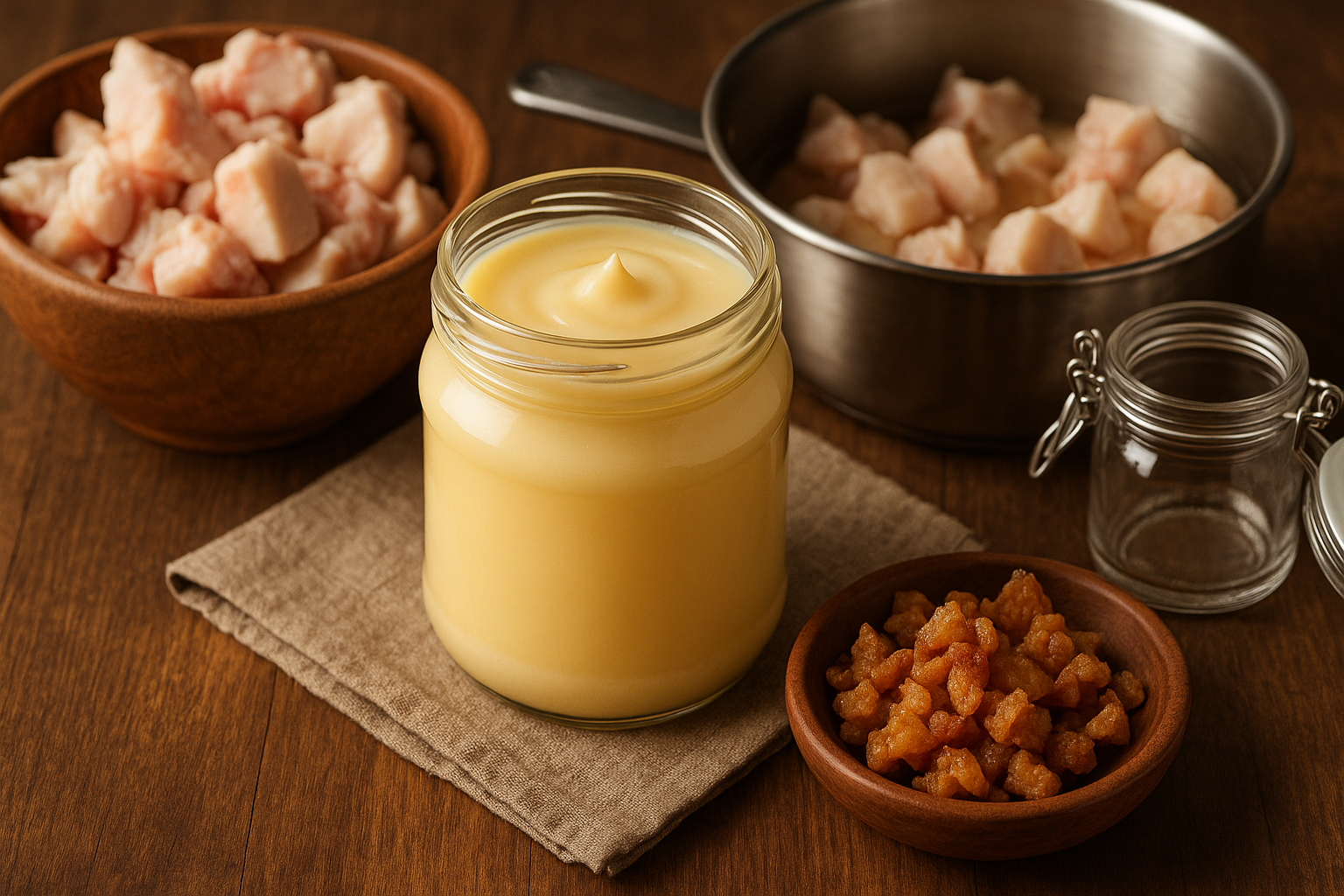
The color of your finished tallow tells you about its quality. Pure white tallow has been well-filtered and will have the mildest flavor and longest shelf life. This is what you get from suet rendered with the wet method and strained multiple times.
Cream or pale yellow tallow is still perfectly good but might have a slightly stronger flavor. This often happens with dry rendering or when using fat trimmings instead of pure suet. It works beautifully for frying and sautéing where a hint of beef flavor is desirable.
Your tallow should smell clean and slightly beefy when fresh, but not burnt or rancid. If it has a sharp or unpleasant smell, something went wrong during rendering. Either the fat wasn’t fresh to start with, or you cooked it too hot and scorched it.
Storing Beef Tallow for Maximum Shelf Life
Properly rendered and strained tallow will keep at room temperature in a sealed container for up to a year. The key is making sure all the water and protein particles are removed, since those are what spoil. Keep it in a cool, dark pantry away from direct heat or sunlight.
You can also refrigerate tallow to extend its life even further. It’ll last 18 months or more in the fridge. Frozen tallow stays good for several years. Divide it into smaller portions before freezing so you can thaw only what you need.
Always use clean, dry utensils when scooping out tallow. Any water or food particles you introduce can create spoilage. If you see mold growing on the surface or notice a rancid smell, throw it out.
Some people like to can their tallow in mason jars using a pressure canner. This creates truly shelf-stable jars that can sit in the pantry for years. Check out pressure canners on Amazon if you want to try this preservation method for large batches.
Cooking with Beef Tallow
Beef tallow has a smoke point around 400°F, making it excellent for high-heat cooking. Use it for deep frying potatoes and you’ll understand why McDonald’s fries were legendary before they switched to vegetable oil. The flavor is rich and savory, and the fries stay crispy longer.
Pan-frying steaks in tallow creates an incredible crust. Heat a cast iron skillet until it’s smoking hot, add a tablespoon of tallow, and sear your steak. The beef-on-beef flavor is intense in the best possible way. This technique also works beautifully for burgers and any other beef dishes.
For roasting vegetables, tallow beats olive oil every time. Toss root vegetables with melted tallow, salt, and pepper, then roast at 425°F until caramelized. Brussels sprouts, carrots, and potatoes become addictively crispy on the outside and creamy inside.
Traditional French cooking techniques often call for beef fat in dishes like confit and rillettes. You can also use tallow in place of butter or shortening in savory pie crusts and biscuits for an incredibly flaky texture.
Baking Applications for Tallow
Replace shortening or lard with tallow in any pastry recipe at a 1:1 ratio. Pie crusts made with tallow are flaky and tender with a subtle savory note that complements both sweet and savory fillings. It works especially well in meat pies and pot pies.
Biscuits made with cold, grated tallow are lighter than those made with butter. Cut the cold tallow into your flour mixture just like you would with any other solid fat. The key is keeping everything cold so the fat doesn’t melt until it hits the oven heat.
Some bakers swear by tallow for making traditional British suet puddings and dumplings. The texture is lighter and less greasy than versions made with other fats. You can even make traditional beef dripping toast by spreading tallow on bread and grilling it.
Using Tallow Beyond the Kitchen
Pure beef tallow has uses beyond cooking. It’s traditionally used for making candles that burn slowly and cleanly. Tallow soap is gentle on skin and produces a rich lather, making it popular with homesteaders and DIY enthusiasts.
You can use tallow as a natural leather conditioner for boots and saddles. It penetrates the leather and creates a water-resistant barrier. Apply it sparingly with a soft cloth and buff to a shine.
Tallow also works as a cast iron seasoning. Rub a thin layer on your clean, dry pan and bake it at 450°F for an hour. The fat polymerizes into a slick, non-stick coating. Learn more about caring for cast iron cookware on Amazon.
Comparing Tallow to Other Cooking Fats
Tallow beats vegetable oils for high-heat cooking because it’s more stable and doesn’t oxidize as easily. Seed oils like canola and soybean oil break down at high temperatures and form harmful compounds. Tallow maintains its structure even during prolonged frying.
Compared to butter, tallow has a higher smoke point and doesn’t burn as easily. Butter starts smoking around 350°F while tallow handles 400°F comfortably. For dishes where you want that rich, meaty flavor without the burnt milk solids, tallow is your best choice.
Lard (rendered pork fat) is tallow’s closest cousin. They behave similarly in recipes, though lard has a slightly lower smoke point and a different flavor profile. Many people prefer lard for pastries and tallow for frying, but they’re largely interchangeable.
Coconut oil is popular for high-heat cooking, but it costs significantly more and has a distinct tropical flavor that doesn’t work in savory dishes. Tallow tastes neutral to slightly beefy, making it more versatile for general cooking.
Common Mistakes When Rendering Tallow
Using too high heat is the biggest mistake beginners make. You want a gentle melt, not a hard boil. High heat scorches the fat and creates a burnt flavor you can’t remove. Keep your temperature low and be patient.
Not straining thoroughly enough leaves protein particles in your tallow that will spoil. Always use cheesecloth or a fine filter, and consider doing a second strain for tallow you plan to store long-term.
Trying to render fat with too much meat attached gives you a product that smells and tastes gamey. It also won’t keep as long. Take the time to trim away meat before you start rendering.
Storing tallow while it still contains water is a recipe for mold and spoilage. Make sure all the water has evaporated during rendering. The fat should look clear, not cloudy, and you shouldn’t hear any sizzling or popping (which indicates water boiling off).
Getting the Most Tallow from Your Fat
You’ll extract more tallow if you cut the fat into smaller pieces before rendering. The increased surface area means more fat can melt out. Grinding the fat in a food processor gives you the highest yield, though it’s messier.
Using a slow cooker on low heat for 8-10 hours extracts more fat than stovetop rendering because the prolonged gentle heat melts out every possible drop. You can set it up before bed and wake up to finished tallow.
Don’t throw away the cracklings until you’ve pressed them to extract the last bit of fat. Place them in a potato ricer or press them between two plates with something heavy on top. You’ll get another few tablespoons of tallow from the scraps.
Some people save cracklings in the freezer and render them a second time to extract even more fat. This works, though the quality of the second-render tallow is lower and better used for non-cooking purposes like soap making.
Troubleshooting Tallow Problems
If your tallow stays soft and greasy instead of solidifying at room temperature, you might have rendered fat from a grain-fed animal or included some softer body fat rather than hard suet. This tallow is still usable, just store it in the refrigerator where it will firm up.
Tallow with a strong or unpleasant smell either came from old fat or was cooked too hot. Unfortunately, there’s no fix for burnt tallow. You’ll need to start over with fresh fat and lower heat. Always smell your raw fat before rendering, it should smell clean and slightly beefy, not sour or rancid.
Cloudy tallow that doesn’t clear up usually contains suspended water or protein particles. Reheat it gently until it’s fully liquid, let it settle for 30 minutes, then carefully pour it through a fresh filter, leaving any sediment behind in the bottom of the pot.
Tallow that develops mold has water contamination. You can sometimes salvage it by melting, re-straining, and making sure to cook off all water, but it’s safer to discard it and start fresh. Prevention is easier than cure here.
Scaling Up Your Tallow Production
Once you’ve mastered small batches, rendering larger quantities becomes worthwhile. A large slow cooker or roasting pan can handle 10-15 pounds of fat at once. This gives you enough tallow to last months and share with friends.
Consider setting up an outdoor propane burner if you’re rendering large amounts. The smell of rendering fat isn’t terrible, but it does permeate your house when you’re working with big batches. An outdoor deep fryer setup works perfectly for large-scale rendering.
Establish a relationship with a local butcher who can save fat for you regularly. Some butchers will even render tallow for customers if you ask nicely and they have downtime. You might end up with a reliable source of high-quality cooking fat year-round.
Using Different Types of Beef Fat
Kidney suet produces the whitest, most neutral-tasting tallow. It’s the gold standard for baking and anywhere you want minimal beef flavor. The fat is harder and more saturated, giving you a firm finished product.
Back fat and fat from around the ribs has a slightly softer texture and more pronounced beef flavor. This makes excellent frying fat for applications where you want that savory note. It’s perfect for slow-cooked beef dishes where the fat adds another layer of richness.
Fat from grass-fed beef tends to be more yellow due to higher beta-carotene content. Don’t let the color put you off, it’s actually an indicator of superior nutrition. The flavor is often grassier and more complex than conventional beef tallow.
Bone marrow can be rendered into a spreadable fat that’s delicious on toast. It has a softer consistency than regular tallow and a rich, almost buttery flavor. Treat it like a separate product and store it in the refrigerator.
Equipment That Makes Rendering Easier
A heavy-bottomed pot or Dutch oven distributes heat evenly and prevents hot spots that can scorch your fat. Stainless steel or enameled cast iron works best. Avoid thin aluminum pots that create uneven heating.
A good large slow cooker is the lazy person’s rendering tool. Set it on low and walk away for 8 hours. You’ll come back to finished tallow with minimal supervision needed.
Fine-mesh strainers and cheesecloth are essential for filtering. Buy cheesecloth in bulk since you’ll use several layers for each batch. Coffee filters work in a pinch but strain very slowly.
A food thermometer helps you monitor temperature if you’re rendering on the stovetop. You want to stay between 200-250°F for optimal results. Any hotter and you risk scorching.
Frequently Asked Questions
How long does homemade beef tallow last?
Properly rendered and strained tallow lasts up to one year at room temperature in a sealed container, 18 months refrigerated, and several years frozen. The key is removing all water and protein particles during rendering and straining. Always use clean, dry utensils when scooping it out, and discard if you notice any off smells or mold growth.
Can I mix beef tallow with other cooking fats?
You can blend tallow with butter for a cooking fat that has butter’s flavor but tallow’s high smoke point. Use a 50/50 ratio for pan-frying steaks or sautéing vegetables. You can also mix it with duck fat or lard, though each fat has different melting points and flavors. Don’t mix tallow with liquid oils, they won’t stay combined and have very different cooking properties.
What’s the white residue at the bottom of my tallow jar?
That’s gelatin and protein particles that settled out as the tallow cooled. It’s harmless but can reduce shelf life. You can scoop the pure white tallow off the top and leave the bottom layer behind, or remelt everything and strain through fresh cheesecloth to remove it. For the cleanest tallow, always strain while hot and let it cool undisturbed so sediment stays at the bottom.
Why did my beef tallow turn out yellow instead of white?
Yellow tallow usually comes from grass-fed beef, which contains more beta-carotene in the fat. It’s actually more nutritious than white tallow. Yellow color can also indicate you used body fat instead of kidney suet, or that you didn’t strain it thoroughly. As long as it smells clean and fresh, yellow tallow works perfectly fine for all cooking applications.
Final Recommendations
Start with the wet rendering method if you want the highest-quality, mildest-tasting tallow for baking and delicate cooking. Use dry rendering when you’re making tallow primarily for frying or dishes where beef flavor is a bonus. Keep your temperature low, strain thoroughly, and don’t rush the process.
Buy a good supply of cheesecloth and mason jars before you begin your first batch. Having the right supplies on hand makes the whole process smoother. Build a relationship with a local butcher who can source quality fat for you regularly.
Beef tallow deserves a permanent spot in your kitchen alongside butter and olive oil. Once you experience the crispy perfection it brings to fried foods and the flaky texture it creates in pastries, you won’t want to cook without it. The fact that you made it yourself from scraps makes every dish that much more satisfying.
This article contains affiliate links. If you purchase through these links, we may earn a small commission at no extra cost to you.