What Is Mortadella? The Italian Bologna with Pistachio and Pork Fat
Discover authentic mortadella, the Italian deli meat with pork fat cubes and pistachios. Learn what makes it different from bologna, how to eat it, and where to buy it.
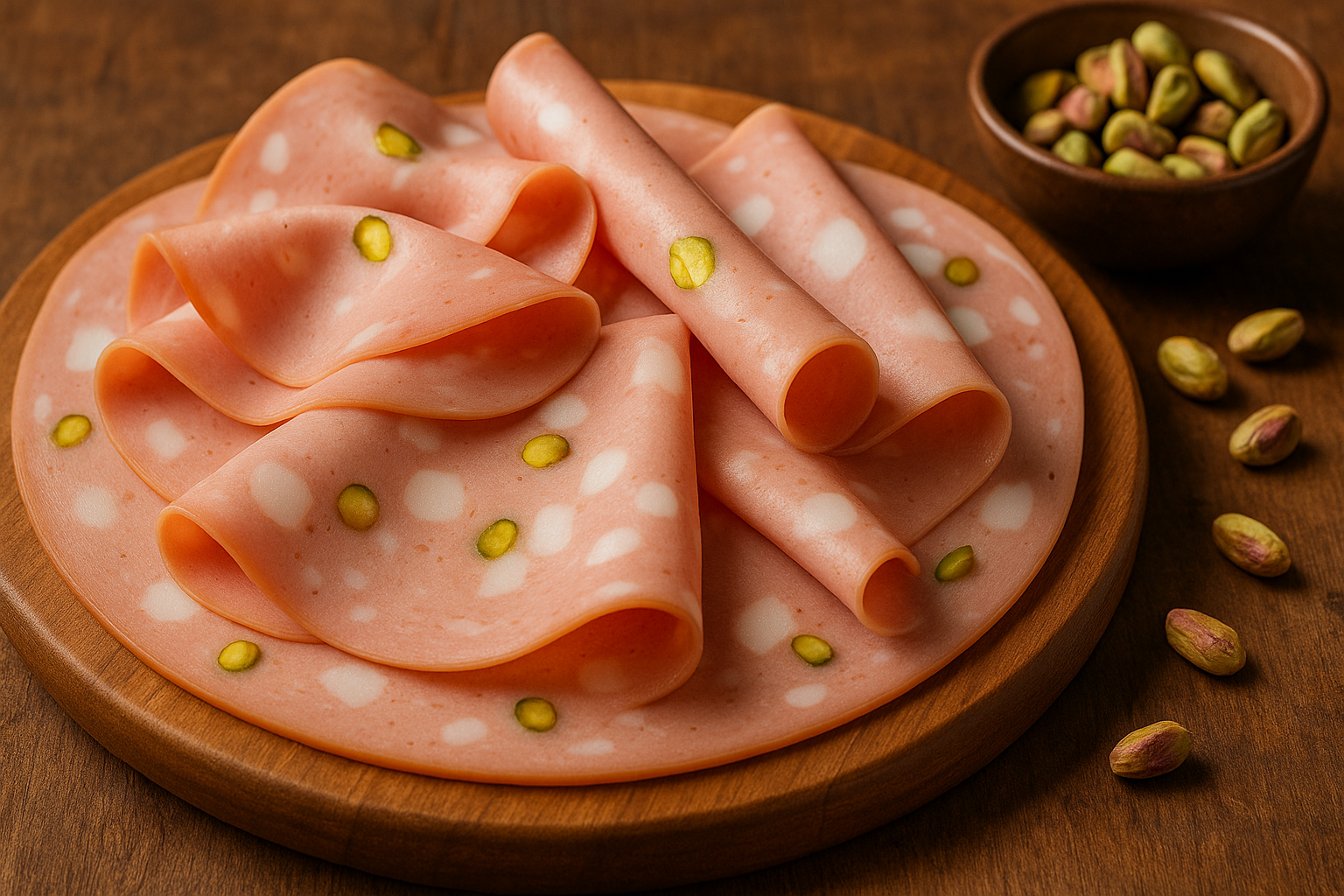
Mortadella is Italy’s elegant answer to bologna, a rich pork sausage studded with creamy fat cubes and bright green pistachios that’s been perfected in Bologna since the Renaissance. Unlike the thin, rubbery slices of American bologna you grew up with, authentic Italian mortadella has a silky texture, complex spice blend, and enough sophistication to star on charcuterie boards at upscale restaurants.
Disclosure: As an Amazon Associate, this site earns from qualifying purchases. Thank you!
What Is Mortadella?
Mortadella is a heat-cured sausage made from finely ground pork, chunks of pork fat, whole or chopped pistachios, and a carefully balanced mix of spices including black pepper, myrtle berries, and sometimes garlic. The mixture gets stuffed into large casings (some reach up to 18 inches in diameter), then slow-cooked in dry-air ovens at precisely controlled temperatures until it reaches an internal temp of 158°F to 160°F.
The defining characteristic is those visible cubes of pure white pork fat scattered throughout the pink meat. These aren’t just for show. They melt slightly during cooking, creating pockets of richness that give mortadella its signature creamy mouthfeel. Quality mortadella uses fat from the neck and jowl areas, which have the best flavor and texture.
True Mortadella di Bologna carries a Protected Geographical Indication (PGI) status from the European Union, meaning it must be produced in specific Italian regions following strict traditional methods. You’ll find cheaper imitations labeled simply as “mortadella” without the “di Bologna” designation, but they rarely match the quality.
Mortadella Ingredients and Production
The ingredient list for authentic mortadella is surprisingly short. You need finely ground pork (usually from the shoulder and trim), high-quality pork fat cut into precise cubes (typically 1/4 to 1/2 inch), pistachios, salt, whole black peppercorns, and traditional spices.
Production starts with grinding lean pork into an incredibly fine paste using specialized equipment. This isn’t your standard meat grinder work. The meat gets emulsified until it’s almost creamy, creating that smooth texture that sets mortadella apart from coarser sausages. Some producers add small amounts of pork liver for extra richness, though this is less common in premium versions.
The pork fat cubes get folded in by hand or with careful mechanical mixing. These pieces must stay intact throughout the cooking process. If they break down too much, you lose the visual appeal and textural contrast that makes mortadella special.
Pistachios are the traditional choice for Italian mortadella, though some versions use green olives or skip the green addition entirely. The pistachios add a subtle nutty flavor and create those distinctive green flecks throughout each slice. For traditional Mortadella di Bologna PGI, only specific ingredients are permitted, and artificial colors or fillers are strictly forbidden.
The stuffed sausages hang in special ovens where hot, dry air circulates for 12 to 24 hours, depending on the size. Larger mortadellas can take several days to cure properly. Temperature control is critical. Too hot and the fat melts out completely, too cool and the sausage won’t cook through safely.
Mortadella vs Bologna: Understanding the Difference
American bologna is mortadella’s distant cousin that took a wrong turn somewhere in the Atlantic crossing. While both start as emulsified pork sausages, that’s where the similarities end.
Bologna in the United States typically contains mechanically separated chicken or turkey alongside pork, various fillers and binders, high amounts of sodium, and enough preservatives to survive a nuclear winter. The texture is uniform, rubbery, and often slightly slimy. You won’t find visible fat cubes, pistachios, or any of the textural interest that makes mortadella worth eating.
Mortadella uses whole muscle pork, visible high-quality fat, real spices you can see and taste, and minimal preservatives beyond salt and sodium nitrite for safe curing. The flavor is delicate, slightly sweet from the pork, with warmth from black pepper and aromatic complexity from spices like myrtle berries and coriander.
The fat content tells the story best. Bologna often lists fat percentages around 15% to 20%, all finely ground and invisible. Mortadella contains 25% to 30% fat, but much of it comes from those visible cubes that provide richness without greasiness. The higher quality fat in mortadella actually makes it taste less fatty than cheap bologna.
Price reflects this quality gap. While bologna sits at budget-friendly levels, authentic Italian mortadella commands premium deli counter prices. You’re paying for better ingredients, traditional production methods, and a product that’s actually meant to be enjoyed rather than just stuffed between white bread with yellow mustard.
If you’ve been curious about whether bologna is healthy, switching to mortadella eaten in moderation won’t solve all your concerns (it’s still a cured meat high in sodium), but you’ll at least be eating real food made with identifiable ingredients.
The Flavor Profile of Italian Mortadella
Good mortadella tastes like the best parts of pork distilled into silky slices. You get a subtle sweetness from the meat itself, a creamy richness when you hit those fat cubes, and gentle warming spice that builds as you chew.
The spice blend varies by producer, but traditional recipes include black pepper for mild heat, myrtle berries for a slightly resinous, juniper-like quality, coriander for citrusy notes, and sometimes nutmeg or cinnamon in tiny amounts for background warmth. These spices never overpower the pork. They’re there to enhance and complement, not disguise.
Pistachios add earthy nuttiness and a slight buttery quality. In each bite, you might get a whole pistachio that crunches lightly against the soft meat, creating textural contrast that keeps things interesting.
The fat cubes are crucial to the experience. They melt slightly at room temperature, coating your palate with richness that carries all those subtle flavors. This is why you should never eat mortadella straight from the refrigerator. Cold fat is waxy and unpleasant. Room temperature fat transforms into velvety smoothness.
Compared to other Italian cured meats, mortadella sits on the mild, approachable end of the spectrum. It doesn’t have the funky fermented tang of salami, the intense saltiness of prosciutto, or the garlicky punch of soppressata. This makes it versatile for cooking and accessible for people who find other charcuterie too aggressive.
How to Eat Mortadella
The simplest and often best way to enjoy mortadella is sliced thick (about 1/4 inch) at room temperature on a cutting board with good bread, cheese, and maybe some pickled vegetables. Let it sit out for 20 to 30 minutes before serving. This isn’t optional. The flavor and texture improve dramatically as the fat softens.
For sandwiches, pile thick slices on crusty Italian bread with provolone, arugula, and a light spread of mayo or olive oil. Skip the mustard and heavy condiments that will overwhelm mortadella’s delicate flavor. In Bologna, they serve mortadella on tigelle (small round flatbreads) or piadina (thin Italian flatbread) with soft squacquerone cheese.
Mortadella works beautifully in pasta dishes when you dice it into small cubes and warm it gently in olive oil before tossing with pasta, peas, and cream. The fat renders slightly, flavoring the sauce while the meat cubes stay tender. This is particularly good with short pasta shapes like rigatoni or mezze maniche.
You can also cube mortadella and thread it onto skewers with mozzarella balls, cherry tomatoes, and basil for easy appetizers. The meat’s richness balances well against fresh mozzarella’s mildness and tomatoes’ acidity.
For breakfast, fry thick slices in a dry pan until they develop golden edges and serve with eggs. The fat renders out and creates natural nonstick coating while the meat gets slightly crispy on the outside and stays creamy inside.
Here’s a video showing how to make a delicious toasted mortadella and cheese sandwich that really highlights the meat’s quality:
Buying and Storing Mortadella
Look for mortadella at Italian delis, specialty food stores, or better grocery store deli counters. You want to see “Mortadella di Bologna” on the label if possible, indicating PGI certification. The meat should be pale pink with evenly distributed white fat cubes and green pistachio pieces throughout.
Avoid mortadella that looks dark or gray, has separated fat pooling around the edges, or smells sour or off in any way. The fat cubes should be pure white, not yellow or gray. If you can see the end of a whole mortadella log, check that the fat distribution looks consistent throughout, not concentrated on one side.
Buy it sliced fresh to order rather than pre-packaged when possible. Those sealed plastic containers often contain mortadella that’s been sitting too long. Ask for thick slices (1/4 inch) even if you plan to use it for sandwiches. Thin slices dry out quickly and lose that crucial textural element.
Store mortadella wrapped tightly in butcher paper or plastic wrap in your refrigerator’s coldest section (usually the back of the bottom shelf). It’ll keep for 5 to 7 days after slicing. Whole, uncut mortadella in its casing lasts several weeks refrigerated.
Don’t freeze mortadella if you can avoid it. The fat cubes don’t handle freezing well and can become grainy or separate when thawed. The emulsified meat portion also loses moisture and becomes slightly mealy.
If you’re interested in exploring more Italian cured meats and how to pair them, mortadella makes an excellent starting point before moving on to funkier, more challenging options.
Where to Find Quality Mortadella
Your best bet for authentic Italian mortadella is a dedicated Italian deli or specialty food store with knowledgeable staff and good turnover. These shops often import whole logs directly from Italy and slice to order. The quality difference between this and grocery store mortadella is substantial.
Whole Foods and other upscale grocery chains typically carry decent mortadella at their deli counters, though it’s often domestically produced rather than imported. Domestic producers like Boar’s Head and Columbus make acceptable versions that follow traditional methods, even if they lack some of the complexity of imports from Bologna.
Online ordering has made authentic Italian mortadella more accessible. Several specialty importers ship whole or half logs of PGI-certified Mortadella di Bologna directly to your door. This works well if you’re feeding a crowd or want to ensure you’re getting the real thing.
You can check current prices for mortadella on Amazon, though availability varies and you’ll want to verify the product is actually Italian-made rather than a cheaper imitation. Look for brands like Negroni, Villani, or Levoni for reliable quality.
For deli slicers who process a lot of mortadella or other Italian meats at home, a quality meat slicer makes portion control easier and ensures consistent thickness every time.
Making Mortadella at Home
Home mortadella production is possible but requires specialized equipment and careful attention to food safety. You’ll need a powerful meat grinder or food processor capable of achieving very fine emulsification, a sausage stuffer for large casings, and precise temperature control during the cooking phase.
The biggest challenge is achieving that ultra-smooth meat texture. Professional producers use industrial equipment that can grind meat into paste-like consistency while keeping it cold enough to prevent the fat from melting. Home equipment often struggles with this, resulting in grainier texture.
You also need synthetic casings large enough to hold several pounds of mixture. Natural casings don’t work for mortadella’s size and won’t hold up during the long cooking process. Fibrous casings (3 to 4 inch diameter) are standard for home production.
Temperature control during cooking separates success from disaster. You need to slowly raise the internal temperature to 158°F without exceeding 175°F in your oven or smoker. Too hot and the fat melts out, leaving you with a dry, crumbly sausage swimming in rendered lard. A reliable probe thermometer is non-negotiable.
For those interested in attempting it, this detailed video walks through the entire home mortadella-making process:
Understanding quality pork production and sourcing becomes important when you’re making mortadella from scratch. The meat quality directly impacts your final product in ways that commercial production methods can sometimes mask.
Mortadella’s History and Cultural Significance
Mortadella’s origins trace back to ancient Rome, where a similar sausage called “farcimen mirtatum” (sausage with myrtle berries) appears in historical records. The name “mortadella” likely comes from the Latin “mortarium,” referring to the mortar used to grind the meat and spices together.
The modern version we recognize today developed in Bologna during the 17th century. The city’s butchers refined the recipe and production methods, creating a luxury product for wealthy families. A 1661 proclamation by Cardinal Farnese established official standards for mortadella production in Bologna, making it one of the world’s first protected food products.
By the 19th century, mortadella had become Bologna’s signature export. Italian immigrants brought it to the Americas, though the recipe was simplified and cheapened during production, eventually evolving into American bologna. This transformation stripped away the quality ingredients and traditional methods, creating something that shares only a name with its Italian ancestor.
In Italy today, mortadella remains a point of regional pride for Bologna. The city hosts an annual Mortadella Festival celebrating the sausage’s history and cultural importance. Proper mortadella appears on holiday tables, in traditional recipes passed through generations, and as a benchmark of deli quality.
The PGI certification awarded in 1998 protects traditional production methods and ensures that only mortadella made in specific regions using approved ingredients can carry the “Mortadella Bologna” designation. This matters because numerous inferior imitations flood global markets, trading on mortadella’s reputation while delivering none of its quality.
Nutritional Considerations
Mortadella is not health food, but it’s also not the nutritional disaster that American bologna can be. A typical 1-ounce serving contains around 90 to 110 calories, 7 to 9 grams of fat, 6 to 7 grams of protein, and 350 to 450 milligrams of sodium.
The fat content is high, but it’s primarily from pork fat rather than added oils or fillers. Pork fat contains oleic acid (the same monounsaturated fat found in olive oil) alongside saturated fats. This doesn’t make it a health food, but the fat profile is better than you might expect from a processed meat.
Sodium is the bigger concern. Like all cured meats, mortadella requires substantial salt for preservation and flavor. That 350 to 450 milligrams per ounce adds up quickly if you’re building a generous sandwich. People watching their sodium intake need to account for this.
Mortadella contains nitrites (usually sodium nitrite) added during curing to prevent bacterial growth and maintain color. These are standard in cured meats but have raised health concerns regarding potential links to cancer risk with heavy consumption. Moderation is key.
The protein content is decent, and mortadella provides B vitamins (particularly B12 and niacin), zinc, and selenium. It’s not something you should eat daily, but occasional enjoyment as part of a varied diet isn’t cause for alarm.
Compared to other charcuterie, mortadella sits in the middle range for calories and fat. It’s richer than lean prosciutto but lighter than fatty salami varieties. The portion size makes the biggest difference in nutritional impact.
Pairing Mortadella with Other Foods
Mortadella’s mild, rich flavor pairs beautifully with sharp, salty cheeses that provide contrast. Parmigiano-Reggiano is the classic choice, offering crystalline crunch and umami depth against mortadella’s creaminess. Aged pecorino works similarly, adding sheep’s milk funk and saltiness.
For softer options, try fresh mozzarella or burrata alongside mortadella. The combination of rich meat and milky cheese creates an indulgent but balanced bite. Stracchino or squacquerone (soft, spreadable Italian cheeses) are traditional in Bologna and provide tangy creaminess that melts into warm mortadella.
Pickled vegetables cut through mortadella’s richness beautifully. Giardiniera (Italian pickled vegetable mix), cornichons, pickled onions, or marinated artichoke hearts all work well. The acidity and crunch refresh your palate between bites.
Fresh fruits add unexpected but welcome contrast. Try mortadella with ripe figs, melon slices, or fresh pear. The sweetness and juicy texture complement the savory meat without competing with it.
For bread, choose options with structure and flavor that won’t get soggy or overwhelmed. Ciabatta, focaccia, or crusty Italian bread all work well. Avoid soft sandwich bread that becomes mushy under mortadella’s fat content.
Wine pairings lean toward lighter reds or crisp whites. A chilled Lambrusco (a slightly sparkling red from Emilia-Romagna) is the traditional choice in Bologna. Alternatively, try Verdicchio, Soave, or Pinot Grigio for whites, or light-bodied reds like Barbera or young Sangiovese.
Beer works beautifully with mortadella too. Pilsners, Italian lagers like Peroni or Moretti, or wheat beers provide refreshing carbonation and mild flavor that won’t clash with the delicate meat.
Mortadella in Different Cuisines
While mortadella is fundamentally Italian, it has been adopted and adapted by other food cultures in interesting ways. In Brazil, mortadella became hugely popular through Italian immigration and now appears in everything from simple sandwiches to elaborate pizzas topped with thick-cut slices.
Brazilian mortadella sandwiches often feature much thicker slices than Italian versions, sometimes cut nearly an inch thick and piled high on crusty rolls with melted cheese, lettuce, tomato, and various sauces. These sandwiches bear little resemblance to delicate Italian preparations but have become beloved street food.
In parts of the Middle East, mortadella appears in manakish (flatbread) or alongside other cold cuts in meze spreads. The mild flavor fits naturally into the region’s preference for well-spiced but not overwhelming meats.
Portuguese cuisine embraced mortadella through cultural exchange with Italy. You’ll find it in traditional sandwiches, sliced into salads, or served as part of appetizer platters alongside olives, cheese, and bread.
American delis occasionally carry real Italian mortadella alongside bologna, though many consumers don’t realize they’re distant relatives. The mortadella usually appears in Italian sub sandwiches or on charcuterie boards rather than the bologna’s typical lunch meat applications.
Understanding mortadella’s versatility helps explain why it has endured while many other regional specialties remain obscure. The mild flavor and creamy texture adapt to various serving styles and cuisines without losing their essential character.
Frequently Asked Questions
Can you eat mortadella raw?
Mortadella is fully cooked during production and completely safe to eat without further cooking. The heat-curing process brings the sausage to safe internal temperatures that eliminate harmful bacteria. You can eat it straight from the package, though it tastes significantly better at room temperature when the fat softens and the flavors open up. Many recipes also call for heating mortadella slightly in a pan or incorporating it into cooked dishes, but this is for flavor and texture preferences rather than food safety concerns.
Why does mortadella have pistachios?
Pistachios serve both aesthetic and flavor purposes in traditional mortadella. The bright green nuts create visual appeal against the pink meat and white fat, making each slice more attractive. Flavor-wise, pistachios add subtle nuttiness and slight sweetness that complement the pork without overwhelming it. The tradition dates back centuries in Bologna, where pistachios were a luxury ingredient that signaled high-quality mortadella. Some modern versions use green olives or omit the green addition entirely, but purists argue that true Mortadella di Bologna requires pistachios as part of its protected recipe.
How long does mortadella last after opening?
Sliced mortadella keeps for 5 to 7 days in the refrigerator when properly wrapped. Store it tightly in butcher paper or plastic wrap, pressing out as much air as possible to prevent oxidation and drying. Whole mortadella logs in their original casing last several weeks refrigerated. You’ll know mortadella has gone bad if it develops gray or green discoloration, smells sour or unpleasant, or feels slimy to the touch. The fat cubes may appear slightly translucent or yellowed in older mortadella, but this is usually still safe if there are no other signs of spoilage. For best flavor and texture, consume within 3 to 4 days of purchase.
Is mortadella gluten-free?
Traditional mortadella made with only pork, pork fat, spices, and salt is naturally gluten-free. However, some commercial producers add fillers, binders, or flavorings that may contain gluten. Check labels carefully if you have celiac disease or gluten sensitivity. Authentic Mortadella di Bologna PGI certification prohibits fillers and non-traditional ingredients, making these products safer choices for gluten-free diets. When buying from a deli counter, ask about ingredients or request to see packaging information. The risk of cross-contamination from slicers that also cut bread or other gluten-containing products is another consideration for people with severe gluten intolerance.
Finding True Value in Quality Mortadella
Mortadella represents everything that’s right about traditional food production. You get real ingredients, time-honored methods, and flavors that have satisfied people for centuries. Yes, it costs more than bologna, but you’re paying for actual food rather than industrially processed mystery meat.
Start with a quarter-pound from a quality Italian deli and taste it properly at room temperature on good bread with a simple cheese. You’ll immediately understand why this isn’t just fancy bologna. It’s a completely different category of food that deserves recognition beyond its more famous Italian cured meat cousins.
For home cooks and meat enthusiasts, mortadella offers versatility that spans from elegant appetizers to hearty sandwiches. The mild flavor won’t intimidate anyone while still providing enough complexity to stay interesting. It belongs in your refrigerator alongside quality pork products that demonstrate the difference proper sourcing and production make.
If you’ve been skeptical about mortadella because of bad experiences with bologna, give authentic Italian mortadella a fair chance. It might just change how you think about deli meat entirely.
This article contains affiliate links. If you purchase through these links, we may earn a small commission at no extra cost to you.