Porterhouse vs T-Bone Steak: Cut Differences and Which to Choose
Learn the real difference between porterhouse and T-bone steaks. USDA size requirements, cooking tips, and which cut offers better value for your needs.
“`html
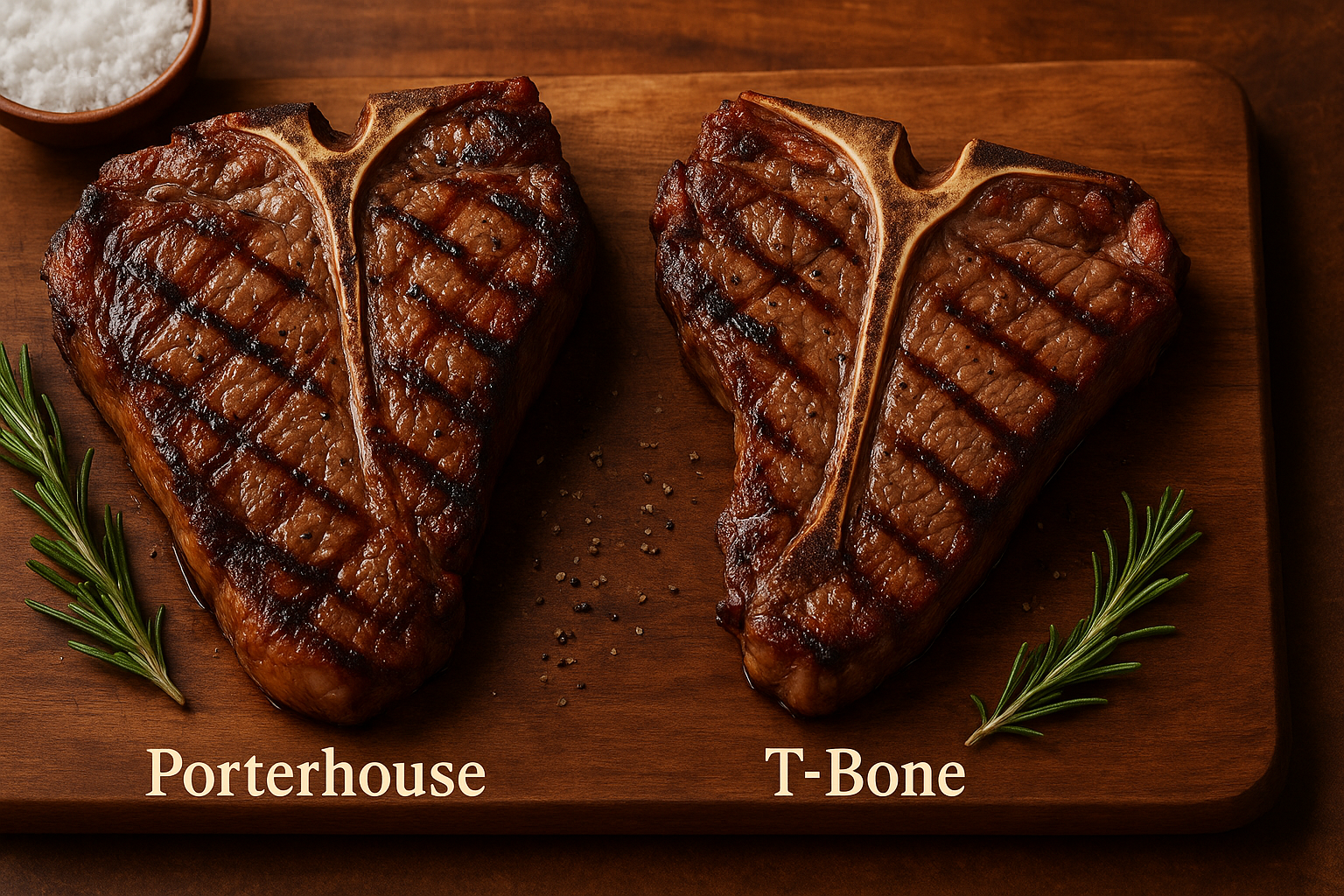
The difference between a porterhouse and T-bone steak boils down to one thing: the size of the tenderloin portion. Both cuts come from the same part of the cow and look nearly identical, but the USDA has strict rules about what qualifies as each cut. Understanding these regulations will save you from overpaying for a glorified T-bone labeled as a porterhouse.
Disclosure: As an Amazon Associate, this site earns from qualifying purchases. Thank you!
What Makes a Steak a Porterhouse vs T-Bone
Both steaks come from the short loin section of the cow, where the tenderloin and strip loin meet. A T-shaped bone separates these two muscles, giving both cuts their distinctive appearance. On one side, you get the strip steak (also called a New York strip). On the other side sits the tenderloin (the same muscle that becomes filet mignon).
The USDA defines the difference with a ruler, not by feel or visual estimation. A porterhouse must have a tenderloin section that measures at least 1.25 inches wide at its thickest point. A T-bone only needs a tenderloin section that’s 0.5 inches wide. That’s it. That’s the entire technical difference.
This measurement matters more than you’d think. A porterhouse gives you substantially more of that buttery, mild tenderloin. A T-bone skews heavily toward the strip side, with just a small medallion of tenderloin that can sometimes cook faster than the strip portion.
Where These Cuts Come From on the Cow
Picture the cow’s back, moving from front to rear. The short loin sits between the rib section (where ribeye and tenderloin cuts come from) and the sirloin. The tenderloin muscle runs underneath the spine through this entire area, getting gradually thicker toward the rear.
T-bones come from the front portion of the short loin, where the tenderloin is smaller. Porterhouses come from the rear section, where the tenderloin has widened to its maximum thickness. A butcher cutting straight through the short loin will get T-bones first, then porterhouses as they work toward the back.
You’ll only get three to four porterhouse steaks from each cow, compared to about seven to eight T-bones. This scarcity partially explains why porterhouses typically command higher prices, though you’re genuinely getting more edible meat per steak.
Taste and Texture Differences
Honestly, the strip portions taste identical because they’re the exact same muscle. The strip offers that classic beefy flavor with good marbling and a slightly firm, satisfying chew. You won’t detect any difference between the strip side of a T-bone versus a porterhouse.
The real distinction comes from the ratio of tenderloin to strip. The tenderloin delivers a milder, more subtle beef flavor with that trademark melt-in-your-mouth texture. It’s the most tender cut on the entire animal, but it sacrifices some intensity of flavor for that texture.
A porterhouse gives you a more balanced eating experience. You can alternate between bites of rich, flavorful strip and buttery tenderloin. A T-bone leans heavily toward the strip experience with just a few bites of tenderloin, assuming that small medallion doesn’t overcook and turn rubbery.
Cooking Challenges With Each Cut
The bone creates your main cooking challenge with both cuts. That T-shaped bone acts as an insulator, slowing heat transfer to the meat closest to it. This means the outer edges of your steak will cook faster than the sections hugging the bone.
T-bones present a trickier situation because that small tenderloin cooks much faster than the strip. By the time your strip reaches a perfect medium-rare (130°F internal temperature), your tenderloin might be pushing medium or medium-well. You’ll need to position the strip closer to your heat source to compensate.
Porterhouses cook more predictably. The larger tenderloin section retains heat better and won’t overcook as quickly. You still need to account for different cooking rates, but the margin of error is more forgiving. Position the strip side toward higher heat, keeping the tenderloin toward cooler zones.
Both cuts benefit from reverse searing. Start them in a 250°F oven until they reach 115°F internally, then sear each side over high heat for two minutes. This method gives you more control over doneness across both muscle sections.
Best Cooking Methods for Each Steak
High, direct heat works best for both cuts. These are thick steaks (typically 1 to 1.5 inches for T-bones, 1.5 to 2 inches for porterhouses) with enough fat to handle aggressive searing without drying out.
For T-bones, a cast-iron skillet gives you the most control. You can adjust positioning throughout cooking to manage those different muscle densities. Heat your pan until it’s smoking, add a high-smoke-point oil like avocado or grapeseed, and sear the strip side for four minutes before flipping.
Porterhouses shine on a charcoal or gas grill where you can use a two-zone setup. Sear both sides over direct heat for three to four minutes each, then move to indirect heat to finish. The bone adds enough mass that you need that gentler finishing heat to avoid burning the exterior before the interior reaches temperature.
A meat thermometer is non-negotiable. Stick it into the strip portion, the thickest part away from the bone. Pull your steak at 125°F for rare, 130°F for medium-rare, or 135°F for medium. The temperature will climb another five degrees during resting.
You can also broil either cut successfully. Position your oven rack six inches from the heating element, preheat the broiler for 10 minutes, and cook for four to five minutes per side. Check current prices on a reliable instant-read meat thermometer on Amazon if you don’t own one yet.
Price and Value Comparison
Porterhouses cost more per pound than T-bones at most butcher shops and grocery stores. You’re paying for that extra tenderloin, which ranks as one of the priciest cuts on the cow. But comparing prices per pound misses the full picture.
A T-bone has proportionally more bone and less edible meat. You’re buying bone weight that you’ll never eat. A porterhouse gives you more actual beef for your money, even at a higher per-pound cost. Calculate the cost per ounce of edible meat, and the gap narrows considerably.
For solo dinners or cooking for two with different preferences, a porterhouse makes more sense. You can cut the strip and tenderloin apart after cooking, giving you two distinct portions. One person gets the strip, the other gets the tenderloin, and everyone’s happy.
T-bones work better for individual servings where you want mostly strip steak with just a taste of tenderloin. They’re also easier to fit on smaller grills or in standard skillets. Check current prices at your local butcher before defaulting to supermarket options, as you’ll often find better value and higher quality from a dedicated meat counter.
How to Pick the Best Steak at the Store
Look for bright red meat with white or cream-colored fat. Avoid any steak with gray or brown spots, which indicate age or improper storage. The fat should look dry, not slimy or sticky.
Marbling matters tremendously. Those thin white lines of intramuscular fat running through the strip portion will melt during cooking, keeping the meat juicy and adding flavor. USDA Choice grade offers good marbling at reasonable prices. USDA Prime has more marbling but costs significantly more, and for these cuts, Choice grades deliver excellent results.
Check the thickness carefully. Anything under 1 inch is difficult to cook properly because you’ll burn the outside before the inside reaches temperature. For T-bones, aim for 1 to 1.25 inches. For porterhouses, 1.5 inches minimum is ideal.
Measure that tenderloin section yourself. Stores sometimes mislabel T-bones as porterhouses, banking on customers not knowing the USDA standards. Pull out your phone and use it as a ruler if needed. The tenderloin should measure at least 1.25 inches across at the widest point for a true porterhouse.
Storage and Shelf Life
Keep raw steaks refrigerated at 40°F or below. They’ll stay fresh for three to five days in the original packaging. For longer storage, rewrap them tightly in plastic wrap, then add a layer of aluminum foil or freezer paper.
Frozen steaks maintain quality for six to twelve months. Wrap them in butcher paper or freezer paper, pushing out as much air as possible. Label with the date and cut type.
Thaw frozen steaks in the refrigerator for 24 hours before cooking. Never thaw at room temperature, as the exterior will hit dangerous temperatures while the interior stays frozen. For faster thawing, seal the steak in a plastic bag and submerge it in cold water, changing the water every 30 minutes.
Remove steaks from the refrigerator 30 to 45 minutes before cooking. This takes the chill off and promotes more even cooking. Pat them completely dry with paper towels before seasoning. Surface moisture prevents proper browning.
Essential Equipment for Cooking These Steaks
A heavy cast-iron skillet or grill grates that retain heat are your foundation. Thin pans create hot and cold spots that cook unevenly. A 12-inch cast-iron skillet handles one large porterhouse or two T-bones comfortably.
Invest in a quality instant-read thermometer. Guessing doneness by touch or timing alone leads to overcooked or undercooked steaks. Digital thermometers with readings in two to three seconds give you accuracy without leaving the probe in too long.
Long-handled tongs let you flip and move steaks without burning yourself. Avoid forks, which puncture the meat and release juices. You want to keep those flavorful juices inside the steak until you cut into it.
A wire cooling rack set over a sheet pan creates a perfect resting spot. Elevating the steak allows air circulation underneath, preventing the bottom from steaming and losing its crust. Browse current selection of cast-iron skillets on Amazon if you need to upgrade your cookware.
Seasoning Recommendations
Coarse kosher salt and fresh-cracked black pepper are all you need. Season aggressively, at least 40 minutes before cooking or immediately before hitting the heat. That middle zone of 10 to 30 minutes actually draws out moisture without enough time to reabsorb it.
Use about 3/4 teaspoon of kosher salt per pound of steak. That sounds like a lot, but much of it will fall off during cooking. The coarse grains create a better crust than fine table salt.
Add pepper right before cooking, not during the early salting phase. Pepper burns at high heat and turns bitter. Wait until you’re ready to put the steak in the pan or on the grill.
Compound butter makes an excellent finishing touch after cooking. Mix softened butter with minced garlic, fresh herbs like thyme or rosemary, and a pinch of salt. Drop a tablespoon on top of each steak right after it comes off the heat. The residual heat will melt the butter, creating an instant sauce.
Common Mistakes to Avoid
Cooking straight from the refrigerator is the most frequent error. A cold steak won’t develop a proper crust before the interior overcooks. Those 30 to 45 minutes at room temperature make a measurable difference in the final result.
Flipping too often disrupts crust formation. Flip once for pan-seared steaks, maybe twice if you’re grilling over very high heat. Each flip resets the browning process. Let the heat work undisturbed.
Skipping the rest period after cooking is a waste of good meat. Those juices need time to redistribute through the muscle fibers. Cut immediately, and they’ll flood onto your cutting board instead of staying in the meat. Five to ten minutes of resting transforms the texture.
Overcrowding your cooking surface drops the temperature too much. If you’re cooking multiple steaks, leave at least two inches between them. Better yet, cook in batches and hold finished steaks in a 200°F oven while you finish the rest.
Which Cut You Should Choose
Go with a porterhouse if you’re feeding multiple people or want a balanced experience between strip and tenderloin. The larger tenderloin portion justifies the extra cost, especially if you’re sharing. You’re getting two distinct steaks in one cut, and you can satisfy different preferences at the table.
Pick a T-bone for solo meals where you’re primarily after that strip steak flavor. The small tenderloin gives you a taste of variety without overwhelming the plate. T-bones also work better on smaller grills and in standard skillets.
For special occasions or celebrations, porterhouses deliver more impact. They look impressive on the plate, and that generous tenderloin section feels indulgent. You’re making a statement with a porterhouse in ways a T-bone doesn’t quite match.
Budget-conscious shoppers should calculate cost per edible ounce, not per pound. A cheaper T-bone with more bone and less meat might actually cost more than a porterhouse once you account for waste. Buy whichever offers better value after doing that math.
Frequently Asked Questions
Can you cook porterhouse and T-bone steaks in the oven?
Yes, the reverse-sear method works perfectly in the oven for both cuts. Start at 250°F until the internal temperature reaches 115°F, then sear in a screaming-hot cast-iron skillet for two minutes per side. This technique gives you precise control over doneness and creates an excellent crust. You can also broil these steaks, positioning them six inches from the heating element and cooking for four to five minutes per side.
Do porterhouse and T-bone steaks have different fat content?
No, the strip portions have identical marbling and fat content because they’re the same muscle. The tenderloin sections also match in fat content, though tenderloin naturally has less marbling than strip. The only difference is the proportion of each muscle you’re getting. A porterhouse gives you more tenderloin (which is leaner), while a T-bone gives you more strip (which has more marbling).
Why is my T-bone tenderloin always overcooked?
The small tenderloin section on a T-bone cooks much faster than the strip because it’s thinner and more exposed. Position the strip side closer to your heat source, whether that’s the hottest part of your grill or the center of your pan. This compensates for the different cooking rates. Alternatively, use the reverse-sear method, which gives you more even cooking across both muscles.
Can I cut the bone out before cooking?
You can, but you shouldn’t. The bone adds flavor during cooking and helps insulate the meat closest to it, promoting more even cooking overall. It also makes the steak easier to flip and handle with tongs. If you prefer boneless cuts, buy strip steaks and tenderloin separately instead of removing the bone from a T-bone or porterhouse. You’ll get better value that way.
Final Recommendation
The porterhouse wins this comparison for most home cooks. You’re getting a more substantial tenderloin portion that’s easier to cook properly, plus the flexibility to split one steak between two people if you want. Yes, you’ll pay more per pound, but you’re actually getting better value once you account for the bone weight in T-bones.
That said, T-bones aren’t second-rate steaks. They’re the right choice for individual servings when you’re primarily after strip steak flavor. Just make sure you’re actually getting a deal compared to porterhouses by calculating the cost per ounce of meat, not just comparing sticker prices.
Either way, both cuts deserve high heat, minimal seasoning, and a good meat thermometer. Master the basics, and you’ll turn out restaurant-quality results regardless of which steak sits on your grill or in your pan.
This article contains affiliate links. If you purchase through these links, we may earn a small commission at no extra cost to you.