What Is Pâté? Types, Ingredients, and Traditional French Preparation
Learn what pâté is, including types like pâté de campagne and liver mousse. Discover French preparation methods, key ingredients, and serving traditions.
“`html
Pâté is a rich, spreadable preparation made from ground or finely chopped meat, typically featuring liver as the star ingredient mixed with pork, duck, or game meats. French chefs developed this forcemeat technique centuries ago to transform inexpensive cuts and offal into something luxurious, and it remains one of the most elegant ways to serve meat at any gathering.
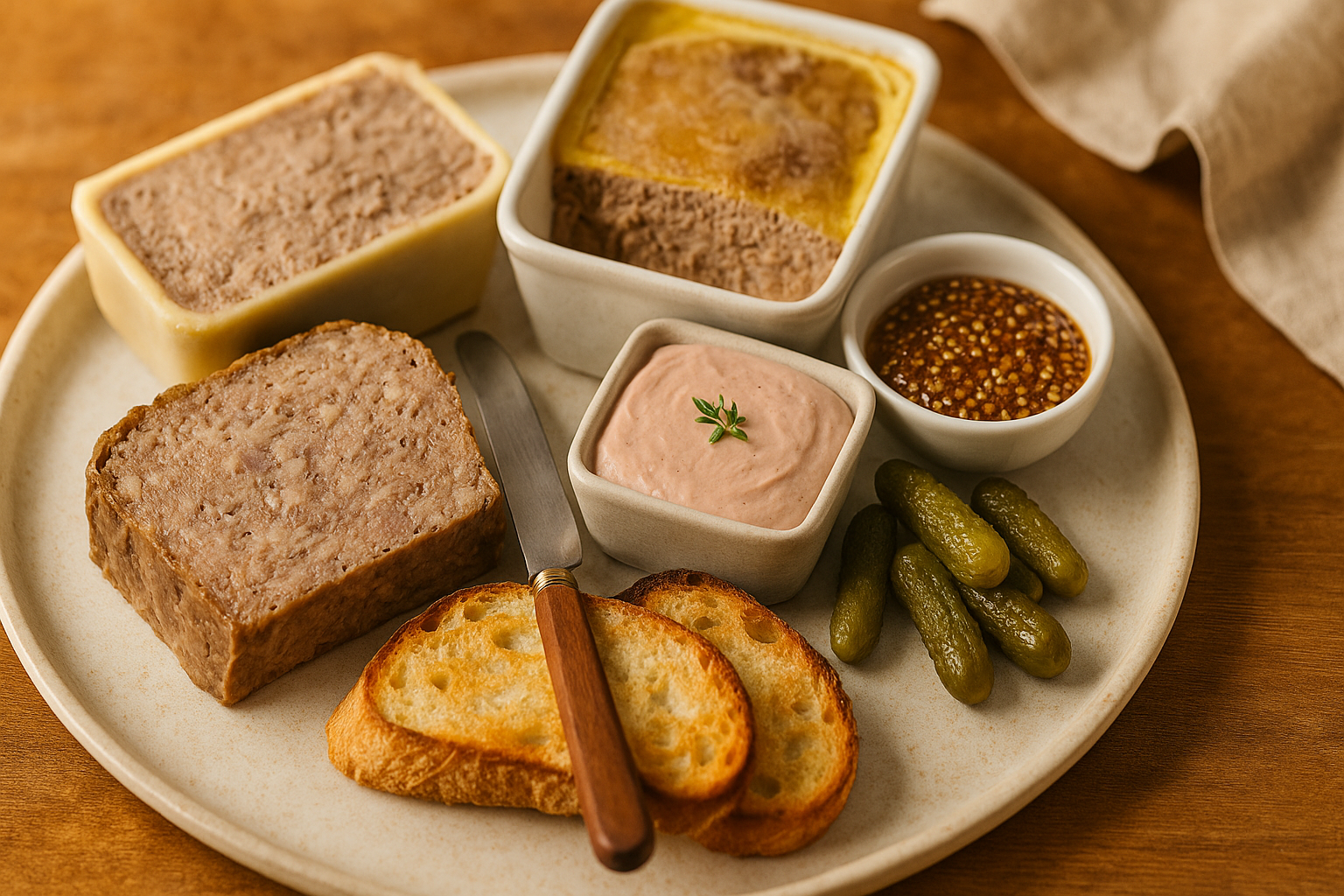
You’ll find pâté served cold or at room temperature, spread on crusty bread or crackers, often accompanied by cornichons and mustard. The texture ranges from coarse and rustic to silky smooth, depending on the style and preparation method.
Disclosure: As an Amazon Associate, this site earns from qualifying purchases. Thank you!
The Core Ingredients That Make Pâté
Understanding what goes into pâté helps you appreciate why it tastes so good and why making it at home gives you complete control over quality and flavor. The base always includes some form of liver, which provides that distinctive rich, mineral flavor that defines the dish.
Chicken liver is the most common choice for beginners because it’s mild, widely available, and budget-friendly. Duck or goose liver creates a more luxurious version with deeper flavor. Pork liver adds earthiness but can be strong, which is why most recipes blend it with other meats.
The supporting cast matters just as much. Ground pork provides fat and body, keeping the pâté moist and spreadable. You need about 30% fat content minimum, or your pâté will be dry and crumbly. Some recipes include pork belly or fatback to hit that target.
Aromatics are essential. Shallots, garlic, thyme, and brandy or cognac appear in nearly every French pâté recipe. These ingredients cut through the richness of the liver and add complexity. Fresh herbs like parsley and tarragon brighten the flavor.
Eggs and cream act as binders, holding everything together during cooking. A typical recipe uses one egg per pound of meat mixture and enough heavy cream to make the forcemeat spreadable but not soupy.
Types of Pâté You Need to Know
The French have developed numerous styles of pâté, each with distinct characteristics and preparation methods. Knowing the differences helps you choose the right one for your occasion and skill level.
Pâté de Campagne (Country Pâté)
This is the workhorse of the pâté world and the best place to start if you’re making it at home. Pâté de campagne has a coarse, rustic texture because you grind the meat through a larger die or chop it by hand. It typically combines pork, pork liver, and pork fat with plenty of garlic, herbs, and sometimes pistachios or dried fruit.
You bake country pâté in a terrine mold (a rectangular ceramic or enameled cast iron dish) lined with bacon strips. The bacon bastes the meat as it cooks and provides a protective layer. Cook it to an internal temperature of 155°F, then press it with weights overnight to achieve a firm, sliceable texture.
Country pâté keeps for up to two weeks refrigerated, making it perfect for entertaining. The flavor actually improves after a few days as the seasonings meld together.
Pâté de Foie (Liver Pâté)
When you see “pâté de foie” on a menu, you’re getting a preparation where liver is the dominant ingredient, making up at least 50% of the mixture. Chicken liver pâté is the most popular version and surprisingly easy to make at home.
The preparation differs from country pâté because you sauté the livers quickly in butter with shallots and herbs, then blend everything until smooth. You’re not baking this one. After blending, you pour the mixture into ramekins or a terrine, top with clarified butter to seal it, and refrigerate until firm.
This style has a creamy, spreadable consistency similar to soft butter. It’s ready to eat the same day you make it, though it also improves after a day or two. Just be sure to check if your chicken is fresh before starting, using guidelines similar to spotting signs your chicken has gone bad.
Mousse de Foie (Liver Mousse)
Mousse takes the smooth texture of liver pâté even further. Chefs achieve this by pushing the cooked mixture through a fine sieve or using a high-powered blender, then folding in whipped cream to create an airy, spreadable consistency.
The ratio here is important. You want about one part whipped cream to three parts liver mixture. Too much cream and you lose the liver flavor; too little and it’s not really a mousse.
Mousse is more delicate and less stable than traditional pâté. It needs to stay cold and won’t keep as long, usually only five to seven days refrigerated. But the ultra-smooth texture makes it perfect for spreading on delicate crackers or toasted baguette slices.
Pâté en Croûte
This is pâté wrapped in pastry dough, baked until the crust is golden and flaky. It’s technically more of a meat pie than a traditional pâté, but French butchers and charcutiers classify it as pâté because of the forcemeat filling.
Making pâté en croûte is an advanced project. You need to master both pastry work and pâté preparation, then figure out how to get them to cook properly together. The pastry must be sturdy enough to hold the filling but tender enough to eat, and the meat needs to reach a safe temperature without drying out.
After baking, you pour aspic (a savory gelatin) through a hole in the crust to fill any gaps between the meat and pastry. This keeps everything moist and adds another layer of flavor. It’s impressive to serve, but definitely not a weeknight project.
Terrine
Technically, “terrine” refers to the dish you bake pâté in, but it’s also become a term for any pâté baked in that vessel and served cold. The distinction between pâté and terrine has blurred over time, and many people use the terms interchangeably.
A true terrine often has visible layers or chunks of different meats. You might see a center layer of whole chicken breast, duck breast, or even foie gras running through the middle of coarser ground meat. These elements create visual interest when you slice the terrine.
The layering technique takes practice. You need to partially cook the terrine, add the center layer, then continue cooking. Getting everything to cook evenly without overcooking the delicate center piece requires careful temperature control.
How to Make Pâté at Home
Making chicken liver pâté is the most practical starting point for home cooks. It requires minimal equipment, comes together quickly, and delivers impressive results that taste better than anything you’ll buy at the store.
Start with one pound of fresh chicken livers. Trim away any green spots (bile) and connective tissue. Pat them dry thoroughly because excess moisture will make your pâté watery.
Heat two tablespoons of butter in a large skillet over medium-high heat. Add two finely minced shallots and cook until soft, about three minutes. Add the livers and cook for five to six minutes, turning once, until they’re browned outside but still slightly pink in the center. They should register about 155°F on an instant-read thermometer.
Transfer everything to a food processor. Add two tablespoons of brandy or cognac, one teaspoon of fresh thyme leaves, half a teaspoon of salt, and a quarter teaspoon of black pepper. Pulse a few times to break down the livers.
With the processor running, add four tablespoons of softened butter, one tablespoon at a time. This creates the smooth, creamy texture you want. Taste and adjust the seasoning. Pâté needs more salt than you think because you’ll serve it cold, and cold foods taste less salty.
Press the mixture through a fine-mesh strainer using a rubber spatula. This step is optional but removes any remaining bits of membrane or gristle for an ultra-smooth result. Transfer to ramekins or a small terrine.
Melt two tablespoons of butter and pour it over the top to seal. This layer prevents oxidation and extends shelf life. Refrigerate for at least four hours before serving.
This video from America’s Test Kitchen walks through the chicken liver pâté process with helpful visual cues for checking doneness and achieving the right consistency.
Equipment You’ll Need
You don’t need specialized equipment for basic chicken liver pâté, but a few tools make the process easier and improve your results.
A food processor is essential for achieving smooth texture. A blender can work in a pinch, but you’ll need to stop and scrape down the sides frequently, and it won’t give you quite the same control over texture.
For country-style pâté, a meat grinder gives you control over coarseness. You can grind once through a coarse die for rustic texture or twice for something finer. If you don’t have a grinder, ask your butcher to grind the meat for you or use a food processor with caution (pulse in short bursts to avoid turning it into paste).
A terrine mold is helpful if you’re making country pâté regularly. The standard size is about 10 inches long, 3 inches wide, and 3 inches deep. You can use a loaf pan as a substitute, though proper terrine molds distribute heat more evenly and have a lid designed for this purpose.
An instant-read thermometer is non-negotiable for food safety. Pâté needs to reach 155°F to 160°F internal temperature to eliminate any pathogens in the liver or raw pork.
Fine-mesh strainers improve texture in smooth pâté. Get one with a sturdy frame and fine enough mesh to catch tiny bits of connective tissue. You’ll need a rubber spatula to push the mixture through.
The French Way to Serve Pâté
Serving temperature matters more than most people realize. Pâté should be cold but not ice-cold. Take it out of the refrigerator about 20 minutes before serving so the flavors can open up and the fat softens slightly.
Traditional accompaniments include cornichons (small tart pickles), whole-grain mustard, and pickled onions. The acidity cuts through the rich, fatty pâté and refreshes your palate between bites. This pairing principle is similar to what makes French weeknight cooking so satisfying.
Bread matters too. Crusty baguette slices toasted until barely golden are classic. The crunch contrasts with the smooth pâté, and toast absorbs less moisture than soft bread. Avoid heavily flavored crackers that compete with the pâté’s taste.
Present pâté simply. If you made it in a terrine, slice it at the table to show off the texture. If you used ramekins, serve them directly with a small spreading knife. Some people unmold pâté onto a platter, but this risks breaking it apart.
French etiquette says to spread pâté thickly on bread rather than dabbing a tiny amount. You want enough in each bite to appreciate the flavor and texture fully.
Storage and Food Safety
Pâté contains liver and often raw eggs, which means you need to handle it carefully. Cook all pâté to an internal temperature of at least 155°F, measured at the thickest part. Use a reliable thermometer and check multiple spots.
Once cooked and cooled, store pâté in the coldest part of your refrigerator (usually the back of the bottom shelf). Country pâté sealed with a layer of fat or aspic keeps for up to two weeks. Chicken liver pâté without a seal lasts five to seven days maximum.
Watch for signs of spoilage: off smells, mold, or a slimy surface. The fat seal on top should stay white or pale yellow. If it turns gray or develops dark spots, throw out the entire batch.
You can freeze pâté for up to three months. Wrap it tightly in plastic wrap, then aluminum foil. Thaw in the refrigerator overnight, never at room temperature. The texture may be slightly grainier after freezing, but the flavor remains good.
Common Mistakes to Avoid
Overcooking liver is the number one problem. Chicken livers turn grainy and bitter when cooked past 160°F. They should still be slightly pink in the center when you take them off the heat. Carryover cooking will bring them to a safe temperature while you blend the mixture.
Not enough fat leads to dry, crumbly pâté. You need at least 30% fat in your meat mixture, preferably closer to 35%. Don’t try to make low-fat pâté. It doesn’t work. The fat is what makes it spreadable and gives it that luxurious mouthfeel.
Under-seasoning is another frequent error. Cold foods need more salt and acid than hot foods. Season aggressively, taste the raw mixture (if it doesn’t contain raw pork), and adjust. If your recipe includes raw pork, cook a small spoonful in a skillet to taste-test the seasoning.
Skipping the straining step leaves bits of sinew and membrane that ruin the smooth texture. It takes an extra five minutes but makes a huge difference in quality.
Not pressing country pâté properly results in a loose, crumbly texture. After baking, place a piece of cardboard wrapped in foil on top of the pâté, then weight it down with cans or a brick. This compresses the meat and forces out excess fat and moisture.
Where to Source Quality Ingredients
Liver quality makes or breaks pâté. Look for livers that are deep red or burgundy in color, with a clean smell. Avoid any with brown spots, green discoloration, or an ammonia-like odor.
Farmers’ markets and butcher shops often carry fresh duck or goose liver that’s superior to supermarket chicken livers. The price difference might surprise you, but you’ll taste it in the final product. If you’re interested in quality poultry, the same principles that apply to selecting good turkey work for choosing quality liver.
For pork, find a butcher who carries heritage breeds if possible. Heritage breed pork has better marbling and flavor than commodity pork, which matters in country pâté where pork is the base.
Pork fat is available at most butcher counters. Ask for fatback or fresh pork belly. They’ll usually give you fat trimmings for little to no cost if you explain what you’re making.
Pâté Versus Other Liver Preparations
People often confuse pâté with liverwurst or braunschweiger, but they’re different products. Liverwurst is a German sausage made from pork liver and meat, heavily spiced with onions and sometimes bacon. It’s spreadable but has a distinct spice profile different from French pâté.
Braunschweiger is a type of liverwurst that’s smoked, giving it a deeper, more intense flavor. It’s softer than pâté and often contains more liver by percentage.
Chopped liver is a Jewish preparation where you sauté chicken livers and hard-boiled eggs, then chop everything together with schmaltz (chicken fat) and onions. It has a coarser texture than pâté and different seasonings, though the basic concept is similar.
Foie gras is fattened duck or goose liver served whole or pureed. It’s much more expensive than regular pâté and has a buttery, delicate flavor. You can incorporate foie gras into pâté, but true foie gras is its own category.
Using Pâté in Cooking
While pâté shines as an appetizer, you can use it in other applications. Melt a spoonful into pan sauces for steak or roasted chicken to add depth and richness. The liver flavor isn’t obvious but creates a fuller, more satisfying sauce.
Stuff chicken breasts or pork chops with a thin layer of pâté before cooking. The heat melts the fat, basting the meat from inside while adding flavor complexity.
Use leftover pâté to make a quick pasta sauce. Warm it gently with cream and pasta cooking water, toss with fresh tagliatelle, and finish with grated Parmesan. It’s indulgent and takes about 10 minutes.
Mix pâté into ground beef for burgers. About two tablespoons per pound adds moisture and a subtle savory note without overwhelming the beef flavor. It works especially well with game meats like venison, which can be dry.
Wine and Beverage Pairings
Rich, fatty pâté needs wine with good acidity to cut through the fat. French Beaujolais is the classic pairing, particularly Morgon or Fleurie. The light body and bright fruit balance liver’s mineral qualities perfectly.
For duck liver pâté, try Sauternes or another sweet white wine. The sugar content mirrors the richness of the liver, while the acidity provides contrast. This is a traditional French pairing that works better than you’d expect.
Dry Riesling from Alsace is another excellent choice. The wine’s minerality complements liver’s earthy flavor, and the acidity refreshes your palate.
If you prefer beer, go with Belgian-style saisons or farmhouse ales. Their funky, yeasty character matches country pâté’s rustic nature. Avoid heavy stouts or porters, which compete with the pâté rather than complementing it.
Buying Prepared Pâté
Not everyone wants to make pâté from scratch, and good prepared versions exist. Look for products made in small batches by actual charcutiers rather than industrial brands.
Read ingredient lists carefully. Quality pâté should list meat, liver, and fat as the first ingredients, followed by seasonings. Avoid products with long lists of stabilizers, emulsifiers, or artificial flavors.
Texture tells you a lot. Press gently on the container if possible. It should feel firm but yielding, not hard or mushy. Once opened, the surface should look moist but not weeping liquid or covered in excess fat.
Check for imported French pâté at specialty grocers or online. Many traditional producers export their products, and while they cost more than domestic versions, the quality difference is noticeable.
The Cultural Significance of Pâté
Pâté represents French cuisine’s fundamental principle: waste nothing and transform humble ingredients into something special. Farmers and butchers developed these techniques to use every part of the animal, particularly organs that spoil quickly.
In France, every charcuterie (delicatessen) makes its own pâté, usually several types. It’s everyday food, not fancy restaurant fare. French families buy pâté for weekend lunches the way Americans buy deli meat.
The craft of making pâté is part of French culinary training. Charcuterie is a separate discipline within professional cooking, and mastering forcemeats like pâté is essential for certification. This tradition maintains quality standards and techniques that might otherwise disappear.
Regional Variations Across France
Each French region has its own pâté style reflecting local ingredients and traditions. Périgord, in southwestern France, is famous for pâté studded with truffles and featuring duck or goose liver.
Brittany produces pâtés incorporating fish and seafood, unusual for this preparation. You’ll find pâté de poisson (fish pâté) and even versions with scallops or crab.
Alsace-Lorraine, near the German border, makes pâté en croûte with game meats like wild boar and venison. The German influence shows in the spicing, which is heavier than in other regions.
Provence features pâtés with Mediterranean herbs like rosemary, fennel, and lavender. Some include olives or sun-dried tomatoes, giving them a brighter, more aromatic character than northern styles.
Making Pâté as Gifts
Homemade pâté makes an excellent gift for food-loving friends. Package it in small glass jars or ramekins with tight-fitting lids. Add a layer of clarified butter on top for freshness, then seal the container.
Include storage and serving instructions. Write the date you made it and note that it needs to stay refrigerated and be consumed within one week for smooth pâté, two weeks for country style.
Package with accompaniments like a jar of cornichons, good mustard, or crackers. A small terrine serving set with a spreader makes the gift more complete if you’re feeling generous.
Make custom labels listing ingredients clearly. Some people have religious dietary restrictions or allergies that make liver or pork problematic. Full disclosure is respectful and necessary.
Frequently Asked Questions
Can you freeze pâté?
Yes, pâté freezes well for up to three months. Wrap it tightly in plastic wrap, then aluminum foil to prevent freezer burn. Thaw overnight in the refrigerator, never at room temperature. The texture might be slightly grainier after freezing, but flavor remains good. Don’t refreeze thawed pâté, as this degrades quality significantly.
What’s the difference between pâté and liverwurst?
Pâté is French and typically features a higher proportion of liver with refined seasonings like brandy, thyme, and shallots. Liverwurst is German, more heavily spiced with onions and black pepper, and usually has a softer, more spreadable texture. Liverwurst often contains added bacon and different cuts of pork. Both are delicious but offer distinctly different flavor profiles reflecting their cultural origins.
How long does homemade pâté last in the refrigerator?
Smooth chicken liver pâté lasts five to seven days refrigerated when sealed with a layer of butter. Country pâté keeps up to two weeks because of its denser texture and protective bacon layer. Always store in the coldest part of your refrigerator and watch for signs of spoilage like off odors, discoloration, or mold. When in doubt, throw it out.
Do you eat pâté hot or cold?
Traditional pâté is always served cold or at room temperature. Take it out of the refrigerator 20 minutes before serving so it softens slightly and the flavors open up. Hot pâté would be too soft to spread and loses its characteristic texture. The only exception is pâté en croûte, which some people serve slightly warm when freshly baked, though even this is usually served at room temperature.
Final Thoughts on Making and Enjoying Pâté
Start with chicken liver pâté if you’re new to this preparation. It’s forgiving, quick, and produces restaurant-quality results with minimal equipment. Once you master the basic technique, move on to country-style pâté where you can experiment with different meats and seasonings.
Don’t be intimidated by the French pedigree. Pâté is fundamentally simple cooking that relies on quality ingredients and proper technique rather than complicated procedures. The satisfaction of serving homemade pâté to impressed guests makes the modest effort worthwhile.
Remember that pâté improves with time. Make it two or three days before you plan to serve it, giving flavors time to meld. This also makes entertaining easier since you complete the work well in advance.
This article contains affiliate links. If you purchase through these links, we may earn a small commission at no extra cost to you.