Grilled Sturgeon Recipe: Mediterranean Style with Olive Oil and Herbs
Master grilled sturgeon with this Mediterranean recipe featuring olive oil, herbs, and lemon. Includes prep tips, cooking temps, and serving suggestions.
“`html
Sturgeon might be expensive and somewhat hard to find, but once you taste a perfectly grilled piece with Mediterranean flavors, you’ll understand why it’s worth seeking out. This meaty, firm fish takes to the grill beautifully and can handle bold seasonings without falling apart.
I’ll show you exactly how to grill sturgeon using olive oil, herbs, and lemon for a restaurant-quality meal that’s actually simpler than you’d think.
Disclosure: As an Amazon Associate, this site earns from qualifying purchases. Thank you!
Why Sturgeon Works So Well on the Grill
Sturgeon has a texture that’s more like chicken or veal than traditional flaky fish. The flesh is dense and meaty, which means you can flip it, move it around, and handle it without watching it disintegrate on the grates.
This fish also has a mild, slightly sweet flavor that pairs exceptionally well with Mediterranean ingredients. It won’t fight with garlic, lemon, or herbs the way more assertive fish might. Plus, the high fat content keeps it moist even if you accidentally cook it a minute or two longer than ideal.
You’ll find sturgeon sold as steaks or fillets. I prefer steaks because they’re easier to handle on the grill and present beautifully on the plate.
Selecting and Preparing Your Sturgeon
Fresh sturgeon should smell clean, almost like cucumber or the ocean breeze. Any fishy or ammonia smell means you should pass. The flesh should be firm to the touch and have a slight sheen.
You’ll want pieces that are about 1 to 1.5 inches thick. Thinner pieces cook too fast and dry out. Thicker pieces take forever and risk burning on the outside before cooking through.
Pat your sturgeon completely dry with paper towels before seasoning. This step matters more than most people realize. Moisture on the surface creates steam, which prevents proper browning and makes sticking more likely. Take an extra 30 seconds here and you’ll thank yourself later.
Should You Remove the Skin?
I recommend leaving the skin on if your sturgeon comes with it. The skin helps hold the meat together during grilling and adds extra flavor. It also creates a barrier between the delicate flesh and the hot grates.
Just make sure to score the skin with a few shallow cuts before cooking. This prevents curling and helps the seasonings penetrate better.
The Mediterranean Marinade
This marinade is simple but effective. You don’t need 20 ingredients to make something delicious.
Ingredients
- 1/2 cup extra virgin olive oil
- 3 cloves garlic, minced
- 2 tablespoons fresh lemon juice
- 1 tablespoon lemon zest
- 2 tablespoons fresh oregano, chopped (or 2 teaspoons dried)
- 1 tablespoon fresh thyme leaves
- 1 tablespoon fresh rosemary, minced
- 1 teaspoon sea salt
- 1/2 teaspoon black pepper
- 1/4 teaspoon red pepper flakes (optional)
Whisk everything together in a bowl. You want the olive oil to emulsify slightly with the lemon juice, creating a thick coating rather than separated liquids.
Reserve about 1/4 cup of this marinade before adding your fish. You’ll use this clean portion for basting and as a finishing sauce.
Marinating Time
Sturgeon only needs 30 minutes to 2 hours in the marinade. Unlike tougher meats, fish doesn’t benefit from overnight marinating. The acid in the lemon will actually start to “cook” the fish if you leave it too long, changing the texture in ways you don’t want.
Place your sturgeon and marinade in a shallow dish or resealable bag. Keep it refrigerated and flip once halfway through if you remember.
For high-quality olive oil that won’t break the bank for marinades and basting, check out extra virgin olive oil options on Amazon. You don’t need the most expensive bottle for cooking, but avoid the cheapest options that taste like nothing.
Grilled Sturgeon Recipe: Step by Step
What You’ll Need
- 2 pounds sturgeon steaks (about 4 portions)
- The marinade from above
- Additional olive oil for the grates
- Lemon wedges for serving
- Fresh herbs for garnish
Grill Setup
You want a two-zone fire for this recipe. That means high direct heat on one side and a cooler indirect zone on the other. This setup gives you control if things start cooking too fast or if you need to move a piece that’s browning too quickly.
For gas grills, heat to medium-high (around 400-450°F) with burners on one side turned higher than the other. For charcoal, pile your coals on one side and leave the other side empty or with just a few coals.
Clean your grates thoroughly with a grill brush. Sturgeon can stick if your grates aren’t clean, and you’ll lose that beautiful seared crust you’re working for. Once clean, oil the grates by dipping a folded paper towel in vegetable oil (not your good olive oil) and rubbing it across the grates using tongs.
Cooking Process
Remove your sturgeon from the marinade and let excess drip off. You want a light coating, not pools of marinade that will cause flare-ups.
Place the sturgeon on the hot side of your grill, skin side up if there’s skin. Don’t touch it for at least 4 minutes. This is where most people mess up. Moving the fish too early guarantees sticking and torn flesh.
After 4 minutes, check if the fish releases easily. If it sticks, give it another minute. Once it releases cleanly, flip it carefully using a wide spatula or fish turner.
Cook the second side for 3-4 minutes, depending on thickness. You’re aiming for an internal temperature of 135-140°F. Sturgeon can handle being cooked to a slightly higher temperature than delicate fish because of its meaty texture, but don’t go past 145°F or it will dry out.
During the last couple minutes of cooking, brush with some of that reserved clean marinade. This adds an extra layer of flavor and a beautiful sheen.
Testing for Doneness
Use an instant-read thermometer inserted into the thickest part. This is the only reliable method. The “flakes easily with a fork” test doesn’t work well with sturgeon because its texture is different from typical fish.
The flesh should be opaque throughout with just a hint of translucence in the very center. It should feel firm but still have some give when you press it gently.
Serving Suggestions
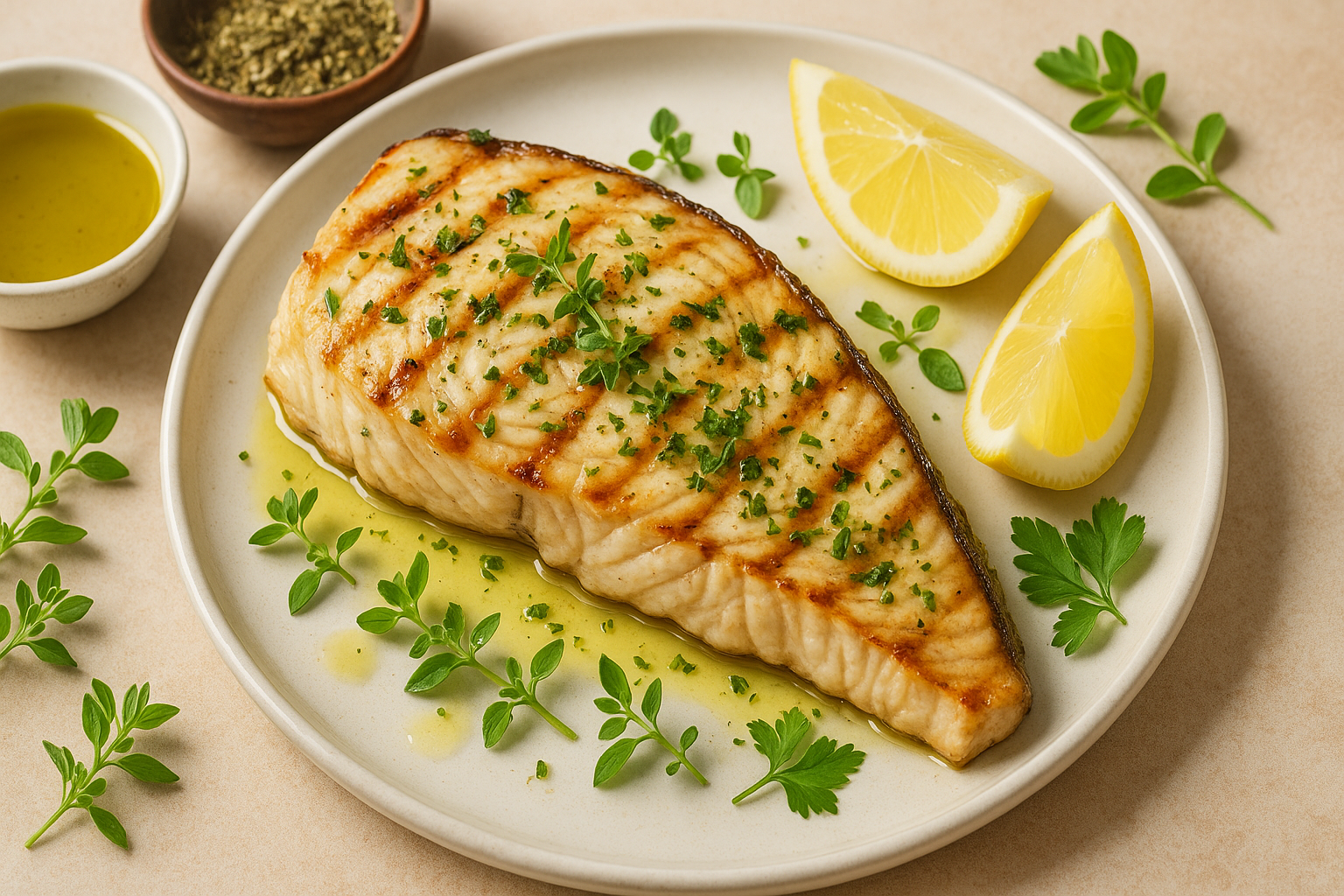
Transfer your grilled sturgeon to a platter and let it rest for 3-4 minutes. Yes, fish benefits from resting too. This brief pause lets the juices redistribute.
Drizzle with a bit more of that reserved marinade or fresh olive oil. Add fresh lemon wedges on the side. A sprinkle of flaky sea salt and some torn fresh herbs (parsley, basil, or oregano) makes the presentation pop.
This sturgeon pairs beautifully with grilled vegetables, a simple arugula salad with lemon vinaigrette, or roasted potatoes with garlic. Keep the sides simple and let the fish shine.
If you’re looking to expand your grilling repertoire beyond sturgeon, check out these grilled beef tenderloin tips for another impressive main course option.
Common Mistakes and How to Avoid Them
Overcooking
This is the number one way people ruin sturgeon. Because it’s such a meaty fish, people assume it needs to be cooked longer than it actually does. Remember that carryover cooking will add another 5 degrees after you remove it from the grill.
Pull your sturgeon off at 135°F if you want it perfectly cooked. It will reach 140°F while resting.
Not Oiling the Grates Properly
Even with sturgeon’s firm texture, inadequate grate preparation leads to sticking. Oil the grates right before adding your fish, not 10 minutes earlier. The oil needs to be there creating a barrier when the fish hits the metal.
Using Too Much Marinade
Excess marinade dripping into the flames causes flare-ups that char the outside before the inside cooks. Shake off or wipe away excess before grilling. You want a coating, not a puddle.
Flipping Too Early or Too Often
You should only flip sturgeon once. Wait until it releases naturally from the grates. If you’re fighting it, you’re moving too soon.
Equipment That Makes Grilling Fish Easier
A wide fish spatula with a thin, flexible edge is worth buying if you grill fish regularly. It slides under delicate items better than a standard spatula. Look for one with slots to let excess marinade drain.
An instant-read thermometer is non-negotiable. Guessing temperatures is how you end up with dry, overcooked fish. A good digital thermometer costs less than one ruined dinner and will last for years. Browse instant-read thermometers on Amazon to find one that fits your needs.
A heavy-duty barbecue tool set with long-handled tools keeps your hands away from the heat and gives you better control over your food.
If you’re serious about adding more variety to your grilling, consider a rotisserie kit for your next big meal.
Variations on the Mediterranean Theme
Greek Style
Add crumbled feta cheese and kalamata olives to your finished sturgeon. Use dill instead of rosemary in the marinade. Serve with tzatziki sauce on the side.
Italian Twist
Replace the oregano with fresh basil and add sun-dried tomatoes to the marinade. Top the finished fish with a chunky tomato-caper relish. Finish with a drizzle of aged balsamic vinegar.
Spanish Influence
Add smoked paprika to your marinade and use flat-leaf parsley instead of oregano. Serve with romesco sauce and grilled asparagus. A squeeze of orange juice alongside the lemon adds complexity.
For more inspiration on seasoning and oiling techniques that work across different proteins, read about how to season and oil chicken. Many of the same principles apply.
Storing and Reheating Leftovers
Grilled sturgeon keeps well for 2-3 days in the refrigerator. Store it in an airtight container with a drizzle of olive oil to prevent drying.
For reheating, skip the microwave. It turns the texture rubbery. Instead, bring the fish to room temperature for 15 minutes, then warm it gently in a 275°F oven for about 10 minutes. You can also flake the leftover sturgeon and use it cold in salads or grain bowls.
Leftover sturgeon makes excellent fish tacos. Just warm it gently and serve in corn tortillas with cabbage slaw and avocado.
Where to Source Quality Sturgeon
Your best bet for fresh sturgeon is a specialty fish market or a high-end grocery store with a good seafood counter. Call ahead to see if they have it or can order it for you.
Frozen sturgeon works well too, especially if you don’t live near the coast. Make sure it’s been flash-frozen and stored properly. Thaw it in the refrigerator overnight, never at room temperature or in hot water.
Some online seafood suppliers ship sturgeon packed in dry ice. This can be a good option if local sources are limited. The fish arrives frozen solid and stays that way during shipping.
Pairing This Dish With Quality Olive Oil
Since olive oil is central to this recipe, using a decent quality makes a difference you can taste. You don’t need a bottle that costs as much as the fish itself, but avoid the absolute cheapest options.
Look for olive oil labeled “extra virgin” with a harvest date on the bottle. Fresher is better. Oil that’s been sitting on the shelf for two years has lost much of its flavor and beneficial compounds.
Store your olive oil in a cool, dark place. Heat and light degrade the quality faster than anything else. If you go through a lot of olive oil for cooking, an olive oil dispenser can help keep it fresh and make pouring easier.
Why This Recipe Works Better Than Complex Versions
You’ll find recipes online that call for 15 ingredients in the marinade or complicated cooking techniques. Ignore them. Sturgeon has enough flavor on its own that it doesn’t need to be buried under aggressive seasonings.
The Mediterranean approach respects the fish while enhancing its natural qualities. Olive oil provides richness without overwhelming. Herbs add fragrance. Lemon brightens everything up. That’s all you need.
Grilling over direct heat develops a crust that adds textural contrast to the tender interior. You can’t achieve this with other cooking methods. Oven-roasting or pan-searing works fine, but grilling gives you something special.
This video from America’s Test Kitchen demonstrates butter-basting techniques for fish fillets that you can adapt for sturgeon if you want to add extra richness during cooking.
Nutritional Benefits of Sturgeon
Sturgeon is packed with protein and omega-3 fatty acids. A 6-ounce serving provides about 38 grams of protein with relatively low calories compared to fattier fish like salmon.
It’s also a good source of selenium, vitamin B12, and phosphorus. The omega-3 content supports heart health and reduces inflammation. According to the USDA FoodData Central, sturgeon offers excellent nutritional value for people looking to increase their fish intake.
The firm texture and mild flavor make it more acceptable to people who think they don’t like fish. If you’re trying to eat more seafood but find other options too “fishy,” sturgeon is an excellent gateway fish.
Scaling This Recipe for a Crowd
This recipe scales easily. Just multiply the ingredients based on how many people you’re feeding. Figure about 6-8 ounces of sturgeon per person if it’s the main protein.
Make the marinade in a larger batch. You can even prepare it a day ahead and keep it refrigerated. The flavors actually develop and meld better after sitting for a day.
For grilling multiple pieces at once, make sure you have enough grill space. Don’t crowd the fish. Each piece needs room for heat circulation and for you to maneuver your spatula.
Consider setting up a serving station with lemon wedges, extra olive oil, and fresh herbs so guests can customize their portions. This works great for casual outdoor dinners.
Frequently Asked Questions
Can I use this marinade for other types of fish?
Absolutely. This Mediterranean marinade works beautifully with swordfish, halibut, mahi-mahi, or salmon. Adjust cooking times based on the thickness of your fish. More delicate fish like tilapia or sole won’t hold up to grilling as well, but you can use the marinade and bake them instead.
What if my sturgeon starts to stick to the grill?
Don’t force it. Give it another 30-60 seconds and try again. The fish will release naturally once it develops a proper crust. If it’s really stuck, slide a thin metal spatula gently under the edge and work your way across rather than trying to lift the whole piece at once. Prevention is better though, so make sure your grates are clean and well-oiled before you start.
How can I tell if sturgeon is sustainably sourced?
Look for sturgeon that’s farm-raised rather than wild-caught. Many wild sturgeon populations are threatened or endangered. The Monterey Bay Aquarium Seafood Watch provides up-to-date information on sustainable seafood choices. Farm-raised sturgeon from the United States or Europe is generally considered sustainable. Ask your fishmonger about the source and look for any certification labels.
Can I cook sturgeon on a charcoal grill instead of gas?
Charcoal actually works better for this recipe. The higher heat and slight smokiness complement the Mediterranean flavors perfectly. Use hardwood lump charcoal if possible. It burns cleaner and hotter than briquettes. Follow the same temperature guidelines and cooking times. The only difference is you’ll get a slightly more pronounced char flavor, which is delicious. If you’re interested in adding smoke flavor to other proteins, check out the best woods for smoking brisket for ideas that translate to fish as well.
Making This Recipe Your Own
Once you’ve mastered the basic technique, don’t be afraid to experiment. Swap out herbs based on what’s fresh and available. Try tarragon or chervil for a French twist. Use cilantro and lime instead of parsley and lemon for a Latin American vibe.
Add spice with harissa paste or preserved lemon for a North African influence. Top the finished fish with a gremolata or chimichurri. The possibilities are endless once you understand the fundamentals.
The key is balancing fat, acid, and aromatics while respecting the fish’s natural flavor. Stick to that principle and you can’t go wrong.
Final Thoughts on Grilling Sturgeon
Grilled sturgeon with Mediterranean flavors is one of those dishes that seems fancy but isn’t complicated. The firm texture makes it beginner-friendly despite its reputation as a premium fish. The marinade comes together in minutes. The grilling takes less than 10 minutes.
What makes this recipe special is how the simple ingredients work together to enhance rather than mask the fish’s natural qualities. You’ll impress dinner guests while actually spending less time cooking than if you’d made a complicated seafood dish with 20 ingredients.
Master this basic technique and you’ll have a reliable method for grilling any firm fish. The confidence you gain from successfully cooking sturgeon translates to other proteins too. Your grill will become a tool for quick, healthy dinners rather than just a weekend burger machine.
Get yourself some fresh sturgeon, fire up the grill, and see what you’ve been missing. This is fish that even fish skeptics will eat seconds of.
This article contains affiliate links. If you purchase through these links, we may earn a small commission at no extra cost to you.