5 Best Santoku Knives for Meat Prep and Butchering
Hands-on comparison of the top santoku knives for slicing, dicing, and prepping meat. Expert reviews covering blade steel, handle comfort, and edge retention.
“`html
You need a santoku knife that can handle everything from breaking down a chicken breast to slicing thin cuts of beef for stir fry. This Japanese blade style offers a unique combination of weight distribution and edge geometry that makes it particularly useful for meat preparation tasks that don’t require the flexibility of a boning knife or the heft of a cleaver.
After testing santoku knives for the past two years on everything from pork tenderloin to whole chickens, I’ve identified the five models that consistently deliver clean cuts, comfortable handling, and edge retention that lasts through multiple prep sessions.
Disclosure: As an Amazon Associate, this site earns from qualifying purchases. Thank you!
What Makes a Santoku Knife Different for Meat Work
The santoku knife originated in Japan as an all-purpose kitchen blade. The name translates to “three virtues,” referring to its ability to handle slicing, dicing, and mincing. The blade typically measures 5 to 7 inches long with a straighter edge profile than Western chef’s knives.
For meat preparation specifically, the santoku excels at precision slicing tasks. The flat edge makes contact with your cutting board across its entire length during each cut, rather than requiring the rocking motion of a curved chef’s knife. This gives you more control when portioning chicken breasts, slicing steaks against the grain, or cutting bacon into lardons.
The blade width tapers from spine to edge at a narrower angle than most Western knives, usually around 12 to 15 degrees per side compared to 20 degrees. This sharper angle produces thinner, cleaner cuts through meat fibers with less tearing. You’ll notice the difference immediately when slicing raw chicken or cutting thin strips of flank steak.
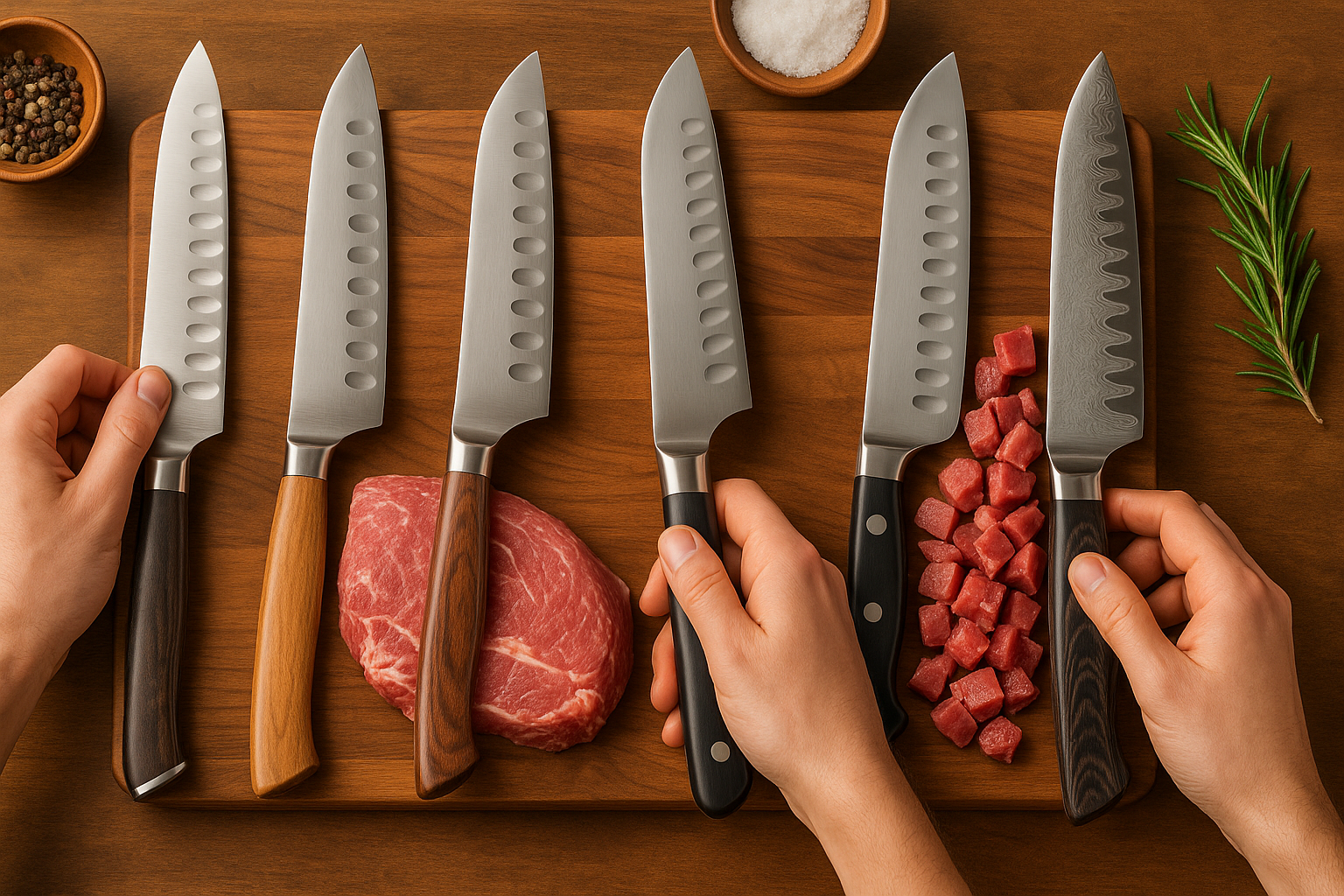
Most santoku knives include kullenschliff (the fancy German term for those oval indentations along the blade). These dimples create tiny air pockets that reduce surface tension between the blade and wet meat surfaces. Your sliced chicken breast won’t stick to the blade as much, which speeds up your prep work considerably.
The 5 Best Santoku Knives for Meat Preparation
1. Shun Classic 7-Inch Santoku
This is my top pick for serious home cooks who want professional-level performance. The Shun Classic features VG-MAX steel at its core, surrounded by 34 layers of Damascus stainless steel on each side. This construction method creates a blade that holds an incredibly sharp edge while remaining resistant to chipping.
The 16-degree edge angle per side cuts through chicken skin without tearing and makes paper-thin slices of beef tenderloin effortless. I’ve used this knife to break down whole chickens, trim brisket, and portion pork chops, and it handles all these tasks without needing frequent resharpening.
The D-shaped pakkawood handle fits naturally in your palm with enough heft to provide control without causing fatigue during extended prep sessions. The handle design works best for right-handed users, though Shun offers left-handed versions if you need them.
Edge retention on this knife is exceptional. After six months of regular use on meat prep tasks, I only needed to touch it up on a leather strop rather than bring out the whetstones. Check current prices and availability on Amazon for the Shun Classic Santoku.
2. Wüsthof Classic 7-Inch Santoku with Kullenschliff
Wüsthof brings German engineering to the Japanese santoku design, and the result works beautifully for meat preparation. This knife uses high-carbon stainless steel forged from a single piece of metal, extending from the tip through the full tang in the handle.
The weight distribution leans slightly toward the handle compared to Japanese-made santoku knives. This balance point makes it easier to control during repetitive slicing tasks like cutting stew meat into uniform cubes or portioning chicken thighs. Your hand does less work to keep the blade stable.
The 14-degree edge angle per side splits the difference between traditional German knives (20 degrees) and ultra-sharp Japanese blades (12 degrees). You get excellent sharpness for clean meat cuts without the increased maintenance demands of thinner edge angles. I particularly appreciate this balance when working with tougher cuts that have more connective tissue.
The triple-rivet handle provides a secure grip even when your hands are slightly damp from handling raw meat. The synthetic handle material cleans easily and won’t harbor bacteria in cracks or seams like some wooden handles might.
This knife performs reliably on everything from delicate fish fillets to dense beef roasts. Check current pricing for the Wüsthof Classic Santoku if you want a workhorse blade that combines Japanese cutting geometry with German durability.
3. Victorinox Swiss Classic 6.7-Inch Santoku
This knife represents the best value option for home cooks who want solid santoku performance without premium pricing. Victorinox manufactures this blade from high-carbon stainless steel with a stamped rather than forged construction, which keeps costs down while still delivering respectable cutting performance.
The blade measures 6.7 inches, slightly shorter than the standard 7-inch length. This compact size actually works to your advantage in smaller kitchens or when working with cutting boards that have limited space. I find it particularly useful for breaking down chicken parts where the shorter blade gives you better control in tight spaces around joints and bones.
The edge holds up well through typical home cooking tasks. You’ll need to sharpen it more frequently than premium Japanese steel, maybe every two to three weeks with regular meat prep use compared to monthly or less for higher-end options. However, the steel sharpens easily on basic whetstones without requiring specialized equipment.
The Fibrox handle feels less premium than wooden or pakkawood alternatives, but it delivers excellent grip security and cleans thoroughly in the dishwasher (though I still recommend hand washing your knives regardless of handle material). The textured surface prevents slipping during repetitive cutting tasks.
This knife excels at standard meat prep duties like slicing cooked roasts, dicing pork for stir-fry, or portioning chicken breasts. You can find the Victorinox Swiss Classic Santoku on Amazon if you want reliable performance on a modest budget.
4. MAC Superior 6.5-Inch Santoku
MAC knives fly under the radar compared to Shun or Global, but professional chefs know them as reliable workhorses. The Superior series santoku uses high-carbon stainless steel with added molybdenum and vanadium for enhanced edge retention and corrosion resistance.
This knife feels noticeably lighter than Western-style santoku knives at around 5 ounces compared to 7 or 8 ounces for German models. The reduced weight allows for faster, more precise movements during meat prep. You’ll appreciate this when making dozens of identical cuts for even cooking, like portioning chicken tenders or slicing beef for bulgogi.
The blade geometry features a particularly thin spine that tapers to an acute 15-degree edge angle. This construction produces exceptionally clean cuts through raw meat with minimal cellular damage. Your sliced chicken breasts will leak less moisture during cooking because the blade doesn’t crush and tear as many cell walls.
The pakkawood handle tapers slightly from front to back, encouraging a pinch grip on the blade itself rather than gripping the handle entirely. This grip style gives you maximum control for detail work like trimming silverskin from tenderloins or removing excess fat from pork chops.
One consideration: the thin blade profile means you should avoid heavy-duty tasks like cutting through bones or frozen meat. Save this knife for precision slicing on thawed, boneless cuts. Browse options for MAC Superior santoku knives on Amazon to see current availability.
5. Global G-48 7-Inch Santoku
Global’s distinctive all-metal design divides opinion among knife users, but it delivers real functional benefits for meat preparation. The blade and handle are stamped from a single piece of high-carbon stainless steel, eliminating any seams or joints where bacteria could hide.
The dimpled metal handle provides better grip than you’d expect from smooth steel. The pattern creates enough friction to maintain control even when working with slippery raw chicken or fatty pork. The handle design does require an adjustment period if you’re used to traditional wooden handles, but most users adapt within a few prep sessions.
The blade uses CROMOVA 18 stainless steel, a proprietary alloy that Global developed specifically for kitchen knives. It combines good edge retention with easier sharpening compared to extremely hard Japanese steels. The edge typically lasts three to four weeks of regular meat prep before needing attention.
Weight distribution on Global knives centers near the middle of the blade rather than toward the handle or tip. This neutral balance makes the knife feel nimble during rapid slicing tasks. I particularly like it for breaking down whole chickens where you need to make quick angle changes around the bird’s anatomy.
The all-metal construction means you can sanitize this knife thoroughly without worrying about damaging wooden handle components. This matters more for meat prep than other cooking tasks given the food safety considerations around raw poultry and pork.
You can check current prices for the Global G-48 santoku on Amazon. The unique design might not appeal to traditionalists, but it performs reliably for meat cutting tasks.
How to Choose the Right Santoku Knife for Your Needs
Blade length matters more than most people realize. A 7-inch santoku provides enough cutting surface for larger tasks like slicing brisket or breaking down pork shoulders. A 5.5 to 6.5-inch blade works better in compact kitchens or for cooks with smaller hands who find longer blades unwieldy.
Steel composition determines how often you’ll sharpen your knife and how well it resists corrosion. High-carbon stainless steel offers the best balance for most home cooks, combining edge retention with reasonable rust resistance. Pure carbon steel holds edges longer but requires more maintenance to prevent oxidation.
Handle comfort directly affects your cutting precision and fatigue level during extended prep sessions. Visit a kitchen store if possible to hold different handle styles before buying. The handle should feel secure without requiring a tight grip that causes hand cramping after 15 minutes of cutting.
Edge angle influences both sharpness and durability. Angles around 12 to 15 degrees per side create extremely sharp edges that glide through meat but may chip if you accidentally hit bones. Angles of 16 to 18 degrees sacrifice some initial sharpness for better edge durability during everyday use.
Proper Santoku Knife Technique for Meat Prep
The santoku’s flat edge profile works best with a vertical chopping motion rather than the rocking action you’d use with a curved chef’s knife. Place the entire edge against your cutting board, then lift the blade straight up before repositioning for the next cut.
For slicing cooked meats, use long, smooth strokes that draw the blade through the meat rather than pressing down. Let the sharp edge do the work rather than applying excessive downward pressure. This technique prevents the blade from tearing meat fibers and keeps your slices intact.
Position your non-knife hand properly by curling your fingertips under and using your knuckles as a guide for the blade. This grip prevents accidental cuts while providing a consistent reference point for uniform slice thickness. Your knuckles should brush against the flat side of the blade as you cut.
Maintain consistent blade angle throughout each cut for even slices. Tilting the knife changes the effective cutting angle and produces wedge-shaped pieces instead of uniform slices. Keep the blade perpendicular to your cutting board unless you specifically want bias-cut pieces.
Maintaining Your Santoku Knife for Optimal Performance
Hand wash your santoku knife immediately after use rather than leaving it in the sink or putting it in the dishwasher. Prolonged contact with moisture and detergent chemicals can damage the edge and promote rust on carbon steel blades. Dry the knife thoroughly before storing it.
Hone your knife regularly using a honing steel or ceramic rod to realign the microscopic teeth along the edge. This maintenance takes 30 seconds and significantly extends the time between actual sharpening sessions. Three to four passes per side before each major prep session keeps the edge performing well.
Sharpen your santoku knife on whetstones rather than pull-through sharpeners whenever possible. Whetstones remove minimal metal while creating a refined edge geometry. Start with a 1000-grit stone for regular maintenance, then finish on a 3000 to 6000-grit stone for polishing.
Store your knife in a knife block, on a magnetic strip, or in a blade guard rather than loose in a drawer. Blade-to-blade contact with other utensils damages the cutting edge and creates nicks that compromise slicing performance. Proper storage prevents 90% of edge damage between sharpening sessions.
Check out these trimming knives for specialized tasks that require more flexibility than a santoku provides, or consider boning knives if you frequently work around bones and joints.
This video from Prudent Reviews explains the key differences between santoku and chef’s knives, helping you understand when each blade style works best for specific cutting tasks.
Common Mistakes to Avoid with Santoku Knives
Don’t use your santoku knife on frozen meat. The hard surface can chip the fine edge or even crack the blade near the tip. Thaw meat completely before cutting, or use a heavier knife specifically designed for frozen products.
Avoid cutting directly on hard surfaces like glass, ceramic, or metal plates. These materials are harder than your knife’s edge and will dull it rapidly. Always use a wooden or plastic cutting board that’s slightly softer than the blade steel.
Never twist the blade sideways to separate cut pieces or to scrape food off your cutting board. This lateral force can bend or break the thin tip section. Use the spine of the knife or a bench scraper to move cut ingredients.
Don’t expect your santoku knife to replace specialized meat preparation tools. Use your carving fork to hold roasts steady during slicing, and rely on dedicated trimming knives for removing sinew and connective tissue from tough cuts.
How Santoku Knives Compare to Other Meat Prep Tools
A chef’s knife handles heavy-duty tasks better than a santoku due to its curved edge and thicker spine. Choose a chef’s knife for breaking down large primals or cutting through cartilage. The santoku excels at precision slicing on already-portioned cuts.
Boning knives offer flexibility that santoku blades lack, making them superior for working around bones and joints. The rigid santoku blade works better for straight cuts through boneless meat where you don’t need the blade to curve around obstacles.
Cleaver-style knives provide the weight and blade thickness needed for chopping through bones and frozen products. Your santoku knife shouldn’t attempt these tasks. Each blade style serves specific purposes in a well-equipped kitchen.
For slicing already-cooked meat into thin, uniform pieces, consider a dedicated meat slicer if you do this task frequently. The santoku handles occasional slicing jobs perfectly well but can’t match the efficiency of a motorized slicer for high-volume work.
FAQ: Santoku Knives for Meat Preparation
Can you use a santoku knife to cut raw chicken?
Yes, a santoku knife works excellently for cutting raw chicken. The sharp edge and thin blade profile make clean cuts through chicken breast, thighs, and skin without tearing the meat fibers. The straight edge gives you precise control when portioning chicken into uniform pieces for even cooking. Just remember to clean and sanitize your knife thoroughly after working with raw poultry.
How often should you sharpen a santoku knife used for meat prep?
Most home cooks need to sharpen their santoku knife every 4 to 8 weeks when using it regularly for meat preparation. Harder Japanese steels on premium knives may last 8 to 12 weeks between full sharpening sessions. Hone your knife on a steel every few uses to maintain the edge between sharpening. You’ll know it’s time to sharpen when the blade no longer slices cleanly through a ripe tomato skin with minimal pressure.
What’s the ideal blade length for a santoku knife used primarily on meat?
A 7-inch blade length works best for most meat preparation tasks at home. This size provides enough cutting surface to slice larger cuts like chicken breasts or flank steaks in single strokes, while remaining maneuverable for detail work. Cooks with smaller hands or compact kitchens might prefer a 6 to 6.5-inch blade. Avoid santoku knives shorter than 5.5 inches for meat work, as they lack the length needed for efficient slicing.
Do I need both a chef’s knife and a santoku knife for meat preparation?
You don’t absolutely need both, but they complement each other well in a meat-focused kitchen. Use your chef’s knife for heavy-duty tasks like breaking down whole chickens or trimming large roasts. Reserve your santoku for precision slicing tasks like portioning chicken breasts, cutting stir-fry meat, or slicing cooked roasts. If you’re only buying one knife, choose based on which tasks you perform more frequently. The chef’s knife offers more versatility for general kitchen work, while the santoku excels at controlled slicing.
Final Verdict: Which Santoku Knife Should You Buy?
The Shun Classic 7-inch santoku represents the best overall choice for serious home cooks who want professional-level performance. Its edge retention, cutting precision, and comfortable handling justify the investment if you prepare meat regularly.
For budget-conscious shoppers who still want reliable meat prep performance, the Victorinox Swiss Classic delivers solid cutting ability and durability. You’ll sharpen it more often than premium Japanese steel, but it handles everyday meat cutting tasks without complaint.
The Wüsthof Classic santoku splits the difference nicely, offering German build quality with Japanese blade geometry. This option makes sense if you want something that can handle occasional rough treatment better than delicate Japanese knives while still providing excellent cutting performance.
Whichever santoku knife you choose, pair it with proper technique and regular maintenance to maximize its performance. A sharp, well-maintained knife makes meat preparation faster, safer, and more enjoyable regardless of whether you’re breaking down chicken for weeknight dinners or portioning beef for a special occasion. Your meat storage practices and where you shop for quality meat matter just as much as having the right knife for the job.
This article contains affiliate links. If you purchase through these links, we may earn a small commission at no extra cost to you.