Slow-Cooked BBQ Goat in Chile Marinade: A Pit-Style Recipe
Master pit-style BBQ goat with this bold chile marinade recipe. Complete guide to sourcing, marinating, and slow-cooking goat for tender, flavorful results.
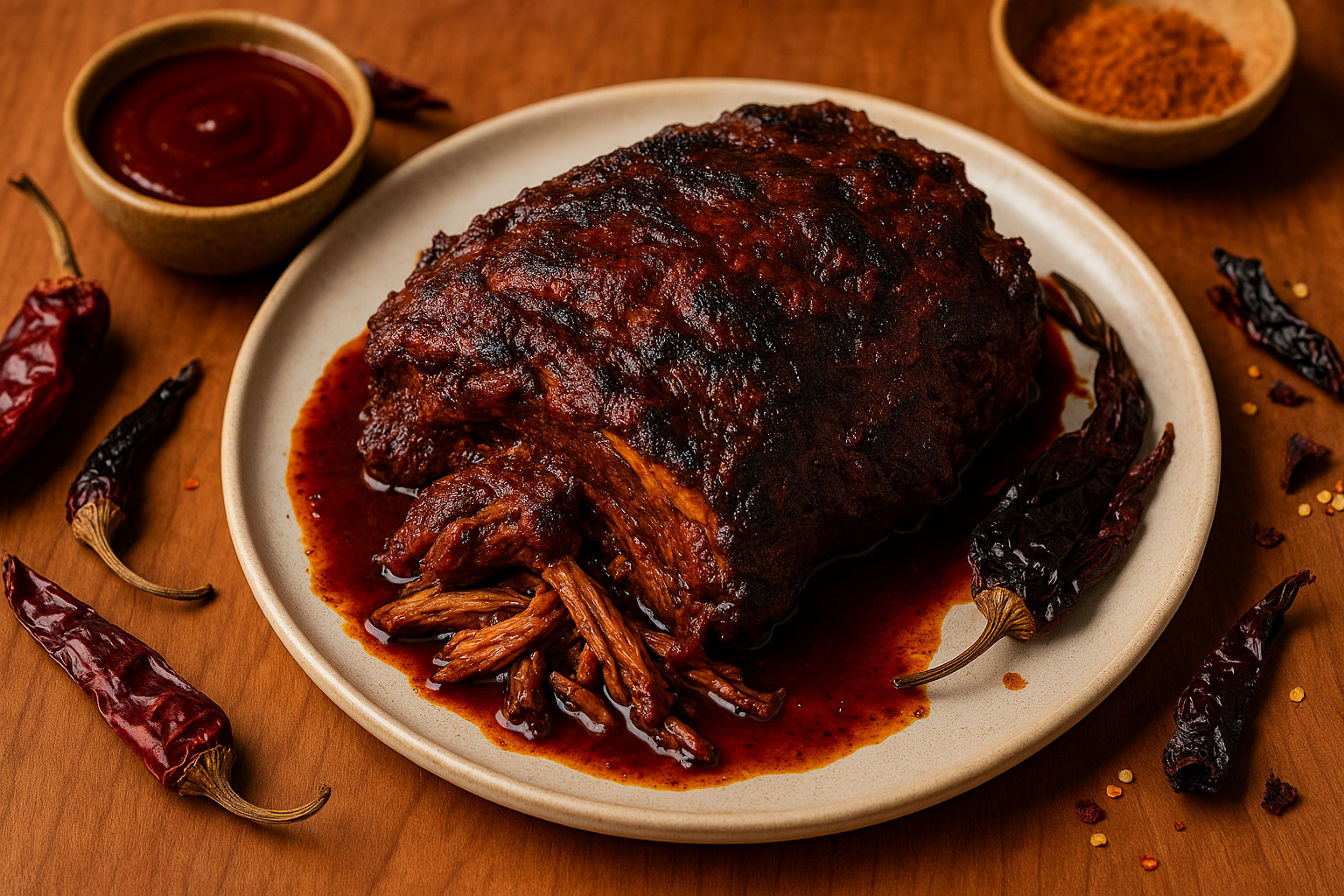
Goat meat delivers bold, rich flavor that stands up beautifully to smoky, pit-style barbecue. This recipe walks you through building a dried chile marinade and slow-cooking goat until it’s tender enough to pull apart with your fingers.
Disclosure: As an Amazon Associate, this site earns from qualifying purchases. Thank you!
Why BBQ Goat Deserves a Spot on Your Pit
You’ve probably seen goat curry and stews, but selecting the right cuts for grilling opens up a whole new world of barbecue possibilities. Goat has less marbling than pork or beef, which means it needs careful attention to cooking technique. Done right, though, you get meat that’s both lean and incredibly flavorful.
The key is treating goat more like brisket than pork ribs. You need low heat, plenty of time, and moisture to break down the connective tissue. A bold chile marinade adds the fat and acidity that goat meat naturally lacks.
This pit-style approach works whether you’re using a traditional in-ground pit, a barrel smoker, or a covered grill with indirect heat. The principles stay the same: create a sealed environment, maintain steady low heat, and let time do the heavy lifting.
Sourcing Your Goat Meat
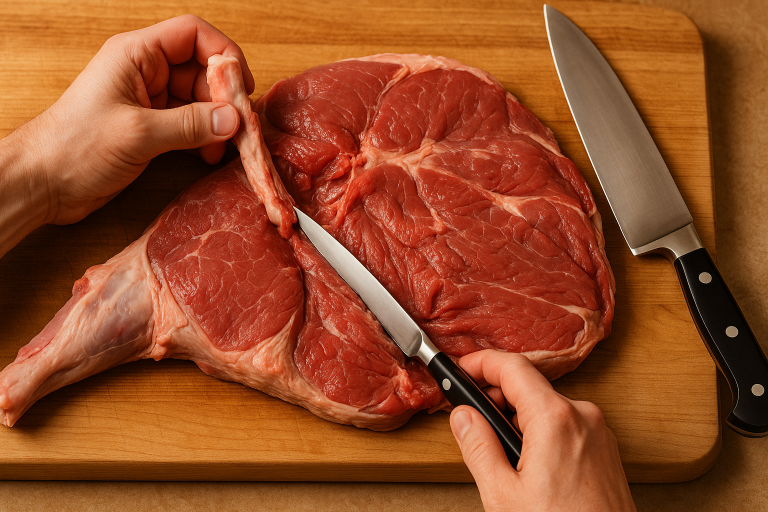
You’ll need about 8 to 10 pounds of bone-in goat shoulder or leg for this recipe. Bone-in cuts work better than boneless because the bones add flavor and help regulate heat distribution during the long cook.
Don’t expect to find goat at every grocery store. Your best options are ethnic markets (especially Caribbean, Mexican, or South Asian grocers), halal butchers, or specialty meat suppliers. If you’re having trouble tracking down a local source, check out our guide on where to buy quality goat meat for specific recommendations.
Look for meat from younger animals (sometimes labeled as cabrito or kid) if you want milder flavor and more tender meat. Mature goat has stronger flavor that some people love, but it requires longer cooking times. For your first attempt at pit-style goat, younger meat gives you more room for error.
The color should be bright pink to light red, not dark purple or brown. Smell it before buying. Fresh goat has a mild, slightly sweet smell. Any strong or sour odor means it’s past its prime.
Building the Chile Marinade
This marinade relies on dried chiles for depth of flavor. You’ll need:
- 6 dried ancho chiles
- 4 dried guajillo chiles
- 2 dried pasilla chiles
- 8 cloves garlic, peeled
- 1 large white onion, quartered
- 2 tablespoons cumin seeds, toasted
- 1 tablespoon Mexican oregano
- 2 teaspoons black peppercorns
- 1 cup apple cider vinegar
- 1/2 cup vegetable oil
- 2 tablespoons kosher salt
- 1 tablespoon brown sugar
Start by removing the stems and seeds from all the dried chiles. Toast them in a dry skillet over medium heat for about 2 minutes per side. They should become fragrant but not blackened. Burning chiles creates bitter flavor you can’t fix.
Cover the toasted chiles with hot water and let them soak for 20 minutes until they’re completely soft. While they soak, toast your cumin seeds in the same dry skillet until they smell nutty and turn a shade darker.
Drain the chiles and add them to a blender with the garlic, onion, toasted cumin, oregano, peppercorns, vinegar, oil, salt, and brown sugar. Blend until completely smooth. This takes longer than you think, usually 2 to 3 minutes of continuous blending. You want zero chunks.
The marinade should coat a spoon thickly but still pour easily. If it’s too thick, add water one tablespoon at a time. Too thin means you didn’t use enough chiles or you added too much liquid during soaking.
Marinating the Goat
Pat your goat pieces completely dry with paper towels. Moisture on the surface prevents the marinade from penetrating the meat.
Score the meat by making diagonal cuts about 1/2 inch deep across the surface. This lets the marinade work its way deeper into the meat and creates more surface area for bark formation during cooking.
Pour about one-third of the marinade into a large bowl or food-safe container. Add the goat pieces and pour the remaining marinade over the top. Use your hands to massage the marinade into every surface and into the score marks.
Cover and refrigerate for at least 12 hours, but 24 hours is better. Turn the pieces every 6 to 8 hours if you remember. This isn’t critical, but it helps distribute the marinade evenly.
Reserve about 1 cup of marinade before adding the raw meat. You’ll use this for basting during the cook. Keep it refrigerated separately.
Setting Up Your Pit or Smoker
You want to maintain a cooking temperature between 225°F and 250°F. This low-and-slow range gives connective tissue time to break down without drying out the lean meat.
For a traditional pit, you’ll dig a hole about 3 feet deep and 4 feet across. Line it with rocks if possible, build your fire, and let it burn down to coals. Cover the coals with a layer of dirt or sand, place your wrapped meat on top, and cover everything with more dirt and possibly a tarp.
Most of you will use a smoker or covered grill instead. Set up for indirect heat by placing your coals or gas burners on one side and your meat on the other. Add wood chunks (mesquite, oak, or hickory all work well) for smoke flavor.
Place a water pan under the cooking grate on the cool side. This creates humidity that helps keep the goat from drying out during the long cook.
You’ll need a reliable meat thermometer. Don’t trust the built-in gauge on most smokers. Get a digital probe thermometer with a remote display so you can monitor temperature without opening the lid. Check current options for probe thermometers on Amazon.
The Slow Cook Process
Remove the goat from the marinade 30 minutes before cooking. Let it come closer to room temperature while your pit or smoker preheats. This helps it cook more evenly.
Place the goat pieces on the grate bone-side down. The bones act as a heat shield, protecting the meat from direct heat. Leave space between pieces for smoke circulation.
Insert your probe thermometer into the thickest part of the largest piece, making sure it’s not touching bone. Bone conducts heat differently and gives you false readings.
Close the lid and maintain your temperature. For the first 3 hours, resist the urge to open and check. Every time you lift the lid, you lose heat and smoke. You’re just adding time to your cook.
After 3 hours, start basting with your reserved marinade every 45 minutes. Use a silicone basting brush or a mop if you’re feeling traditional. This adds moisture and builds up layers of flavor on the surface.
The meat is done when it reaches an internal temperature of 195°F to 205°F. This might sound high, but you’re not aiming for medium-rare. You want the collagen to convert to gelatin, which happens at these higher temperatures. The meat should be fork-tender and starting to pull away from the bones.
Total cooking time runs anywhere from 6 to 9 hours depending on your pit temperature, the size of your meat pieces, and how often you open the lid. Plan for 8 hours to be safe.
This video shows excellent technique for preparing goat tacos, and you’ll notice similar low-and-slow principles at work.
Resting and Serving
When your goat hits target temperature, remove it from the pit and tent it loosely with foil. Let it rest for 30 minutes minimum. This isn’t optional. The resting period lets juices redistribute through the meat instead of running out onto your cutting board.
After resting, you can pull the meat off the bones with your hands or forks. It should come apart easily if you cooked it properly. Any pieces that resist pulling aren’t done yet.
Serve the pulled goat on warm tortillas with diced white onion, fresh cilantro, and lime wedges. Or pile it onto crusty rolls with pickled jalapeños. The smoky, chile-forward flavor pairs well with bright, acidic toppings that cut through the richness.
You can also serve it plated with traditional barbecue sides like coleslaw, beans, and cornbread. The meat doesn’t need sauce, but a simple vinegar-based hot sauce on the side lets people adjust heat to their preference.
Equipment That Makes the Difference
Beyond your pit or smoker, a few tools make this recipe much easier to execute well.
A quality silicone basting brush won’t shed bristles into your food and stands up to high heat better than traditional brushes. Look for one with a long handle to keep your hands away from the heat.
Heavy-duty heat-resistant gloves let you handle hot meat and grates without constantly looking for tongs. The bear paw style works well for pulling meat apart during serving.
A good selection of smoking wood chunks gives you flavor options. Mesquite delivers intense smoke that matches well with goat’s strong flavor profile, while oak provides milder smoke if you want the chile marinade to shine through more.
Keep your cooking grates clean between cooks. Built-up residue creates off flavors and can cause sticking. Our grill maintenance guide covers the best approaches for different grate materials.
Adapting the Recipe for Different Cuts
While shoulder and leg are my top choices, you can apply this technique to other goat cuts with adjustments.
Goat ribs cook faster, usually 4 to 5 hours at the same temperature. They have less meat, so watch them carefully after the 3-hour mark. You can wrap them in foil with a splash of apple juice for the last hour if they’re drying out.
Whole goat quarters or half animals work beautifully for this recipe. You’ll need a larger pit and more cooking time, potentially 10 to 12 hours. The principles stay the same, but you’ll go through more wood and need better heat management skills.
Boneless cuts dry out faster because you lose the insulation and moisture from the bones. If you can only get boneless meat, consider wrapping it in foil after the first 3 hours, similar to the wrapping technique used for ribs. This creates a steam environment that keeps things moist.
Common Mistakes to Avoid
Running your pit too hot is the number one mistake. You might think 275°F or 300°F will just cook the meat faster, but it actually toughens the exterior before the interior breaks down properly. Stick to 225°F to 250°F even if it feels painfully slow.
Don’t skip the scoring step. Goat meat is lean and benefits from every bit of marinade penetration you can achieve. Those surface cuts create pockets where the chile marinade can really work its magic.
Pulling the meat too early is tempting, especially after 5 or 6 hours of cooking. But goat needs to reach those higher internal temperatures to become tender. If you pull it at 165°F or 170°F, you’ll have tough, chewy meat no matter how good your marinade is.
Using too much smoke is possible. Three to four wood chunks are plenty for an 8-hour cook. More than that creates bitter, acrid flavor that overwhelms the chile marinade you worked hard to build.
Storing and Reheating Leftovers
Leftover pulled goat stays good in the refrigerator for up to 4 days in an airtight container. Store it with some of its cooking juices to keep it moist.
For longer storage, freeze it in portion-sized bags with a bit of liquid. It keeps well for up to 3 months. Thaw overnight in the refrigerator before reheating.
Reheat gently in a covered pot with a splash of water or broth over low heat. Microwaving works in a pinch, but use 50% power and stir every minute to prevent dry spots.
Leftover goat makes excellent tacos, quesadillas, nachos, or even pizza topping. The smoky chile flavor holds up well to being combined with other ingredients.
Variations on the Chile Marinade
The base recipe above gives you authentic, bold flavor, but you can adjust it to your taste.
For spicier results, add 2 to 3 dried árbol chiles or a couple of chipotles in adobo to the marinade blend. These bring serious heat without much flavor alteration.
Adding citrus changes the profile significantly. Try including the juice and zest of 2 oranges and 1 lime for a brighter, more acidic marinade that works well in hot weather.
Some cooks like to add a tablespoon of cocoa powder to the marinade. This doesn’t make it taste like chocolate, but it adds earthy depth that complements the chiles. Use unsweetened cocoa powder only.
Fresh herbs like cilantro stems or epazote blended into the marinade add complexity. Save the cilantro leaves for garnish, but the stems have tons of flavor and won’t turn brown in the marinade.
Nutritional Benefits of Goat
Beyond just tasting great, goat meat offers serious nutritional advantages. It’s naturally lean, with less fat than chicken in many cuts. For people watching their fat intake but still wanting red meat flavor, goat’s lean profile makes it an excellent choice.
It’s also rich in iron and protein while being lower in calories than beef or pork. This makes the long cooking process particularly valuable because it transforms a lean, potentially tough protein into something tender and delicious.
The chile marinade adds minimal calories while bringing vitamins A and C from the peppers. Capsaicin from the chiles may even have metabolism-boosting properties, though you shouldn’t count on barbecue as a weight-loss strategy.
Scaling Up for a Crowd
This recipe scales beautifully if you’re feeding a large group. The chile marinade recipe as written handles up to 10 pounds of meat, but you can double or triple it easily.
For big events, consider cooking multiple smaller pieces rather than one massive cut. Four 3-pound shoulder sections cook more evenly and in less time than one 12-pound whole shoulder.
You can also prepare the marinade 2 to 3 days ahead and store it in the refrigerator. This actually improves the flavor as the ingredients meld together. Just give it a quick stir before using.
Pulled goat holds well in a warming tray or slow cooker set to low for serving at parties. Add a bit of water or broth to the holding container to prevent drying.
Pairing Your BBQ Goat With Sides
The rich, smoky meat pairs well with sides that provide contrast. Bright, acidic slaws cut through the fat and cleanse your palate between bites. Try a simple cabbage slaw with lime juice, cilantro, and a touch of honey.
Mexican street corn (elote) brings sweetness and creaminess that balances the chile heat. Grill fresh corn, slather it with mayo mixed with lime juice and chile powder, and top with cotija cheese.
Black beans cooked with cumin and oregano echo the flavors in the marinade without competing. Add a bay leaf and some diced onion while they simmer.
For people who want traditional American barbecue sides, potato salad and baked beans work fine. Just skip the sweet, molasses-heavy bean recipes and go for something more savory to match the chile-forward meat.
Frequently Asked Questions
Can I use this marinade on other meats?
Absolutely. This chile marinade works beautifully on lamb shoulder, pork shoulder, or even beef chuck roast. Lamb is probably the closest match to goat in terms of flavor intensity and cooking requirements. Cooking times and temperatures stay the same for these other meats. Just match the size of the cuts to what the recipe calls for.
Do I need to wrap the goat in foil during cooking?
You don’t have to, but wrapping after 4 to 5 hours can help if you’re seeing too much bark formation or if the exterior is drying out. Wrap loosely in heavy-duty foil with a splash of apple juice or water. This creates a braising environment for the final hours. It softens the bark, though, so only wrap if you’re having moisture issues.
What if I can’t maintain steady temperature in my smoker?
Temperature swings happen, especially with charcoal or wood-fired pits. As long as you stay in the 225°F to 275°F range most of the time, you’ll be fine. The key is avoiding sustained periods above 300°F, which will dry out the meat. Add more fuel when you start seeing temperature drop below 200°F. A temperature controller for your smoker can help maintain consistency if you struggle with manual adjustments.
How do I know if the goat is bad before cooking?
Fresh goat should smell clean and slightly sweet, similar to lamb but milder. Any sour, ammonia-like, or strongly gamey smell indicates spoilage. The color should be pink to light red. Gray or brown discoloration, especially with a slimy texture, means bacteria growth. Buy from reputable sources that understand proper handling and storage of goat meat.
Final Thoughts on Pit-Style BBQ Goat
This recipe requires time and attention, but the payoff is meat that falls apart, soaked with smoky chile flavor that you simply can’t achieve with quick-cooking methods. Goat curry has its place, but pit-style barbecue brings out different qualities in this underused meat.
Start with quality meat from a trusted source, build your marinade with real dried chiles (not powder), and commit to maintaining low, steady heat for the full cooking time. Rushing any of these steps compromises the final result.
The best part about mastering this technique is that it opens up possibilities for cooking all kinds of tougher cuts using similar principles. Once you can turn goat shoulder into tender, flavorful barbecue, you can apply the same approach to countless other recipes.
This article contains affiliate links. If you purchase through these links, we may earn a small commission at no extra cost to you.