Wild Boar Sausage with Fennel and Red Pepper
Make authentic Italian wild boar sausage at home with fennel and red pepper. Complete recipe with grinding, stuffing, and cooking instructions.
Disclosure: As an Amazon Associate, this site earns from qualifying purchases. Thank you!
Italian-Style Wild Boar Sausage You Can Make at Home
Wild boar sausage combines the rich, slightly sweet flavor of game meat with classic Italian seasonings like fennel and red pepper. This recipe delivers authentic links that taste better than anything you’ll find at a specialty butcher, and you control every ingredient that goes into the casing.
You’ll get about 5 pounds of finished sausage from this batch, enough to feed a crowd at your next cookout or stock your freezer for weeks of quick dinners. The toasted fennel seeds provide that distinctive Italian sausage flavor, while red pepper flakes add just enough heat to keep things interesting.
Why Wild Boar Makes Outstanding Sausage
Wild boar meat sits somewhere between pork and beef in terms of flavor. It’s darker, leaner, and has more complexity than farm-raised pork. The meat carries a subtle sweetness that pairs beautifully with aromatic spices.
The lower fat content means you’ll need to add pork fat to your grind. Most wild boar comes in incredibly lean, sometimes under 5% fat. Sausage needs at least 20-25% fat to stay juicy and bind properly during stuffing.
Don’t try to make sausage from pure wild boar unless you enjoy chewing on dry, crumbly links. I learned this the hard way on my first attempt. Adding pork fat or fatty pork shoulder brings the texture exactly where you want it while letting the boar flavor shine through.
If you’re curious about the flavor profile before committing to a full sausage batch, check out what wild boar tastes like and how it compares to other meats.
Essential Equipment for Homemade Wild Boar Sausage
You’ll need a meat grinder and sausage stuffer for this project. A stand mixer attachment works fine if you’re only making occasional batches, but a dedicated grinder handles the job faster and with less frustration.
For the stuffer, vertical stuffers give you better control and reduce air pockets in your casings. The 5-pound capacity models hit the sweet spot for home use. You can find quality options by checking vertical sausage stuffers on Amazon.
Natural hog casings work best for this Italian-style sausage. They’re the traditional choice, and they provide that satisfying snap when you bite into a properly cooked link. Soak them in warm water for 30 minutes before stuffing to make them pliable.
You’ll also want a spice grinder or mortar and pestle for the fennel seeds. Pre-ground fennel doesn’t have the same aromatic punch as freshly toasted and crushed seeds.
Wild Boar Sausage Recipe with Fennel and Red Pepper
This recipe makes approximately 5 pounds of finished sausage links.
Ingredients
- 3.5 pounds wild boar meat (shoulder or leg cuts work best)
- 1.5 pounds pork shoulder or pork fat
- 3 tablespoons kosher salt
- 3 tablespoons whole fennel seeds, toasted and coarsely ground
- 1 tablespoon red pepper flakes (adjust for heat preference)
- 2 teaspoons freshly ground black pepper
- 1 tablespoon sweet paprika
- 6 cloves garlic, minced fine
- 1/2 cup dry white wine or cold water
- Natural hog casings (32-35mm)
Preparation Steps
Cut the wild boar and pork into 1-inch cubes. Keep everything cold throughout the process. Freeze the meat for 30 minutes before grinding, and chill your grinder parts in the freezer too. Cold meat grinds cleanly without smearing.
Toast the fennel seeds in a dry skillet over medium heat for 2-3 minutes until fragrant. Grind them coarsely in a spice grinder. You want texture, not powder.
Combine all the spices in a small bowl. Mix the cubed meat with the spice blend and wine in a large bowl. Use your hands to distribute everything evenly. Cover and refrigerate for at least 2 hours, or overnight for better flavor development.
Grind the seasoned meat through a medium plate (about 3/8 inch). After grinding, mix the meat by hand for 2-3 minutes to develop the protein bind. You’ll notice the mixture becoming sticky and cohesive. This step matters more than people realize for keeping your sausages from crumbling.
Stuffing the Casings
Thread the soaked casing onto your stuffer nozzle, leaving about 3 inches hanging off the end. Tie a knot in that tail.
Feed the ground meat mixture into the stuffer and begin cranking. Fill the casing firmly but not tight. Overstuffed casings will burst during cooking. You want the casing full enough that you don’t see wrinkles, but with a little give when you squeeze it.
Twist the filled casing into 5-6 inch links. Twist every other link in the opposite direction to prevent them from unraveling. Prick any air bubbles with a sterilized needle.
Hang the links to dry for 1-2 hours in a cool place. This drying period helps the casings tighten and improves texture. You can skip this if you’re cooking them immediately, but the extra step produces better results.
For more detailed guidance on sausage making equipment and techniques, check out sausage making kits that include everything you need.
Cooking Your Wild Boar Sausage Links
Grilling over medium-high heat gives you the best results. You want those casings to char slightly while the interior cooks through to 160°F internal temperature.
Start the links over indirect heat for the first 10 minutes. This gentle cooking prevents the casings from bursting. Then move them to direct heat and grill for another 8-10 minutes, turning frequently to get even browning.
Don’t pierce the casings while cooking. All those flavorful juices will drain out and you’ll end up with dry sausage. Use tongs to turn them, not a fork.
Pan frying works well too. Add a tablespoon of oil to a heavy skillet over medium heat. Brown the links on all sides, then reduce heat to medium-low and cover. Cook for another 10-12 minutes, turning occasionally, until they reach 160°F internally.
Smoking sausage adds another dimension of flavor if you have the time and equipment. Apple or cherry wood complements the wild boar particularly well.
Serving Wild Boar Sausage Italian Style
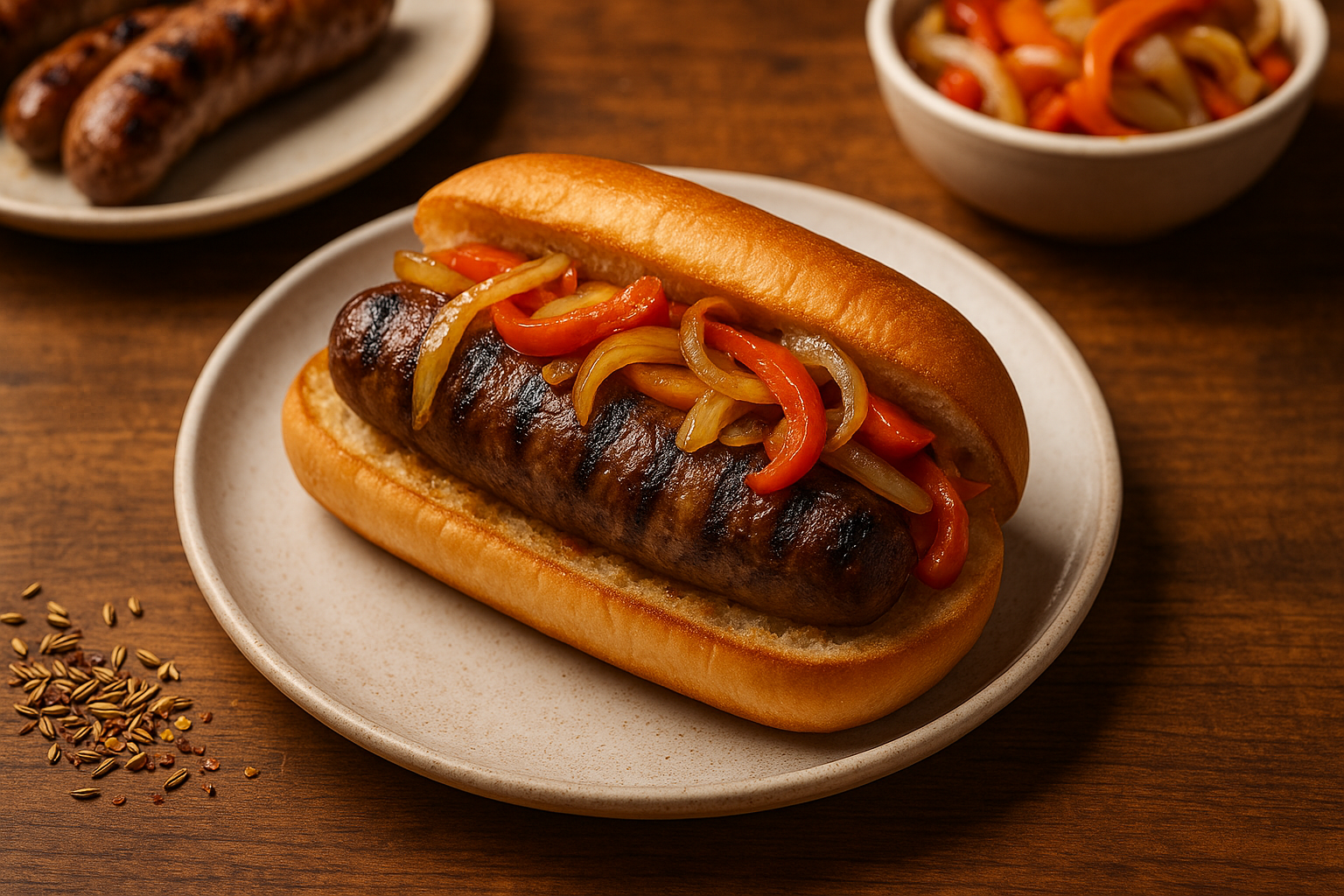
The classic presentation puts these links on toasted hoagie rolls with sautéed peppers and onions. Slice one red bell pepper and one green bell pepper into strips. Add a large sliced onion to the pan with olive oil and cook until everything softens and caramelizes.
Top with provolone cheese if you want to go full Italian-American. A drizzle of good olive oil and some fresh basil leaves elevate the sandwich even further.
You can also slice the cooked sausages and toss them with pasta, use them in pizza toppings, or serve them alongside polenta. The fennel flavor plays nicely with tomato-based sauces.
For complete meal ideas, take a look at sausage and pepper side dishes that round out your plate.
Storage and Make-Ahead Tips
Raw sausages keep in the refrigerator for 2-3 days after stuffing. Separate the links and wrap them in butcher paper or vacuum seal for best quality.
Freezing extends storage to 3-4 months. Flash freeze the links on a sheet pan first, then transfer to freezer bags once solid. This prevents them from sticking together in one giant mass.
Cooked sausages refrigerate well for up to 5 days. They reheat beautifully in a skillet with a splash of water to create steam. Cover the pan and heat on medium-low until warmed through.
You can also freeze cooked links. They thaw quickly and taste almost as good as fresh. I keep a stash in the freezer for quick weeknight dinners.
Adjusting Heat and Flavor
This recipe sits at medium heat with one tablespoon of red pepper flakes. Double it for a spicier version, or cut it in half for milder sausage that appeals to more palates.
Adding extra garlic never hurts Italian sausage. Some recipes call for up to 8-10 cloves per batch. Fresh garlic beats pre-minced or powdered versions by a wide margin.
You can substitute hot paprika for the sweet version if you want smoky heat instead of the direct burn from red pepper flakes. Smoked paprika adds another layer of complexity that pairs well with grilled preparation.
Fresh herbs like chopped parsley or basil mixed into the meat before stuffing provide bright notes. Add about 1/4 cup of finely chopped fresh herbs if you go this route.
Sourcing Wild Boar Meat
Your best bet for wild boar comes from specialty game dealers or hunting directly. Some farmers’ markets carry it seasonally, particularly in areas with established wild boar populations.
Online suppliers ship frozen wild boar to your door. Check current prices and availability, but expect to pay premium rates compared to conventional pork. The quality difference justifies the splurge for special occasions.
If you hunt your own boar, you’re getting the best possible meat at the lowest cost. Field dress the animal properly and keep the meat clean and cool. For more information on preparing wild game, read through these wild game cooking tips.
Farm-raised wild boar offers more consistent sizing and fat content than truly wild animals. It lacks some of the intense gamey notes but still delivers far more flavor than grocery store pork.
Common Sausage Making Problems and Solutions
Dry, crumbly sausage means you didn’t add enough fat or you overcooked it. Aim for 25% fat content in your meat mixture for juicy results. Wild boar needs that added pork fat.
Burst casings usually come from overstuffing or cooking over too high heat. Leave a little slack in the casing, and use indirect heat first to cook the interior gently before searing the outside.
Lack of flavor often points to insufficient salt or inadequate resting time after mixing. Salt does more than season, it helps extract proteins that bind the mixture. Let your seasoned meat rest in the fridge overnight.
Tough texture results from grinding meat that’s too warm. Everything should stay below 40°F throughout the grinding process. Warm meat smears instead of cutting cleanly, which creates a mushy, unpleasant texture.
Equipment Maintenance and Food Safety
Clean your grinder and stuffer immediately after use. Dried meat becomes cement-hard if you wait even a few hours. Disassemble everything and scrub with hot soapy water.
Sanitize all equipment that touches raw meat. A solution of 1 tablespoon bleach per gallon of water works well. Rinse thoroughly after sanitizing.
Keep everything cold during preparation. Bacteria multiply rapidly at room temperature. Work in batches if needed to keep meat chilled.
Cook wild boar sausage to 160°F internal temperature. Wild game can carry parasites that proper cooking eliminates. Use an instant-read thermometer to verify doneness rather than guessing by appearance.
According to the USDA guidelines on sausage safety, proper handling and cooking temperatures prevent foodborne illness from homemade sausages.
Scaling the Recipe
This recipe scales up or down easily. The critical factor is maintaining the same ratios of meat to fat to seasoning. If you’re making a smaller 2-pound batch, divide all ingredients proportionally.
Larger batches require careful attention to temperature. More meat generates more heat during grinding and mixing. Take breaks to chill everything back down if you’re processing 10+ pounds at once.
Test your seasoning blend before stuffing the whole batch. Fry a small patty and taste it. Adjust salt, pepper, or fennel as needed. It’s much easier to fix seasoning in the bowl than after everything’s in casings.
Write down any adjustments you make. Sausage making rewards consistency, and good notes help you replicate successful batches.
Frequently Asked Questions
Can I make wild boar sausage without a stuffer?
You can form the mixture into patties instead of stuffing casings. You’ll lose the traditional sausage experience, but the flavor remains the same. Another option is using a piping bag with a large tip to fill casings by hand, though this takes patience and produces inconsistent results.
How long does it take to make homemade wild boar sausage?
Plan on 3-4 hours total for your first batch, including prep, grinding, stuffing, and cleanup. Experienced sausage makers can cut this to 2 hours. The overnight rest for flavor development adds time but requires no active work. Most people spread the process over two days for convenience.
Can I use synthetic casings instead of natural ones?
Synthetic casings work but don’t provide the same texture or snap as natural hog casings. Collagen casings are edible and easier to work with for beginners. Some people prefer them for consistency. I still recommend natural casings for traditional Italian-style links, but try both and decide for yourself.
What’s the difference between wild boar sausage and regular Italian sausage?
The meat makes the main difference. Wild boar brings darker color, leaner composition, and more complex flavor than domestic pork. You’ll taste subtle sweetness and a richer, beefier character. The seasonings remain similar, but the game meat base creates a distinctly different eating experience. Regular Italian sausage using conventional pork fat tends toward milder, more uniform flavor.
Making Wild Boar Sausage Worth Your Time
Homemade wild boar sausage with fennel and red pepper beats commercial alternatives in every category that matters. You control the meat quality, adjust seasonings to your preference, and avoid the mystery ingredients that show up on store-bought labels.
The upfront investment in equipment pays off after just a few batches. Quality meat grinders last for years of regular use, and making your own sausage costs less per pound than buying premium links.
This Italian-style preparation showcases what wild boar can do when you treat it right. The fennel and red pepper combination is traditional for good reason. It complements the game meat without overwhelming its natural character. Make a batch this weekend and see why hunters guard their wild boar sausage recipes so carefully.
This article contains affiliate links. If you purchase through these links, we may earn a small commission at no extra cost to you.