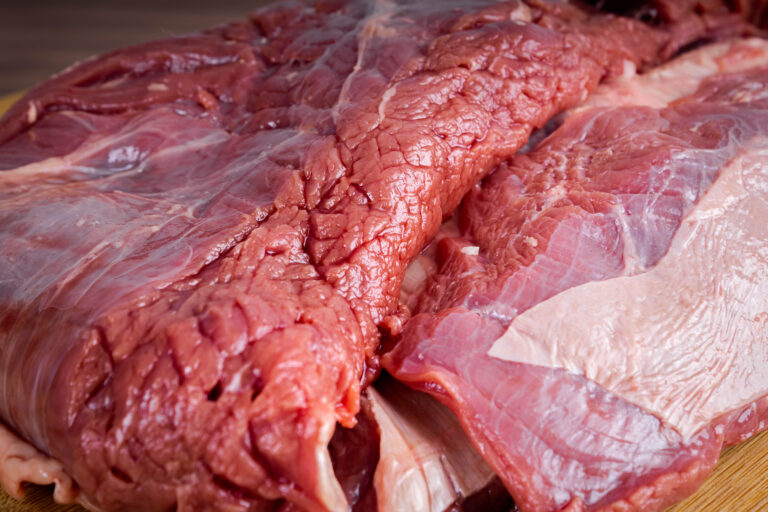
Brisket Point vs Flat: Which Cut Should You Smoke?
Compare brisket point vs flat for smoking. Learn fat content, cooking times, and which cut makes better burnt ends or slices for perfect BBQ results.

“`html
A whole packer brisket contains two distinct muscles: the point and the flat. These cuts differ dramatically in fat content, texture, and ideal cooking methods, which means choosing between them matters for your final results.
I’m picking the point as the overall winner for smoking. It’s fattier, more forgiving, and delivers richer flavor that makes people remember your barbecue.
Disclosure: As an Amazon Associate, this site earns from qualifying purchases. Thank you!
Understanding the Two Cuts of Brisket
The brisket flat (also called the first cut or lean cut) sits beneath the point. It’s a rectangular, uniform muscle that contains less marbling and features a thick fat cap on one side. You’ll find this cut weighs between 5-10 pounds when separated.
The point (second cut or deckle) rests on top of the flat and connects through a layer of fat. This triangular muscle has significantly more intramuscular fat running throughout. It typically weighs 3-6 pounds after separation.
Most people buy a whole packer brisket that includes both cuts still attached. Understanding how these muscles differ helps you decide whether to separate them before cooking or choose one cut over the other at the butcher counter.
Fat Content and Marbling Differences
The point contains roughly twice as much intramuscular fat as the flat. This marbling runs throughout the entire muscle, creating those beautiful white streaks you see in cross-sections. Fat content in the point typically reaches 20-30% by weight.
The flat averages around 5-10% fat content by weight. Most of its fat sits in a thick cap on the exterior rather than distributed throughout the muscle. This makes the flat leaner but also means it dries out faster during long cooks.
You can’t add fat back into lean meat, but you can trim excess fat from fatty meat. This gives the point a massive advantage for smoking because that internal marbling keeps the meat moist during 12-16 hour cooking sessions.
Texture and Grain Patterns
The flat has long, uniform grain running in one direction. This makes slicing simple since you just cut perpendicular to those fibers. The texture ends up tender but can turn stringy if overcooked or sliced incorrectly.
Point meat has a more complex grain structure with fibers running in multiple directions. This creates a looser, more tender texture that practically falls apart when properly smoked. Some people describe it as “beefy pot roast” texture compared to the flat’s “sliced roast beef” feel.
Both cuts need to reach an internal temperature of 200-205°F to properly break down collagen. The difference is that the point’s extra fat keeps it moist even if you accidentally push it to 210°F.
Cooking Time Comparison
A separated flat typically finishes smoking in 8-10 hours at 225-250°F. Its uniform thickness allows heat to penetrate consistently. You’ll hit the stall around 160-170°F, which usually lasts 2-4 hours depending on your smoker setup.
The point takes 10-12 hours at the same temperatures. Its irregular shape and higher fat content mean it takes longer to render all that intramuscular fat. The stall often lasts longer too, sometimes 4-5 hours.
A whole packer brisket containing both cuts needs 12-16 hours. The flat portion reaches its target temperature first, but you need to wait for the point to finish. This is why many experienced pitmasters separate the cuts and pull the flat when it’s done.
Best Uses for Each Cut
When to Choose the Flat
Pick the flat when you need uniform slices for sandwiches or plated presentations. Restaurants prefer this cut because it yields consistent portions that look identical on every plate. The flat also works better for pastrami or corned beef since the uniform shape cures evenly.
Home cooks who want to impress guests with picture-perfect slices should focus on the flat. Just remember you’ll need to monitor temperatures carefully and wrap it in butcher paper once it hits 165°F to prevent drying.
When to Choose the Point
The point excels for burnt ends, chopped beef, or any application where presentation matters less than flavor. That extra fat bastes the meat from the inside out, creating incredibly juicy results.
I recommend the point for beginners because it forgives temperature swings and timing mistakes. You can pull it anywhere from 200-210°F and still get tender, delicious meat. If you’re learning to smoke brisket, start with the point to build your confidence.
The point also works perfectly for tacos, burritos, or nachos where you’ll chop or shred the meat anyway. Why pay for the flat’s uniform slicing potential if you’re just going to dice it up?
Making Perfect Burnt Ends
Burnt ends are cubed, caramelized pieces of brisket that originated in Kansas City. You can only make authentic burnt ends from the point because the flat simply doesn’t contain enough fat.
Smoke your point to 195-200°F, then remove it and cube it into 1-inch pieces. Toss those cubes with barbecue sauce, brown sugar, butter, and honey, then return them to the smoker in an aluminum pan. Cook another 1-2 hours at 275°F until the sauce caramelizes into a sticky glaze.
The high fat content prevents the cubes from drying out despite this extra cooking time. If you tried this technique with flat, you’d end up with dry, chewy chunks instead of the tender, candy-like texture burnt ends should have.
For tools that help with this process, check current prices on meat cubing knives designed for cutting cooked brisket cleanly.
Slicing Techniques for Each Cut
The flat requires slicing against the grain at about pencil-width thickness (1/4 inch). Identify which direction the fibers run, then cut perpendicular to those lines. This shortens the muscle fibers and makes each bite tender.
Keep your knife sharp and use smooth, continuous strokes. A dull knife tears the meat instead of slicing cleanly, which ruins the presentation and makes the texture seem tougher than it actually is.
The point’s complex grain means you can’t simply slice in one direction. Cut it into sections first, then slice each section against its predominant grain. Many people just chop or pull the point instead of trying to achieve perfect slices.
A quality 12-inch slicing knife makes this job much easier for both cuts. The extra length lets you slice through an entire brisket width in one stroke.
Separating Point and Flat Before Cooking
You can separate these muscles before smoking, which gives you more control over each cut’s final temperature. Run your knife along the fat layer between them, staying close to the flat to maximize the point’s size.
This technique lets you pull the flat at 200-203°F while pushing the point to 205-208°F. You can also make burnt ends from the point while keeping the flat whole for slicing. Competition teams often use this method.
This video demonstrates the separation technique clearly:
The downside is that separating exposes more surface area to smoke and heat. Both cuts will cook slightly faster, and you’ll get more bark formation. Some people prefer keeping them together so the point’s fat bastes the flat during cooking.
Trimming and Preparation
Trim the fat cap on the flat down to 1/4 inch thickness. Any thicker and it won’t render properly, leaving you with a rubbery layer between the bark and the meat. Any thinner and you risk drying out this lean cut.
The point needs less trimming since most of its fat sits inside the muscle. Just remove any hard exterior fat and even out thick spots. Leave the fat layer between the point and flat intact if you’re cooking them together.
Season both cuts identically with a simple salt and pepper rub (I use 50/50 coarse black pepper and kosher salt). The meat’s flavor should shine through, not get buried under complex spice blends. Apply the rub at least 2 hours before smoking, or overnight for better penetration.
Temperature and Doneness Guidelines
Forget about time-based estimates. Brisket is done when the internal temperature reaches 200-205°F and a probe slides through like soft butter. The flat typically needs to hit 200-203°F for proper tenderness.
The point can handle 203-208°F because that extra fat keeps it from drying out. Push it to the higher end if you’re making burnt ends since you’ll cook it further anyway.
Use an instant-read thermometer to check multiple spots. The thickest part of the flat usually takes longest. Once you hit your target temperature, probe the meat in several places. If the probe meets any resistance, the collagen hasn’t fully broken down yet, even if the temperature reads correctly.
A reliable wireless meat thermometer saves you from constantly opening your smoker to check temperatures.
Resting and Holding
Rest both cuts for at least 1 hour after removing from the smoker. Wrap them in butcher paper or foil, then place in an empty cooler lined with towels. This holds them safely at temperature while the juices redistribute.
You can hold brisket this way for 4-6 hours without quality loss. Competition teams often cook overnight and hold their briskets until judging the next afternoon. The point holds slightly better than the flat thanks to its higher fat content.
Never slice brisket straight off the smoker. Those juices need time to reabsorb into the meat fibers. Cut too early and you’ll watch all that moisture pour out onto your cutting board instead of staying in the meat where it belongs.
Reheating Leftover Brisket
Reheat sliced flat by placing it in an aluminum pan with 1/4 cup of beef broth. Cover tightly with foil and warm at 250°F for 30-45 minutes. This gentle method prevents the lean meat from drying out further.
Chopped or cubed point reheats beautifully in a covered pan on the stovetop. Add a splash of liquid (broth, beer, or water) and warm over medium-low heat, stirring occasionally. The fat content protects it from drying out.
Both cuts freeze well for up to 3 months when vacuum-sealed. Slice or chop before freezing so you can thaw only what you need. Reheat from frozen by adding 15-20 minutes to the normal reheating time.
Buying Considerations
Whole packer briskets give you the best value since you get both cuts at once. Look for USDA Choice or Prime grade for adequate marbling. Select grade works for the point but produces disappointingly dry flats.
If buying separated cuts, the point typically carries a premium per pound. Check current prices at your local butcher or grocery store. Some warehouses and big-box stores sell only flats, which limits your options.
Understanding the differences between Prime and Choice grades helps you make smarter purchasing decisions for any beef cut.
Regional Preferences and Traditions
Texas barbecue culture prizes the flat for its clean slices and traditional presentation. Pitmasters there often separate the cuts and serve the flat as the main course while turning the point into chopped beef.
Kansas City style focuses heavily on the point, specifically for burnt ends. Many restaurants there sell out of burnt ends by mid-afternoon because demand exceeds supply.
Neither approach is wrong. Your choice should depend on what you’re serving and who you’re feeding. Formal dinners call for the flat’s elegant slices. Casual gatherings work better with the point’s rich, forgiving meat.
Just like choosing between charcoal and gas grills affects your cooking style, picking between point and flat shapes your entire brisket approach.
Common Mistakes to Avoid
Don’t cook the flat past 203°F. This lean cut dries out quickly once collagen breaks down. Pull it early rather than late.
Avoid trimming too much fat from either cut. That fat protects the meat during long cooking times. You can always remove excess fat after cooking, but you can’t add moisture back to dried-out meat.
Never skip the wrap step for the flat. Once it hits 165°F, wrap it in pink butcher paper to power through the stall. Unwrapped flats often turn out dry and tough.
Don’t judge doneness by time alone. A 6-pound flat might finish in 8 hours or 11 hours depending on your smoker’s temperature consistency, the meat’s starting temperature, and humidity levels. Trust the thermometer and the probe test.
Pairing With Other Ingredients
The flat’s milder flavor pairs well with bold barbecue sauces and pickled vegetables. Serve it with classic sides like coleslaw, potato salad, and baked beans. The clean beef flavor won’t compete with other strong tastes.
The point’s richness stands up to equally bold accompaniments. Pair it with sharp cheddar, pickled jalapeños, or tangy sauces. Its fatty texture balances acidic ingredients that would overpower the flat.
Both cuts work in sandwiches, but they require different approaches. The flat needs moisture from sauce or juices to prevent dry sandwiches. The point stays juicy enough to eat with minimal sauce.
Storage and Food Safety
Refrigerate leftover brisket within 2 hours of cooking. Store it in shallow containers so it cools quickly. Properly stored brisket lasts 3-4 days in the refrigerator.
The point’s higher fat content means it can develop off-flavors slightly faster than the flat. Smell it before reheating. Any sour or rancid odor means the fat has oxidized and you should discard the meat.
Vacuum-seal portions before freezing to prevent freezer burn. Flat slices freeze better than point chunks since they stack neatly and thaw more evenly. Label each package with the date and cut type.
Nutritional Differences
The flat contains roughly 230-250 calories per 4-ounce serving with about 8-10 grams of fat. It provides 35-40 grams of protein, making it the leaner choice for health-conscious eaters.
The point packs 300-350 calories per 4-ounce serving with 20-25 grams of fat. Protein content stays similar at 30-35 grams. Those extra calories come almost entirely from the additional marbling.
Both cuts provide excellent amounts of iron, zinc, and B vitamins. The nutritional difference comes down to fat content. If you’re watching calories or fat intake, choose the flat. If you prioritize flavor and moisture, pick the point.
For more detailed comparisons of different meat nutrition profiles, see our guide on flank steak versus ribeye nutrition facts.
My Final Recommendation
Buy a whole packer brisket and separate the point from the flat before cooking. This gives you the best of both worlds: perfect slices from the flat for presentation and rich, forgiving meat from the point for burnt ends or chopping.
Cook the flat to 200-202°F, wrap it, and hold it in a cooler. Push the point to 205-207°F, then cube it for burnt ends. This approach impresses guests with variety while maximizing each cut’s strengths.
For beginners smoking their first brisket, buy just the point. The extra fat forgives mistakes and builds confidence. You can always graduate to the flat or whole packers once you’ve mastered temperature control and timing.
Your smoker choice matters less than understanding these fundamental differences between the cuts. Master the meat first, then worry about equipment upgrades.
Frequently Asked Questions
Can you smoke just the point without the flat?
Yes, smoking only the point works perfectly and many people prefer it. The point cooks in 10-12 hours at 225-250°F and produces incredibly juicy results. You’ll get better burnt ends from a standalone point since the entire cut can be cubed without worrying about the flat. Just trim any hard exterior fat and season it like you would a whole brisket.
Why does restaurant brisket look different from the point?
Most restaurants serve sliced flat because it photographs better and yields consistent portions. The uniform grain and lean profile match what people expect “brisket” to look like. Many restaurants save the point for chopped beef sandwiches or burnt ends rather than serving it sliced. Home cooks have more flexibility to serve whatever cut they prefer.
Does the point always sit on top of the flat?
Yes, anatomically the point (or deckle) always rests on top of the flat in a whole packer brisket. The point covers roughly two-thirds of the flat’s length. A thick fat layer separates them, which makes separation straightforward if you follow that natural seam. This positioning is why the point has more surface area exposed to smoke and develops a thicker bark.
Should I flip brisket while smoking it?
Keep the flat facing the heat source to protect it from direct exposure. In an offset smoker, place the point end toward the firebox since it can handle higher temperatures. Flip only if you notice severe uneven cooking, which usually indicates temperature control problems with your smoker rather than issues with the meat itself. Most competition pitmasters never flip their briskets.
This article contains affiliate links. If you purchase through these links, we may earn a small commission at no extra cost to you.