Barbacoa: What Cut of Beef Is It and How to Make It at Home
Learn what barbacoa is, which beef cuts work best (cheeks, chuck, brisket), and how to make authentic slow-cooked barbacoa at home with dried chiles.

Barbacoa is slow-cooked beef traditionally steamed underground with dried chiles and spices until it falls apart into tender, deeply flavored shreds. While the authentic method involves digging a pit and wrapping meat in maguey leaves, you can make outstanding barbacoa at home using a slow cooker or Dutch oven with the right cuts and technique.
This isn’t just another shredded beef recipe. Barbacoa has a distinctive earthy, slightly spicy flavor profile that sets it apart from other slow-cooked beef dishes. Once you understand which cuts work best and how to layer those traditional flavors, you’ll have a recipe that beats most restaurant versions.
Disclosure: As an Amazon Associate, this site earns from qualifying purchases. Thank you!
What Is Barbacoa?

Barbacoa refers to both a cooking method and the dish itself. The technique originated in the Caribbean and spread throughout Latin America, with each region developing its own style. In Mexico, particularly in central and northern states, barbacoa typically means beef slow-cooked with dried chiles, cumin, cloves, and bay leaves until the meat becomes impossibly tender.
The traditional approach involves wrapping seasoned meat in maguey (agave) leaves and steaming it in an underground pit lined with hot rocks. This method creates incredibly moist meat with a subtle smokiness and earthy undertones from the leaves. The meat cooks in its own juices for hours, breaking down tough connective tissue into gelatin.
Modern home versions adapt this concept using slow cookers, pressure cookers, or Dutch ovens. You won’t get the exact same flavor without the maguey leaves and underground pit, but you can get remarkably close with the right ingredients and low, slow heat. The key is choosing cuts with plenty of connective tissue and fat, then cooking them gently until they surrender completely.
Best Beef Cuts for Barbacoa

Three cuts dominate authentic barbacoa recipes, each bringing different qualities to the finished dish. Your choice depends on availability, texture preference, and how adventurous you’re feeling.
Beef Cheeks (My Top Pick)
Beef cheeks are the gold standard for barbacoa. These muscles work constantly as the cow chews, which means they’re packed with collagen and intramuscular fat. After several hours of slow cooking, that collagen melts into gelatin, giving you meat that’s both fall-apart tender and incredibly rich.
Each cheek weighs between 1 and 2 pounds after trimming. You’ll need to ask your butcher specifically for them since they rarely appear in standard meat cases. The texture after cooking is softer and more unctuous than chuck or brisket, with a silky quality that’s hard to beat.
The only downside? Availability. Many butchers sell cheeks to restaurants or use them for ground beef. Call ahead and ask them to set some aside for you. It’s worth the extra effort for truly outstanding barbacoa beef cheeks.
Chuck Roast (The Practical Alternative)
Chuck roast works beautifully if you can’t find cheeks. This cut comes from the shoulder area and contains plenty of marbling and connective tissue. It’s available at every grocery store and costs considerably less than specialty cuts.
Look for chuck roast with visible fat marbling throughout. Avoid lean chuck, which will dry out during the long cooking process. A 3 to 4-pound roast feeds six to eight people generously. You can leave it whole or cut it into large chunks, which increases surface area for the spice rub.
Chuck produces slightly firmer shreds than beef cheeks, with a beefier flavor. It’s an excellent choice if you’re making barbacoa for the first time or feeding a crowd on a budget.
Brisket (For BBQ Enthusiasts)
Brisket brings a different character to barbacoa. The flat cut works better than the point for this application since it shreds more cleanly. Brisket has a more pronounced beef flavor and slightly firmer texture even after hours of cooking.
This cut shines if you’re already comfortable working with brisket for other recipes. The trimming and preparation follow similar principles to what you’d do for traditional smoked brisket. Just remember that barbacoa cooking is about braising, not smoking, so you’re aiming for completely fall-apart meat rather than sliceable texture.
Brisket costs more than chuck but less than beef cheeks in most markets. Check current prices and decide whether the flavor difference matters enough to you.
Essential Ingredients for Authentic Flavor

The meat matters, but the seasoning blend is what makes barbacoa taste like barbacoa. You’ll need dried chiles, whole spices, and aromatics to build that characteristic deep, earthy flavor.
Dried Chiles
Dried guajillo and ancho chiles form the foundation of most barbacoa recipes. Guajillos bring bright, tangy heat with berry notes. Anchos add sweet smokiness and body. Together, they create a complex chile flavor that isn’t just about heat.
You’ll need to toast these chiles lightly in a dry pan, then rehydrate them in hot water before blending. This step is non-negotiable. Skipping it gives you flat, one-dimensional flavor. The toasting wakes up the essential oils in the chiles, while rehydrating makes them soft enough to blend into a smooth paste.
Most recipes call for 4 to 6 dried chiles total for 3 to 4 pounds of meat. Adjust based on how much chile flavor you want. More chiles equal deeper color and more pronounced earthiness.
Whole Spices and Aromatics
Cumin seeds, whole cloves, black peppercorns, and Mexican oregano provide the aromatic backbone. Use whole spices and toast them separately before grinding. Pre-ground spices work in a pinch, but they lack the punch of freshly toasted and ground versions.
Bay leaves, garlic, and white onion round out the flavor base. You’ll use a shocking amount of garlic, often 6 to 8 cloves for one recipe. Don’t reduce it. That garlic mellows during the long cooking process and adds savory depth without overwhelming sharpness.
Apple cider vinegar or lime juice adds brightness to balance the rich meat and earthy chiles. Just a few tablespoons cut through the fat and keep the dish from tasting heavy.
Homemade Barbacoa Recipe
This recipe uses a slow cooker for convenience, but you can adapt it for a Dutch oven or Instant Pot. The principles remain the same across methods: season generously, cook low and slow, and don’t rush the process.
Ingredients
- 3-4 pounds beef cheeks, chuck roast, or brisket
- 4 dried guajillo chiles, stems and seeds removed
- 2 dried ancho chiles, stems and seeds removed
- 6 cloves garlic, peeled
- 1 white onion, quartered
- 2 teaspoons cumin seeds
- 4 whole cloves
- 1 teaspoon black peppercorns
- 2 teaspoons dried Mexican oregano
- 3 bay leaves
- 3 tablespoons apple cider vinegar
- 1 tablespoon salt
- 2 cups beef broth
- 2 tablespoons vegetable oil
Preparation Steps
Start by preparing the chiles. Heat a dry skillet over medium heat and toast the guajillo and ancho chiles for about 30 seconds per side. They should become fragrant and slightly pliable. Don’t let them burn or they’ll turn bitter.
Transfer the toasted chiles to a bowl and cover with hot water. Let them soak for 20 minutes until completely soft. While they soak, toast your whole spices (cumin seeds, cloves, peppercorns) in the same dry skillet for 1 to 2 minutes until fragrant. Grind them in a spice grinder or mortar and pestle.
Drain the chiles, reserving some soaking liquid. Add them to a blender with the garlic, half the onion, ground spices, oregano, vinegar, and salt. Add about 1/2 cup of the chile soaking liquid and blend until completely smooth. This chile paste should be thick and deeply colored. If it’s too thick to blend, add more soaking liquid a tablespoon at a time.
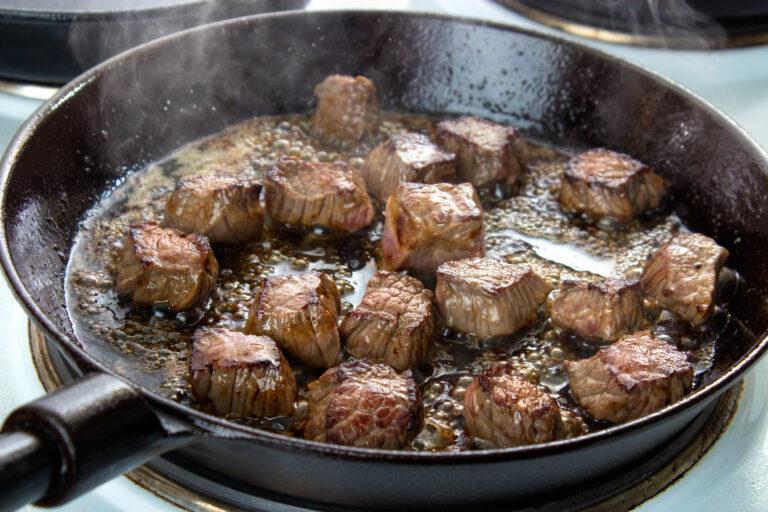
Pat your beef dry with paper towels. Season all sides generously with salt. Heat the vegetable oil in a large skillet over medium-high heat. Sear the beef on all sides until deeply browned, about 3 to 4 minutes per side. This step adds flavor through the Maillard reaction. Don’t skip it even though the meat will cook for hours.
Transfer the seared meat to your slow cooker. Pour the chile paste over the top and rub it into all surfaces of the meat. Add the remaining onion quarters, bay leaves, and beef broth. The liquid should come about halfway up the meat. If you need more liquid, add water or additional broth.
Cover and cook on low for 8 to 10 hours. Beef cheeks need the full 10 hours. Chuck roast is usually done around 8 to 9 hours. You’ll know it’s ready when the meat shreds easily with a fork and the connective tissue has completely broken down.
Here’s a helpful video showing the process with beef cheeks:
Finishing the Dish
Remove the meat from the slow cooker and transfer it to a large bowl. Discard the bay leaves and onion pieces from the cooking liquid. Use two forks to shred the meat into bite-sized pieces. If you used beef cheeks, some sections might be so tender they fall apart without any effort.
Skim excess fat from the cooking liquid if desired, though some fat adds richness. Taste the liquid and adjust seasoning with more salt if needed. Return the shredded meat to the liquid and stir to combine. Let it sit for 10 minutes so the meat reabsorbs some of the flavorful braising liquid.
At this point, your barbacoa is technically done. But here’s a pro move: spread the meat on a baking sheet and broil it for 3 to 5 minutes. This crisps up the edges while keeping the interior moist. You get textural contrast that makes the dish more interesting.
Serving Suggestions
Barbacoa shines in tacos, but limiting it to that one application misses its versatility. Warm corn tortillas are traditional, topped with diced white onion, fresh cilantro, and a squeeze of lime. Keep it simple so the meat flavor dominates.
Consommé, the rich cooking liquid, deserves attention. Strain it, adjust the seasoning, and serve it in small cups alongside your tacos. Dip each bite into the consommé before eating. This is how barbacoa is often served in Mexico, and the liquid intensifies every flavor.
Beyond tacos, barbacoa works in burrito bowls over cilantro-lime rice, in quesadillas with Oaxaca cheese, or piled on tostadas with refried beans. The leftovers actually improve after a day in the refrigerator as the flavors meld further. Reheat gently with some of the cooking liquid to keep the meat moist.
Equipment That Makes Barbacoa Easier
You don’t need specialized equipment for excellent barbacoa, but a few tools simplify the process and improve results. A good slow cooker is the most practical option for home cooks. Look for one with at least a 6-quart capacity to handle 3 to 4 pounds of meat comfortably. You can check current prices on Amazon for highly-rated models.
A high-powered blender makes smooth chile paste without chunks. Standard blenders work, but you’ll need to blend longer and scrape down the sides multiple times. Rehydrated chiles are fibrous, and a weak blender leaves stringy bits in your sauce.
If you prefer pressure cooking, an Instant Pot cuts cooking time dramatically. Beef cheeks finish in about 90 minutes at high pressure compared to 10 hours in a slow cooker. The texture is slightly different, a bit firmer even when fully tender, but the time savings appeal to many cooks. Browse pressure cooker options if speed matters more than tradition.
A cast-iron Dutch oven lets you make barbacoa entirely in the oven. This method gives you more control over temperature and produces slightly drier meat compared to slow cooker versions. Cook at 275°F for 5 to 6 hours, checking occasionally and adding liquid if the pot looks dry.
Common Mistakes and How to Avoid Them
The biggest error is choosing lean meat. Barbacoa needs fat and connective tissue to work properly. Lean cuts like sirloin or round roast will dry out and turn stringy no matter how long you cook them. This isn’t the time for lean cuts, even if you normally avoid fatty meat.
Rushing the cooking process ruins texture. Some recipes claim you can make barbacoa in 4 to 5 hours. Technically the meat will be cooked through, but it won’t have that falling-apart quality that defines great barbacoa. Connective tissue needs time and low heat to break down completely. Eight hours minimum for chuck, ten for beef cheeks.
Under-seasoning is remarkably common. The cooking process dilutes flavors as the meat releases liquid. Season aggressively at the start. That chile paste should taste intensely spiced, almost overwhelming. It will mellow significantly during cooking.
Opening the slow cooker lid repeatedly extends cooking time and releases valuable moisture. Resist the urge to check on your meat every hour. Trust the process and leave the lid on until you’re near the minimum cooking time.
Storing and Reheating Barbacoa
Barbacoa keeps beautifully in the refrigerator for up to 5 days. Store the shredded meat in its cooking liquid to prevent drying. Use airtight containers and press plastic wrap directly onto the surface before sealing to minimize air exposure.
For longer storage, freeze barbacoa in portion-sized containers for up to 3 months. Include plenty of liquid with each portion. Frozen barbacoa actually reheats better than many other slow-cooked beef dishes because the gelatin-rich liquid protects the meat fibers.
Reheat on the stovetop over low heat, stirring occasionally. Add a splash of water or broth if the mixture looks dry. Microwave reheating works in a pinch but can create hot spots. Use 50% power and stir every minute to heat evenly.
Scaling the Recipe Up or Down
This barbacoa recipe scales easily for meal prep or large gatherings. Double everything to make 6 to 8 pounds of meat in a large slow cooker or roasting pan. The cooking time stays roughly the same since you’re still cooking at the same temperature. You might add 30 minutes to an hour for larger quantities.
Scaling down below 2 pounds of meat gets trickier. The ratio of liquid to meat shifts, and you risk ending up with too much liquid for the amount of meat. If you’re cooking for one or two people, make the full recipe anyway and freeze the extra. The effort of making barbacoa properly doesn’t justify tiny batches.
The chile paste recipe works for any amount of meat. Just make sure you use enough to coat all surfaces generously. Extra chile paste keeps in the refrigerator for a week or freezes for months. Use it as a flavor base for other braises, soups, or even as a marinade for grilled meats.
Frequently Asked Questions
Can I make barbacoa in an Instant Pot?
Yes, pressure cooking produces excellent barbacoa in a fraction of the time. Sear your meat using the sauté function, add the chile paste and liquids, then cook on high pressure for 60 minutes for chuck roast or 90 minutes for beef cheeks. Let the pressure release naturally for at least 20 minutes before opening. The texture will be slightly firmer than slow cooker versions but still tender enough to shred easily. Some people prefer this texture because the meat holds together better in tacos.
What’s the difference between barbacoa and carnitas?
Barbacoa uses beef and cooks in a chile-based braising liquid with cumin and warm spices. Carnitas uses pork shoulder and typically cooks in fat or water with citrus until tender, then gets crisped. The flavor profiles are completely different. Barbacoa has earthy, slightly spicy notes from dried chiles, while carnitas leans more toward citrusy and savory. Both are delicious but not interchangeable in recipes.
Why is my barbacoa tough after cooking all day?
Three likely culprits: wrong cut, not enough cooking time, or temperature too high. If you used a lean cut without connective tissue, no amount of cooking will make it tender. For chuck roast or beef cheeks, 8 to 10 hours on the low setting should completely break down the collagen. If your slow cooker runs hot, the meat can tighten up instead of becoming tender. Try using the “keep warm” setting instead of low, or cook for even longer at low. Tough meat after long cooking almost always means temperature issues.
Can I use beef tongue in barbacoa?
Absolutely. Beef tongue (lengua) is traditional in many regional barbacoa recipes. You’ll need to peel the thick outer skin after cooking, which slips off easily once the tongue is tender. Tongue has a unique, firm texture that’s richer than muscle meat. Many cooks combine tongue with beef cheeks for variety. Cook tongue for the same amount of time as cheeks, about 8 to 10 hours until completely tender. The preparation and seasoning stay the same.
Why Barbacoa Beats Other Slow-Cooked Beef
Making authentic barbacoa at home connects you to a cooking tradition that’s survived for centuries because it works. The combination of tough, inexpensive cuts transformed through patient cooking and bold spicing produces results that expensive steaks can’t match.
Start with beef cheeks if you can find them. The texture and richness justify the extra effort to source them. If cheeks aren’t available, chuck roast delivers excellent results at a fraction of the cost. Either way, don’t rush the process. Low, slow heat and proper seasoning are the only requirements for outstanding homemade barbacoa that rivals what you’d find in the best taquerias.
The recipe above gives you a solid foundation, but feel free to adjust chile quantities and spice levels to your taste. Barbacoa should reflect your preferences while respecting the traditional techniques that make it special. Once you’ve mastered the basics, you’ll find yourself making batches regularly for weeknight dinners, weekend gatherings, and meal prep sessions.
This article contains affiliate links. If you purchase through these links, we may earn a small commission at no extra cost to you.