Venison Bratwurst: Homemade German-Style Sausage for the Grill
Make authentic venison bratwurst with this detailed recipe. Includes spice blend, fat ratios, beer poach technique, and grilling tips for perfect homemade brats.

Disclosure: As an Amazon Associate, this site earns from qualifying purchases. Thank you!
Making Venison Bratwurst at Home
Venison bratwurst combines the lean, rich flavor of deer meat with traditional German spices and the satisfying snap of a well-made sausage. You’ll get better flavor than store-bought brats, and you control exactly what goes into every link.
This recipe uses a classic ratio of venison to pork fat, seasoned with ginger, nutmeg, and white pepper for that authentic bratwurst taste. The beer-and-onion poach before grilling keeps the links juicy while adding another layer of flavor that makes these brats stand out at any cookout.
Why Venison Makes Excellent Bratwurst
Deer meat is extremely lean, which presents both opportunities and challenges for sausage making. The lack of fat means you need to add some back in, but it also means you’re starting with a clean canvas for flavor without the gamey taste some people worry about.
The key is using quality venison that’s been properly field-dressed and aged. If you hunt your own deer, trim away all silver skin, connective tissue, and any bloodshot meat before grinding. Poor trimming leads to tough, chewy sausages that no amount of spice can fix.
For those buying venison, look for meat labeled as trim or stew meat rather than premium cuts. You’re grinding it anyway, and the less expensive cuts work perfectly fine. Save the backstraps and tenderloins for steaks.
The Fat Ratio That Actually Works
You’ll want a 70/30 or 75/25 ratio of venison to pork fat. I prefer 70/30 because it creates a juicier sausage with better texture, and the extra fat helps bind the spices more effectively.
Pork shoulder fat (sometimes called pork butt fat) is your best option. It has a mild flavor that won’t compete with the venison, and it grinds easily. Ask your butcher for fat trimmings, or buy a pork shoulder and trim it yourself.
Some recipes suggest using bacon or pork belly, but I find those add too much salt and smoke flavor. You want the venison to shine through, not get buried under bacon.
Essential Equipment for Homemade Venison Brats
You’ll need a meat grinder with both coarse and medium plates, a sausage stuffer, and natural hog casings. Don’t try to make sausage with a food processor. It won’t give you the right texture, and you’ll end up with mushy, paste-like results.
If you’re serious about making sausage regularly, invest in a standalone grinder rather than a KitchenAid attachment. The attachments work in a pinch, but they heat up quickly and struggle with larger batches. A dedicated grinder makes the whole process faster and produces better texture. You can find complete sausage making kits that include everything you need to get started.
For casings, natural hog casings are the way to go. They provide that satisfying snap when you bite into the sausage, and they hold up better during the beer poach than synthetic casings. Soak them in warm water for at least 30 minutes before using to make them pliable.
The Spice Blend That Defines Bratwurst
Traditional bratwurst seasoning centers on three main spices: ginger, nutmeg, and white pepper. These create the distinctive flavor profile that separates brats from other sausages.
White pepper is critical here, not black. It has a sharper, more penetrating heat that complements the other spices better. Black pepper would overpower the subtle ginger and nutmeg notes.
Fresh ground nutmeg makes a noticeable difference over pre-ground. The essential oils in whole nutmeg are far more potent, and grating it fresh releases them into your sausage mixture. You only need about 1/4 teaspoon per pound of meat, but that small amount creates the warm, slightly sweet undertone that makes people say “that tastes like authentic bratwurst.”
Venison Bratwurst Recipe
Ingredients
- 3.5 pounds venison trim, cubed and very cold
- 1.5 pounds pork shoulder fat, cubed and very cold
- 2 tablespoons kosher salt
- 1 tablespoon ground white pepper
- 2 teaspoons ground ginger
- 1 teaspoon fresh ground nutmeg
- 1/2 teaspoon ground caraway (optional, adds depth)
- 1 cup ice-cold whole milk
- 4 feet of hog casings, soaked
For the beer poach:
- 12 oz German lager or pilsner
- 2 cups water
- 1 large onion, sliced
- 2 bay leaves
Preparation Steps
Keep everything cold throughout the entire process. Put your grinder parts in the freezer for 30 minutes before starting. Warm meat smears instead of cutting cleanly, resulting in a mushy texture.
Mix all the spices together in a small bowl. Toss the cubed venison and pork fat with the spice mixture until evenly coated. Spread the seasoned meat on a sheet pan and place it in the freezer for 20 minutes. You want it firm but not frozen solid.
Grind the meat mixture through the coarse plate first, catching it in a bowl set over ice. After the first grind, mix in the ice-cold milk thoroughly. This helps bind everything together and keeps the mixture workable.
Run everything through the medium plate for the second grind. This creates the right texture for bratwurst, finer than Italian sausage but with more substance than an emulsified sausage like hot dogs.
Mix the ground meat with your hands or a stand mixer with the paddle attachment for about 60 seconds. You want it to become slightly sticky and hold together when squeezed. This develops the protein structure that gives your brats a good snap.
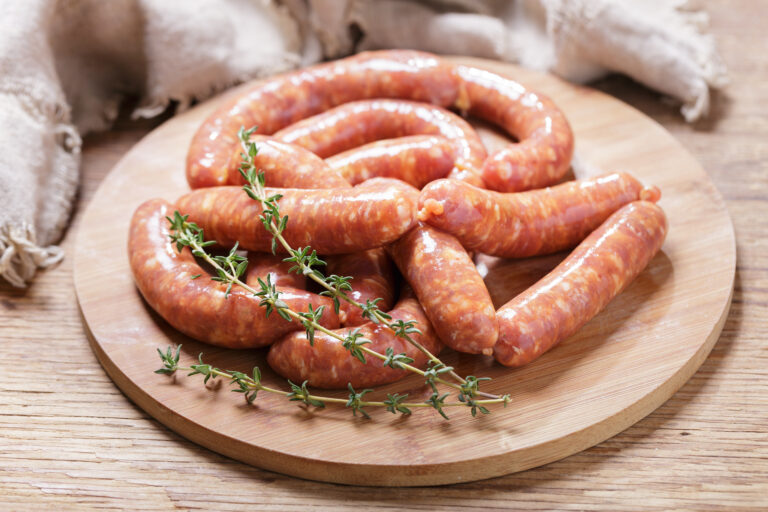
Stuff the mixture into the prepared casings, linking them every 5-6 inches by twisting in alternating directions. Don’t overstuff them. Leave enough give that the casings can expand during cooking without bursting.
Hang the sausages uncovered in your refrigerator for at least 4 hours or overnight. This dries the casings slightly and helps the flavors meld. The links will also develop a slight tackiness called pellicle, which helps them brown better on the grill.
The Beer Poach Technique
Poaching brats in beer before grilling isn’t just tradition, it’s smart cooking. The gentle heat cooks the sausages through without bursting the casings, while the beer and onions add flavor.
Combine the beer, water, sliced onions, and bay leaves in a large skillet or Dutch oven. Bring it to a simmer over medium heat, then reduce to low. You want barely bubbling water, around 170-180°F. A full boil will cause your casings to split.
Add the brats and poach them for 20 minutes, turning once halfway through. They should reach an internal temperature of 150°F. They’ll finish cooking on the grill, but this gets them most of the way there safely.
Remove the brats and pat them dry. You can refrigerate them at this point and grill them later, or go straight to the grill. Some people like to poach their brats in the morning and grill them in the evening, which actually helps the casings firm up even more.
Don’t throw out those poached onions. They’re delicious piled on top of your finished brats.
Grilling for Maximum Flavor
Set up a two-zone fire on your grill. You want medium-high direct heat on one side (around 400°F) and indirect heat on the other. This lets you brown the casings over direct heat and finish them gently over indirect if needed.
Oil your grill grates well. Sausage casings stick easily, and tearing a casing after all your work is frustrating. Use tongs to place each brat perpendicular to the grates.
Grill over direct heat for 3-4 minutes per side, rolling them a quarter turn to get even color all around. You’re looking for deep brown caramelization and slight charring. The casings should be tight and glossy.
Check the internal temperature. You want 160°F for food safety. If they’re not quite there after browning, move them to the indirect side and close the lid for a few minutes.
The beer poach means these brats are already cooked through, making them much harder to mess up on the grill. You’re mainly adding color and smoky flavor at this stage. For more control over your heat, check out these grill temperature control tips.
Serving Suggestions
Traditional German-style service keeps things simple. Use a good quality brat bun or hard roll, add a stripe of spicy brown mustard, and top with the beer-poached onions from earlier.
Sauerkraut is a classic addition that cuts through the richness of the sausage. I prefer it served on the side rather than piled on the brat, but that’s personal preference.
Skip the ketchup. It’s too sweet and masks all the complex flavors you worked hard to build with your spice blend.
For a full German feast, serve these alongside potato salad, grilled vegetables in a grill basket, and another round of that same beer you used for poaching.
Storage and Make-Ahead Tips
Fresh sausages keep in the refrigerator for 3-4 days. Store them loosely wrapped in butcher paper or parchment, not plastic wrap, which traps moisture and makes the casings slimy.
For longer storage, freeze them. Separate the links, wrap each one in plastic wrap, then place them all in a freezer bag. They’ll keep for up to 3 months. Thaw them overnight in the refrigerator before cooking.
You can also poach them first, then freeze them. This makes for incredibly fast weeknight grilling, since you’re just reheating and adding color.
Making a double batch is smart. The work of grinding and stuffing doesn’t double when you make more sausage, and having homemade venison brats in your freezer is a luxury that beats most store-bought options. If you’re curious how your homemade version compares to commercial options, check out this guide to the best bratwurst brands.
Troubleshooting Common Issues
If your brats taste dry and crumbly, you didn’t add enough fat. Venison has almost no intramuscular fat, and trying to make lean sausages results in disappointing texture. Stick to the 70/30 ratio minimum.
Casings that burst during cooking usually mean you overstuffed them or the poaching liquid was too hot. Leave some slack in the casings when stuffing, and keep your poach below 180°F.
Mushy, paste-like texture comes from meat that got too warm during grinding. Everything needs to stay below 40°F throughout the process. Chill your equipment, work quickly, and keep the meat over ice between steps.
If your sausages taste bland, you probably under-seasoned or didn’t mix the spices thoroughly enough. Salt especially needs to be distributed evenly, or you’ll get pockets of over-seasoned and under-seasoned meat in the same link.
Why Make Your Own Instead of Buying
Making venison bratwurst at home gives you control over quality that you can’t get from commercial game sausages. You choose the venison cuts, the fat ratio, and the exact spice levels.
The flavor difference is substantial. Store-bought game sausages often use too much sage or other strong spices to mask lower-quality trim meat. Your homemade version tastes clean and balanced, letting the venison flavor come through.
There’s also satisfaction in using deer meat you harvested yourself. Processing your own game into restaurant-quality sausages transforms hunting from just meat acquisition into a full culinary experience.
You’ll need some specialized equipment to get started. A good meat grinder and sausage stuffer combination will handle venison processing plus let you experiment with other sausage varieties. For natural casings specifically, you can find hog casings on Amazon that come pre-sorted and ready to use.
Variations on the Basic Recipe
Once you master the standard version, try adding a tablespoon of fresh minced garlic for a more pungent brat. This pushes it toward a Polish kielbasa style while keeping the bratwurst spice foundation.
Beer can go directly into the sausage mixture instead of just the poach. Replace half the milk with a dark German lager for deeper, more complex flavor. This also makes the sausage slightly darker in color.
Adding finely diced onions and fresh parsley creates a Thuringer-style sausage. Use about 1/2 cup of onion and 1/4 cup of parsley per 5 pounds of meat. These need to be minced very fine or they’ll interfere with stuffing.
For a spicier version, add 1 teaspoon of crushed red pepper flakes or a pinch of cayenne. Just remember that heat intensifies as sausages age, so go lighter than you think you need.
Understanding Game Meat Regulations
If you’re processing wild game, be aware of regulations around sharing or selling your sausages. In most states, you can’t sell wild game meat or products made from it without special licensing.
Giving sausages to friends and family is generally fine, but check your state’s game laws. Some states have restrictions on transferring wild game between hunters.
For food safety, the USDA recommends cooking all ground game meat to 160°F internal temperature. Wild game can potentially carry parasites or bacteria that proper cooking eliminates. The beer poach and grill method gets you well past this threshold.
If you’re concerned about chronic wasting disease (CWD) in your area, have your deer tested before processing. While CWD hasn’t been shown to affect humans, many hunters prefer to avoid consuming meat from positive animals.
FAQ
Can I make venison bratwurst without a sausage stuffer?
You can form the mixture into patties instead of stuffing casings. These grill well and have the same flavor, though you lose the traditional bratwurst texture and snap. Some people use a piping bag to stuff casings, but it’s messy and inconsistent. If you plan to make sausage regularly, a proper stuffer is worth the investment.
What other types of fat work besides pork shoulder?
Beef fat can work but has a higher melting point and can leave a waxy coating in your mouth. Lamb fat is too strongly flavored and will overpower the venison. Pork shoulder fat is really your best option for neutral flavor and good texture. Some people use bacon fat, but it adds salt and smoke that changes the final product significantly.
How long do the spices need to cure in the meat mixture?
Unlike cured sausages like salami, fresh bratwurst doesn’t need a curing period for the spices. Mixing them thoroughly and letting the stuffed sausages rest overnight in the fridge helps flavors blend, but you can technically cook them immediately after stuffing. The overnight rest mainly helps dry the casings for better browning.
Can I skip the beer poach and just grill them?
You can, but you’ll need to use very low, indirect heat and cook them slowly to avoid bursting the casings. The poach method is more forgiving and adds flavor. If you skip it, keep your grill temperature around 300°F and plan on 25-30 minutes of cooking time, turning frequently. Use a meat thermometer to verify they reach 160°F internally.
Final Thoughts on Homemade Venison Brats
Making your own venison bratwurst takes practice, but the fundamentals are simple: keep everything cold, get the fat ratio right, and don’t overcook them. The beer poach technique practically guarantees success by cooking them gently before you add any grill marks.
These brats represent one of the best uses for venison trim, turning lean meat that might otherwise become dry into juicy, flavorful sausages that rival anything you’d buy. The German spice profile works beautifully with game meat, and the whole process becomes faster and easier after you’ve made a batch or two.
Start with this recipe exactly as written, then adjust the spices to your preference on future batches. You’ll quickly develop your own house style that becomes your signature sausage.
This article contains affiliate links. If you purchase through these links, we may earn a small commission at no extra cost to you.