
Essential Brine Formulas for Juicy Chicken, Turkey, and Pork
Brining is the most reliable way to guarantee juicy chicken, turkey, and pork every single time. The salt in…

Brining is the most reliable way to guarantee juicy chicken, turkey, and pork every single time. The salt in the brine changes the protein structure of the meat, allowing it to hold more moisture during cooking. The difference between a brined pork chop and an unbrined one off the same grill is stark: one stays tender, the other goes dry.
Here are the essential brine formulas for each protein, with timing guidelines and flavor variations that actually work.
Disclosure: As an Amazon Associate, this site earns from qualifying purchases. Thank you!
Basic Wet Brine Formula

The universal ratio is 1/4 cup kosher salt per quart of water. For sweetness and balance, add 2 tablespoons of sugar per quart. Dissolve the salt and sugar in warm water, then chill completely before adding the meat. Never brine in warm liquid. Warm brines accelerate bacterial growth and partially cook the surface of the meat, creating a mushy texture.
For a gallon of brine (enough for a whole chicken or four to six pork chops), use 1 cup kosher salt and 1/2 cup sugar. Scale up or down based on your container size and the volume of meat. The meat needs to be fully submerged. If it floats, weight it down with a plate.
Use kosher salt, not table salt. Table salt is denser and will make the brine twice as salty. If you only have table salt, use half the amount called for in the recipe.
Chicken Brine
For a whole chicken or bone-in pieces, brine 4 to 12 hours in the refrigerator. For boneless breasts, 1 to 2 hours is sufficient. Longer than 12 hours can make chicken overly salty and spongy. The texture turns mealy if you push past that window.
A 4-pound whole chicken needs about 2 quarts of brine to stay submerged in a large bowl or pot. Keep it refrigerated the entire time. Room temperature brining invites food safety problems.
Flavor additions: crushed garlic, bay leaves, peppercorns, lemon zest, fresh thyme. These aromatics infuse into the meat along with the salt. Crush the garlic cloves with the side of a knife to release their oils. Whole peppercorns add a subtle heat without making the brine spicy.
For a batch of bone-in thighs or drumsticks, 6 to 8 hours hits the sweet spot. They come out deeply seasoned and juicy, even if you accidentally overcook them by a few degrees. If you’re planning to roast, grill, or smoke those pieces, a brine beforehand is close to mandatory. You can find more ways to prepare brined poultry in our collection of chicken recipes worth bookmarking.
Turkey Brine
A whole turkey needs 12 to 24 hours in a brine large enough to submerge it completely. A food-safe brining bucket or a large cooler with ice works for turkeys too big for the refrigerator. If using a cooler, add frozen gallon jugs of water to keep the temperature below 40°F throughout the brining period. Check the temperature with a thermometer after a few hours to confirm it’s staying cold.
A 12- to 14-pound turkey requires at least 2 gallons of brine. Use 2 cups kosher salt and 1 cup sugar dissolved in 2 gallons of cold water. Place the turkey breast-side down in the brine so the thickest part of the meat gets maximum exposure.
Flavor additions: apple cider (substitute 1 quart of cider for 1 quart of water), sage, rosemary, onion, juniper berries. Apple cider adds sweetness and a mild fruity note that complements turkey without overpowering it. Fresh sage and rosemary bring an earthy, herbal depth. Halve an onion and toss it in. Juniper berries add a piney, gin-like brightness that cuts through the richness of dark meat.
For turkey breast only, 8 to 12 hours is enough. A bone-in breast weighs 5 to 7 pounds and needs less time than a whole bird. If you’re smoking just the breast, the brine keeps it from drying out during the long cook. Our guide to smoking turkey breast walks through the full process.
Pork Chop Brine
Pork chops are lean and benefit enormously from even a short brine. Submerge for 1 to 4 hours. The difference between a brined and unbrined grilled pork chop is dramatic. Unbrined chops turn chalky and dry at 145°F. Brined chops stay moist and tender even if you hit 150°F.
Bone-in chops hold up better to longer brining times. Go for 3 to 4 hours. Boneless chops are thinner and can take on too much salt if you push past 2 hours. For a quick weeknight dinner, even 1 hour makes a noticeable difference.
Flavor additions: brown sugar (swap it for white sugar in the base formula), whole grain mustard (2 tablespoons per quart), garlic, apple cider vinegar (1/4 cup per quart). Brown sugar adds a caramelized sweetness that pairs well with pork. Mustard brings a tangy sharpness without making the brine acidic. Vinegar brightens the flavor and tenderizes the surface slightly.
If you’re brining a larger cut like pork shoulder, the timing and technique shift. Check out our pork shoulder brining tips for more specific guidance on that cut.
Quick Brine Method
Short on time? Double the salt concentration (1/2 cup per quart) and halve the brining time. This “turbo brine” produces similar results in half the hours. A chicken breast that normally needs 2 hours can be done in 1 hour with a concentrated brine. A whole chicken that needs 8 hours can be done in 4.
Rinse the meat thoroughly after a concentrated brine to prevent excess surface salt. Pat it completely dry with paper towels. The surface needs to be dry for good browning and crisping during cooking.
This method works well when you forgot to start the brine early. It’s not quite as foolproof as a standard brine because the margin for error is smaller, but it gets you 90% of the way there.
Dry Brine Alternative
If submerging meat in liquid feels like too much hassle, dry brining achieves 80% of the benefit with almost no effort. Sprinkle kosher salt generously over the protein’s surface (about 1/2 teaspoon per pound) and refrigerate uncovered for the same duration as a wet brine. The salt draws out moisture, dissolves into a concentrated brine on the surface, and gets reabsorbed along with the seasoning.
Dry brining also dries the skin on poultry, which promotes crispier results during roasting and grilling. For a Thanksgiving turkey, the dry brine method is increasingly preferred by professional cooks because it produces both juicy meat and crackling-crisp skin. No liquid to dispose of, no giant container taking up fridge space, and the results are nearly identical to a wet brine.
For a whole chicken, use about 2 teaspoons of kosher salt rubbed all over the skin and inside the cavity. Place it on a wire rack set over a rimmed baking sheet and refrigerate uncovered for 8 to 12 hours. The exposed skin dries out, which is exactly what you want. During roasting, that dry skin crisps up beautifully.
For pork chops, use about 1/4 teaspoon per side. Pat it into the surface and let them sit uncovered in the fridge for 2 to 4 hours. They’ll look slightly damp after an hour as the salt draws out moisture. By hour two, that moisture will have been reabsorbed.
You can read more about how dry and wet preparations affect chicken in our comparison of wet versus dry chicken.
Flavor Infusions Beyond Salt
A brine is an opportunity to infuse flavor deep into the meat. For an Asian-inspired brine, add soy sauce (1/4 cup per quart, reduce the salt slightly to compensate), ginger (3-inch knob, sliced), and star anise (2 to 3 pods). For a Southwestern twist, include lime juice (1/4 cup per quart), cumin (1 tablespoon), and chili powder (1 tablespoon). For a classic herb brine, use bay leaves (2 to 3), thyme (several sprigs), rosemary (2 sprigs), and peppercorns (1 tablespoon). The salt carries these flavors into the meat in a way that surface seasoning alone cannot.
Sweeteners (sugar, honey, maple syrup) balance the salt and promote browning during cooking. Don’t skip the sweetener; even a small amount makes a noticeable difference in the finished flavor profile. Honey and maple syrup add complexity beyond plain sugar. Use 3 tablespoons of honey or maple syrup per quart in place of 2 tablespoons of sugar.
Fresh herbs are better than dried for brines. Dried herbs can turn bitter during long soaking times. Fresh citrus zest works better than juice because juice adds acidity that can make the texture mushy if left too long.
Equipment That Makes Brining Easier

A dedicated brining container simplifies the process. Large food-safe bags designed for brining take up less space than rigid containers and conform to odd shapes like whole turkeys. Our roundup of the best brining kits covers bags, buckets, and complete kits with all the accessories you need.

Brining Bucket Kit
Food-safe buckets with tight-fitting lids that make brining large turkeys and multiple chickens easy
For smaller cuts like chicken pieces or pork chops, a gallon-size resealable bag works fine. Place the bag in a bowl to catch any leaks. For whole chickens and turkeys, brining bags rated for up to 25 pounds are worth the small investment. They’re thick enough not to puncture and come with twist ties that actually seal.
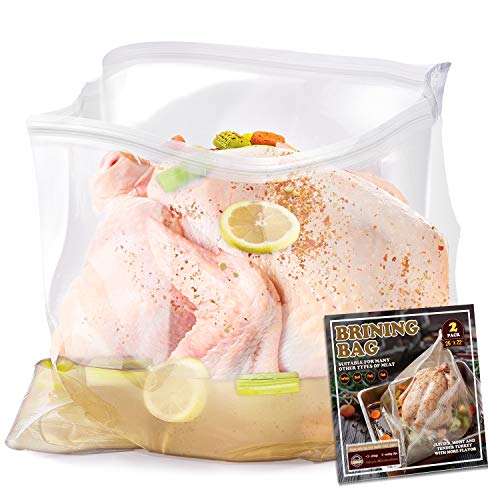
XL Brining Bags
Heavy-duty bags that can handle a 25-pound turkey and fit in most refrigerators
If you’re brining a large turkey in a cooler, line the cooler with a brining bag first. This keeps the cooler clean and makes disposal easier. Add ice around the bag to maintain temperature.
The Science Behind Brining

Salt in the brine dissolves and is drawn into the meat through osmosis. Once inside, the salt denatures the muscle proteins, causing them to unwind and form a looser matrix that traps more water. The result: meat that retains 6% to 10% more moisture during cooking than unbrined meat.
This isn’t just surface seasoning. The salt penetrates deep into the muscle tissue. A properly brined chicken breast will be seasoned evenly from edge to center, not just on the outside. The restructured proteins also make the meat more resistant to overcooking. A brined chicken breast can handle being cooked to 165°F without turning into rubber.
Sugar and other flavorings don’t penetrate as deeply as salt, but they do get pulled in to some degree. Most of the flavor benefit from aromatics comes from the surface layer, but it’s still more effective than a dry rub applied just before cooking.
Mistakes to Avoid
Brining too long is worse than not brining at all. The texture becomes waterlogged and spongy. Stick to the time windows listed for each protein. Set a timer if you need to.
Using iodized table salt will ruin the brine. It’s too concentrated and adds a metallic taste. Buy a box of kosher salt and keep it in the pantry specifically for brining.
Skipping the rinse after brining can leave the surface too salty. A quick rinse under cold water for 10 seconds is all it takes. Then pat dry thoroughly with paper towels.
Brining in a metal container can react with the salt and impart off flavors. Use food-safe plastic, glass, or stainless steel. Avoid aluminum and cast iron.
Other Proteins That Respond Well to Brining
Brisket benefits from brining before smoking, though it’s not as common as brining poultry or pork. A brine adds moisture to lean brisket flats and enhances the bark. Our article on brining brisket covers the pros and cons.
Game birds like pheasant and quail are excellent candidates for brining because their meat is leaner than chicken. A simple apple cider brine works particularly well with these stronger-flavored birds. We’ve got a full recipe for smoked whole pheasant with apple cider brine if you want to try it.
Frequently Asked Questions
Should I rinse after brining?
A quick rinse removes excess surface salt. Pat dry thoroughly after rinsing, especially if you want crispy skin. Skipping the rinse is fine for mildly brined meat (standard concentration), but always rinse after concentrated quick brines. If the meat tastes too salty after cooking, you probably skipped the rinse or brined too long.
Can I brine frozen meat?
You can thaw and brine simultaneously. Place the frozen meat in the brine in the refrigerator. It will thaw over several hours while absorbing the brine. Add extra time since the frozen meat needs to thaw before the brine can fully penetrate. A frozen chicken will take 12 to 18 hours to thaw and brine, compared to 6 to 8 hours for a thawed bird.
Does brining work on enhanced chicken?
No. Enhanced chicken is already injected with a salt solution. Brining it further will make it unpleasantly salty. Check the ingredient list and only brine chicken labeled “no added solutions.” Enhanced chicken usually says something like “contains up to 15% solution” on the package. If you see that, skip the brine. Regular dry seasoning is enough.
Can I reuse brine?
Never reuse brine. Once raw meat has been submerged in it, the brine is contaminated with bacteria. Dispose of used brine and make a fresh batch for the next round. The cost of salt and sugar is too low to risk food poisoning over.


