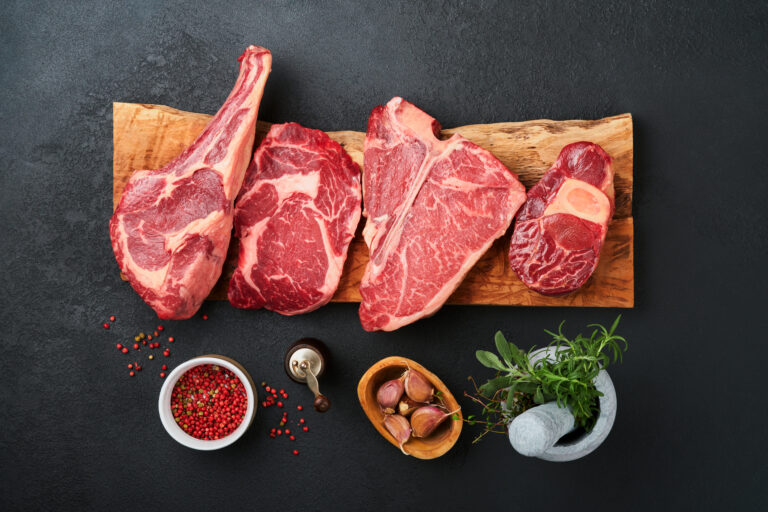
Best Cuts of Meat for Stir-Fry on a Budget
Stir-fry is one of the best weeknight meals for stretching a small amount of meat across a big, satisfying…

Stir-fry is one of the best weeknight meals for stretching a small amount of meat across a big, satisfying dinner. The key is choosing cuts that stay tender when sliced thin and cooked over high heat for just a couple of minutes.
You don’t need expensive steak for this. Budget cuts actually work better in many cases because they respond well to quick cooking methods and proper technique.
The right cut makes all the difference. Look for meat with enough fat or marbling to stay juicy under high heat, but not so much that it renders out and makes the dish greasy. Grain structure matters too.
Cuts with long, visible grain lines slice cleanly into thin strips and respond well to slicing against the grain, which shortens the muscle fibers and keeps each bite tender.
Disclosure: As an Amazon Associate, this site earns from qualifying purchases. Thank you!
Flank Steak

Flank steak is a stir-fry classic. Its long grain structure slices beautifully into thin strips, and it stays tender when seared quickly over high heat.
Slice it against the grain into 1/8-inch strips while it’s partially frozen (about 30 minutes in the freezer) for the cleanest cuts. You’ll get uniform pieces that cook evenly, which prevents some strips from overcooking while others stay raw.
Flank steak absorbs marinades quickly because of its open grain structure. A 15-minute soak in soy sauce, sesame oil, and cornstarch gives the slices a velvety texture that mimics restaurant-quality stir-fry.
If you’re planning ahead, even five minutes in the marinade makes a noticeable difference. Don’t skip it.
Expect to pay competitively priced to competitively priced per pound for flank steak depending on your region and retailer. That’s a middle-tier price point for beef, but a single pound feeds four people easily when paired with rice and vegetables.
If you need ideas for using leftover flank steak in other meals, there are plenty of ways to stretch it across multiple dinners.
Look for flank steak with a deep red color and visible grain lines running the length of the cut. Avoid pieces with excessive surface moisture or an off smell.
Some supermarkets label it as “London broil,” which is technically a cooking method but often used interchangeably with flank steak.
Pork Loin
Boneless pork loin is one of the cheapest per-pound meats at any grocery store, and it’s excellent for stir-fry. Slice it into thin strips across the grain and stir-fry for 2 to 3 minutes.
It cooks fast, stays tender if you don’t overcook it, and takes on any flavor profile you throw at it. Whether you’re making Kung Pao, ginger scallion, or Thai basil stir-fry, pork loin adapts without complaint.
Buy a whole pork loin and slice some for stir-fry, some for chops, and freeze the rest. The per-pound cost on a whole loin is remarkably low, often competitively priced to competitively priced per pound on sale.
That makes it one of the best values for quick-cooking meals. A three-pound loin gives you enough meat for multiple stir-fry dinners, plus bonus chops for grilling or pan-frying later.
The main risk with pork loin is drying it out. It’s very lean, so it doesn’t have the fat cushion of pork shoulder or belly. Keep your stir-fry time short.
Once the pork turns from pink to white, pull it out of the wok immediately. You can always add it back in during the final toss with the sauce and vegetables if you’re worried it’s underdone, but you can’t undo dry, overcooked pork.
Trim any silverskin or thick fat cap before slicing, but leave a thin layer of fat if it’s evenly distributed. That little bit of fat adds flavor without making the dish greasy.
Cut your strips about 1/4-inch thick. Any thinner and they cook so fast you’ll struggle to control doneness.
Chicken Thighs

Boneless skinless chicken thighs are the superior choice over breasts for stir-fry. They have more fat, which means more flavor and a much wider margin of error.
Even slightly overcooked thighs stay juicy, while overcooked breast meat turns chalky and dry in seconds. If you’ve ever wondered why restaurant stir-fry chicken tastes better than what you make at home, thighs are part of the answer.
Cut thighs into bite-sized pieces (about 1-inch cubes) and velvet them in a mixture of cornstarch, soy sauce, and a splash of rice wine for 15 minutes before cooking.
Velveting is the Chinese restaurant technique that creates that silky, glossy coating on stir-fried chicken. The cornstarch forms a protective layer that locks in moisture and gives each piece a tender, almost slippery texture that clings to sauce.
Boneless skinless thighs run competitively priced to competitively priced per pound in most markets, making them one of the most affordable proteins for stir-fry. A pound of chicken thighs yields about 12 to 14 ounces of usable meat after trimming, which serves three to four people when combined with vegetables and rice.
Bone-in, skin-on thighs are even cheaper if you’re willing to do the butchering yourself, though the time savings of buying them already prepped is usually worth the extra dollar per pound.
Trim off any large chunks of fat or cartilage, but don’t obsess over getting every tiny bit. A little fat is fine and adds flavor.
Cook the chicken in batches if your wok or pan is on the smaller side. Crowding causes steaming instead of searing, which makes the chicken rubbery and prevents that caramelized brown crust from forming.
Top Round (Beef)
Top round is ultra-lean and very affordable. It’s tougher than flank steak, but when sliced paper-thin against the grain and given the cornstarch-velveting treatment, it works beautifully in stir-fry.
The key is high heat and short cooking time. 60 to 90 seconds in a screaming hot wok is all it needs. Any longer and it turns into shoe leather.
You can find top round competitively priced to competitively priced per pound, sometimes less when it’s on sale. That’s significantly cheaper than flank steak and only marginally tougher when prepared correctly.
The savings add up if you’re making stir-fry weekly. Buy a two-pound roast, slice what you need for tonight’s dinner, and freeze the rest in single-meal portions.
Top round benefits more from velveting than any other cut on this list. The cornstarch coating compensates for the lack of intramuscular fat and keeps the meat from seizing up and toughening under high heat.
Skip the velveting step and top round becomes nearly inedible in stir-fry. Follow it and you get tender, flavorful beef that costs half what flank steak does.
For more guidance on selecting beef cuts that balance quality and price, there’s a detailed breakdown of steak cuts that deliver flavor without breaking the bank.
Skirt Steak (When You Can Find It)
Skirt steak doesn’t always make the budget list because pricing varies wildly by region, but when it’s available for under competitively priced per pound, it’s worth grabbing.
Skirt has even more pronounced grain than flank, which means slicing against the grain makes a dramatic difference in tenderness. It’s also fattier than flank, which gives it a richer, beefier flavor.
The downside is that skirt steak is thinner and cooks faster than flank, so your timing window is narrower. You’re looking at 45 to 60 seconds per batch in a hot wok.
Miss that window and it goes from perfectly tender to tough and chewy in the span of 10 seconds. Use a timer if you need to.
Skirt steak also shrinks more than flank during cooking because of its higher fat content. Plan on losing about 25% of the raw weight to shrinkage.
That doesn’t mean it’s a bad value, just that you should buy a little extra if you’re feeding a crowd.
The Velveting Technique

Velveting is the difference between chewy stir-fry meat and restaurant-smooth stir-fry meat. Toss your sliced meat in 1 tablespoon cornstarch, 1 tablespoon soy sauce, and 1 teaspoon oil per pound.
Let it sit for 15 to 30 minutes. The cornstarch coating creates a barrier that seals in moisture during the intense heat of stir-frying.
Some cooks add an egg white to the mixture for extra silkiness, which works well but isn’t strictly necessary for good results.
The science is simple. Cornstarch gelatinizes when it hits high heat, forming a thin protective layer around each piece of meat.
That layer prevents moisture from escaping and keeps the meat’s proteins from tightening up and squeezing out their juices. The soy sauce adds flavor and salt, which helps the meat hold onto water. The oil lubricates everything and prevents sticking.
You can velvet any protein: beef, pork, chicken, shrimp, even tofu if you want a firmer texture. The ratios stay the same regardless of what you’re cooking.
Some restaurant kitchens take it a step further and briefly blanch the velveted meat in oil (a technique called “passing through”), but that’s overkill for home cooking and uses a lot of oil.
If you want to dive deeper into the range of sauces that pair with velveted meat, there are options beyond the standard soy-garlic-ginger combination.
Equipment Matters (But Not As Much As Technique)
A quality wok makes a noticeable difference because it gets hotter than a standard nonstick pan. That extreme heat is what creates the smoky, caramelized flavor (called wok hei) that defines great stir-fry.
Carbon steel woks are the traditional choice and hold heat well, but they require seasoning and maintenance. If you want a simpler option, electric woks offer consistent heat control without the learning curve of managing a flame.
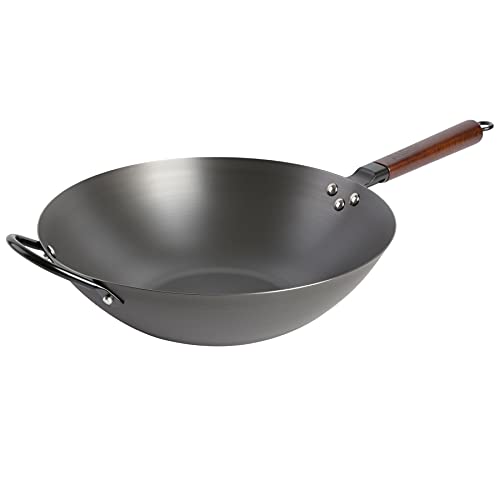
Carbon Steel Wok
A 14-inch flat-bottomed carbon steel wok is ideal for home stoves and provides excellent heat retention for proper searing
For home cooks working on a standard stove, a 14-inch flat-bottomed carbon steel wok is the sweet spot. It’s large enough to toss ingredients without spilling, and the flat bottom makes better contact with Western burners than a round-bottomed wok.
Choosing the right wok depends on your stove type and how much space you have for storage.
If you don’t have a wok, a large (12-inch or bigger) stainless steel or cast-iron skillet works. Nonstick pans are the worst choice for stir-fry because they can’t handle the high heat needed for proper searing.
They also prevent browning, which is where most of the flavor comes from.
Preheat your wok or skillet until a drop of water evaporates on contact in under a second. Add oil and swirl to coat, then wait another 10 seconds until the oil shimmers and just barely starts to smoke.
That’s when you add the meat. If the oil isn’t hot enough, the meat will stick and steam instead of sear.
Common Mistakes and How to Avoid Them
Overcrowding is the number one killer of good stir-fry. Too much meat in the pan drops the temperature, which causes steaming instead of searing.
Cook in batches if you’re making more than two servings. Pull the first batch out, let the wok reheat for 30 seconds, then cook the second batch. Combine everything when you add the sauce.
Skipping the partial freeze makes slicing thin strips much harder, especially with flank or skirt steak. The meat is too soft to hold its shape under the knife, so you end up with ragged, uneven pieces.
30 minutes in the freezer firms up the exterior just enough to get clean, uniform slices.
Cooking the meat all the way through in the initial sear is another mistake. You’ll add it back in with the vegetables and sauce later, so it gets a second round of heat.
Pull it out when it’s about 80% done (still slightly pink in the center for beef and pork, just opaque for chicken). It’ll finish cooking in the final toss and stay tender instead of turning rubbery.
Frequently Asked Questions
Can I use sirloin for stir-fry?
Yes, but it’s more expensive than flank or round and doesn’t add enough extra tenderness to justify the price difference when sliced thin and cooked quickly. Save sirloin for grilling where its qualities shine.
Compare the per-pound price to flank steak when sirloin is on sale. If sirloin is cheaper, go for it, but otherwise stick with the budget cuts.
How thin should I slice meat for stir-fry?
Aim for 1/8-inch strips. The partial-freeze trick (30 minutes in the freezer until the outside is firm but the center is still slightly soft) makes thin, uniform slicing much easier.
Use a sharp knife and slice in one smooth motion rather than sawing back and forth. If your knife drags or tears the meat, it’s not sharp enough.
Why does my stir-fry meat come out tough?
Three common causes: overcrowding the pan (which steams instead of sears), cooking too long, or skipping the velveting step. Cook in small batches, keep the heat high, and remove the meat after 60 to 90 seconds.
Tough meat is almost always a result of too much heat for too long, or not enough heat for the right amount of time. Find the balance and your results will improve dramatically.
Can I marinate the meat overnight instead of velveting?
You can, but it’s not the same. Velveting creates a physical coating that protects the meat during cooking. A marinade flavors the meat but doesn’t provide that protective barrier.
Drain the excess liquid and toss the meat with cornstarch before cooking when you marinate overnight. That gives you the flavor benefits of marinating plus the texture benefits of velveting.