
How to Make Cold-Smoked Salmon (Lox) at Home
Cold-smoked salmon (lox-style) is a luxurious product that costs a premium at the deli counter. Making it at home…

Cold-smoked salmon (lox-style) is a luxurious product that costs a premium at the deli counter. Making it at home requires patience and attention to food safety, but the process is simple and the results rival artisan producers. Here’s the full guide from cure to finished product.
Disclosure: As an Amazon Associate, this site earns from qualifying purchases. Thank you!
Food Safety First
Cold smoking happens below 80°F, which is within the bacterial danger zone. The curing step is essential for safety, as the salt concentration inhibits bacterial growth during the smoking process. Do not skip or shorten the cure.
If you’re uncomfortable with the safety parameters, stick with hot-smoked salmon (which cooks the fish to a safe internal temperature).
The USDA recommends freezing salmon at -4°F for seven days before cold smoking to kill parasites. Most home freezers run at 0°F, which requires freezing for at least a week. If you’re using previously frozen salmon from the grocery store, you’re already covered.
If you’re working with fresh-caught or never-frozen fish, freeze it before starting the cure. Some producers skip the freeze step and rely on the cure alone. Freezing adds a layer of safety that costs nothing but time.
The Cure


Mix equal parts kosher salt and brown sugar by weight. For a 2-pound salmon fillet, you need about 2 cups of the mixture. Coat the fillet completely, covering all surfaces generously.
Place in a glass baking dish, cover with plastic wrap, and refrigerate for 24 to 48 hours. The cure draws moisture from the fish through osmosis while the salt penetrates inward.
After curing, the fish will feel firmer and the surface will be tacky. Rinse the cure off thoroughly under cold water and pat dry with paper towels.
Thicker fillets (1.5 inches or more at the spine end) need the full 48 hours. Thinner fillets (under 1 inch) can finish in 24. If you leave a thin fillet in cure for 48 hours, it comes out too salty.
Taste a small piece from the tail end after rinsing. It should taste pleasantly seasoned, not mouth-puckeringly salty.
Some recipes add dill, peppercorns, juniper berries, or citrus zest to the cure. These aromatics flavor the surface but don’t penetrate deeply. If you want classic lox flavor, skip the extras. If you want gravlax (Scandinavian cured salmon), add fresh dill and a splash of aquavit to the cure.
Forming the Pellicle

Place the rinsed fillet on a wire rack and refrigerate uncovered for 6 to 12 hours. This forms a pellicle, a thin, tacky layer on the surface that allows smoke to adhere properly.
Without a pellicle, smoke condenses unevenly and can create a bitter, acrid taste. The pellicle should feel slightly sticky to the touch, like the back of a Post-it note.
If it’s still wet and slippery, give it more time. If it’s completely dry and matte, you’ve gone too long and the surface has hardened too much. You want tacky, not dry.
A small fan pointed at the fillet in the fridge speeds pellicle formation. Position it so air circulates around the fish without drying one side more than the other. Some people use a box fan on low in a garage fridge dedicated to curing projects.
A regular refrigerator works fine without the fan, it just takes longer.
Cold Smoking
You need a way to generate smoke without heat. A cold smoke generator tube filled with wood pellets or sawdust produces smoke for 4 to 6 hours without raising the temperature significantly.
Place it inside your regular grill or smoker (with no other heat source active). Smoke the salmon for 4 to 8 hours, keeping the temperature below 80°F.
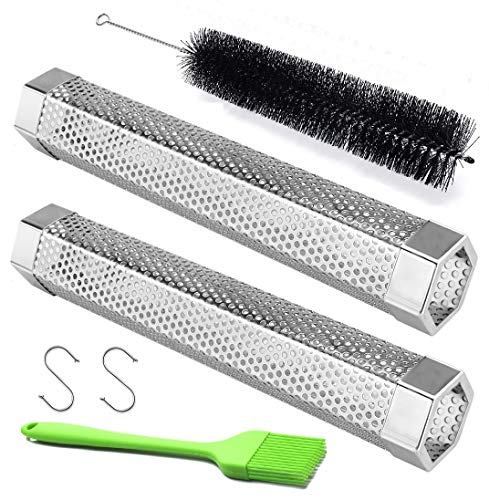
Cold Smoke Generator Tube
Essential tool for cold smoking that produces clean smoke without heat for 4-6 hours
Alder and apple wood produce the traditional mild, sweet smoke flavor associated with lox. Check periodically that the ambient temperature inside the smoker hasn’t climbed too high.
Outdoor temperature matters. Cold smoking in July in Texas is asking for trouble. The ambient heat alone can push your smoker into the danger zone. Cold smoking works best when outdoor temperatures are below 50°F.
If you’re smoking in warmer weather, do it early in the morning or late at night and monitor temperature constantly with a reliable thermometer.
Some setups use a separate smoke chamber connected to the heat source by a pipe or duct. This keeps the smoke generator physically separated from the fish, allowing smoke to cool before it reaches the food. You can build one with two cardboard boxes and a dryer vent hose. It’s ugly but it works.
Pellet smokers with cold smoke attachments make the process easier. Traeger, Pit Boss, and Camp Chef all sell cold smoke kits designed to work with their units. You’re paying for convenience, but if you already own the smoker, a budget-friendly attachment beats rigging up a cardboard contraption.
Rotate the fillet halfway through smoking if your smoker has hot spots. Most have uneven airflow that deposits more smoke on one side. A 180-degree turn at the 3-hour mark evens things out.
Finishing
After smoking, wrap the fillet tightly in plastic wrap and refrigerate for 12 to 24 hours. This allows the smoke flavor to equalize throughout the fish.
Slice paper-thin against the grain using a sharp, long knife. Serve on bagels with cream cheese, capers, and red onion.
A slicing knife with a 10- to 12-inch blade makes this easier. Hold the knife at a shallow angle and use long, smooth strokes. Short sawing motions tear the flesh and create ragged edges.
If you’re struggling to get thin slices, chill the fillet in the freezer for 20 minutes before slicing. Slightly firm fish cuts cleaner.
Remove the skin before slicing or leave it on and peel it off each slice as you go. Skin-on is easier to handle during slicing because it gives you something to grip. Skin-off looks cleaner on the plate.
Troubleshooting Common Issues
If the salmon tastes too salty, extend the rinse time after curing. Run cold water over the fillet for 15 to 20 minutes and taste a small slice from the thin end.
If it’s still salty, soak the fillet in cold water for 30 minutes.
If the smoke flavor is too mild, extend the smoking time by 2 to 4 hours. If it’s too strong or bitter, reduce smoking time and check that your wood pellets or sawdust aren’t smoldering too aggressively.
A steady, thin stream of smoke is ideal. Thick, white billowing smoke indicates incomplete combustion and deposits bitter compounds.
If the surface looks wet or shiny after smoking instead of matte and tacky, the pellicle didn’t form properly. Return the fillet to the fridge uncovered for another 4 to 6 hours before attempting to smoke again. A proper pellicle is the foundation for clean smoke adhesion.
If the texture is mushy or the fillet falls apart when you slice it, the cure wasn’t long enough or the fish was too fresh and never frozen. Freezing breaks down cell walls slightly, which firms the texture after curing.
Mushy salmon is safe to eat but unpleasant. Use it chopped in a salmon spread instead of slicing it.
If you see white albumin (the white protein goop that leaches out during cooking) on the surface during smoking, your temperature climbed too high. Albumin appears when salmon hits 140°F or so.
Check your thermometer placement and make sure it’s measuring air temp near the fish, not near a vent or heat source.
Storage and Yield
A 2-pound fillet loses about 20% of its weight during curing and smoking. You’ll end up with roughly 1.6 pounds of finished product. That’s 25 to 30 servings if you’re slicing it deli-thin for bagels.
Vacuum sealing extends shelf life significantly. A vacuum-sealed fillet lasts 2 to 3 weeks in the fridge. Wrapped in plastic without vacuum sealing, it lasts about 1 week.
Freeze vacuum-sealed portions for 2 to 3 months. Freezing degrades texture slightly, but frozen cold-smoked salmon still beats most of what you’ll find at the grocery store.
Label everything with the date you finished smoking. Cold-smoked salmon doesn’t look or smell different when it’s going bad until it’s really bad. Dating your packages prevents guesswork.
Cost Breakdown
Grocery store lox runs competitively priced to competitively priced per pound at the deli counter. A whole side of salmon (3 to 4 pounds) competitively priced to competitively priced per pound at Costco or a fish market.
After trimming and weight loss, you’ll have 2.5 to 3 pounds of finished product from a 4-pound fillet. That’s competitively priced to competitively priced in raw fish yielding the equivalent of competitively priced to competitively priced worth of retail lox.
The cure ingredients cost almost nothing. A box of kosher salt and a bag of brown sugar run competitively priced total and handle multiple batches. Wood pellets or sawdust competitively priced to competitively priced for a bag that lasts 6 to 8 smoking sessions.
If you already own a grill or smoker, a cold smoke generator tube is budget-friendly. You’re looking at a modest initial investment in equipment, then competitively priced per batch in fish and materials. The payoff comes after the second or third batch.
Frequently Asked Questions
How Long Does Homemade Cold-Smoked Salmon Last?
Vacuum-sealed cold-smoked salmon lasts 2 to 3 weeks in the refrigerator and 2 to 3 months in the freezer. Unwrapped, it lasts about 1 week refrigerated.
Label everything with the date you finished smoking. Cold-smoked salmon doesn’t look or smell different when it’s going bad until it’s really bad.
Can I Use Any Type of Salmon?
Fattier varieties (king, Atlantic) produce the best results because the fat carries smoke flavor and creates a silkier texture. Leaner species (sockeye, coho) work but produce a drier, firmer finished product.
Farmed Atlantic salmon is the most forgiving for beginners. It’s fatty, consistent in thickness, and widely available. Wild king salmon tastes better but costs twice as much and has more variation in fat content depending on the season.
Is Cold-Smoked Salmon Raw?
Technically yes, the fish is not cooked by heat. The curing process and smoke exposure create conditions that inhibit bacteria, but the proteins are not denatured by heat the way they are in hot-smoked salmon.
This is the same preparation used for commercial lox and smoked salmon. The freezing step and proper cure make it safe to consume.
Can I Cold Smoke Previously Frozen Salmon?
Yes. Freezing is actually recommended for safety. Just thaw the fillet completely in the fridge before starting the cure. Pat it dry before applying the cure mixture.
What’s the Difference Between Lox and Cold-Smoked Salmon?
Traditional lox is cured but not smoked. Cold-smoked salmon (sometimes called Nova lox) is cured and then smoked. The terms get used interchangeably at delis, but they’re technically different products. What you’re making here is cold-smoked salmon.
Do I Need a Smoker or Can I Use a Regular Grill?
Any covered grill works. Charcoal, gas, pellet, all fine as long as you’re not lighting the fuel source. The grill is just acting as a smoke chamber.
A cold smoke generator tube sits on the grate and produces smoke without heat. This technique works with any type of grill you already own.
Can I Cold Smoke Other Fish?
Trout, char, steelhead, and mackerel all work. Trout is especially good and costs less than salmon. The process is identical. Oily fish smoke better than lean white fish like cod or halibut.
If you’re interested in other curing and smoking projects, check out our guides on making venison salami and elk pastrami for similar curing techniques with game meat.
This article contains affiliate links. We may earn a small commission at no extra cost to you.


