Ribeye vs New York Strip: Fat, Tenderness & Price Compared
Ribeye and New York strip are the two most popular steaks in America, and the choice between them comes…

Ribeye and New York strip are the two most popular steaks in America, and the choice between them comes down to one fundamental preference: do you want maximum richness or a cleaner, beefier bite? Both are excellent, but they deliver distinctly different eating experiences.
Disclosure: As an Amazon Associate, this site earns from qualifying purchases. Thank you!
Marbling and Fat Content

Ribeye has significantly more intramuscular fat than strip steak. The ribeye’s central eye is surrounded by the spinalis (the cap), which is one of the most marbled, flavorful muscles on the entire cow. All that fat renders during cooking and creates the buttery, rich mouthfeel that ribeye fans love.
The fat content difference shows up clearly in the numbers. A typical Choice grade ribeye runs around 37-40% fat by weight. Prime ribeye pushes past 40%. That’s a lot of rendered fat pooling on your plate.
New York strip has a firm band of fat along one edge (the fat cap) but less marbling throughout the lean meat. Strip usually comes in around 23-28% fat at Choice grade, with Prime strip reaching 30-33%. The result is a cleaner, more concentrated beef flavor without the heavy richness. Some people prefer this leaner profile, especially those who find ribeye too fatty.
The location matters too. Ribeye comes from the rib section (ribs 6 through 12), where the cow stores more fat because those muscles don’t work as hard. Strip comes from the short loin, further back along the spine, where the muscle gets more use and stays leaner.
Tenderness
Ribeye is naturally more tender because of its fat distribution. Fat lubricates the muscle fibers and provides a softer chew. Even a slightly overcooked ribeye maintains reasonable tenderness because the fat compensates.
Strip steak has a firmer, more substantial chew. It’s not tough by any means (especially at Choice or Prime grade), but the bite is noticeably different from ribeye. Many steak purists actually prefer this firmer texture because it feels more satisfying and “steaky.”
Thickness changes the tenderness equation. A 1-inch ribeye and a 1-inch strip both cook fast enough that neither gets tough, assuming you pull them at the right temp. But at 2 inches thick, the strip’s leaner composition means you need to be more precise with your target temp. Miss by 10 degrees and the strip feels dry, while the ribeye stays forgiving.
Grain structure plays a role too. Strip has longer, more defined muscle fibers running in one direction. Slicing against the grain makes a big difference. Ribeye’s fat pockets interrupt the grain, so slicing direction matters less. If you’re looking for techniques to maximize tenderness in leaner cuts, proper slicing technique becomes even more critical.
Price
Ribeye typically costs more per pound than strip at the same USDA grade. The difference ranges from modest to significant depending on the retailer and the time of year. Both are premium cuts, so neither qualifies as a budget option, but strip is usually the more wallet-friendly choice.
At most grocery store meat counters, expect to pay competitively priced to competitively priced more per pound for ribeye compared to strip at the same grade. During holiday periods (late December, Memorial Day, Fourth of July), both cuts spike, but the gap often narrows because strip demand surges.
Costco’s pricing reflects the gap clearly. Choice ribeye steaks typically cost more per pound than Choice strip steaks. Prime grades push both cuts higher, but the spread holds.
Buying whole sub-primals (a whole strip loin or whole ribeye roll) from Costco and cutting your own steaks narrows the price gap significantly and saves money on both cuts.
A whole Choice ribeye roll (bone-in rib section, 7 ribs) weighs around 18 to 22 pounds at wholesale clubs. A whole strip loin (bone-in) weighs 14 to 18 pounds. You’ll spend more upfront, but the per-steak cost drops by 30% to 40% compared to buying individual steaks. If you’re working with a tighter budget, there are several affordable beef cuts worth considering that deliver excellent flavor without the premium price tag.
Best Cooking Methods

Ribeye: High-Heat Searing
High-heat sear in a cast iron skillet or over direct grill heat. The fat needs high heat to render properly. Baste with butter during the last minute for an extra layer of richness. Pull at 130-135°F for medium-rare.
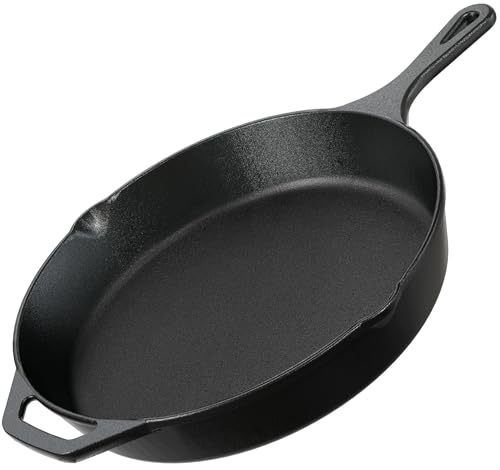
Cast Iron Skillet 12 Inch
Essential for getting a proper sear on ribeye; retains heat better than any other pan material
Get the pan screaming hot before the steak goes in. Ribeye fat renders best above 400°F surface temp. A properly preheated cast iron or carbon steel pan hits that mark. Let the steak sit undisturbed for 3 to 4 minutes per side (for a 1.5-inch steak). Resist the urge to flip early.
On the grill, set up a two-zone fire with all the coals banked to one side. Sear the ribeye directly over the coals, then move it to the cooler side to finish if it’s getting too charred before reaching temp. For more ways to prepare this cut, check out these ribeye recipe ideas for various meals.
Strip: Controlled Heat and Reverse Sear
Also excellent with high heat, but it benefits from a slightly more controlled approach. The fat cap can cause flare-ups on the grill, so have an indirect zone ready. Strip steaks thicker than 1.5 inches respond well to the reverse sear (low oven first, then a finishing sear).
For reverse sear, set your oven to 225°F. Place the strip on a wire rack over a sheet pan and cook until the internal temp hits 110-115°F. That takes 25 to 35 minutes for a 2-inch steak. Pull it out, let it rest 10 minutes, then sear in a ripping-hot pan for 90 seconds per side. You get an even medium-rare edge to edge with a dark crust.
Strip’s leaner profile means it dries out faster than ribeye if you push past medium. Don’t cook strip beyond 140°F unless you like jerky.
Bone-In vs. Boneless
Both cuts come bone-in or boneless. The bone doesn’t add flavor (that’s a myth), but it does two useful things: it slows heat transfer on one side of the steak, giving you a gradient of doneness, and it makes the steak look more impressive on the plate.
Bone-in ribeye is sold as a cowboy steak when the rib bone is left long (8 to 10 inches). Bone-in strip is sometimes called a Kansas City strip. Boneless versions of both cuts are easier to sear evenly and faster to cook.
Bone-in steaks cost slightly less per pound because you’re paying for bone weight. A bone-in ribeye might be priced lower per pound than boneless, but 12% to 15% of that weight is bone you can’t eat. The actual meat cost ends up close to even.
Picking a Good One at the Counter

What to Look for in Ribeye
Look for even distribution of white marbling flecks throughout the eye and a visible spinalis cap. Avoid ribeyes where the cap has separated from the eye, which happens with rough handling.
Check the color. Fresh ribeye should be bright cherry red in the lean sections, with creamy white fat. Grayish-brown patches or yellowing fat mean the steak has been sitting too long.
Thickness matters more than weight. A 1.25-inch ribeye is harder to cook right than a 1.75-inch ribeye because the thin one overcooks before you get a good crust. Aim for steaks at least 1.5 inches thick.
What to Look for in Strip
Look for a steak with even thickness from one end to the other (some strips taper toward one end, which causes uneven cooking). The fat cap should be a clean, firm white. Moderate marbling throughout the lean is a sign of a good Choice or Prime cut.
Strip steaks cut from the center of the loin (the middle of the sub-primal) are the most uniform. Steaks from the ends taper and include more connective tissue. If you’re buying from a butcher counter, ask for center-cut strips.
Press the steak gently through the package. It should feel firm and spring back. Mushy texture means the steak was frozen and thawed, which breaks down the muscle structure.
Waste and Trimming
Ribeye generates more trim waste than strip. That big fat cap and the pockets of fat between muscles add up. Expect to lose 8% to 12% of the steak’s weight to trimmings if you’re the type who cuts away excess fat before cooking.
Strip waste is minimal. The fat cap runs along one edge and you can leave it on or trim it in 10 seconds. The lean meat itself needs no trimming unless you hit a patch of silverskin, which is rare on strip.
Save ribeye trimmings for rendering into tallow. Freeze the fat scraps in a zip-top bag until you have a pound or two, then render it low and slow in a heavy pot. Strain and store the tallow for frying potatoes or searing other steaks. Strip trimmings don’t yield much usable fat.
Freezing and Storage
Both cuts freeze well if you wrap them right. Vacuum-seal individual steaks or wrap tightly in plastic wrap, then add a layer of butcher paper or foil. Frozen steaks hold quality for 6 to 9 months. Beyond that, they’re still safe but the texture starts to degrade.
Ribeye’s higher fat content makes it slightly more prone to freezer burn if the wrap isn’t airtight. Fat oxidizes faster than lean meat in the freezer. Check your seals.
Thaw frozen steaks in the fridge, not on the counter. A 1.5-inch steak takes 12 to 18 hours to thaw fully in a 38°F fridge. Plan ahead.
Common Mistakes
Ribeye Errors
Biggest mistake with ribeye: not letting the rendered fat drain. Ribeye releases a lot of liquid fat as it cooks, especially in a pan. If the steak sits in pooled fat, it fries instead of searing. Tilt the pan periodically and spoon out excess fat, or move the steak to a dry spot on the grill grates.
Strip Errors
Biggest mistake with strip: trimming the fat cap before cooking. That cap protects the lean meat and bastes it as the fat renders. Trim it after cooking if you don’t want to eat it, but leave it on during the cook.
Universal Timing Mistakes
Both cuts suffer from the same timing error: flipping too soon. Let the crust develop. If the steak sticks to the grates or the pan, it’s not ready to flip. Wait another minute.
Resting matters for both, but it’s critical for strip. A ribeye’s fat keeps the juices distributed even if you skip the rest. Strip needs 5 to 8 minutes resting after cooking or the juices run out when you slice.
Pairing with Sides
Ribeye’s richness pairs well with lighter, acidic sides that cut through the fat. Grilled asparagus, arugula salad with lemon vinaigrette, or roasted Brussels sprouts balance the plate. Skip heavy cream-based sides unless you want to feel like you ate a stick of butter.
Strip’s leaner profile handles richer sides better. Loaded baked potato, creamed spinach, or buttery mashed potatoes don’t overwhelm the steak. The cleaner beef flavor holds up.
For sauces, ribeye doesn’t need much. A sprinkle of