10 Tips to Save Money on Meat at Costco
Costco’s meat department offers some of the best per-pound pricing in the country, but knowing a few insider strategies…

Costco’s meat department offers some of the best per-pound pricing in the country, but knowing a few insider strategies turns good savings into great ones. These ten tips help you maximize every dollar you spend on meat at the warehouse club.
Disclosure: As an Amazon Associate, this site earns from qualifying purchases. Thank you!
1. Buy Whole Sub-Primals and Cut Yourself

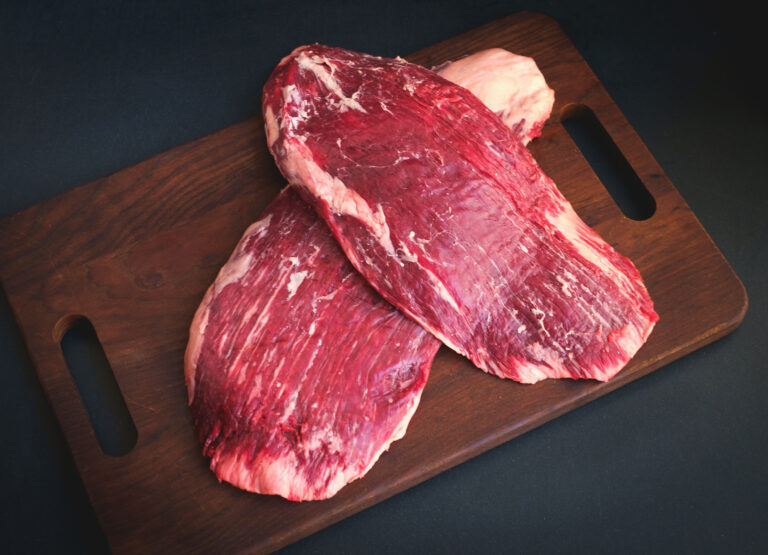
Whole boneless ribeye rolls, strip loins, and pork loins cost dramatically less per pound than pre-cut steaks and chops. A whole ribeye roll yields 10 to 14 steaks at a savings of 25% to 40% compared to buying individual cuts. All you need is a sharp knife and 15 minutes.
The technique is simple. Let the whole sub-primal sit at room temperature for 20 minutes to firm up slightly, which makes cutting easier. A long slicing knife works best. Cut against the grain in 1-inch to 1.5-inch slices for ribeyes, slightly thinner for strip steaks. You control the thickness, which means you can cut exactly what you need: thick steaks for reverse searing, thinner ones for quick weeknight dinners.
A typical whole ribeye roll weighs 12 to 16 pounds and runs competitively priced to competitively priced per pound, while pre-cut ribeye steaks at the same store competitively priced to competitively priced per pound. On a 14-pound roll, that’s a savings of competitively priced to competitively priced. The same math applies to pork loins, where whole loins sell competitively priced to competitively priced per pound versus competitively priced to competitively priced per pound for pre-cut chops.
Trim any excess fat cap to your preference. Save the trimmings for rendering into tallow or lard. Vacuum seal what you won’t cook within three days and freeze flat for easy stacking. Having a quality knife designed for butchering and meat prep makes this process much faster and safer.

2. Time Your Visits for Markdowns
Costco marks down meat approaching its sell-by date, typically in the late afternoon. Visiting between 3 PM and 6 PM gives you the best chance of finding discounted packages. The savings are typically 20% to 30% off the regular price.
Markdown timing varies by location and day of week. Weekdays see fewer shoppers competing for marked-down items. Mondays and Tuesdays often have weekend overstock that needs to move. Talk to the butchers at your local warehouse to learn their markdown schedule. Some locations mark down earlier, around 1 PM or 2 PM.
Check the use-by date on markdown packages. If it’s two days out and you’re cooking tonight or tomorrow, you’re fine. If you plan to freeze immediately, the use-by date matters less. Vacuum seal markdown meat right when you get home to lock in freshness for months.
Not every visit yields markdown finds, but when you score a competitively priced pack of ribeyes competitively priced, the savings stack up fast. Build your shopping routine around flexibility: if there’s a markdown, grab it. If not, stick to your regular list.
3. Compare Business Center vs Regular Costco
Costco Business Centers (available in some metro areas) carry commercial-sized meat packages at even lower per-pound prices than regular Costco locations. Whole briskets, bulk chicken, and restaurant-grade pork are often available here.
Business Centers stock items in true foodservice sizes: 40-pound cases of chicken wings, whole untrimmed briskets weighing 14 to 18 pounds, and 10-pound bags of bacon ends. The per-pound pricing undercuts regular Costco by another 10% to 20%, but you’re committing to larger quantities.
This makes sense if you have a dedicated freezer and cook for a family or meal prep in bulk. A whole untrimmed brisket at a Business Center might run competitively priced per pound, while a trimmed flat at regular Costco competitively priced to competitively priced per pound. You’re doing the trimming yourself, but you’re also getting the point cut for burnt ends or chopped beef.
Not every metro area has a Business Center. Check Costco’s website for locations. You need a regular Costco membership to shop there, and business memberships aren’t required for most locations. These strategies work at any warehouse club where you shop.
4. Use the Rotisserie Chicken Strategically

At its low price point, the rotisserie chicken provides more value per dollar than almost any raw protein in the store. Strip the meat for chicken salad, tacos, soup, and pasta throughout the week. Simmer the carcass into stock for an additional 2 quarts of homemade broth.
A typical rotisserie chicken yields 3 to 4 pounds of cooked meat. That’s enough for four to five meals if you’re stretching it: chicken quesadillas one night, chicken salad sandwiches for lunch, shredded chicken over rice another night. At the current price, you’re paying less per pound than raw chicken breasts, and it’s already cooked.
Don’t waste the carcass. Toss it in a stockpot with onion ends, carrot peels, celery scraps, and a bay leaf. Cover with water, simmer for 2 to 3 hours, and strain. You’ll pull 8 to 10 cups of rich stock that freezes perfectly. Use it for soups, risotto, or braising liquid. The stock alone is worth several dollars compared to buying boxed broth.
Time-saving tip: pick up two rotisserie chickens. Strip one immediately for the week’s meals. Strip the second, portion the meat into 1-cup freezer bags, and freeze. You’ve got instant cooked chicken for future recipes with zero active cooking time.
5. Know Which Cuts Aren’t a Good Deal
Pre-marinated meats (like the marinated tri-tip and chicken) cost more per pound than buying the plain cut and seasoning it yourself. Pre-cut thin steaks also carry a per-pound premium over whole sub-primals. Pre-formed burger patties cost more per pound than buying ground beef and forming your own.
Pre-marinated tri-tip runs competitively priced to competitively priced per pound. Plain tri-tip at the same warehouse competitively priced to competitively priced per pound. You’re paying competitively priced to competitively priced per pound for a marinade you can make in 2 minutes with soy sauce, garlic, oil, and black pepper. The same markup applies to pre-marinated chicken thighs and pork chops.
Thin-cut steaks (often labeled “sandwich steaks” or “minute steaks”) cost more per pound than the whole sub-primal they came from. You’re paying for convenience, but if you’re already cutting your own steaks from a whole ribeye roll, cutting thin slices is no extra effort.
Pre-formed burger patties carry a similar premium. A 15-count box of frozen patties costs competitively priced per pound, while ground beef chubs run competitively priced to competitively priced per pound. Spend 10 minutes forming patties yourself, freeze them on a sheet pan, then stack with parchment between each patty. Same end result, lower cost.
Avoid pre-seasoned meat rubs applied in-store unless you genuinely prefer that specific blend. Most are salt-forward and mask the meat’s natural flavor. A basic kosher salt and coarse black pepper rub costs pennies and lets the beef speak for itself. Using a reliable thermometer is far more important for getting perfect results than any fancy marinade.
6. Vacuum Seal Everything

A vacuum sealer is essential for making Costco’s large packages practical. Portion, seal, and freeze what you won’t use within 2 to 3 days. Vacuum-sealed meat lasts 12 to 18 months in the freezer without quality loss.
Entry-level vacuum sealers are budget-friendly and widely available. Chamber sealers (the pro-grade option) handle liquids and marinades better, but for home use, a FoodSaver or similar edge-sealer works fine. Buy bags in bulk rolls and cut to size rather than using pre-sized bags. You’ll save money and reduce waste.
Portion meat into meal-sized amounts before sealing. If you’re cooking for two, portion steaks in pairs. Freeze ground beef in 1-pound portions pressed flat. Flat portions thaw faster and stack efficiently in the freezer.
Label everything with the cut, weight, and freeze date. Use a permanent marker directly on the bag. A year from now, you won’t remember if that’s a New York strip or a sirloin. Include the weight so you know how much you’re thawing for recipe planning.
Vacuum sealing prevents freezer burn, which ruins texture and flavor. Meat wrapped in butcher paper or zipper bags develops ice crystals and oxidation within 3 to 6 months. Vacuum-sealed meat stays pristine for over a year. This means you can stock up during sales without worrying about waste.
Thaw vacuum-sealed meat in the refrigerator overnight. Cut the bag open before thawing to prevent botulism risk in the anaerobic environment. If you’re in a hurry, submerge the sealed bag in cold water. It’ll thaw in 30 to 60 minutes depending on thickness.
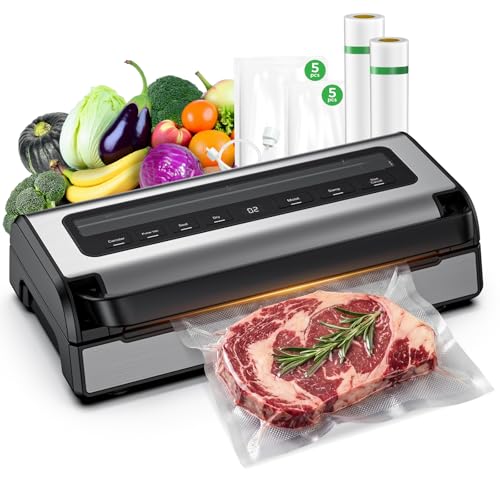
Vacuum Sealer Starter Kit
Makes bulk buying practical and prevents freezer burn for up to 18 months
7. Check Both the Fresh and Frozen Sections
Costco’s frozen section carries items (like frozen shrimp bags, salmon portions, and chicken tenders) that are often cheaper per pound than their fresh counterparts. The quality of flash-frozen seafood is excellent and sometimes superior to counter-thawed “fresh” options.
Frozen wild-caught salmon portions competitively priced to competitively priced per pound, while “fresh” farmed salmon at the counter runs competitively priced to competitively priced per pound. The frozen product was flash-frozen on the boat within hours of harvest, locking in peak freshness. The “fresh” salmon at the counter was often frozen, shipped, and thawed at the store. You’re paying more for a product that’s technically older.
The same applies to shrimp. A 2-pound bag of frozen raw shrimp (31/40 count) costs competitively priced per pound. Thawed shrimp at the counter runs competitively priced to competitively priced per pound. Buy frozen, thaw it yourself in a bowl of cold water for 15 minutes, and save the markup.
Frozen chicken tenders and nuggets make sense if you have kids or need quick weeknight protein. The per-pound price beats buying fresh chicken breasts and cutting your own tenders. The quality is consistent, and you can pull