
How to Cook Eye of Round Roast (Cheap Beef Done Right)
Eye of round is the most bought and most ruined cut of beef in America. It’s dirt cheap per…

Eye of round is the most bought and most ruined cut of beef in America. It’s dirt cheap per pound, which makes it appealing, but its leanness makes it unforgiving. Cook it wrong and you get a dry, gray, flavorless hunk of meat. Cook it right and you get deli-quality roast beef that rivals anything behind the counter at the grocery store.
Disclosure: As an Amazon Associate, this site earns from qualifying purchases. Thank you!
Why It’s So Cheap
Eye of round comes from the hindquarters of the cow, a heavily used muscle group. It’s extremely lean with almost no marbling or connective tissue. The lack of fat means less flavor and no built-in moisture protection during cooking.
Butchers and grocery stores price it low because demand is limited relative to supply. The muscle itself is cylindrical and uniform, which makes it easy to portion and package.
That uniformity is a plus for slicing, but it doesn’t compensate for the structural reality: this is a working muscle with dense grain and virtually zero intramuscular fat. Rib roasts and strip loins command higher prices because they deliver built-in tenderness and flavor through marbling. Eye of round trades all that for a low price tag and a clean, lean profile.
You’ll find eye of round priced anywhere from competitively priced to competitively priced per pound depending on the store and whether it’s on sale. Costco often runs it under competitively priced per pound. Walmart and Aldi price it similarly. Compare that to a ribeye roast competitively priced to competitively priced per pound or a tenderloin competitively priced+. The savings are real, but so is the difference in fat content. If you’re looking for other affordable options, check out our guide to the best cheap cuts of beef that deliver quality on a budget.
The Right Cooking Method

The key to eye of round is a two-stage approach: high-heat sear followed by low-temperature oven roasting. This creates a flavorful crust while gently cooking the interior to the perfect temperature.
Preheat your oven to 500°F. Season the roast generously with salt, pepper, garlic powder, and dried rosemary. Place it on a roasting rack in a pan. Sear at 500°F for 15 minutes to build a deep brown crust on the exterior.
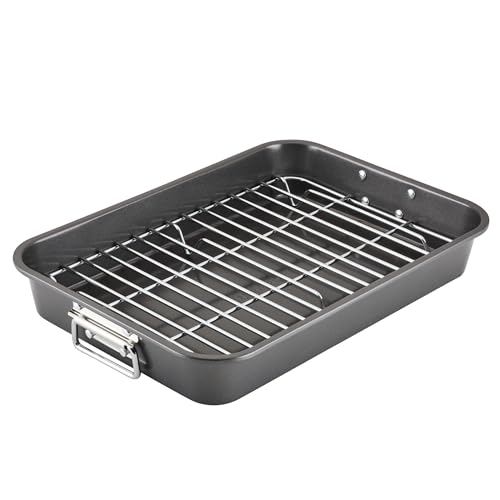
Roasting Pan with Rack
Essential for proper air circulation during the sear and roasting stages
Without opening the oven door, reduce the temperature to 225°F. Continue roasting until the internal temperature reaches 125-130°F for medium-rare (about 1.5 to 2 hours for a 3 to 4 pound roast). The low temperature cooks the meat gently and evenly, minimizing moisture loss.
The sear stage is non-negotiable. That initial blast of heat develops a Maillard reaction on the surface, creating the browned, savory crust that adds the only real depth of flavor this lean cut will produce.
The low oven stage is where patience pays off. Cooking at 225°F prevents the exterior from overcooking while the interior slowly climbs to your target temperature. If you rush it at 350°F or 375°F, the outer layers dry out and turn gray before the center reaches medium-rare.
A 3-pound roast takes about 90 to 110 minutes at 225°F after the sear. A 5-pound roast can stretch to 2.5 hours. Use a leave-in probe thermometer and watch the readout. Don’t guess.
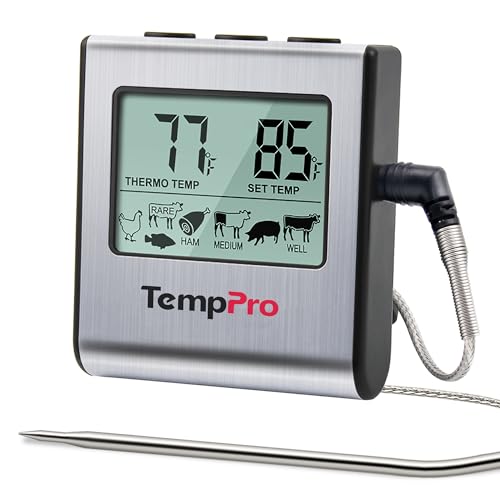
Leave-In Probe Thermometer
Monitors internal temperature without opening the oven door, preventing heat loss
Do Not Go Past Medium
This is the critical rule for eye of round. At medium-rare (130°F), the meat is tender, juicy, and flavorful. At medium (140°F), it’s acceptable but noticeably drier. Past medium (145°F+), eye of round becomes tough, dry, and unpleasant. There’s no amount of gravy that saves an overcooked eye of round.
Use a leave-in probe thermometer and set an alarm for 125°F. Carryover cooking will bring the roast to 130-135°F during the rest.
The difference between 130°F and 145°F is not subtle. At 130°F, the muscle fibers are still holding moisture, and the protein hasn’t fully contracted. At 145°F, the fibers have squeezed out most of their juice, and the texture shifts from tender to chalky. Understanding proper temperature control and cut selection is essential to avoiding stringy, overcooked beef.
Medium-rare is your ceiling. Medium is your absolute limit. Anything past that is a waste of meat.
Let the roast rest for 15 to 20 minutes after pulling it from the oven. Tent it loosely with foil. The internal temperature will coast upward by 5 to 10 degrees during this rest. If you pull at 130°F, you’ll end up at 135-140°F after resting, which lands you in the safe zone for medium-rare to the low edge of medium.
Slicing Is Mandatory

Eye of round must be sliced thin. Paper-thin slices against the grain make this cut feel far more tender than it actually is. Thick slices expose the tight grain structure and make the meat feel chewy.
A sharp slicing knife and a steady hand produce deli-quality slices. For even thinner results, chill the cooked roast in the refrigerator for a few hours before slicing. Cold meat slices more cleanly than warm.
Grain direction on eye of round runs lengthwise along the roast. Slice perpendicular to that grain. If you slice with the grain, you’re pulling long muscle fibers across your teeth, which feels stringy and tough. Cutting across the grain shortens those fibers into tiny segments that chew easily.
Aim for slices no thicker than 1/8 inch. Thinner is better. If you have a deli slicer, this is where it earns its counter space. Hand-slicing works fine if you keep the knife sharp and the roast cold. Room-temperature roast beef is harder to slice thin because the meat is softer and tears instead of cutting cleanly.
Seasoning and Flavor Additions
Salt, pepper, and garlic powder form the baseline. Dried rosemary or thyme add herbal notes that complement beef without overwhelming it. You can also rub the roast with Dijon mustard before seasoning for a subtle tang and better spice adhesion.
Avoid thick rubs or sugar-heavy seasonings. The high-heat sear will burn sugar before it caramelizes, leaving a bitter crust. Keep it simple. The meat itself has a mild, clean beef flavor, and your job is to enhance that, not mask it.
Some cooks add a few smashed garlic cloves and a sprig of fresh rosemary to the roasting pan during the low-temperature stage. The aromatics infuse the pan drippings, which you can then use to make a quick au jus.
Deglaze the pan with a cup of beef broth after removing the roast, scrape up the browned bits, and simmer for a few minutes. Strain and serve alongside the sliced beef.
Uses for Eye of Round
Thin-sliced eye of round makes excellent roast beef sandwiches, French dip, steak salads, and cold-cut platters. It’s also perfect for homemade beef jerky because of its leanness and uniform shape.
For French dip, pile thin slices on a toasted hoagie roll, top with melted provolone, and serve with a cup of warm au jus for dipping. The lean beef soaks up the jus without falling apart, and the thin slices stay tender.
For cold sandwiches, layer the slices on rye or sourdough with horseradish cream, arugula, and thinly sliced red onion. The sharp horseradish cuts through the mild beef and adds punch.
Eye of round also works well in grain bowls. Slice it thin, toss it with mixed greens, roasted vegetables, and a tangy vinaigrette. The lean protein adds substance without the heaviness of fattier cuts.
For beef jerky, slice the raw roast into 1/4-inch strips, marinate overnight in soy sauce, Worcestershire, black pepper, and garlic powder, then dehydrate at 160°F for 4 to 6 hours. The lack of fat means the jerky won’t turn rancid quickly, and the uniform shape produces consistent strips.
Common Mistakes

Cooking eye of round like a prime rib is the most common error. Prime rib has enough marbling to protect itself during longer cooking times and higher temperatures. Eye of round does not. Treat it like a lean, delicate cut that needs low heat and careful monitoring.
Another mistake is skipping the rest period. If you slice into the roast immediately after pulling it from the oven, the juices run out onto the cutting board instead of redistributing through the meat. That 15 to 20 minute rest is the difference between moist slices and dry ones.
Cutting thick slices ruins the texture. Even perfectly cooked eye of round feels tough if you cut it into half-inch slabs. Thin slices are non-negotiable.
Using a slow cooker or braising this cut is a waste. Eye of round has no collagen to break down, so long, moist cooking methods don’t tenderize it. They just dry it out. Save the slow cooker for chuck roast and short ribs, or try other cuts like beef stew with root vegetables that benefit from extended cooking times.
Price Comparisons by Store
Costco sells eye of round roasts in vacuum-sealed packs, usually 4 to 5 pounds, priced between competitively priced and competitively priced per pound. The larger format makes sense if you’re feeding a group or planning to slice it for sandwiches throughout the week.
Sam’s Club prices are similar, often running competitively priced to competitively priced per pound. Walmart typically stocks smaller roasts (2.5 to 3.5 pounds) competitively priced to competitively priced per pound. Aldi carries eye of round intermittently, usually priced under competitively priced per pound when available.
Local butcher shops may charge slightly more, often competitively priced to competitively priced per pound, but you’re paying for better trimming and the option to request a specific size. If you only need a 2-pound roast, a butcher can cut one to order. Grocery


