Why Steak Prices Vary: Understanding Cost Differences
Two steaks sitting side by side in the meat case can have wildly different price tags. A filet mignon…

Two steaks sitting side by side in the meat case can have wildly different price tags. A filet mignon might cost three or four times more per pound than a chuck steak. Understanding the factors that drive those price differences helps you make informed decisions about where your money goes, and when paying more (or less) actually makes sense.
Disclosure: As an Amazon Associate, this site earns from qualifying purchases. Thank you!
Cut Location on the Animal

The most fundamental pricing factor is which muscle the steak comes from. Muscles along the spine (tenderloin, ribeye, strip) do minimal work during the animal’s life, producing naturally tender meat. These primal cuts sit in the rib and loin sections where movement is limited.
Muscles in the legs and shoulders (round, chuck, shank) work constantly, developing tough fibers and connective tissue that require slow, moist cooking methods to break down. For dishes that use these tougher cuts, techniques similar to braising work exceptionally well.
Tender muscles are in higher demand and shorter supply relative to tough muscles, which drives their per-pound price up. Each cow produces only about 6 to 8 pounds of tenderloin but 25+ pounds of chuck. The shoulder alone accounts for roughly 26% of a steer’s total carcass weight, while the short loin delivers just 8%. That scarcity translates directly to shelf pricing.
The rib primal yields ribeye steaks and standing rib roasts. The short loin produces strip steaks, T-bones, and porterhouses. The sirloin (a distinct primal from the short loin) offers top sirloin and tri-tip. Each muscle group has different grain structure, fat distribution, and flavor intensity.
A ribeye carries intramuscular fat throughout. A strip steak concentrates fat along the exterior cap. A top sirloin runs leaner with tighter grain. These structural differences affect both cooking behavior and retail price. Understanding these distinctions can help you choose between tenderloin and sirloin based on your preferences and budget.
Chuck cuts like chuck eye steak and flat iron offer excellent flavor because they come from well-exercised muscles with robust beefy taste. They just need different cooking approaches than tender loin cuts. Round cuts from the rear leg are the leanest and toughest, best suited for marinating, mechanically tenderizing, or braising.
USDA Grading

USDA Prime (the highest grade) commands the largest premium because only 6% to 8% of graded beef earns this designation. Choice is the most common grade, and Select is the leanest. The price steps from Select to Choice to Prime reflect the increasing marbling at each level.
A typical spread might show Select strip competitively priced per pound, Choice competitively priced, and Prime competitively priced. That’s a 110% jump from Select to Prime for what looks like the same cut.
Grading evaluates intramuscular fat (marbling) in the ribeye muscle between the 12th and 13th ribs. The marble pattern at that specific location determines the entire carcass grade. More marbling means more flavor, tenderness, and juiciness when cooked. It also means higher production costs. The differences in marbling between premium cuts like ribeye and filet mignon explain much of their price variation even within the same grade.
Cattle destined for Prime spend more time on feed, consume more grain, and reach heavier market weights. Those costs flow through to retail pricing.
Within each grade, there’s a quality range. High-end Choice approaches low Prime in marbling but costs significantly less. This is where value-conscious shoppers find the best deals: top-of-Choice at Choice pricing. Some butchers and meat managers cherry-pick Choice carcasses with exceptional marbling, effectively selling near-Prime quality without the Prime label or price.
Ask your butcher which Choice steaks they consider exceptional. Many will steer you toward specific lots or days when superior Choice product arrives.
Select grade works fine for quick-sear cooking if you don’t overcook it. It has less margin for error, a narrower target temperature range before it dries out. Prime forgives slight overcooking because the fat lubricates the muscle fibers. Select does not.

Meat Thermometer
Essential for monitoring doneness on leaner cuts like Select grade beef
Ungraded beef (common at discount grocers and some warehouse clubs) may be equivalent to Select or lower. Without the USDA shield, you’re buying on trust and visual assessment. Some of it is perfectly good. Some isn’t. Check the color, the fat distribution, and the price per pound against graded alternatives.
Demand
Consumer preferences drive pricing independent of quality. Chicken breast is more expensive per pound than chicken thigh not because it’s better, but because more people want it. Ribeye and filet command premiums partly because they’re the cuts people order at restaurants and associate with special occasions.
That cultural conditioning shapes retail pricing. If everyone decided strip steak was the prestige cut, prices would shift accordingly.
Conversely, cuts that are equally delicious but less famous (flat iron, hanger, teres major) stay cheaper because fewer people ask for them. Hanger steak, sometimes called butcher’s steak, was historically kept by butchers for personal use because customers didn’t request it. It delivers bold, mineral-rich flavor and competitively priced to competitively priced per pound in markets where filet runs competitively priced to competitively priced.
Understanding demand dynamics reveals where the best values hide.
Regional preferences also create pricing variation. Tri-tip is a staple in California and costs less there because supply meets steady demand. In the Midwest, tri-tip is often more expensive or harder to find because processors route it differently. Skirt steak costs more in areas with large Hispanic populations where it’s a fajita staple. The differences between flank and skirt steak also affect regional pricing, as each cut serves different culinary traditions.
Flat iron stayed cheap until restaurants started featuring it, then prices climbed.
Restaurant trends push retail prices. When a cut becomes a menu darling, distributors prioritize restaurant sales where margins are higher. Retail supply shrinks and prices rise. This happened with short ribs, hanger steak, and Denver steak over the past decade.
The reverse happens too. As pork chops fell out of restaurant favor, retail prices stayed flat or dropped because grocers absorbed the supply restaurants no longer wanted.
Aging

Dry-aged beef costs 50% to 100% more than wet-aged (standard grocery store) beef. The aging process requires controlled refrigeration for 21 to 60 days, during which the beef loses 20% to 30% of its weight to moisture evaporation. Enzymes break down muscle proteins, concentrating flavor and tenderizing the meat.
The outer surface develops a hard, dark crust that must be trimmed away. Between moisture loss and trim waste, a 20-pound dry-aged subprimal might yield 14 pounds of salable steak. That 30% shrinkage gets factored into the price.
Dry aging also ties up inventory and cooler space. A processor could sell that same beef fresh within days, turning inventory faster and reducing overhead. Choosing to dry age means accepting slower turnover and higher holding costs. Those costs land on the customer.
Wet aging (the standard for supermarket beef) happens in vacuum-sealed bags. The beef ages in its own juices without weight loss or surface trim. It doesn’t develop the concentrated, nutty, funky notes of dry-aged beef, but it does become more tender over 14 to 21 days.
Most Choice and Prime beef spends at least a week in the bag from slaughter to retail sale, which provides some aging benefit at no added cost to the consumer.
You can approximate dry aging at home using a dedicated refrigerator, a wire rack, and a fan, but you need consistent 34°F to 38°F temperature and 60% to 70% humidity. Most home refrigerators run too cold and too dry. Commercial dry-aging rooms are purpose-built. That infrastructure isn’t cheap.
Bone-In vs Boneless
Boneless cuts cost more per pound because of the labor required to remove the bone and the reduced total weight. You’re paying a higher per-pound price for less total weight. A boneless ribeye competitively priced per pound delivers only edible meat.
A bone-in ribeye competitively priced per pound includes a bone that weighs 10% to 15% of the total. If the bone-in steak weighs 16 ounces and the bone accounts for 2 ounces, you’re paying for 14 ounces of meat competitively priced per pound (competitively priced5 per ounce). The boneless steak competitively priced per pound breaks down to competitively priced5 per ounce.
The real per-ounce-of-meat cost is often closer than the sticker prices suggest.
Bone-in cuts offer advantages beyond price. The bone insulates the meat during cooking, slowing heat transfer and reducing the risk of overcooking the area nearest the bone. It also adds flavor. Marrow, connective tissue, and periosteum (the membrane coating the bone) release gelatin and savory compounds as they cook.
A bone-in ribeye tastes slightly richer than a boneless ribeye cooked to the same internal temperature.
Some shoppers prefer boneless for ease of slicing and eating. Others want the bone for stock or simply enjoy gnawing the last bits of meat off it. Neither choice is wrong, but the per-pound price difference deserves scrutiny.
Bone-in also affects portion sizing. A 16-ounce bone-in steak delivers roughly 14 ounces of meat. A 12-ounce boneless steak delivers 12 ounces of meat. If you’re feeding a set number of people and want consistent portions, boneless simplifies the math. If you’re cooking for yourself and don’t mind variable portion sizes, bone-in often delivers better value.
Packaging and Branding
Pre-portioned, individually wrapped steaks carry a packaging premium. “Premium” or branded product lines add marketing costs to the price. A plain USDA Choice strip steak from the butcher counter is often the same quality as a branded version in the display case at a lower per-pound price.
The branded package might say “Black Angus” or “Certified Premium Beef” or carry a ranch name. Those labels cost money to license, print, and market. You pay for that.
Some brands deliver tangible quality differences. Certified Angus Beef (CAB) requires marbling scores in the top third of Choice or higher, along with specific maturity, size, and appearance standards. It’s a legitimate quality filter, not just marketing. But plenty of non-CAB Choice beef meets the same standards without the label or the price bump.
Your butcher can tell you which lots hit CAB-equivalent marbling.
Grocery stores also create their own house brands (“Stockyard Select,” “Butcher’s Reserve,” etc.). These are often just repackaged Choice or Prime with store branding. Sometimes the store partners with a specific packer for consistent sourcing. Sometimes it’s purely cosmetic.
Read the USDA grade shield on the label. If it says Choice, it’s Choice, regardless of what the store brand name implies.
Pre-seasoned steaks cost more per pound because someone added competitively priced worth of salt, pepper, and garlic powder, then charged you competitively priced extra for the convenience. You can season a steak yourself in five seconds. The pre-seasoned upcharge rarely makes sense unless you’re buying in bulk and the seasoning is free as part of a promotional price.
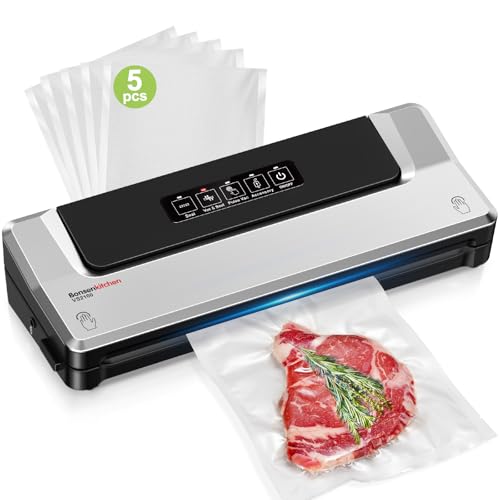
Vacuum-sealed steaks last longer in the fridge and freezer, which has value. The packaging costs a bit more to produce, but it prevents freezer burn and extends shelf life. If you’re buying ahead or stocking a freezer, vacuum-sealed is worth a small premium. If you’re cooking tonight, it doesn’t matter.