
Grilled Swordfish Steaks with Lemon-Herb Marinade Recipe
Simple recipe for perfectly grilled swordfish steaks with lemon-herb marinade. Includes tips for preventing dry fish and achieving beautiful grill marks.
“`html
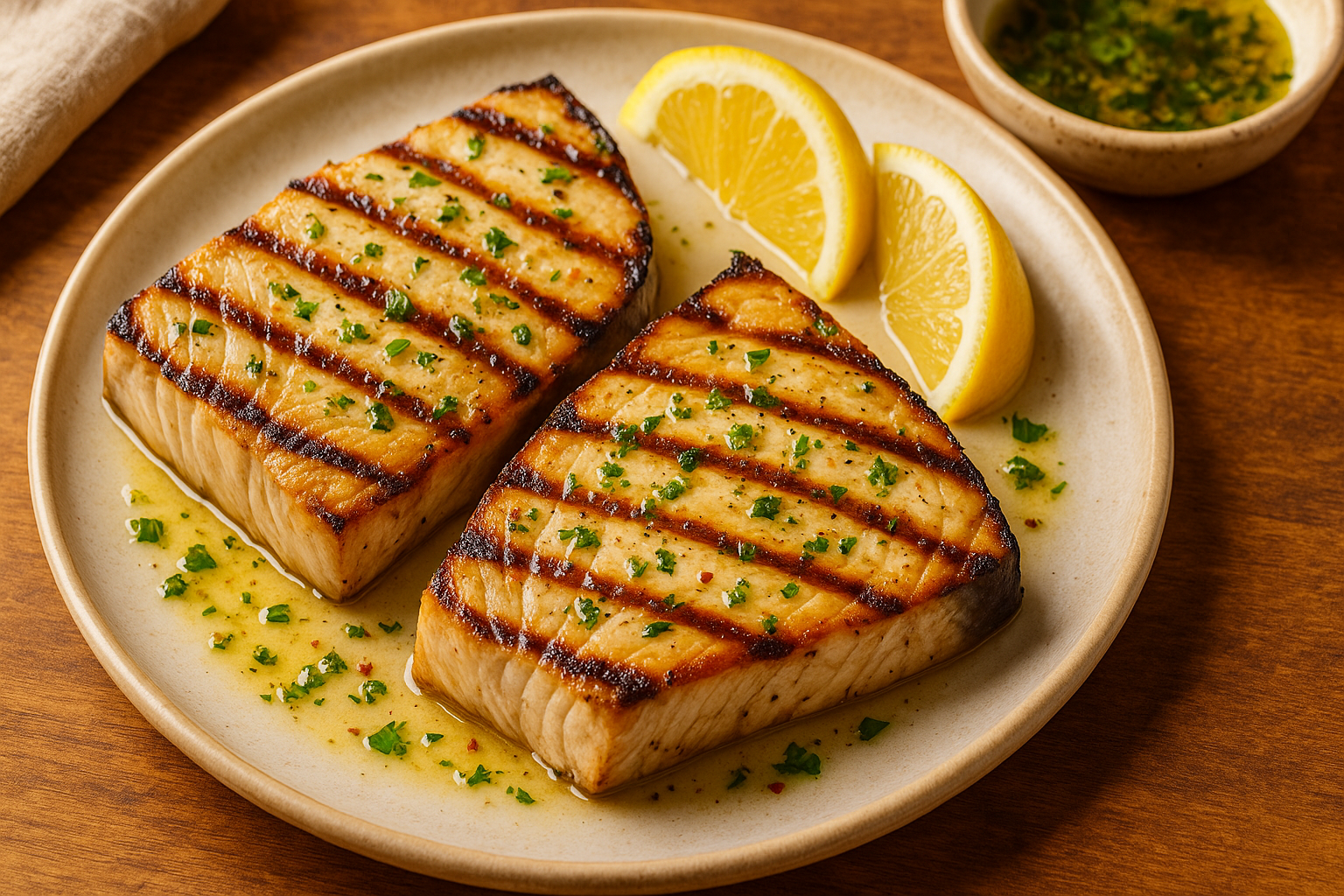
Swordfish steaks are meaty, satisfying, and remarkably easy to overcook into hockey pucks. This recipe solves that problem with a simple lemon-herb marinade that keeps the fish moist while adding bright, fresh flavor that complements the fish’s natural richness.
You’ll get restaurant-quality results on your backyard grill with just 30 minutes of marinating time and about 8 minutes of actual cooking. The trick is high heat, minimal flipping, and knowing exactly when to pull the steaks off the grill.
Disclosure: As an Amazon Associate, this site earns from qualifying purchases. Thank you!
Why Swordfish Works Perfectly on the Grill
Swordfish has a firm, dense texture that holds up beautifully to direct heat. Unlike flakier fish that fall apart when you look at them wrong, swordfish steaks stay intact and develop gorgeous grill marks without special equipment or a fish basket.
The meat itself is mild but not bland, with a slightly sweet flavor that pairs well with acidic marinades. It’s also one of the few fish that actually benefits from a short marinating period, unlike delicate white fish that can get mushy in acid.
One important note: buy swordfish steaks that are at least 1 inch thick, preferably closer to 1.5 inches. Thin steaks will dry out before you get any real char on the outside. Thicker cuts give you that perfect combination of a caramelized crust and a tender, just-cooked center.
The Lemon-Herb Marinade Recipe
This marinade has just enough acid to brighten the fish without overwhelming it. The olive oil helps keep the steaks moist and prevents sticking on the grill grates.
Ingredients
- 4 swordfish steaks (6-8 oz each, 1 to 1.5 inches thick)
- 1/3 cup extra-virgin olive oil
- 1/4 cup fresh lemon juice (about 2 lemons)
- 3 cloves garlic, minced
- 2 tablespoons fresh parsley, chopped
- 1 tablespoon fresh oregano, chopped (or 1 teaspoon dried)
- 1 tablespoon fresh thyme leaves (or 1 teaspoon dried)
- 1 teaspoon lemon zest
- 3/4 teaspoon kosher salt
- 1/2 teaspoon black pepper
- 1/4 teaspoon red pepper flakes (optional)
Marinade Preparation
Whisk together all marinade ingredients in a bowl. You can also shake them in a jar if you prefer less cleanup. The mixture should look slightly cloudy and smell intensely aromatic.
Place the swordfish steaks in a shallow dish or a large zip-top bag. Pour the marinade over the fish, making sure each steak is well coated. If using a bag, squeeze out as much air as possible so the marinade makes maximum contact with the fish.
Refrigerate for 30 minutes to 2 hours. Don’t go longer than 2 hours or the acid will start breaking down the fish’s texture. If you’re really in a rush, even 15 minutes will add flavor, though 30 minutes is the sweet spot.
How to Grill Swordfish Steaks Perfectly
Grilling swordfish isn’t complicated, but timing matters. You’re aiming for an internal temperature of 130-135°F, which gives you a slightly translucent center that’s moist and tender. Cooking to 145°F (the USDA recommendation) will give you a drier, chalkier texture.
Grill Setup
Preheat your grill to high heat, around 450-500°F. You want it hot enough that you can only hold your hand about 6 inches above the grates for 2-3 seconds max. This high heat is crucial for developing a good crust before the interior overcooks.
Clean your grill grates thoroughly and oil them well. Use tongs and a paper towel soaked in vegetable oil to coat the grates right before you add the fish. This step prevents sticking better than any amount of oil in the marinade.
For gas grills, preheat all burners on high, then drop to medium-high once the grill reaches temperature. For charcoal, you want a full chimney of coals spread in an even layer. Check out these grilled beef tenderloin tips for more advice on managing grill temperatures for thick-cut proteins.
Grilling Instructions
Remove the swordfish from the marinade and let excess drip off. Don’t pat them dry, you want a light coating of oil on the surface. Place the steaks on the grill at a 45-degree angle to the grates for those classic diagonal grill marks.
Grill for 4 minutes without moving them. Resist the urge to peek or adjust. The fish needs uninterrupted contact with the grates to develop a proper crust.
After 4 minutes, use a thin metal spatula to carefully lift and rotate each steak 90 degrees (creating a crosshatch pattern). Grill for another 3-4 minutes.
Flip the steaks and grill for 4 minutes on the second side. Check the internal temperature with an instant-read thermometer inserted into the thickest part. Pull them off at 130-135°F for medium-rare to medium, which is ideal for swordfish.
Transfer the steaks to a platter and let them rest for 3-5 minutes. They’ll continue cooking slightly during this time, reaching a final temperature of about 135-140°F.
This video demonstrates the grilling technique with helpful visual cues for knowing when to flip your swordfish steaks.
Common Mistakes and How to Avoid Them
Overcooking is the biggest problem with grilled swordfish. The fish goes from perfectly moist to dry and tough in about 60 seconds, which is why a good instant-read thermometer is essential. Don’t rely on cooking times alone because steak thickness varies.
Another mistake is using too much marinade acid or marinating too long. Swordfish isn’t ceviche. Extended exposure to lemon juice will give you mushy, mealy fish. Stick to the 30-minute to 2-hour window.
Flipping too early causes the fish to stick and tear. You’ll know the steaks are ready to flip when they release easily from the grates. If there’s resistance, give them another minute.
Using a dirty grill is asking for stuck fish. Even with oil, residue from previous grilling sessions will grab onto your swordfish. A clean, well-oiled grate is non-negotiable.
Serving Suggestions and Pairings
Swordfish steaks are substantial enough to be the centerpiece of your meal. Serve them with grilled vegetables like zucchini, bell peppers, or asparagus. Roasted potatoes or a fresh grain salad also work well.
A simple arugula salad with lemon vinaigrette complements the richness of the fish without competing with it. You can also go Mediterranean with a tomato-cucumber salad, olives, and feta cheese.
For sauces, keep it light. A drizzle of good olive oil and a squeeze of fresh lemon is often all you need. If you want something more substantial, try a salsa verde or a compound butter with herbs and garlic.
White wines like Sauvignon Blanc or Pinot Grigio pair beautifully with grilled swordfish. The acidity cuts through the fish’s richness and echoes the lemon in the marinade.
Shopping for Swordfish Steaks
Fresh swordfish should smell clean and oceanic, never fishy or ammonia-like. The flesh should be firm and spring back when pressed, not leave an indentation.
Color varies depending on the part of the fish, ranging from ivory to pale pink to slightly orange. All are fine, though avoid any steaks with brown spots or rainbow-colored sheens, which indicate spoilage.
Previously frozen swordfish is perfectly acceptable and often your only option depending on where you live. Just make sure it was properly thawed in the refrigerator, not sitting in a puddle of water at room temperature.
Look for steaks cut from the loin rather than the tail section. Loin cuts are more uniform in thickness and have better texture. Check current prices at your local fish counter or explore online seafood delivery options for convenient shipping to your door.
Essential Grilling Tools
An instant-read thermometer is the single most important tool for grilling fish. I recommend a digital model like the Thermapen or similar that reads in under 2 seconds. You need accurate temperature readings without leaving the probe in and letting heat escape.
A thin, flexible metal spatula makes flipping swordfish steaks much easier than tongs, which can squeeze moisture out of the fish. Look for a spatula with a beveled edge that can slide under delicate proteins without tearing them.
If you’re serious about grilling fish regularly, a quality grill brush and scraper will keep your grates clean and prevent sticking issues. Wire brushes work, but bristle-free scrapers are safer and equally effective.
For basting or applying oil to grates, a set of long-handled tongs and heat-resistant silicone basting brushes will save your knuckles from the heat. Check the latest options and compare grilling tool sets on Amazon.
Marinade Variations to Try
The base lemon-herb marinade is versatile, but you can adapt it to different flavor profiles. For an Asian-inspired version, swap the lemon juice for lime juice and add fresh ginger, cilantro, and a splash of soy sauce.
Mediterranean variations work well with the addition of capers, anchovies, or sun-dried tomatoes blended into the marinade. Just remember to reduce the salt if you’re adding salty ingredients like capers or anchovies.
A spicy version with extra red pepper flakes, a minced jalapeño, or a teaspoon of harissa paste adds heat without overwhelming the fish. You might enjoy experimenting with different spice combinations from our guide on cooking with spices.
If you’re looking for more marinade inspiration beyond this recipe, check out our roundup of marinade and seasoning kits that work great with fish and other proteins.
Leftover Swordfish Ideas
Grilled swordfish keeps well in the refrigerator for up to 3 days. The texture changes slightly when reheated, so I prefer using leftovers cold or at room temperature.
Chop leftover swordfish into chunks and toss with pasta, olive oil, capers, and cherry tomatoes for a quick lunch. The fish adds protein and substance without requiring any additional cooking.
Swordfish makes excellent fish tacos. Flake the cold grilled fish, warm some corn tortillas, and top with cabbage slaw, avocado, and a squeeze of lime. Much better than sad, reheated fish.
You can also add chunks of leftover swordfish to salads or grain bowls. The firm texture holds up well and doesn’t get mushy like some other fish would.
Nutritional Benefits of Swordfish
Swordfish is high in protein and contains beneficial omega-3 fatty acids, though not as much as fattier fish like salmon. A 6-ounce serving provides about 40 grams of protein, making it genuinely filling.
The fish is also a good source of selenium, vitamin D, and B vitamins, particularly B12. These nutrients support immune function, bone health, and energy metabolism.
One caution: swordfish contains moderate to high levels of mercury because it’s a large, long-lived predator fish. The FDA recommends limiting swordfish consumption to one serving per week, particularly for pregnant women and young children.
Frequently Asked Questions
Can you grill frozen swordfish steaks?
You can, but the results won’t be as good as using thawed fish. Frozen steaks release moisture as they cook, making it harder to get a good sear. They’ll also cook unevenly, with the outside overcooked by the time the center thaws. Thaw swordfish in the refrigerator overnight for best results.
What temperature should swordfish be when cooked?
The USDA recommends cooking all fish to 145°F, but swordfish is much better at 130-135°F in the center. This gives you a slightly translucent center that’s moist and tender rather than dry and chalky. The fish continues cooking during the resting period, reaching a final temperature of 135-140°F.
How do you prevent swordfish from sticking to the grill?
Three things prevent sticking: a clean grill, well-oiled grates, and patience. Scrub your grates clean before preheating, then oil them right before adding the fish. Don’t try to flip the steaks too early. When they’re ready, they’ll release easily from the grates with minimal resistance.
Can you use this marinade for other fish?
Absolutely. This lemon-herb marinade works well with other firm fish like tuna, mahi-mahi, or halibut. It’s also great on salmon, though you’ll want to reduce the marinating time to 20-30 minutes since salmon is softer and more delicate than swordfish. The marinade would overwhelm mild white fish like cod or tilapia.
Final Thoughts on Grilling Swordfish
Grilled swordfish steaks deserve a spot in your regular dinner rotation. They’re faster than most meat, impressive enough for company, and hard to mess up once you understand the basics of high heat and proper timing.
The lemon-herb marinade in this recipe is reliable and crowd-pleasing without being boring. It enhances the fish without masking its natural flavor, and the ingredients are things you probably already have in your kitchen.
Get yourself a good instant-read thermometer if you don’t have one already, heat your grill properly, and you’ll turn out restaurant-quality swordfish every single time. The difference between perfectly cooked and overdone is just a few degrees and about 30 seconds, but those details make all the difference.
If you enjoyed this recipe, you might also like our lamb kebab recipe for another excellent grilling option, or try our honey barbecued chicken for something completely different on the grill.
This article contains affiliate links. If you purchase through these links, we may earn a small commission at no extra cost to you.


