
How to Cut Your Own Ribeye Steaks from a Whole Costco Primal
Buying a whole ribeye sub-primal from Costco or a restaurant supply store and cutting it into steaks yourself is…

Buying a whole ribeye sub-primal from Costco or a restaurant supply store and cutting it into steaks yourself is one of the smartest savings moves a steak lover can make. The per-pound price on a whole bone-in or boneless ribeye loin is dramatically lower than buying individual steaks, and the process takes about 15 minutes with the right tools.
You get exactly the thickness you want, trim the fat to your preference, and freeze steaks that match your household size instead of being stuck with whatever the butcher decided to cut that day.
Disclosure: As an Amazon Associate, this site earns from qualifying purchases. Thank you!
What You’re Buying
A whole boneless ribeye (also called a lip-on ribeye or beef rib roll) typically weighs 12 to 18 pounds. It’s the entire muscle that individual ribeye steaks are cut from. At Costco, these are usually USDA Choice, and occasionally Prime, at a per-pound price that’s substantially below what you’d pay for pre-cut ribeye steaks.
The savings add up fast. Depending on the grade and store, you can save 25% to 40% per pound compared to buying individual steaks. On a 15-pound sub-primal, that savings is significant. Restaurant supply stores sometimes offer even lower prices, though they may require a membership or minimum purchase.
Bone-in ribeye roasts (the rib section with bones attached) are also available, but they’re harder to find at warehouse stores and require more skill to cut around the bones. Start with boneless. The process is simpler, the yield is higher, and the price difference is minimal once you account for bone weight. If you’re curious about bone-in cuts, understanding different types of beef ribs can help you appreciate the anatomy of these primal cuts.
Tools You’ll Need

A sharp, long slicing knife (at least 10 inches) is essential for clean, even cuts. A 12-inch slicing knife gives you the length to cut through the widest part of the loin in a single smooth stroke, which prevents jagged, uneven steaks. A dull knife forces you to saw back and forth, tearing muscle fibers and creating rough surfaces that don’t sear well.

12-Inch Slicing Knife
Essential for making clean, single-stroke cuts through the entire loin width
You’ll also need a large cutting board (at least 18 by 24 inches), paper towels, a kitchen scale for consistent portions, and vacuum sealer bags or heavy-duty freezer bags for storage. A ruler or a set of 1-inch measuring blocks helps if you’re aiming for precise thickness on every steak. Some people use painter’s tape on the knife blade as a depth guide.
Optional but helpful: a boning knife for trimming tight areas, latex or nitrile gloves to keep your hands clean, and a second cutting board or large tray to hold finished steaks as you work.
Step-by-Step Cutting Process

Remove the whole ribeye from its packaging and pat it dry with paper towels. Place it on the cutting board with the fat cap facing up. Let it sit at room temperature for 10 to 15 minutes. Cold meat is firmer and easier to cut cleanly.
First, trim the exterior. Remove the lip (a flap of meat and fat along one side). This piece is attached loosely and pulls away with minimal cutting. Set it aside for grinding or stir-fry meat. Trim the fat cap down to about 1/4 inch thick, leaving a consistent layer across the top. Some people prefer more fat, others less. Keep the trimmings for rendering into tallow or adding to ground beef.
You’ll also notice a layer of silverskin (thin, translucent connective tissue) along parts of the loin. Slide your knife under it at a shallow angle and peel it away. It doesn’t break down during cooking and creates chewy spots on the finished steak.
Starting from one end, measure and cut steaks to your preferred thickness. For most grilling and pan-searing, 1 to 1.5 inches is ideal. Use a ruler or your finger width as a guide until you develop a feel for consistent cuts. A 1.25-inch steak weighs roughly 12 to 16 ounces depending on the loin’s diameter.
Use long, smooth strokes rather than sawing motions. Let the knife do the work. Press down firmly and draw the blade through in one or two passes. Sawing creates ragged edges and uneven surfaces. If the knife stalls halfway through, you’re either pressing too hard or the blade needs sharpening.
After every two or three cuts, wipe the blade clean with a damp towel. Fat and connective tissue buildup on the blade makes it drag and slip.
Thickness Matters

Thin steaks (3/4 inch or less) cook fast but overcook just as fast. They’re hard to get a good crust on without drying out the inside. Thick steaks (1.5 to 2 inches) give you more control. You can sear them hard, then finish in a low oven or on indirect heat, hitting a perfect medium-rare all the way through.
For reverse searing, 1.5 to 2 inches is ideal. Start the steak in a 225°F oven until it hits 110°F to 115°F internal, then sear it in a screaming-hot cast iron pan for 60 to 90 seconds per side. You get an even pink center with a dark, caramelized crust.
Sous vide works with any thickness, but thicker steaks show off the method better. A 2-inch ribeye cooked sous vide at 129°F for two hours, then seared, comes out edge-to-edge medium-rare with no gradient. If you’re looking for premium options beyond standard beef, comparing bison ribeye versus beef ribeye can help you decide whether the extra cost is worth it for your next thick-cut steak.
Getting the Most From the Whole Loin
The center sections produce the best, most evenly shaped steaks. The tail end (narrower, thinner) can be cut into thinner steaks for quick-searing or diced into cubes for kabobs and stir-fry. The wider end near the chuck sometimes has more connective tissue and works great for slow-cooked dishes.
From a 15-pound whole ribeye, expect to get 10 to 14 individual steaks (depending on thickness) plus trim for other uses. That trim can be ground for premium burgers using a meat grinder attachment, or saved for stew meat and stir-fry strips.
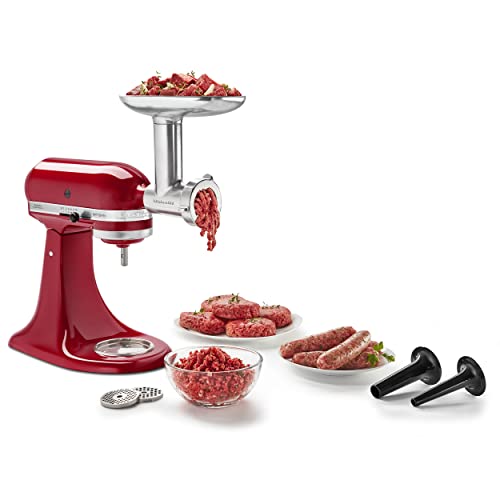
Meat Grinder Attachment
Perfect for turning ribeye trim into premium burger meat
The spinalis (the cap muscle wrapping around one side of the ribeye) is the richest, most marbled part of the steak. On a whole loin, it runs the entire length. Some people separate the cap from the eye muscle and roll it into a roast tied with butcher’s twine. Others leave it attached for traditional ribeye steaks. If you’re splitting it off, cut along the natural seam between the cap and the eye, then trim any silverskin from the underside of the cap. This cap muscle is what makes ribeyes so prized—and it’s also why tomahawk steak prices are so high when you’re paying for that same meat still attached to its dramatic long bone.
Storage
Vacuum seal each steak individually for the longest freezer life (12 to 18 months). If you don’t have a vacuum sealer, wrap each steak tightly in plastic wrap, then in aluminum foil, and place it in a labeled freezer bag with as much air pressed out as possible.
Label every package with the cut name, weight, and date. Organize them in your freezer so you can grab exactly what you need without digging through a pile. A chest freezer works better than an upright for long-term storage. Less air circulation means less freezer burn.
To thaw, move steaks from the freezer to the fridge 24 hours before cooking. For faster thawing, submerge the sealed steak in cold water and change the water every 30 minutes. A 1.5-inch steak thaws in about an hour this way. Don’t thaw at room temperature. The outer layers warm into the danger zone while the center is still frozen.
Common Mistakes
Cutting steaks too thin is the biggest mistake. A 3/4-inch ribeye looks impressive on the cutting board but overcooks in seconds on the grill. You lose the advantage of all that marbling because the fat doesn’t have time to render properly.
Using a short knife forces you into multiple passes, creating ridges and uneven surfaces. A knife that’s shorter than the loin’s width makes clean cuts nearly impossible.
Not trimming the fat cap enough leaves steaks that flare up on the grill and taste greasy. Trimming it too aggressively wastes money and removes the layer that bastes the steak as it cooks. Quarter-inch is the target.
Freezing steaks in a single giant bag means you have to thaw all of them at once. Portion them individually or in meal-sized groups (two steaks per bag for a couple, four for a family).
Skipping the scale leads to wildly inconsistent portion sizes. The wide end of the loin yields steaks nearly double the weight of the narrow end if you cut them all to the same thickness.
When It’s Not Worth It
If you’re only feeding one or two people and don’t have freezer space for 10-plus steaks, buying a whole loin doesn’t make sense. The upfront cost is high, and frozen steaks lose quality after 12 months even when vacuum-sealed.
If your store’s pre-cut ribeye sale price drops below the whole loin price per pound, skip the DIY and stock up on pre-cut. Costco occasionally runs Choice ribeye steaks at competitive prices. At that price, you’re not saving enough to justify the labor.
Whole loins also require a sharp knife and basic knife skills. If you’re uncomfortable handling a large piece of raw meat or making consistent cuts, start with something smaller like a whole pork tenderloin or a tri-tip roast.
Frequently Asked Questions
Is it hard to cut steaks from a whole ribeye?
It’s surprisingly easy. The meat is boneless and has a consistent shape. If you can slice bread, you can cut steaks. The key is a sharp, long knife and steady, confident strokes. Your first attempt might take 20 minutes, but after a couple of sessions you’ll cut that time in half.
Do I need to age the ribeye before cutting?
The sub-primal has already been wet-aged in its vacuum packaging during transport (usually 21 to 28 days). You can cut and freeze immediately, or leave it sealed in the fridge for a few more days


