Butcher Counter vs Pre-Packaged Meat: Which Saves You Money?
The meat aisle gives you two options: grab a pre-packaged tray from the self-serve cooler or walk up to…

The meat aisle gives you two options: grab a pre-packaged tray from the self-serve cooler or walk up to the butcher counter and ask for a custom cut. Most people default to pre-packaged because it’s faster and feels simpler. But that convenience comes with a per-pound premium that adds up over time.
The price gap varies by cut and store. Ground beef shows almost no difference. A standard ribeye? You’ll pay 8% to 15% more for pre-packaged. Specialty cuts can hit 20% to 30% over butcher counter pricing at the same store.
Disclosure: As an Amazon Associate, this site earns from qualifying purchases. Thank you!
Why Pre-Packaged Meat Costs More
Pre-packaged meat carries extra costs for labor (someone cut, weighed, and wrapped it), packaging materials (trays, absorbent pads, plastic overwrap or modified atmosphere packaging), and inventory management. The store also prices in a margin for waste, since some packages won’t sell before the sell-by date.
Modified atmosphere packaging (MAP), the technology that replaces the air inside the package with a gas mix to extend shelf life, adds additional cost per unit. This is why pre-packaged meat often has a longer sell-by date than butcher counter meat but also costs more per pound.
The gas mix in MAP packaging typically combines carbon dioxide, nitrogen, and oxygen in ratios tuned to the specific protein. Beef gets a higher oxygen percentage to maintain the bright red color shoppers expect. Pork and poultry use mostly nitrogen and CO2 to prevent oxidation. The equipment to flush and seal these packages costs money, and that cost lands in the price per pound.
Pre-packaged also builds in less flexibility. If a butcher has a primal that’s starting to age, they can trim it aggressively, cut it to order, and move it at full price. Pre-packaged meat sits in the case at a fixed price until it sells or gets marked down. The store prices that risk into the margin up front.
What You Get From the Butcher Counter

Butcher counter meat is often cut fresh that day, which means it’s typically at peak freshness. You can request exact thickness, specific trim levels, and custom portions that pre-packaged options don’t offer. Want a 1.5-inch thick bone-in pork chop instead of the standard 3/4-inch pre-packaged version? The butcher can do that. If you’re new to working with butcher counter services, understanding how to communicate your needs helps you get exactly what you want.
You also avoid paying for packaging weight. Pre-packaged trays include the weight of the absorbent pad and tray, which are included in the weighed price at some stores (though most tare this out). Butcher paper adds negligible weight.

Butcher Paper Rolls
Essential for wrapping and freezing custom cuts from the butcher counter
Thickness control matters more than most home cooks realize. A 1-inch ribeye reverse-sears cleanly on the grill. A 3/4-inch ribeye from the pre-packaged case overcooks before you get a decent crust. The butcher can cut you a 1.25-inch or 1.5-inch steak that gives you the thermal mass you need for proper technique.
Trim level is the other major variable. Pre-packaged brisket might have 1/4 inch of fat cap or 3/4 inch, and you won’t know until you open the cryovac at home. At the butcher counter, you can ask for a specific trim. Same with pork shoulder: you can request more or less fat cap depending on whether you’re smoking it whole or cubing it for stew.
Portion sizes flex to your actual needs. Buying for one person? Ask for a single 6-ounce pork chop instead of a 4-pack. Feeding six? Get three thick-cut steaks instead of four thin ones. Pre-packaged locks you into whatever count the store decided to tray up.
When Pre-Packaged Makes Sense
For standard, high-volume items like ground beef, chicken breasts, and basic pork chops, pre-packaged is often the more practical choice. The prices are competitive, the quality is consistent, and you can grab and go without waiting in line.
Pre-packaged family packs and value packs offer bulk pricing that the butcher counter rarely matches. If you’re buying 5 pounds of chicken thighs for meal prep, the family pack in the cooler is probably your best bet.
Late-night or busy-schedule shoppers also benefit from pre-packaged, since butcher counters close earlier than the store itself.
Ground beef specifically shows almost no price advantage at the butcher counter. The store grinds in batches and packages it either way. A 3-pound chub of 80/20 ground chuck costs the same whether you grab it from the cooler or ask the butcher to grab one from the back. You’re not paying for custom work, so you’re not paying a premium.
Boneless skinless chicken breasts in a 3-pound or 5-pound value pack often beat butcher counter pricing by 10% to 20%. The store moves high volume on these packs, which drives per-pound cost down. Butcher counter chicken breasts are cut and priced individually, which means no bulk discount.
Pre-packaged also works well if you’re shopping at a store with a weak butcher counter. Some grocery chains staff the counter with generalists who don’t have the knife skills or product knowledge to deliver custom cuts. At those stores, the pre-packaged case gets priority, and the butcher counter is an afterthought. Your best bet is to shop the packages.
When the Butcher Counter Wins
For steaks, custom roasts, and any cut where thickness and trim matter, the butcher counter delivers better results. A thick-cut ribeye or a properly trimmed brisket from the counter will outperform whatever random thickness ended up in the pre-packaged display.
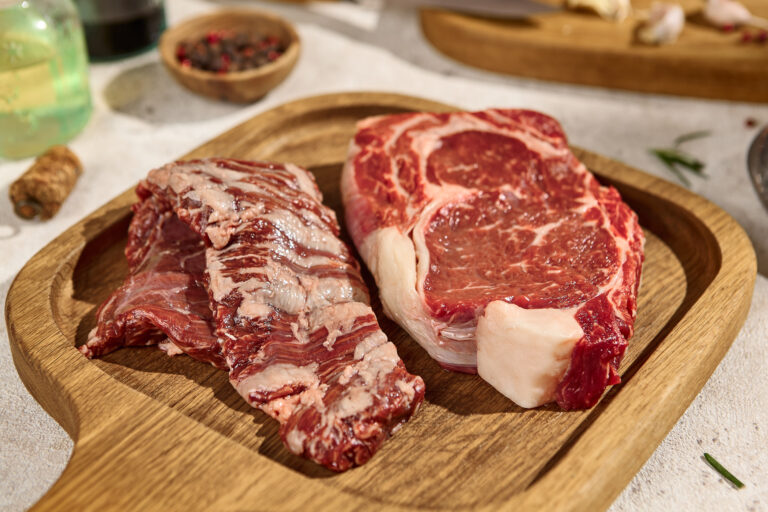
The butcher counter also gives you access to cuts that aren’t pre-packaged: hanger steak, teres major, flat iron, beef cheeks, and oxtail are all examples of underrated cuts that you can often only get by asking.
Whole sub-primals offer serious savings if you’re willing to break them down yourself. A whole ribeye runs competitively priced to competitively priced per pound at Costco or a butcher shop. Pre-cut ribeye steaks at the same store competitively priced to competitively priced per pound. You’re paying competitively priced to competitively priced per pound for someone else to cut and package the steaks. If you own a decent knife and know how to trim, you can buy the whole ribeye, cut your own steaks, and pocket the difference.
Same logic applies to pork. A whole pork loin runs competitively priced to competitively priced per pound. Pre-packaged boneless pork chops from that same loin competitively priced to competitively priced per pound. Buy the loin, cut it into chops or roasts, freeze what you don’t need immediately, and you’ve saved 30% to 40%. For those interested in even larger bulk purchases, buying a side of beef represents the ultimate in cost savings and meat availability.
Butcher counters also handle special requests that pre-packaged can’t touch. Need a bone-in leg of lamb butterflied for the grill? The butcher can do it. Want a beef tenderloin chain-on for making your own steaks? Ask. Pre-packaged gives you zero flexibility once it’s wrapped.
Price Comparisons by Store Type

Grocery store butcher counters price meat 5% to 10% below their own pre-packaged equivalents on premium cuts. The gap narrows to zero on commodity items like ground beef and chicken breasts.
Warehouse clubs like Costco and Sam’s Club don’t really have traditional butcher counters, but they do sell whole sub-primals in cryovac. These beat pre-cut pricing by 20% to 35%, but you’re doing the work yourself.
Independent butcher shops charge 10% to 25% more than grocery store butcher counters on most cuts, but the quality and service often justify the premium. You’re paying for dry-aged beef, heritage pork, custom sausage, and a butcher who actually knows how to fabricate a whole animal.
Aldi and Walmart rely almost entirely on pre-packaged. Their butcher counters, if they have them at all, stock a limited selection and close early. Shop the cooler at these stores.
Common Mistakes
Assuming butcher counter meat is always cheaper is the first mistake. Ground beef, chicken breasts, and basic pork chops often cost the same or more at the counter. Compare per-pound pricing before you commit.
Not asking questions is another misstep. The butcher can tell you which primals came in that day, how long a specific cut has been in the case, and whether they have anything in the back that isn’t on display. Pre-packaged doesn’t answer questions.
Ignoring sell-by dates on pre-packaged meat is a gamble. A package dated three days out is fine if you’re cooking tonight. A package dated tomorrow should go straight into the freezer or get cooked within 24 hours. Butcher counter meat usually has a shorter window because it wasn’t packaged under MAP.
Buying thick steaks from the pre-packaged case without checking actual thickness is a rookie error. Labels might say “thick cut,” but you could get anything from 7/8 inch to 1.25 inches in the same batch. At the butcher counter, you can verify thickness before you buy.
How to Get the Best Value

Start by comparing per-pound prices on the exact cut you want. Check the pre-packaged case, then ask the butcher counter for the same cut. Factor in any difference in thickness or trim that affects yield.
Buy whole sub-primals when you have freezer space and knife skills. A whole ribeye, pork loin, or beef tenderloin costs less per pound than pre-cut steaks or chops. Break it down yourself, vacuum-seal or freezer-wrap the portions, and you’ll beat pre-packaged pricing by 25% to 40%.

Vacuum Sealer Machine
Makes breaking down whole primals economical by preventing freezer burn on long-term storage
Shop the butcher counter for specialty cuts and custom requests. Hanger steak, teres major, beef cheeks, and oxtail rarely appear in the pre-packaged case. These cuts often cost less per pound than ribeye or tenderloin but deliver equal or better flavor.
Ask about manager’s specials and same-day markdowns. Butcher counters mark down meat that needs to move, especially late in the day. Pre-packaged gets yellow “reduced for quick sale” stickers. Both options work if you’re cooking or freezing immediately. There are plenty of additional strategies for reducing your meat budget beyond just choosing between