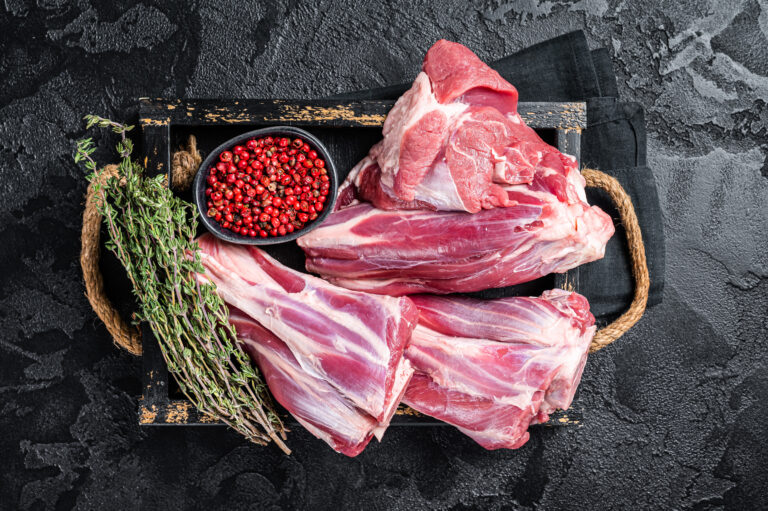
Why Imported Meat Is Cheaper Than Domestic
You’ve probably noticed that some of the cheapest beef, lamb, and shrimp at your grocery store comes from another…

You’ve probably noticed that some of the cheapest beef, lamb, and shrimp at your grocery store comes from another country. Australian beef, New Zealand lamb, and Ecuadorian shrimp regularly undercut domestic prices by a noticeable margin. The reasons involve labor costs, land availability, and production systems that differ significantly from American farming.
The price gap isn’t trivial. Imported grass-fed beef routinely sells competitively priced to competitively priced per pound at stores like Aldi and Walmart, while comparable domestic grass-fed beef runs competitively priced to competitively priced. New Zealand lamb legs competitively priced to competitively priced per pound at Costco, compared to competitively priced to competitively priced for American lamb at butcher shops. These differences hold across cuts and categories, making imported meat a consistent budget option.
Disclosure: As an Amazon Associate, this site earns from qualifying purchases. Thank you!
Lower Labor Costs
Labor is one of the largest expenses in meat production, from ranch hands to slaughterhouse workers to packaging staff. Countries like Brazil, Uruguay, and many Southeast Asian nations have significantly lower labor costs than the United States. This difference compounds at every stage of production, from raising the animal to processing and packaging the final product.
Even in developed countries like Australia and New Zealand, agricultural labor costs run below U.S. levels for cattle and sheep operations, partly because ranching operations there tend to be more extensive (larger pastures, less hands-on management per animal).
The numbers matter. A feedlot worker in the U.S. earns competitively priced to competitively priced per hour. In Brazil, comparable workers earn competitively priced to competitively priced per hour. Processing plant wages follow the same pattern. U.S. meatpacking plants pay competitively priced to competitively priced per hour for line work. In Thailand or Ecuador, shrimp processing workers earn competitively priced to competitively priced per hour. These wage gaps don’t just shave pennies off the final price. They reshape the entire cost structure of getting meat from farm to freezer.
Australian and New Zealand ranching operations benefit from lower labor intensity per animal. A single ranch hand in Australia might manage 2,000 to 5,000 head of cattle across vast unfenced pastures. In the U.S., operations of that scale require far more hands-on management, rotational grazing infrastructure, and equipment. The labor savings compound over the 18 to 24 months it takes to bring a steer to market weight.
Land and Feed Advantages

Countries with abundant, inexpensive grazing land can raise cattle and sheep at lower per-head costs. Australia and Brazil have vast rangeland that supports grass-fed operations without the expensive grain-finishing systems common in American beef production.
Grain-finished beef (the dominant production model in the U.S.) requires massive quantities of corn and soy, which adds feed costs. Grass-fed operations in countries with year-round pasture growth avoid these costs entirely, which translates to lower retail prices for grass-fed imported beef.
Land costs differ dramatically. Prime grazing land in Texas or Montana runs competitively priced to competitively priced per acre. In parts of Australia, rangeland leases competitively priced to competitively priced per acre annually. Brazilian ranchland in Mato Grosso sells competitively priced to competitively priced per acre. That gap allows foreign producers to scale operations without the crushing land acquisition costs U.S. ranchers face.
Grain finishing adds competitively priced to competitively priced per head in feed costs over the 90 to 120 days cattle spend in a U.S. feedlot. Corn and soy prices fluctuate, but finishing a steer to USDA Choice grade requires 50 to 70 bushels of corn equivalent. competitively priced to competitively priced per bushel, the math stacks up quickly. Grass-fed cattle in Argentina, Uruguay, and New Zealand graze year-round on pasture without supplemental grain. The feed cost per head drops to near zero, aside from mineral supplements and occasional hay during droughts.
Year-round grazing also eliminates hay storage infrastructure. U.S. ranchers in northern states spend thousands on barns and hay equipment to sustain herds through winter. In temperate climates like New Zealand’s South Island or southern Brazil, cattle graze outdoors through all seasons. That removes another fixed cost from the operation.
Different Regulatory Costs
U.S. meat production operates under USDA regulations that, while important for safety, add compliance costs. Environmental regulations, worker safety standards, and animal welfare requirements all contribute to higher production costs. Some exporting countries have less stringent (or less costly to comply with) regulatory frameworks.
All meat sold in the United States must meet USDA import inspection standards, regardless of origin. Imported meat is inspected at the port of entry, and any product that doesn’t meet U.S. safety standards is rejected.
Environmental compliance is a real expense. U.S. feedlots managing manure runoff, water usage, and air quality face regulatory costs that some exporting nations don’t impose at the same level. A 10,000-head feedlot in Nebraska might spend competitively priced annually on environmental compliance and monitoring. Comparable operations in Brazil face lighter regulatory burdens, though standards have tightened over time.
Worker safety standards also add costs. OSHA regulations in U.S. meatpacking plants require specific equipment, training programs, and injury prevention protocols. These are non-negotiable and necessary, but they add overhead. Countries with less stringent worker protection laws reduce those compliance costs, which flows through to lower retail prices.
Animal welfare regulations vary widely. The U.S. has baseline standards for humane handling, but enforcement and specifics differ by state. Some exporting countries have minimal animal welfare frameworks, while others (like New Zealand) have stricter standards than the U.S. in certain areas. This variation affects costs unevenly across producers.
Despite looser production regulations in some countries, import inspection at U.S. ports is strict. The USDA’s Food Safety and Inspection Service checks shipments for pathogens, contamination, and labeling accuracy. Rejection rates run 1% to 3% of shipments, mostly for paperwork issues or minor labeling violations rather than safety failures. Importers absorb those losses, but the system prevents substandard meat from reaching shelves.
Currency Exchange and Shipping Economics

Exchange rates shift the price equation constantly. When the U.S. dollar strengthens against the Brazilian real or Australian dollar, imported meat becomes cheaper for American buyers. A strong dollar lets importers purchase more foreign product for the same cost, and some of that savings passes to consumers.
Shipping costs are lower than you’d expect for bulk frozen meat. Container shipping from Australia to Los Angeles runs competitively priced to competitively priced per 40-foot refrigerated container, which holds roughly 44,000 pounds of frozen beef. That’s 7 to 11 cents per pound in freight cost. Even with port fees, customs, and inland trucking, the total logistics cost stays under 30 cents per pound. For a product where the base production cost is competitively priced to competitively priced per pound lower than domestic, the shipping expense doesn’t erase the advantage. Properly frozen shrimp can maintain quality during these long shipping windows, similar to how frozen shrimp often outperforms “fresh” options at the grocery store.
Sea freight efficiency matters. Massive cargo ships move refrigerated containers at a cost per ton-mile that’s far lower than domestic trucking. A steer raised in Nebraska and trucked 1,200 miles to a California distribution center incurs similar per-pound shipping costs to beef shipped 8,000 miles by sea from Australia. The scale of ocean freight offsets the distance.
Production Volume and Specialization

Some exporting countries specialize in specific proteins, achieving efficiencies that smaller U.S. operations can’t match. New Zealand produces lamb at scale with purpose-built infrastructure and generational expertise. Ecuador’s shrimp industry operates vertically integrated farms with hatcheries, grow-out ponds, and processing plants on the same property. That vertical integration cuts middleman costs and speeds processing.
Brazil’s beef industry benefits from sheer scale. The country raises over 200 million head of cattle, more than any nation except India. That volume supports a massive processing infrastructure with plants running near capacity year-round. Fixed costs spread across millions of carcasses per year, lowering per-unit processing expenses.
Australia’s beef export model targets price-sensitive markets. About 70% of Australian beef production gets exported, mostly to Asia and the U.S. Producers there optimize for export economics rather than domestic premium markets, which keeps production lean and cost-focused.
Pros and Cons of Imported Meat
The primary advantage is price. Imported beef, lamb, and seafood can cost 15% to 40% less than comparable domestic products, making it an appealing option for budget shoppers.
The downsides include a larger carbon footprint from transportation, less transparency about farming practices, and potential flavor differences (grass-fed imported beef tastes different from grain-finished American beef). Some consumers also prefer supporting domestic agriculture for economic and community reasons.
Flavor profiles diverge. Grass-fed Australian beef has a leaner, more mineral-forward taste than corn-fed American beef. The marbling is sparser, and the fat has a slightly different composition (higher in omega-3s, lower in saturated fat). Some people prefer it. Others find it gamier or tougher. New Zealand lamb tastes milder than American lamb, partly due to breed differences and diet.
Cuts and butchering standards differ slightly. Australian beef often comes in metric cuts or slightly different trim specs than USDA standards. A “rump roast” from Australia might be cut differently than a USDA bottom round roast. These differences are minor but can affect cooking times and methods.
Transparency varies. You can’t visit an Australian ranch to verify grazing practices, and labeling doesn’t always detail feed, antibiotic use, or specific production methods beyond “grass-fed” or “organic.” Domestic producers, especially smaller operations, often provide more detailed sourcing information if you ask.
Carbon footprint is complex. Shipping meat thousands of miles by sea burns fuel and emits CO2. But if that imported meat comes from a pasture-based system with lower methane emissions per head than a U.S. feedlot, the total lifecycle emissions might be comparable or even lower. The math depends on production methods, not just shipping distance. Life cycle analyses show mixed results depending on assumptions.
Supporting domestic agriculture has economic and community value that’s hard to quantify in per-pound pricing. Money spent on American beef supports U.S. ranchers, processors, and rural economies. Imported meat redirects that spending overseas. For some buyers, that’s a deciding factor. For others, saving competitively priced per pound outweighs those considerations.
When Domestic Meat Is Worth the Premium
Certain cuts and categories justify paying more for domestic. Prime grade beef doesn’t have a direct imported equivalent. USDA Prime ribeyes and strips deliver marbling and tenderness that grass-fed imports can’t match. If you’re grilling steaks for a special occasion, domestic Prime is worth the competitively priced to competitively priced per pound.
Ground beef quality varies more in imported products. Domestic 80/20 ground chuck has consistent fat content and grind size. Imported ground beef sometimes includes leaner trimmings or mixed cuts that affect texture and cooking behavior. For burgers or meatballs where texture matters, domestic ground beef often performs better.
Fresh (never frozen) cuts aren’t available in imported meat. Everything coming from overseas gets frozen for the 3 to 6 week shipping window. If you prefer fresh beef for dry-aging at home or immediate use, you’ll need domestic.
Specialty cuts and organ meats are easier to source domestically. Finding imported beef cheeks, oxtail, or marrow bones is hit or miss. U.S. butcher shops stock those items consistently, and you can request specific cuts. If you’re considering healthy meat choices for your diet, domestic sources often provide better access to diverse cuts with clear nutritional information.

Grass-Fed Ground Beef
Budget-friendly option for everyday meals with the benefits of grass-fed beef
Frequently Asked Questions
Is imported meat safe?
Yes. All meat sold in the U.S. must pass USDA inspection standards, whether domestic or imported. Imported products undergo additional inspection at port of entry. The safety standards applied to imported meat are equivalent to domestic standards.
How can I tell where my meat comes from?
Country of origin labeling (COOL) requirements vary. Ground beef often does not require country-of-origin labeling due to a law change. For whole cuts, look for origin labels on the package. If it’s not listed, ask the butcher