
Why Ground Beef Shrinks When Cooking (And How to Prevent It)
A quarter-pound burger patty that shrinks into a slider-sized puck is frustrating and wasteful. Ground beef shrinks because fat…

A quarter-pound burger patty that shrinks into a slider-sized puck is frustrating and wasteful. Ground beef shrinks because fat and water escape during cooking, and the amount of shrinkage depends on the fat percentage, cooking temperature, and how you handle the meat. Understanding the mechanics of shrinkage lets you plan ahead and cook beef that stays the size you expect.
Disclosure: As an Amazon Associate, this site earns from qualifying purchases. Thank you!
Fat Percentage Is the Main Factor

73/27 ground beef can lose 30% or more of its weight. 80/20 loses about 25%. 90/10 loses only 15%. The fat that renders out during cooking is the primary driver of shrinkage. Higher fat content equals more rendered liquid equals smaller finished patty.
A pound of 73/27 ground beef yields about 11 ounces of cooked meat. A pound of 80/20 yields roughly 12 ounces. A pound of 90/10 yields around 13.5 ounces. The difference matters when you’re cooking for a crowd or trying to hit a specific portion size.
The fat doesn’t just disappear. It melts and drips away or pools in the pan. When you cook four quarter-pound 73/27 patties, you end up with about three-quarters of a cup of rendered fat in the pan. That’s a lot of weight and volume lost.
Leaner ground beef shrinks less because there’s less fat to render. But it also cooks drier. The challenge is balancing shrinkage against juiciness.
Cooking Temperature Matters
Higher heat causes faster, more aggressive fat rendering and moisture loss. A screaming hot grill or pan drives more liquid out of the meat than moderate heat. For burgers, high heat is necessary for a good sear, but lowering the heat slightly (medium-high instead of maximum) reduces shrinkage while still producing a good crust.
A cast iron skillet set to medium-high (around 375°F to 400°F surface temperature) gives you a crust without blasting all the moisture out in the first minute. Maximum heat (450°F and up) sears fast but also causes the patty to seize, tighten, and shed liquid aggressively.

Cast Iron Skillet
Essential for even heat distribution and perfect burger searing at controlled temperatures
Grilling over direct high heat (500°F to 600°F grate temperature) produces similar results. The fat renders fast, the proteins contract hard, and the patty shrinks more than it would over medium-high heat. If you’re cooking thicker patties (three-quarters of an inch or more), consider searing over high heat and finishing over indirect heat to reduce overall shrinkage.
Slow cooking methods like baking or simmering in sauce produce less shrinkage because the fat renders gradually. Meatballs baked at 375°F shrink less than meatballs pan-fried at 450°F.
How to Reduce Shrinkage
Form patties wider than the bun. Account for 20% to 25% diameter shrinkage by making the raw patty about 1 inch wider than the bun on all sides. Press a thumbprint dimple in the center to prevent the patty from puffing into a ball during cooking.
Don’t over-handle the meat. Excessive squeezing and compacting creates a dense patty that contracts more during cooking. Form loose patties with gentle hands. The looser the patty, the less it tightens during cooking.
For meatloaf and meatballs, add breadcrumbs soaked in milk (a panade). The panade absorbs and retains moisture during cooking, reducing overall shrinkage by 10% to 15%.
Chilling patties before cooking helps them hold their shape. Refrigerate formed patties for 15 to 30 minutes before they hit the heat. The cold fat takes longer to render, giving the proteins time to set before the patty starts losing mass. This doesn’t eliminate shrinkage, but it reduces how much the patty deforms during the first minute of cooking.
Avoid flipping too often. Each flip causes the patty to contract slightly as the surface proteins tighten. One flip per side is ideal. Two flips maximum. Constant flipping increases shrinkage and disrupts crust formation.
Choosing the Right Fat Ratio
For burgers: 80/20 gives the best balance of flavor, juiciness, and manageable shrinkage. For dishes where you drain the fat (tacos, spaghetti sauce): 90/10 is better because you’re discarding the fat anyway. For meatloaf: 80/20 or 85/15 retains moisture within the loaf.
73/27 is a specialty ratio best reserved for applications where the rendered fat stays in the dish. Chili benefits from the extra fat because it enriches the broth. Bolognese sauce absorbs the fat into the tomato base. For burgers, 73/27 is wasteful because most of that fat drips through the grill grates or pools in the pan.
85/15 is a middle ground that works well for meatloaf, stuffed peppers, and casseroles. It shrinks about 20%, which is less than 80/20 but still provides enough fat to keep the dish moist.
93/7 and 96/4 ground beef are too lean for most applications. They dry out easily and shrink only 10% to 12%, but the texture suffers. Use these ratios only when you’re adding fat back in another form (like mixing in sausage or cooking in a fatty sauce).
If you’re working with leaner ground meats like venison, similar principles apply. Check out our guide on how to grill bison burgers without drying them out for tips that work with any lean ground meat.
The Dimple and the Diameter Trick

Two small changes to patty formation make a big difference in the finished burger. First, form patties about 1 inch wider in diameter than your bun. The patty shrinks inward as it cooks, and starting wider ensures the finished burger matches the bun instead of sitting like a small puck in the center.
Second, press a shallow thumbprint dimple into the center of each patty. As the proteins cook and contract, the edges tighten inward and upward, causing the center to puff into a dome. The dimple counteracts this, keeping the patty flat and even. A flat patty makes better contact with the bun, the toppings, and the cheese.
The dimple should be about half an inch deep and two inches wide. Press it gently with your thumb. Don’t punch through the patty or create a crater. You’re creating a shallow depression that compensates for the natural bulging that happens during cooking.
When you skip the dimple, you end up with a meatball-shaped burger that rocks on the bun and sheds toppings. The middle is thick and can be undercooked while the edges are overdone. A flat patty cooks more evenly and sits stable on the plate.
For smash burgers, skip the dimple. Smash burgers are intentionally thin and cook so fast that they don’t have time to puff. The dimple is only useful for patties that are half an inch thick or more.
Meatloaf and Meatball Shrinkage

For meatloaf, a panade (breadcrumbs soaked in milk) reduces shrinkage by 10% to 15%. The breadcrumbs absorb and hold moisture during cooking, keeping the interior moist while reducing the amount of fat and liquid that renders out. Use 1/2 cup of breadcrumbs soaked in 1/4 cup of milk per pound of ground beef.
Meatballs follow the same principle. A panade plus a gentle cooking method (baking at 375°F or simmering in sauce) produces plump, juicy meatballs that hold their size. Frying meatballs over high heat causes the most shrinkage.
The panade works because the starches in the breadcrumbs gelatinize as they heat, trapping water molecules. The mixture acts like a sponge inside the meatloaf or meatball, holding onto moisture that would otherwise render out as the fat melts.
You can substitute crushed crackers, panko, or torn white bread for breadcrumbs. The ratio stays the same: about 1/2 cup of dry crumbs per pound of meat, soaked in 1/4 cup of liquid. Milk is traditional, but broth or even water works.

Panko Breadcrumbs
Creates lighter texture in meatballs and meatloaf while still reducing shrinkage effectively
Eggs also help reduce shrinkage in meatloaf and meatballs. One egg per pound of meat acts as a binder that holds the structure together as it cooks. The egg proteins coagulate and form a network that traps moisture. This is less effective in burger patties, where the loose texture is part of the appeal, but it’s essential in meatloaf.
Baking meatloaf in a loaf pan causes more shrinkage than free-forming the loaf on a sheet pan. The pan traps the rendered fat and water around the meat, but the loaf still sits in that liquid and can overcook on the bottom. Free-forming the loaf on a rack set over a sheet pan lets the fat drip away while the loaf cooks more evenly. Shrinkage is similar, but the texture is better.
The same techniques apply to wild game meatballs. Our all-purpose wild game meatball recipe includes detailed tips for preventing shrinkage in lean venison or elk.
When Shrinkage Is Actually Useful
In some applications, shrinkage is a feature, not a bug. Smash burgers rely on aggressive fat rendering to create crispy, lacy edges. You press the patty thin on a screaming hot griddle, and the fat spreads outward, crisping at the edges while the center stays juicy. Shrinkage is inevitable and desirable.
Browning ground beef for tacos or spaghetti sauce benefits from shrinkage because you’re draining the fat anyway. Using 90/10 or 93/7 means less fat to drain and less mess. The meat shrinks, but you’re breaking it into crumbles, so the size doesn’t matter.
Chili and meat sauces benefit from fattier ground beef because the rendered fat enriches the liquid. A pound of 73/27 beef in a pot of chili contributes fat that coats the beans and carries flavor. The shrinkage happens, but the fat stays in the pot instead of dripping away.
After cooking, you’ll need to deal with the rendered fat properly. Our guide on how to dispose of ground beef grease covers safe disposal methods and whether you can reuse it.
How to Measure Shrinkage at Home
Weigh your raw patties and weigh them again after cooking. The difference is shrinkage. A quarter-pound (4-ounce) patty made from 80/20 ground beef typically weighs 3 to 3.2 ounces after cooking. That’s 20% to 25% shrinkage.
Track this over a few cooks and you’ll develop an intuition for how much your patties shrink based on the fat ratio and your cooking method. When you’re consistently losing 30% on 80/20 beef, your heat is too high or you’re overcooking.
You can also measure diameter shrinkage. A 5-inch raw patty made from 80/20 typically shrinks to about 4 inches after cooking. That’s roughly 20% diameter shrinkage, which matches the weight loss.
Tracking shrinkage helps you adjust portion sizes. When you know your burgers lose a quarter of their weight, you can start with 5-ounce patties to end up with 4-ounce cooked burgers.
Freezing Ground Beef and Shrinkage
Freezing doesn’t cause shrinkage directly, but poorly frozen ground beef loses moisture during thawing, which increases shrinkage during cooking. Ice crystals that form during slow freezing puncture cell walls. When the meat thaws, the liquid leaks out instead of staying in the tissue.
Fast freezing (in a chest freezer set to 0°F or colder) produces smaller ice crystals that cause less cell damage. The meat retains more moisture during thawing and shrinks less during cooking.
Vacuum-sealing ground beef before freezing also reduces moisture loss. Air exposure during freezing causes freezer burn, which dries out the surface and increases shrinkage. Vacuum-sealed beef stays moist.
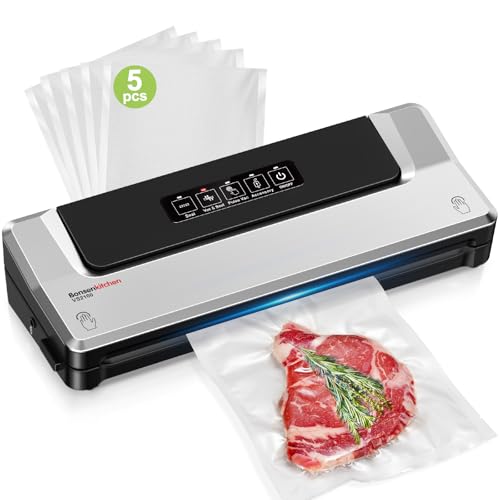
Vacuum Sealer for Meat
Prevents freezer burn and moisture loss, helping ground beef retain its quality through freezing and thawing
Thaw frozen ground beef in the refrigerator, not on the counter. Slow, cold thawing gives the meat time to reabsorb liquid that leaked during freezing. Rapid thawing at room temperature causes more drip loss.
Frequently Asked Questions
Should I press burgers while cooking to reduce shrinkage?
Never press burgers on the grill or in the pan. Pressing squeezes out juice and fat, increasing shrinkage and drying out the patty. The only time pressing is appropriate is for smash burgers, which are intentionally thin.
Does adding egg to ground beef reduce shrinkage?
Slightly. Egg acts as a binder that helps hold moisture within the meat structure. It’s more effective in meatloaf and meatballs than in burger patties, where it can change the texture undesirably.
Is 73/27 ground beef worth buying if it shrinks so much?
For dishes where the rendered fat adds flavor (chili, meat sauces), 73/27 is a fine choice because the fat enriches the surrounding liquid. For burgers, where the fat drips away and is lost, 80/20 is a better value after accounting for shrinkage.
Does resting ground beef after cooking reduce shrinkage?
No. Resting allows the juices to redistribute within the meat, but it doesn’t prevent shrinkage. Shrinkage happens during cooking as fat and water render out. Resting improves texture and moisture retention, but the patty has already shrunk by the time you pull it off the heat.
Can I add water or broth to ground beef to reduce shrinkage?
Adding liquid doesn’t reduce shrinkage. The added water cooks out along with the fat and natural moisture. Some recipes call for mixing a small amount of cold water into burger meat to keep it loose, but this doesn’t prevent shrinkage. It just changes the initial texture.


