
How to Save Money Buying Meat at Warehouse Clubs
Warehouse clubs like Costco, Sam’s Club, and BJ’s offer per-pound meat prices that regular grocery stores struggle to match….

Warehouse clubs like Costco, Sam’s Club, and BJ’s offer per-pound meat prices that regular grocery stores struggle to match. But the savings only materialize if you have a strategy for handling the large package sizes and avoiding the items that aren’t actually a deal.
Disclosure: As an Amazon Associate, this site earns from qualifying purchases. Thank you!
Buy Whole Sub-Primals

Whole ribeye rolls, strip loins, pork loins, and tri-tip roasts are priced significantly lower per pound than pre-cut steaks and chops. Cutting your own steaks takes 15 minutes and saves 25% to 40% compared to buying individual cuts. This is the single biggest savings lever at any warehouse club.
A whole ribeye roll typically weighs 12 to 18 pounds and runs competitively priced to competitively priced per pound at Costco. Pre-cut ribeye steaks from the same case competitively priced to competitively priced per pound. The same pattern holds for strip loins, where whole primals run competitively priced to competitively priced per pound versus competitively priced to competitively priced for pre-cut New York strips. You’re paying for the butcher’s labor when you buy individual steaks.
Pork loins are even more dramatic. A whole boneless pork loin weighs 8 to 12 pounds and competitively priced to competitively priced per pound. Boneless pork chops cut from the same loin competitively priced to competitively priced per pound. Trim the loin yourself, cut 1-inch chops, and you’ve doubled your savings while getting fresher meat.
Tri-tip roasts don’t require cutting at all. Buy the whole untrimmed roast instead of pre-trimmed versions. Five minutes of knife work to remove the fat cap and silverskin saves competitively priced to competitively priced per pound. The fat you trim can be rendered for cooking or discarded, depending on your needs.
For cutting whole sub-primals, a sharp boning knife and a basic understanding of muscle grain direction is all you need. Cut steaks against the grain at your preferred thickness. Most people cut 1-inch to 1.5-inch steaks, yielding 10 to 14 ribeyes from a full roll. Wrap individually or in pairs, vacuum seal if you have the equipment, and freeze what you won’t cook within three days.
Grind Your Own Beef

Buy a chuck roast or a mix of chuck and short rib, then grind it at home using a meat grinder attachment. Homemade ground beef from specific cuts tastes dramatically better than commercial ground beef, and the per-pound cost is often lower than buying pre-ground. You also control the fat ratio exactly.
Chuck roast at warehouse clubs runs competitively priced to competitively priced per pound. Pre-ground 80/20 beef competitively priced to competitively priced per pound. Short rib meat, when you trim it off the bones yourself, adds richness without pushing past your budget. A 70/30 chuck-to-short-rib blend creates burgers with enough fat to stay juicy on a hot grill without flaring up excessively.
Grinding at home also eliminates the question of what’s actually in your ground beef. Commercial ground beef is a blend from multiple sources. When you grind a chuck roast you selected yourself, you know exactly what you’re eating.
The process takes 20 minutes for a typical 5-pound batch. Cube the meat into 1-inch pieces, chill everything (including the grinder parts) in the freezer for 30 minutes before grinding, then run it through on the coarse plate. For burgers, don’t grind twice. A single pass through the coarse plate gives you the texture you want. For meatballs or meatloaf where you need a finer consistency, a second pass works better.
If you’re interested in other homemade sausage projects, check out our guide on making Italian sausage from grind to grill.
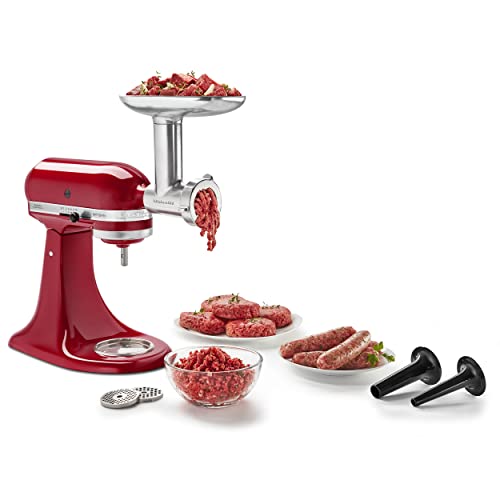
KitchenAid Meat Grinder Attachment
Fits all KitchenAid stand mixers and pays for itself after grinding 15-20 pounds of meat
Stock Up During Rotating Sales
Warehouse clubs run rotating promotions on meat, though less aggressively than regular grocery stores. Watch for seasonal markdowns on ribs (before grilling holidays), whole turkeys (Thanksgiving), and ham (Christmas/Easter). The discounts on already-low warehouse pricing create the best deals of the year. For additional strategies on reducing your meat costs, see our smart ways to save money on meat at the grocery store.
Costco’s monthly coupon book highlights specific cuts each cycle. Sam’s Club uses an Instant Savings program with similar rotating discounts. BJ’s runs weekly ads that stack with manufacturer coupons. All three clubs drop prices on grilling cuts in late April and early May before Memorial Day. Baby back ribs that normally run competitively priced per pound drop to competitively priced to competitively priced. Tri-tips fall from competitively priced to competitively priced.
Whole turkeys hit their lowest prices the week before Thanksgiving. Expect competitively priced to competitively priced per pound for frozen birds, sometimes dropping to competitively priced per pound with additional purchase requirements. Hams follow the same pattern before Christmas and Easter. Spiral-cut bone-in hams drop from competitively priced per pound to competitively priced to competitively priced.
The week after major holidays brings clearance pricing on items that didn’t move. Post-Thanksgiving turkey, post-Easter ham, and post-July 4th brisket all get marked down aggressively. You’ll find 20% to 40% off stickers on packages approaching their sell-by date. These cuts are perfect for immediate cooking or same-day freezing.
Beef brisket cycles through promotional pricing around major BBQ holidays. Prime brisket at Costco runs competitively priced to competitively priced per pound normally, dropping to competitively priced to competitively priced during sales. A full packer brisket weighs 12 to 18 pounds, so the per-item savings add up fast.
Know What’s Not a Deal
Pre-marinated meats carry a markup for the marinade weight and labor. Pre-formed burger patties cost more per pound than plain ground beef. Thin-sliced steaks are priced higher than whole sub-primals. Specialty items (Wagyu, dry-aged) may carry premiums that exceed specialty butcher shop pricing.
Pre-marinated chicken breasts at warehouse clubs competitively priced to competitively priced per pound versus competitively priced to competitively priced for plain chicken breasts. You’re paying competitively priced per pound for a marinade you can make at home for pennies. The marinade also adds water weight that cooks off, reducing the actual meat yield.
Pre-formed burger patties run competitively priced to competitively priced per pound compared to competitively priced to competitively priced for ground beef in a tube or tray. The patty-forming labor adds competitively priced per pound. If you’re grilling for a crowd, forming your own patties from bulk ground beef takes 10 minutes and saves competitively priced to competitively priced on a 5-pound batch.
Thin-cut steaks (sometimes labeled “sandwich steaks” or “minute steaks”) cost more per pound than the sub-primal they were cut from. They’re convenient, but you’re paying for that convenience. If you want thin steaks, buy a whole strip loin and slice it yourself at half the per-pound cost.
Warehouse club Wagyu and American-style Kobe beef often carry premiums that match or exceed specialty butcher pricing. Costco’s A5 Japanese Wagyu runs competitively priced+ per pound. High-end online retailers sell the same grade for similar prices with more transparency about region and farm. American Wagyu competitively priced to competitively priced per pound competes with upper-tier Choice and lower-tier Prime at standard butcher shops, where you can inspect marbling more closely before buying.
Pre-seasoned or pre-rubbed meats add competitively priced to competitively priced per pound for spice blends you likely already own. Buy unseasoned cuts and season them yourself.
Costco vs Sam’s Club vs BJ’s
Costco leads on beef quality (their Choice grades higher within the range) and seafood selection. Sam’s Club is competitive on chicken and pork. BJ’s offers the advantage of accepting manufacturer coupons, which neither Costco nor Sam’s Club does. If only one club is convenient, join that one. If you have options, Costco gets the edge for meat specifically.
Costco’s beef is sourced primarily from U.S. farms and graded at the high end of USDA Choice, often bordering on Prime. Their Prime beef is genuine USDA Prime, not a house grade. This matters when you’re comparing per-pound prices across clubs. Sam’s Club beef is USDA Choice but grades in the mid-range, with less marbling on average. The difference shows up in ribeyes and strips but matters less for chuck roasts and ground beef.
For chicken, Sam’s Club prices run competitively priced to competitively priced per pound lower than Costco on boneless skinless breasts and leg quarters. The quality difference is negligible. Pork pricing is also tighter at Sam’s, particularly on bone-in chops and whole loins.
BJ’s accepts manufacturer coupons, which creates stacking opportunities the other two clubs don’t allow. A competitively priced-off coupon on a package of chicken thighs stacks with BJ’s already competitive pricing. This advantage is significant if you’re a coupon user. For non-coupon shoppers, Costco and Sam’s have the edge on baseline pricing.
Costco’s seafood selection is the strongest of the three. Fresh salmon, halibut, and swordfish are regularly stocked. Sam’s Club carries a narrower seafood selection, focusing on frozen shrimp and tilapia. BJ’s falls between the two.
Member’s Mark (Sam’s Club house brand) and Kirkland Signature (Costco house brand) both offer solid quality on frozen items like shrimp, scallops, and salmon fillets. Costco’s organic options are more extensive if that’s a priority.
Store layout matters too. Costco’s meat section is typically at the back of the store, forcing you to walk past other merchandise. Sam’s Club puts meat closer to the entrance in many locations. BJ’s varies by store but generally follows a layout similar to traditional grocery stores.
Freezer Investment
A chest freezer is essential for maximizing warehouse club savings. Without extra freezer space, you’re forced to cook everything within a few days, limiting your purchasing options. A 7 cubic foot freezer handles a typical family’s warehouse club meat purchases comfortably.
A 7 cubic foot chest freezer holds roughly 245 pounds of meat when packed efficiently. That capacity covers three to four months of meat purchases for a family of four buying aggressively at warehouse clubs. Chest freezers are budget-friendly for basic models, with better insulation and temperature control available at higher price points.
Upright freezers are more convenient for access but less efficient at holding temperature when opened frequently. Chest freezers maintain cold better because cold air sinks. If you’re storing meat long-term, a chest freezer keeps more stable temperatures and uses less electricity.
Energy cost for a 7 cubic foot chest freezer runs competitively priced to competitively priced per month depending on local electricity rates. Compare that to the competitively priced to competitively priced per month you’ll save buying meat in bulk at warehouse clubs. The freezer pays for itself in 6 to 10 months.
Organizing the freezer with bins or baskets prevents older packages from getting buried. Label everything with the cut, weight, and date. Vacuum sealing extends freezer life significantly. Vacuum-sealed beef, pork, and lamb stay good for 12 to 18 months. Standard freezer paper or butcher wrap works for 6 to 9 months. Freezer burn is a quality issue, not a safety issue, but it degrades texture and flavor. Understanding


