
Tilapia vs Salmon: Price, Nutrition & When to Choose Each
Tilapia and salmon sit at opposite ends of the fish price spectrum. Tilapia is the affordable everyday option, while…

Tilapia and salmon sit at opposite ends of the fish price spectrum. Tilapia is the affordable everyday option, while salmon is the premium choice most families reserve for special meals. Both have their place on the dinner table, and understanding the real differences helps you decide when each makes sense.
Disclosure: As an Amazon Associate, this site earns from qualifying purchases. Thank you!
Price Gap
Tilapia costs a fraction of salmon’s per-pound price, making it one of the most affordable fish proteins available. You’ll find tilapia competitively priced to competitively priced per pound at most grocery stores, while salmon runs competitively priced to competitively priced per pound depending on whether it’s farm-raised Atlantic or wild-caught. The gap is significant enough that a family could eat tilapia three times for the cost of one salmon dinner.
At Costco, tilapia fillets typically sell for competitively priced per pound in the frozen section. Their farm-raised Atlantic salmon runs competitively priced to competitively priced per pound, while wild Alaskan sockeye hits competitively priced to competitively priced per pound. Aldi’s fresh tilapia comes in at roughly competitively priced per pound, with their salmon competitively priced to competitively priced depending on variety. Sam’s Club follows similar patterns, with bulk tilapia packs offering slight savings on the per-pound cost.
For budget-conscious households trying to add more fish to their diet, tilapia provides an accessible entry point. A family of four can eat tilapia twice a week without straining the grocery budget. The same frequency with salmon would require either cutting other food costs or treating it as a splurge item.
Nutrition Comparison

Salmon is the nutritional powerhouse. It’s loaded with omega-3 fatty acids (EPA and DHA), which support heart health, brain function, and inflammation reduction. A 4-ounce serving of salmon provides 1,500 to 2,000 mg of omega-3s, depending on whether it’s wild or farmed. Wild sockeye sits at the high end of that range, while farm-raised Atlantic tends toward the lower end but still delivers substantial omega-3 content.
Tilapia is much lower in omega-3s (about 150 mg per serving) and has a higher omega-6 to omega-3 ratio, which some nutritionists consider less favorable. The typical ratio in tilapia runs around 2:1 omega-6 to omega-3, compared to salmon’s heavily omega-3-dominant profile. However, tilapia is still a good source of lean protein (23 grams per serving) with very low calories and fat. A 4-ounce tilapia fillet contains roughly 110 calories and 2 grams of fat, while the same portion of salmon runs 200 to 240 calories with 12 to 15 grams of fat.
For pure protein at the lowest calorie count, tilapia wins. For omega-3s and overall nutritional density, salmon is clearly superior. Both provide selenium, vitamin B12, and phosphorus. Salmon adds significant vitamin D (about 600 IU per serving), while tilapia offers minimal amounts.
The omega-6 concern with tilapia is often overstated. Yes, the ratio isn’t ideal, but the absolute amount of omega-6 in a tilapia serving is still moderate. If you’re eating tilapia as part of a varied diet that includes other omega-3 sources (canned sardines, walnuts, flaxseed, or occasional salmon meals), the ratio issue becomes negligible.
Taste and Texture

Tilapia has a very mild, almost neutral flavor with a soft, flaky texture. This mildness is its greatest strength and weakness: it won’t offend anyone who’s skeptical of fish, but it doesn’t offer much flavor on its own. It’s a blank canvas that takes on whatever seasoning or sauce you apply. The flesh is white to pale pink, with a delicate structure that requires gentle handling during cooking.
Salmon has a rich, distinct flavor that ranges from mild (farm-raised Atlantic) to intense (wild sockeye). The texture is firmer and more substantial than tilapia, with visible flakes that hold together better during cooking. Farm-raised Atlantic salmon has a buttery, mild flavor with higher fat content that gives it a smooth mouthfeel. Wild coho falls in the middle with moderate flavor and medium-firm texture. Wild sockeye delivers bold, almost meaty flavor with deep red flesh and a firm bite.
Salmon stands on its own with just salt and pepper, while tilapia needs help from seasonings and sauces. This isn’t a criticism of tilapia, it’s just a different role. Tilapia works perfectly when you want the breading, blackening spices, or taco toppings to be the star. Salmon works when you want the fish itself to carry the dish.
The fat content difference affects how each fish tastes when cooked. Salmon’s fat keeps it moist and adds richness. Tilapia’s low fat content means it can dry out quickly if overcooked, but it also means a cleaner, lighter finish that some eaters prefer.
Cooking Versatility

Tilapia works well baked, pan-fried, and in tacos. Its delicate texture makes it tricky to grill (it falls apart) unless you use a grill basket. It’s an excellent breading-and-frying fish because the mild flavor doesn’t compete with the coating. Pan-frying tilapia takes 3 to 4 minutes per side over medium-high heat. Baking at 400°F requires 12 to 15 minutes, depending on fillet thickness. The fish is done when it flakes easily and reaches 145°F internal temperature.
Blackened tilapia works exceptionally well. The spice crust adds the flavor the fish lacks naturally, and the high-heat sear creates texture contrast. For tacos, tilapia beats salmon. The mild flavor pairs better with cilantro-lime slaw and crema, and the lower price point makes sense for a casual meal where the fish is one component among many. If you’re looking for taco inspiration, grilled fish tacos with fruit salsa work beautifully with tilapia too.
Salmon handles virtually any cooking method: grilling, baking, pan-searing, smoking, poaching, and even raw (sushi/sashimi). Its higher fat content makes it more forgiving and more versatile. A fish spatula makes flipping either fish easier without breaking the fillet.

Fish Spatula
Thin, flexible blade designed specifically for delicate fish fillets
Grilling salmon takes 6 to 8 minutes per side over medium heat for a 1-inch thick fillet. The skin (if left on) helps hold the fish together and prevents sticking. Baking at 375°F requires 15 to 20 minutes. Pan-searing in a hot skillet with a little oil takes 4 to 5 minutes per side. Salmon also smokes beautifully at 225°F for 1 to 2 hours, developing a rich, wood-fired flavor that tilapia’s mild profile can’t match. Check out this beginner-friendly smoking guide for detailed instructions on smoking salmon at home.
Salmon’s firmness makes it reliable for meal prep. It holds up to reheating better than tilapia, which tends to get rubbery when microwaved. Cold leftover salmon works in salads or grain bowls. Cold leftover tilapia is less appealing.
Portion Size and Yield
A standard serving size for both fish is 4 to 6 ounces raw weight per person. Tilapia fillets at the grocery store typically run 4 to 8 ounces each, so one fillet per person works for most adults. Salmon fillets vary more widely, from 4-ounce portions to large 12-ounce center-cut pieces.
Both fish lose minimal weight during cooking (roughly 10 to 15 percent), so a 6-ounce raw fillet yields about 5 to 5.5 ounces cooked. Plan portions based on raw weight for easier shopping and meal planning.
For feeding a crowd on a budget, tilapia’s price advantage compounds. Serving eight people requires about 3 pounds of tilapia (competitively priced to competitively priced) versus 3 pounds of salmon (competitively priced to competitively priced). That gap matters for regular family meals, even if salmon is the better choice nutritionally.
Environmental Concerns
Most tilapia sold in the U.S. is farm-raised, primarily from China, Indonesia, and Latin America. Environmental practices vary widely by farm. U.S. farm-raised tilapia meets stricter standards but is less commonly available. Look for tilapia from Ecuador or domestic sources for the best combination of price and sustainability. Ecuador has developed solid aquaculture practices with lower environmental impact than some Asian operations.
Chinese tilapia farms have improved in recent years, but inconsistency remains. Some operations use responsible practices, others cut corners. Without clear labeling on individual farm standards, it’s hard to know what you’re getting. If the package just says “farm-raised, product of China” with no additional certifications, you’re taking a chance.
Salmon sustainability depends on the source. Wild Alaskan salmon comes from well-managed fisheries with strict quotas and habitat protections. It’s one of the most sustainable wild seafood choices available. The Marine Stewardship Council certifies most Alaskan salmon fisheries.
Farm-raised Atlantic salmon has improved but still raises concerns about sea lice, waste, and escapes affecting wild populations. Farmed salmon also requires feed made from smaller fish, raising questions about resource efficiency. Look for farms certified by the Aquaculture Stewardship Council or Best Aquaculture Practices for better environmental standards.
Coho salmon from certain Pacific fisheries and land-based recirculating farms offers a middle ground with better sustainability than conventional Atlantic farms and lower prices than wild Alaskan.
Storage and Shelf Life
Fresh tilapia and salmon both last 1 to 2 days in the refrigerator after purchase. Store them in the coldest part of the fridge (usually the back of the bottom shelf) and keep them wrapped in their original packaging or in plastic wrap to prevent odor transfer.
For longer storage, both freeze well. Wrap individual portions tightly in plastic wrap, then place them in a freezer bag with the air pressed out. Frozen tilapia maintains quality for 6 to 8 months. Frozen salmon holds for 6 months, with wild salmon sometimes lasting up to 9 months due to its higher fat content providing some protection against freezer burn.
Thaw both fish in the refrigerator overnight, not on the counter. Rushing the process in warm water or the microwave degrades texture. If you need same-day thawing, seal the fish in a plastic bag and submerge it in cold water, changing the water every 30 minutes. This takes 1 to 2 hours depending on fillet thickness.
Pre-frozen fillets from the grocery store are often flash-frozen on the boat or at the processing facility shortly after harvest. These can actually be fresher than “fresh” fish that’s been sitting on ice during transport and display. Don’t assume fresh always beats frozen. Check the sell-by dates and trust your nose. Fresh fish should smell like the ocean, not fishy or ammoniac.
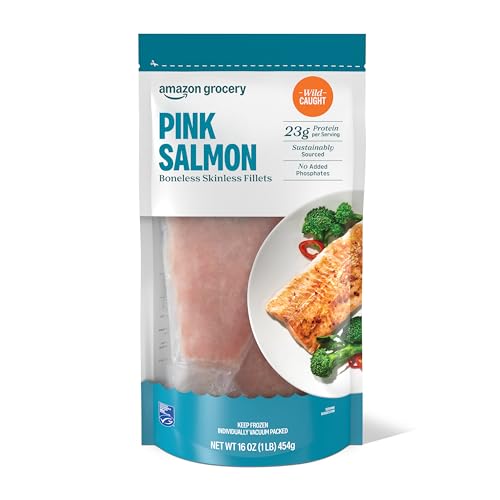
Frozen Salmon Fillets
Individually vacuum-sealed portions that maintain quality and convenience
When to Choose Each
Choose tilapia for fish tacos, breaded and fried preparations, budget weeknight dinners, and introducing fish-skeptics to seafood. It’s the right call when the fish is supporting other flavors rather than being the centerpiece, or when you’re cooking for kids who haven’t developed a taste for stronger fish flavors. Use tilapia for quick 20-minute meals where you need something simple that won’t overpower the sides.
Choose salmon when omega-3 intake matters, when the fish is the star of the plate, and for special occasions where flavor and presentation count. It’s worth the premium for grilled salmon with asparagus, baked salmon with lemon and dill, or smoked salmon on a bagel. Use salmon when you want leftovers that’ll still taste good cold the next day.
Neither fish is objectively better. They serve different purposes at different price points. A household that eats tilapia twice a week and salmon once a month probably gets better overall nutrition than one that skips fish entirely because salmon seems too expensive or tilapia seems too boring.
Cooking Mistakes to Avoid
With tilapia, the biggest mistake is overcooking. Its low fat content means it dries out fast. Pull it from the heat as soon as it flakes and hits 145°F. Leaving it on the stove an extra 2 minutes turns it from tender to rubbery.
Don’t skip seasoning tilapia. Its mild flavor needs salt at minimum, and it benefits from garlic powder, paprika, cumin, or whatever spice profile fits your meal. Plain unseasoned tilapia tastes like nothing.
With salmon, undercooking is more common than overcooking, especially with thicker fillets. The center can stay translucent and cold while the outside looks done. Use an instant-read thermometer. Medium-rare salmon (120°F) is safe and delicious, but if that’s not your preference, cook it to 130°F to 135°F for a firmer texture while keeping some moisture.
Don’t cook cold salmon straight from the fridge. Let it sit at room temperature for 15 minutes before cooking. This helps it cook more evenly, especially for thick cuts. Cold tilapia can go straight to the pan since the fillets are typically thinner.
For both fish, resist the urge to flip them multiple times. One flip is enough. Let the first side develop color and release naturally from the pan before turning. The same principle applies when you’re working with other delicate proteins. For more tips on getting perfect results with tender meats, this master recipe for sautéed fish fillets covers proper pan techniques.
Frequently Asked Questions
Is tilapia bad for you?
No. Tilapia is a lean, high-protein fish that’s perfectly healthy. The concern about its omega-6 to omega-3 ratio is valid but easily addressed by consuming omega-3s from other sources (salmon, sardines, fish oil supplements) elsewhere in your diet. Eating tilapia once or twice a week as part of a varied diet won’t harm you. It’s a better choice than skipping fish entirely because you can’t afford salmon every week.
Can I substitute tilapia for salmon in recipes?
In some recipes, yes. Baked fish dishes and fish tacos work fine with either. Recipes that rely on salmon’s rich flavor (like salmon teriyaki or grilled salmon with lemon) will taste noticeably different and less flavorful with tilapia. The texture difference also matters. Salmon holds together better for skewers or dishes where you need the fish to stay intact. Tilapia works better when the fish will be flaked or mixed into something.
Which frozen fish is a better buy?
Frozen tilapia is the better per-serving value. Frozen salmon portions are the better nutritional value. Both freeze well and maintain quality comparable to fresh when properly stored. If you’re choosing based purely on budget, tilapia wins. If you’re choosing based on omega-3 content per dollar, salmon often wins despite the higher price because its nutritional density is so much greater.
Does farm-raised salmon have as many omega-3s as wild?
Farm-raised Atlantic salmon has slightly lower omega-


