
How Long Does Frozen Meat Last? Complete Storage Guide
Your freezer is the most powerful tool for saving money on meat, but only if you know how long…

Your freezer is the most powerful tool for saving money on meat, but only if you know how long each type of protein stays at peak quality. Frozen meat is safe indefinitely from a bacterial standpoint, but texture and flavor decline over time. This guide gives you the real-world storage limits for every common meat, plus tips for getting the longest freezer life possible.
Disclosure: As an Amazon Associate, this site earns from qualifying purchases. Thank you!
Freezer Storage Chart

Beef
- Steaks (standard wrap): 4 to 6 months
- Steaks (vacuum sealed): 12 to 18 months
- Roasts (standard wrap): 4 to 6 months
- Roasts (vacuum sealed): 12 to 18 months
- Ground beef (standard wrap): 3 to 4 months
- Ground beef (vacuum sealed): 12 months
- Stew meat: 3 to 4 months standard, 12 months vacuum sealed
- Beef liver and organ meats: 3 to 4 months standard, 8 to 10 months vacuum sealed
- Marinated steaks: 2 to 3 months (marinades contain acids that break down proteins faster)
Prime cuts like ribeye and strip steak hold quality longer than lean cuts like sirloin. Fat content matters: heavily marbled steaks develop off-flavors faster than lean cuts when stored beyond 6 months without vacuum sealing.
If you bought a bulk beef order from a butcher or ranch, ask whether it was aged before freezing. Dry-aged beef should be frozen immediately after aging is complete. The aging process doesn’t continue in the freezer, but the exposed surface fat can oxidize faster. When you’re ready to use your frozen beef, proper refrigerator thawing and storage techniques will help maintain quality.
Pork
- Chops (standard wrap): 4 to 6 months
- Chops (vacuum sealed): 12 months
- Roasts and shoulder: 4 to 6 months standard, 12 months vacuum sealed
- Ground pork: 3 to 4 months standard, 12 months vacuum sealed
- Bacon: 1 to 2 months standard, 6 months vacuum sealed
- Sausage: 1 to 2 months standard, 6 months vacuum sealed
- Pork tenderloin: 6 to 9 months vacuum sealed
- Ham (cooked, whole): 1 to 2 months
- Ham (cooked, sliced): 1 month
Bacon and sausage have shorter freezer lives because of their high fat content and seasonings. Salt and spices accelerate rancidity in frozen fat. If you freeze bacon, do it in the original packaging for short-term storage, or repackage in smaller portions (4 to 6 slices per bundle) for easier use. Pancetta and other cured pork products follow the same timeline as bacon.
Uncured sausage lasts longer than cured. Fresh Italian sausage or breakfast sausage will outlast chorizo or andouille by a month or two.
Chicken and Poultry
- Whole chicken: 6 to 12 months
- Chicken pieces (standard wrap): 4 to 6 months
- Chicken pieces (vacuum sealed): 12 months
- Ground chicken/turkey: 3 to 4 months standard, 12 months vacuum sealed
- Whole turkey: 12 months
- Duck (whole): 6 months
- Duck breasts: 6 months
- Game birds (quail, pheasant): 6 to 9 months
- Chicken wings: 6 to 9 months
- Bone-in thighs and drumsticks: 9 months standard wrap, 12 months vacuum sealed
Chicken skin is the weak point. It oxidizes faster than the meat underneath, so bone-in, skin-on pieces develop off-flavors sooner than boneless, skinless cuts.
If you’re freezing a whole chicken, consider removing the giblet bag first. Giblets (liver, heart, gizzard) go rancid faster than muscle meat and can taint the bird if left inside for months.
Store-bought rotisserie chicken lasts 2 to 4 months if you strip the meat off the bones and freeze it in airtight containers. Don’t freeze it whole because the seasoned skin degrades quickly.
Lamb and Game Meats
- Lamb chops: 6 to 9 months standard, 12 months vacuum sealed
- Lamb roasts: 6 to 9 months standard, 12 months vacuum sealed
- Ground lamb: 3 to 4 months standard, 10 months vacuum sealed
- Venison (steaks and roasts): 8 to 12 months vacuum sealed
- Venison (ground): 3 to 4 months standard, 12 months vacuum sealed
- Bison: 10 to 12 months vacuum sealed
- Elk: 10 to 12 months vacuum sealed
- Wild boar: 6 to 8 months vacuum sealed
Wild game is leaner than domestic meat, which gives it a longer freezer life. There’s less fat to oxidize. Venison and elk hold quality exceptionally well if vacuum sealed immediately after butchering.
If you process your own wild game, freeze it within 24 hours of the kill for best results. Game that sits in a cooler for days before freezing won’t last as long. Whether you’re preparing venison backstrap or making venison salami, proper freezing technique matters. For longer-term preservation, you might also consider curing techniques for deer meat.
Seafood
- Lean white fish (cod, tilapia): 6 to 8 months
- Fatty fish (salmon, mackerel): 2 to 3 months standard, 6 months vacuum sealed
- Shrimp: 6 to 12 months
- Scallops: 3 to 6 months
- Crab and lobster: 3 to 6 months
- Tuna steaks: 2 to 3 months standard, 6 months vacuum sealed
- Halibut: 6 to 8 months
- Mussels and clams: 3 to 4 months
- Squid: 3 to 6 months
Fatty fish like salmon, tuna, and mackerel oxidize fast. Their omega-3 oils go rancid in the freezer, giving the fish a fishy, metallic taste after just a few months. Vacuum sealing helps, but even then, don’t push it past 6 months. White fish has less fat and holds quality much longer.
Flash-frozen shrimp from the grocery store (the kind sold in bags, already frozen) lasts longer than fresh shrimp you freeze at home. The commercial flash-freeze process creates smaller ice crystals, which causes less cell damage.
If you’re freezing fresh shrimp yourself, peel and devein them first, then freeze in a single layer on a sheet pan before transferring to a bag. This prevents clumping and speeds up thawing later.
Why Vacuum Sealing Extends Freezer Life

The enemy of frozen meat quality is air exposure. Oxygen causes oxidation (off-flavors, especially in fatty meats) and dehydration (freezer burn). A vacuum sealer removes all air from the package, eliminating both problems and extending quality life by 2 to 3 times.
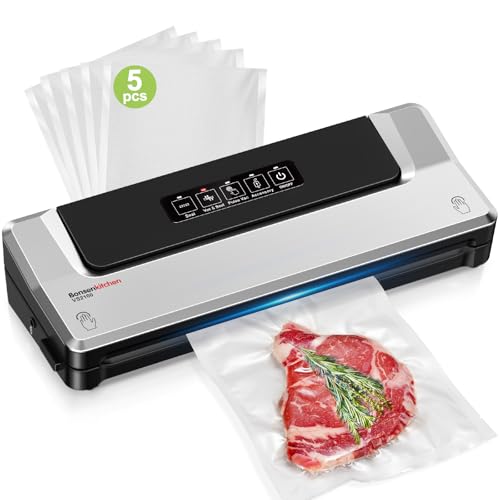
Vacuum Sealer for Meat
Essential tool for serious meat storage that extends freezer life by 2-3x
Chamber vacuum sealers pull a stronger vacuum than edge sealers and handle liquids better, but they cost more. For home use, an edge sealer (the kind that sucks air through the bag opening) works fine. Higher-end units have stronger pumps and seal thicker bags, which matters if you’re freezing bone-in cuts or large roasts. If you’re serious about long-term storage, check out our guide to the best vacuum sealers for meat preservation.
If you don’t have a vacuum sealer, double-wrapping (plastic wrap plus aluminum foil, then into a freezer bag with air pressed out) provides a reasonable alternative. It’s not as effective as vacuum sealing, but it significantly outperforms single-layer wrapping.
Press out as much air as possible before sealing the bag. Submerging the bag in water (leaving the zipper above the waterline) forces air out before you seal it.
Freezer paper is another option. Wrap the meat tightly with the waxy side against the surface, then seal with freezer tape. This method works well for short-term storage (2 to 3 months) but doesn’t compete with vacuum sealing for longer timelines.
Label everything with the cut, weight, and freeze date. Use a permanent marker directly on the bag or apply freezer labels. You’ll forget what’s in there after a few months, and mystery meat from the bottom of the freezer rarely gets used.
Optimal Freezer Temperature
Set your freezer to 0°F (-18°C) or below. Most home freezers default to this temperature, but it’s worth verifying with a freezer thermometer. Temperatures above 0°F allow slow bacterial activity and accelerate quality degradation.
Chest freezers maintain more consistent temperatures than upright models because cold air doesn’t spill out every time you open the door. If you’re buying meat in bulk (half a cow, whole hog), a chest freezer is worth the investment. Uprights are convenient but less efficient for long-term storage.
Avoid placing hot or warm meat directly in the freezer. Let cooked items cool to room temperature first (within the 2-hour food safety window), then freeze. Warm items raise the freezer temperature temporarily, which can affect everything else stored inside.
Don’t overload the freezer all at once. Adding 20 pounds of room-temperature meat in one day forces the compressor to work harder and raises the internal temperature. Freeze in batches if possible, or use the quick-freeze setting if your unit has one.
Keep the freezer at least 75% full. A full freezer holds temperature better than an empty one. If you don’t have enough meat to fill it, add containers of water. They act as thermal mass and keep the temperature stable during power outages.
How to Tell If Frozen Meat Has Gone Bad
Freezer burn appears as dry, grayish-white patches on the meat surface. It’s not unsafe, but it affects texture and taste. Trim off freezer-burned sections before cooking. The remaining meat is fine. Heavily freezer-burned meat (more than 30% of the surface affected) isn’t worth cooking. The texture will be spongy and the flavor muted.
If frozen meat has an off smell after thawing, or if the color is significantly changed (deep brown or green tints), discard it. These signs suggest the meat was already deterior


