
Is Old Frozen Meat Safe to Eat? How to Tell If It’s Still Good
Meat that’s been buried in the freezer for months can look questionable when you finally pull it out. The…

Meat that’s been buried in the freezer for months can look questionable when you finally pull it out. The discoloration, the ice crystals, the slight change in smell after thawing all raise the question: is this still safe to eat? In most cases, yes. Here’s how to tell the difference between normal freezer effects and actual spoilage.
Disclosure: As an Amazon Associate, this site earns from qualifying purchases. Thank you!
Frozen Meat Is Safe Indefinitely
According to the USDA, meat stored continuously at 0°F is safe to eat indefinitely. Freezing doesn’t kill bacteria, but it stops bacterial growth completely. A steak frozen for 2 years is just as safe as one frozen last week, though the quality may have declined.
This applies to every type of meat: beef, pork, chicken, lamb, seafood. The bacterial cells that cause foodborne illness need warmth and moisture to multiply. At 0°F, metabolic activity stops. Pathogens enter a state of suspended animation. They remain present but inactive.
The quality issue is what matters most. Freezer storage degrades texture, moisture retention, and flavor over time. After a year, most cuts develop noticeable dryness and a stale, flat taste. After two years, even well-wrapped meat tastes cardboard-like. You won’t get sick, but you might not enjoy eating it.
If your freezer runs at 10°F or 15°F instead of 0°F (common in older or overpacked units), quality drops faster. Check the actual temperature with a standalone freezer thermometer. Most built-in gauges are inaccurate.

Freezer Thermometer
Essential for verifying your freezer maintains proper 0°F temperature for safe long-term meat storage
Freezer Burn: Ugly but Safe

Freezer burn (dry, grayish-white patches on the surface) is dehydration, not spoilage. It happens when air reaches the meat through imperfect packaging. Freezer-burned sections taste dry and stale, but they’re not dangerous. Trim them off and cook the remaining meat normally.
The affected areas develop a leathery, desiccated texture because moisture has sublimated directly from ice to vapor. This leaves the muscle fibers hollow and brittle. Once cooked, freezer-burned spots turn tough and chalky. They won’t hold moisture or fat, so they contribute nothing to the dish.
Trim freezer burn before or after cooking. Before is easier. Use a sharp knife to cut away the discolored patches, then cook what remains. If the burn is extensive (covering more than 30% of the surface), the cut may not be worth salvaging. You’ll lose too much edible meat in the trimming process.
Prevent freezer burn by wrapping tightly. Standard plastic wrap isn’t enough for long-term storage. Use freezer paper, heavy-duty aluminum foil, or vacuum sealing. Double-wrapping works: plastic wrap directly on the meat, then a layer of foil or freezer paper over that. This blocks air and moisture transfer. For more guidance on extending shelf life, check out our tips on proper meat storage in the fridge.
Color Changes
Frozen beef often darkens to a brownish-red or even grayish color. This is oxidation from air exposure, not spoilage. Once thawed, the meat may bloom back to a brighter color as it re-oxygenates. Color changes in the freezer are cosmetic, not safety-related.
Fresh beef is bright red because myoglobin (a protein in muscle tissue) binds with oxygen. When frozen, oxygen access drops, and the myoglobin shifts to a deoxymyoglobin state, which appears purplish or brownish. This is reversible. After thawing, surface myoglobin re-oxygenates and the red color returns within 20 to 30 minutes.
Pork and chicken follow different color rules. Pork may turn slightly gray or tan when frozen. Chicken can develop a grayish cast. Neither indicates spoilage. Fresh pork should be pale pink; fresh chicken should be pale pink or cream-colored. If they hold those base tones after thawing (even if slightly dulled), they’re fine.
However, if thawed meat is green, has green or black spots, or has a slimy surface, these are signs of bacterial spoilage that likely occurred before freezing. Discard it.
Green discoloration means bacterial colonies producing pigmented metabolites. Black spots indicate mold. Slime is a biofilm from bacterial secretions. None of these develop in a properly functioning freezer. They happened before the meat went in, meaning it was already on the edge when frozen. Freezing paused the decay but didn’t reverse it. Once thawed, bacterial growth resumes from where it left off.
The Smell Test After Thawing
Properly frozen meat should smell neutral or mildly meaty after thawing. A slight off-odor from vacuum packaging is normal and dissipates within 10 to 15 minutes. A strong sour, ammonia-like, or putrid smell after thawing indicates the meat was already deteriorating before it was frozen. Discard anything with a persistent bad smell.
Vacuum-sealed meat sometimes develops a sulfurous or slightly funky aroma immediately after opening. This is from anaerobic bacteria (harmless types that thrive in low-oxygen environments). They produce sulfur compounds as a byproduct of metabolism. Rinse the meat under cold water and let it sit at room temperature for 15 minutes. If the smell clears, the meat is fine. If it intensifies or shifts to a sour or rotten odor, toss it.
Ammonia smells indicate advanced protein breakdown. Bacteria secrete enzymes that cleave amino acids, releasing ammonia as a waste product. This only happens after extended bacterial activity, which means the meat was warm for too long before freezing.
Sour smells come from lactic acid buildup. Certain bacteria ferment sugars in muscle tissue, producing acid. Fresh meat has a pH around 5.5 to 5.8. Spoiled meat drops to 5.0 or lower, generating a vinegar-like tang.
Trust your nose. If the smell makes you hesitate, the meat isn’t worth the risk.
Ice Crystal Concerns

Small ice crystals on the surface are normal and result from moisture in the air inside the packaging. Large, chunky ice formations suggest the meat partially thawed and refroze at some point (during a power outage or temperature fluctuation). The safety concern depends on how warm the meat got during the thaw. If the freezer stayed below 40°F throughout, the meat is safe. If it rose above 40°F, bacteria may have multiplied before refreezing.
The USDA uses 40°F as the safety threshold because bacterial growth accelerates rapidly above that temperature. Between 40°F and 140°F is the “danger zone” where pathogens like Salmonella, E. coli, and Listeria double every 20 to 30 minutes under ideal conditions.
If you experienced a power outage and don’t know how long the freezer was off, check the ice crystal pattern. Small, fine crystals scattered across the surface mean minimal thawing. Large, jagged ice chunks concentrated in one area suggest the meat thawed enough for surface moisture to pool and refreeze. If the packaging feels wet or shows water stains, the thaw was significant.
Use a meat thermometer to check the internal temperature if you’re unsure. If the center of the package is still below 40°F, the meat is salvageable. If it’s 45°F or higher, discard it.
Repeated freeze-thaw cycles destroy texture permanently. Ice crystals rupture cell walls. Each thaw-refreeze cycle creates larger crystals that cause more damage. After two or three cycles, meat turns mushy and loses the ability to hold moisture during cooking.
Realistic Time Limits for Quality
- Beef steaks and roasts: 6 to 12 months
- Ground beef: 3 to 4 months (standard wrap), 12 months (vacuum sealed)
- Chicken pieces: 6 to 9 months
- Pork chops: 4 to 6 months
- Seafood: 3 to 6 months
These timelines assume proper wrapping and a constant 0°F. Cuts with higher fat content degrade faster. Fat oxidizes over time, developing rancid flavors that permeate the meat. Fatty pork (like ribeye chops or pork belly) hits quality decline sooner than lean cuts.
Whole birds last longer than parts because the skin acts as a protective barrier. A whole frozen chicken holds quality for 12 months. Wings, thighs, and breasts lose quality by 9 months.
Ground meat has the shortest shelf life because grinding exposes vastly more surface area to air. Even vacuum-sealed ground beef starts tasting flat and stale by the one-year mark. Standard-wrapped ground meat develops off-flavors by 4 months.
Bone-in cuts last longer than boneless. Bone insulates the interior meat from temperature fluctuations and provides structural support that reduces moisture migration.
Marinated or pre-seasoned meat loses quality faster. Salt draws moisture to the surface, where it freezes into large crystals. Acidic marinades (vinegar, citrus, wine) break down muscle fibers, creating a mushy texture after freezing. If you plan to freeze meat, do it unseasoned. Season after thawing.
Packaging Matters More Than You Think

The difference between 4 months and 12 months of quality life often comes down to packaging. Grocery store trays with plastic overwrap are the worst option for freezer storage. The plastic is thin, the tray is rigid and traps air pockets, and the absorbent pad underneath holds moisture that turns to ice.
Rewrap store-packaged meat before freezing. Remove it from the tray, pat it dry with paper towels, and wrap it tightly in plastic wrap. Press out air bubbles. Add a second layer of heavy-duty foil or freezer paper. Label it with the cut, weight, and freeze date.
Vacuum sealing is the gold standard. It removes 99% of air, which nearly eliminates oxidation and freezer burn. A vacuum-sealed ribeye holds peak quality for 12 months. The same ribeye in store packaging tastes noticeably stale by 6 months.
Freezer bags (the thick, zip-top kind labeled “freezer” not “storage”) work well for irregular shapes like bone-in cuts or whole chickens. Press out as much air as possible before sealing. Use a straw to suck out remaining air if needed.
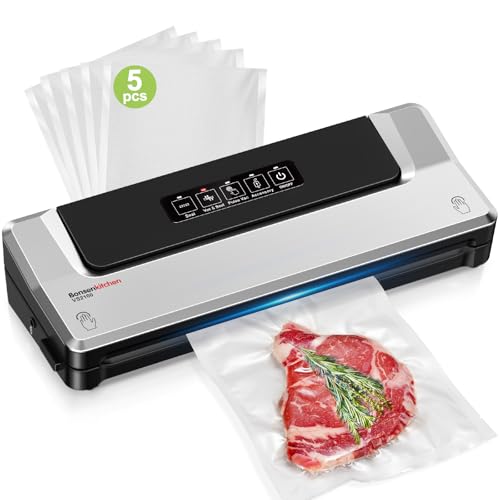
Vacuum Sealer
Extends freezer storage quality by 2-3x compared to standard wrapping by removing air that causes freezer burn
When Not to Eat Frozen Meat
Skip it if the meat shows any of these signs after thawing:
- Green or black discoloration anywhere on the surface


