
When to Buy Meat: Sales Cycles and Shopping Strategy Guide
Meat sales follow predictable patterns, and once you learn them, you’ll never pay full price again. Grocery stores plan…

Meat sales follow predictable patterns, and once you learn them, you’ll never pay full price again. Grocery stores plan their promotions weeks or months ahead, and the cycles repeat year after year. Learning to read these patterns is one of the easiest ways to cut your grocery spending.
Disclosure: As an Amazon Associate, this site earns from qualifying purchases. Thank you!
Weekly Ad Cycle Patterns
Most grocery chains release a new weekly ad every Wednesday or Thursday. The meat deals in these ads rotate on a roughly 4 to 6 week cycle for each major protein. Track the ads for just one month and you’ll start seeing the pattern.
Ground beef tends to go on sale every 3 to 4 weeks. Whole chickens and chicken parts cycle through sales every 4 to 6 weeks. Pork shoulder and chops hit sale prices every 5 to 6 weeks. Premium cuts like ribeye and strip steak appear as sale items less frequently, usually around holidays and grilling season.
Different stores run different cycles. Kroger and Safeway tend toward 4-week rotations for chicken and ground beef. Walmart often runs tighter 3-week cycles. Aldi’s rotation is less predictable but their baseline prices on chicken thighs and pork are already low enough that waiting for sales matters less.
Pay attention to which day your store restocks meat. If fresh deliveries arrive Tuesday and Thursday mornings, the best selection on sale items will be those afternoons. By Sunday evening, popular sale cuts are often picked over or gone entirely.
Holiday and Seasonal Sales

Holiday meat sales are the most predictable of all. Here’s the annual calendar:
- Memorial Day (late May): Burgers, hot dogs, ribs, chicken pieces
- July 4th: Same grilling cuts, often the deepest discounts of summer
- Labor Day: End-of-summer grilling clearance
- Thanksgiving: Turkey prices hit their annual low; ham is also discounted
- Christmas/New Year’s: Ham, prime rib, beef tenderloin
- Super Bowl: Chicken wings, ribs, ground beef for chili
- Easter: Ham and lamb
- Lent (Feb-Apr): Seafood sales at most chains
The deepest discounts often appear the week before the holiday, not the week of. Stores want you shopping early when shelves are fully stocked. Post-holiday clearance (especially after Thanksgiving and Easter) can produce even steeper discounts on leftover inventory.
Grilling season runs Memorial Day through Labor Day. During these months, anything that goes on a grill gets promoted aggressively. Chicken quarters drop to competitively priced/lb or less. Pork spare ribs hit competitively priced/lb. Chuck roast for burgers falls to competitively priced/lb. Stock your freezer heavily during this window.
Winter brings opposite patterns. Stores push roasts, brisket, and stew meat from November through February. Prime rib appears at its lowest annual price the two weeks before Christmas. Beef tenderloin follows the same pattern. If you want tenderloin steaks competitively priced/lb instead of competitively priced/lb, buy the whole tenderloin in mid-December and portion it yourself.
Reading the Weekly Flyer Strategically
The front page of the weekly flyer features the strongest deals (loss leaders). These are the items priced below cost to drive traffic. If chicken breasts are on the front page, that’s a genuine deal worth stocking up on.
Interior pages feature moderate discounts on supporting items. Back-page deals are often the weakest, sometimes barely discounted at all. Focus your buying energy on front-page meat promotions and skip the rest unless the price genuinely beats your tracked average.
Loss leaders exist to get you in the door. Stores assume you’ll buy other full-price items once you’re there. Don’t. Buy the loss leader in bulk, then leave. If ground beef is competitively priced/lb on the front page but normally competitively priced/lb, buy 20 pounds and freeze it. Skip the competitively priced/lb “sale” ribeye on page 4 that’s only 50 cents off.
Watch for purchase limits. “Limit 2” on a stellar deal means the store expects heavy demand and wants to spread inventory across more customers. If you see a limit, that’s confirmation the deal is real. Go back multiple times during the sale week if the product matters to you. Bring family members with separate loyalty accounts if the store allows it.
Some flyers highlight “must-buy” quantities to get the sale price. “Buy 2, get competitively priced off each” is common phrasing. Read the fine print. Sometimes you get the discount on both packages, sometimes only on the second. Know which before you load your cart.
Building a Price-Tracking System
Keep a simple list on your phone with the lowest per-pound price you’ve seen for each cut you buy regularly. When a sale price matches or beats your recorded low, buy enough for 4 to 6 weeks and freeze the surplus.
After 2 to 3 months of tracking, you’ll know your store’s cycle intimately. You’ll recognize genuine deals instantly and avoid the trap of buying at mediocre “sale” prices that aren’t actually low.
Your price tracker doesn’t need to be complicated. A notes app works fine. List the cuts you buy most often (ground beef, chicken breasts, pork chops, whatever you cook weekly) and update the lowest price you’ve seen whenever you spot a better deal. Include the store name and date so you remember where the deal appeared and how long ago.
Track price per pound, not package price. A competitively priced package of chicken thighs means nothing without knowing if it’s 3 pounds or 5 pounds. Always divide total price by weight to get the real number.
Set mental trigger prices for your most-used proteins. When boneless skinless chicken breast hits competitively priced/lb or less, buy 15 to 20 pounds. When 80/20 ground beef drops to competitively priced/lb or lower, grab 10 to 15 pounds. When pork shoulder reaches competitively priced/lb, clear the shelf. These thresholds vary by region, so adjust based on what you see locally. There are additional money-saving strategies you can use alongside tracking prices.
Compare across stores, not just across weeks at one store. Costco’s everyday chicken thigh price often beats the “sale” price at Kroger. Aldi’s baseline on pork beats most chains’ promotional pricing. Your tracker should include all the stores you’re willing to visit so you know where each protein truly costs least.
Store-Specific Sale Patterns
Costco and Sam’s Club don’t run weekly ads like traditional grocers, but they do have predictable sale cycles. Instant savings (the yellow signs) appear monthly and rotate through different meat categories. Ground beef, chicken, and pork ribs cycle through every 4 to 6 weeks. Track when your warehouse club last had a particular cut on instant savings and expect it back around the same time next month.
Aldi rotates “special buy” meats that aren’t part of their regular stock. These appear in Wednesday ads and sell out fast. Ribeye competitively priced/lb or beef tenderloin competitively priced/lb will vanish by Friday. Show up Wednesday morning if you want it.
Trader Joe’s rarely discounts meat, but their baseline prices on certain items (organic chicken, grass-fed ground beef) beat most competitors’ sale prices. Don’t wait for a deal that won’t come.
Local butcher shops don’t run formal sales, but they do markdown inventory approaching its sell-by date. Build a relationship with your butcher and ask when they typically process markdowns. Some shops do it daily at closing, others once or twice a week.
Using Apps and Digital Tools
Most chain grocers have apps that show the current week’s ad and offer digital coupons. Download the app for every store you visit. Load digital coupons to your account before shopping so they apply automatically at checkout.
Flipp and similar apps aggregate weekly ads from multiple stores in one place. Instead of checking five different store websites, scan all the local ads in one app. Filter by category (meat) to see every protein deal in your area at a glance.
Ibotta and Fetch Rewards offer cash-back rebates on meat purchases. Stack these with store sales and digital coupons for triple savings. Rebates are small (usually competitively priced to competitively priced per package) but they add up over time.
Some stores let you clip digital coupons to your loyalty card days before you shop. Do this Sunday night for the week ahead so you don’t forget coupons while standing in the store.
Understanding Manager’s Specials and Markdowns

Manager’s specials are inventory priced to move fast, usually because the sell-by date is that day or the next. These cuts are safe to cook immediately or freeze that same day. Don’t buy manager’s special meat if you won’t use it within 24 hours unless you freeze it as soon as you get home.
Markdown percentages vary. Stores typically start at 30% off and increase to 50% off as the day progresses. If you see 30% off at 9 a.m., check back at 4 p.m. for 50% off. Policies differ by chain, so ask your meat department when they do final markdowns.
Inspect markdown meat closely. It should smell fresh, not sour. Color changes (slight browning on beef, minor graying on chicken) are normal for vacuum-packed meat approaching its date and don’t indicate spoilage. Trust your nose over your eyes. Understanding how to assess meat quality will help you make confident decisions when buying marked-down products.
Yellow or orange clearance stickers are your best friend. Scan the markdown cart or section every time you shop. Even if you’re not planning to buy meat that trip, check what’s marked down. You might find ribeye competitively priced/lb or pork tenderloin competitively priced/lb worth grabbing.
Freezing Sale Meat for Later Use

When you stock up on sale meat, portion it immediately before freezing. Repackage large trays of chicken breasts into 1 or 2 pound portions. Divide ground beef into 1-pound flat packs. This makes thawing faster and eliminates waste from defrosting more than you need.
Vacuum sealing beats plastic wrap and freezer bags for long-term storage. Vacuum-sealed beef and pork stay good for 12 months in the freezer. Chicken and ground meats hold quality for 6 to 9 months. Label everything with the cut, weight, and date frozen.
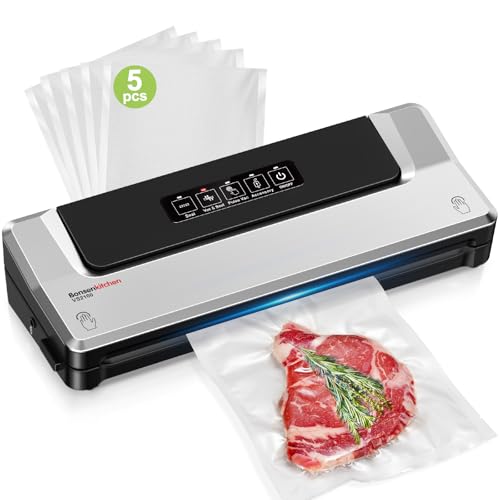
Vacuum Sealer for Meat
Essential for long-term freezer storage of sale meat, preventing freezer burn and extending shelf life up to 12 months
If you don’t own a vacuum sealer, freezer paper works nearly as well for large cuts. Wrap tightly, press out air pockets, and seal with freezer tape. Double-bagging in heavy-duty freezer bags also prevents freezer burn if you squeeze out excess air.
Freeze meat as quickly as possible after purchase. The faster it freezes, the smaller the ice crystals, and the better the texture after thawing. Spread packages out on a shelf rather than stacking them so cold air circulates freely. Proper storage techniques ensure your bulk purchases stay fresh and safe.
Avoiding Common Sale-Shopping Mistakes
Don’t assume every item in the weekly ad is a true deal. Stores highlight products they want to move, not always products at rock-bottom prices. Compare the sale price to your tracker before buying.
Buying more than you can store or use is false savings. If your freezer only holds 20 pounds of meat, don’t buy 40 pounds just because


