
Sam’s Club vs Costco: Which Has Better Meat Prices & Quality?
Sam’s Club and Costco are the two biggest warehouse club options for meat buyers, and both offer significant savings…

Sam’s Club and Costco are the two biggest warehouse club options for meat buyers, and both offer significant savings over regular grocery stores. But they’re not interchangeable. Each club has strengths in different protein categories, and the quality tiers they carry don’t always match up.
If you’re planning to stock a freezer and need to choose one membership over the other, the differences matter more than you’d think.
Disclosure: As an Amazon Associate, this site earns from qualifying purchases. Thank you!
Beef Quality and Selection

Costco consistently carries USDA Choice beef, with Prime available on popular cuts at many locations. Their reputation for picking higher-marbling carcasses within the Choice grade gives them an edge that beef enthusiasts appreciate.
Walk into most Costco locations and you’ll find Choice ribeyes with marbling that approaches low-end Prime. This isn’t an accident. Costco’s meat buyers actively select for better-looking carcasses within the Choice band, which means the steaks you buy perform more like mid-range Choice instead of the bottom tier.
Sam’s Club carries USDA Choice beef under their Member’s Mark brand. The quality is solid and meets the Choice standard, though it doesn’t have the same reputation for cherry-picking the top of the Choice range. Sam’s Club occasionally carries Prime cuts, but availability is less consistent than Costco. You might find Prime ribeyes during grilling season or around major holidays, but it’s not a year-round guarantee at most locations.
For whole sub-primals (ribeye rolls, strip loins, whole tenderloins), Costco typically has the edge in both selection and pricing. A whole ribeye roll at Costco usually runs between competitively priced and competitively priced per pound for Choice, which beats buying individual steaks at any retail grocery store. Sam’s Club carries some sub-primals but with fewer options in most locations. If you’re comfortable breaking down your own beef, Costco gives you more to work with.
Ground beef is competitive at both clubs. Costco’s 88/12 ground beef (sold in vacuum-sealed tubes) runs competitively priced to competitively priced per pound depending on region. Sam’s Club’s Member’s Mark ground beef sits in the same ballpark. Both are priced well below supermarket equivalents, and both freeze cleanly if you portion immediately after purchase.
Brisket pricing swings depending on time of year, but Costco tends to carry whole packers more reliably. Expect competitively priced to competitively priced per pound for Choice-grade packer brisket. Sam’s Club carries brisket but availability varies by location. During peak BBQ months (late spring through early fall), both clubs stock up. Outside that window, Costco is the safer bet.
Chicken
Both clubs offer competitive chicken pricing in large packages. Sam’s Club’s Member’s Mark chicken and Costco’s Kirkland chicken are comparable in quality and pricing. The difference is marginal enough that convenience (whichever club is closer) should drive your decision.
Whole chickens, split breasts, boneless skinless thighs, and drumsticks all hover in the same price range at both clubs. You’re looking at roughly competitively priced to competitively priced per pound depending on the cut and whether it’s on sale.
Costco’s rotisserie chicken remains the standout deal that Sam’s Club hasn’t matched in terms of value and brand recognition. competitively priced for a fully cooked bird (a price Costco has held steady for years), it’s a loss leader that pulls customers into the store. Sam’s Club sells rotisserie chickens at a comparable price, but the Costco version has become iconic in a way that Sam’s hasn’t replicated.
Boneless skinless chicken breasts come in large packs at both clubs. Costco’s packs are typically 6 to 8 pounds. Sam’s Club runs similar sizes. Both freeze well if you repackage into smaller portions. Quality is consistent at both clubs. Neither one sources organic or air-chilled chicken as a standard offering, though Costco occasionally carries organic options at a premium.
Pork
Pork pricing is competitive at both clubs. Costco’s whole pork loins and pork tenderloin multi-packs are consistently well-priced. A whole boneless pork loin at Costco runs competitively priced to competitively priced per pound, and you can cut it into chops, roasts, or cubes for stew. Sam’s Club carries similar items at comparable prices. This category is essentially a draw.
Baby back ribs and St. Louis style spare ribs appear at both clubs. Costco’s rib pricing tends to be slightly better during non-peak times, but Sam’s Club often runs competitive sales during grilling season. Expect to pay competitively priced to competitively priced per pound for ribs at either club. Quality is consistent. Both clubs vacuum-seal their ribs, which makes freezing straightforward.
Pork shoulder (Boston butt) for pulled pork is available at both clubs in the 8- to 10-pound range. Pricing sits competitively priced to competitively priced per pound. If you’re smoking or slow-roasting, either club gives you what you need at a fair price. Sam’s Club sometimes carries pre-seasoned pork shoulders, which can save time if you’re not particular about the rub.
Ground pork, breakfast sausage, and pork chops are stocked at both clubs. Pricing and quality are nearly identical. If pork is your main protein, you won’t see a meaningful difference between the two.
Seafood

Costco’s frozen seafood section is more extensive and tends to carry more variety (wild-caught options, premium species). You’ll find wild-caught Alaskan salmon, Argentine red shrimp, scallops, mahi-mahi, and halibut in the freezer section. Sam’s Club has a solid frozen seafood selection but skews more toward commodity items like tilapia, swai, and farm-raised shrimp. If you’re looking for wild-caught or sustainable options, Costco makes it easier.
For fresh seafood, both clubs carry salmon, shrimp, and seasonal options. Costco’s fresh seafood counter tends to have slightly more variety in most locations. Fresh Atlantic salmon at Costco usually runs competitively priced to competitively priced per pound depending on whether it’s farmed or wild-caught. Sam’s Club’s fresh salmon sits in a similar range but with fewer wild-caught choices.
Frozen shrimp is a staple at both clubs. Costco’s frozen raw shrimp (sold in 2-pound bags) typically competitively priced to competitively priced per pound depending on size and whether it’s wild-caught or farmed. Sam’s Club’s shrimp pricing is competitive, though the sourcing leans more heavily toward farmed product. For everyday shrimp dishes, both clubs deliver solid value.
Scallops, crab legs, and lobster tails show up at both clubs, especially around holidays. Costco carries these items more consistently year-round. If you want king crab legs or jumbo scallops outside of December, Costco is the better bet.
Packaging and In-Store Butcher

Both clubs offer large package sizes designed for families and bulk buyers. Costco’s packaging is generally well-designed for portioning and freezing. The vacuum-sealed tubes for ground beef and the cryovac-wrapped steaks hold up well in the freezer for several months. Sam’s Club uses similar packaging approaches. You’re not going to find loose cuts wrapped in butcher paper at either club. Everything is pre-packaged for volume.
Neither club offers true custom butcher services in most locations. The meat comes pre-packaged in standard sizes and thicknesses. If you need a specific cut thickness (like 2-inch ribeyes) or want a roast tied a certain way, you won’t get that at either club. The trade-off for low prices is standardized product. If custom cuts matter to you, find a local butcher shop and expect to pay retail prices.
Costco’s steak thickness tends to run around 1 to 1.25 inches on ribeyes and strips. Sam’s Club is similar. Both are thick enough for a good sear but not thick enough for a true steakhouse presentation. If you want thicker steaks, buy a whole sub-primal and cut your own.
Additional Meat Categories
Lamb
Costco carries more lamb than Sam’s Club. Expect to find lamb chops, leg of lamb, and ground lamb in the meat case. Sam’s Club carries lamb occasionally but not as a regular stock item. If you cook lamb often, Costco is the clear winner.
Specialty and Prepared Meats
Both clubs stock marinated meats, pre-seasoned options, and ready-to-cook items. Costco’s selection tends to be broader, with options like street taco kits, pre-marinated chicken thighs, and Korean-style short ribs. Sam’s Club carries similar items but with less variety. These products are convenient but come with a markup over plain unseasoned cuts.
Deli Meats and Cheese
Costco’s deli section is larger and carries more premium options. Sam’s Club has a decent deli counter but doesn’t match Costco’s breadth. If you buy a lot of sliced turkey, ham, or cheese, Costco gives you more to choose from.
Membership Cost
Both clubs charge annual membership fees at similar tiers (basic and premium levels). The savings on meat alone can justify the membership fee within a few months for families that shop regularly. A basic membership at either club runs competitively priced per year. The executive or premium tier costs roughly competitively priced to competitively priced per year and includes cashback rewards that can offset the higher fee if you spend enough.
If you’re buying meat for a family of four and hitting the warehouse club once or twice a month, the membership pays for itself quickly. A single beef purchase (say, a whole ribeye roll and a pack of chicken) can save you competitively priced to competitively priced compared to supermarket pricing. Do that a few times and the competitively priced annual fee disappears.
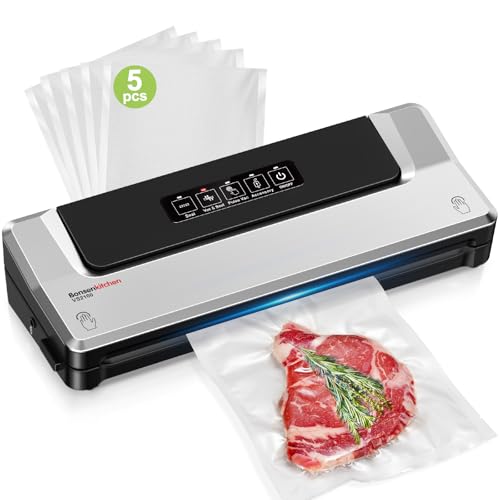
Vacuum Sealer for Meat
Essential for portioning and freezing bulk meat purchases without freezer burn
A vacuum sealer is essential for either club, since the package sizes are large enough that you’ll need to portion and freeze a significant amount of each purchase. Without a vacuum sealer, you’ll be rewrapping in foil or freezer paper, which doesn’t protect against freezer burn as well.
Common Mistakes When Shopping Warehouse Clubs
Buying more than you can freeze properly: Large packages look like a great deal until you realize you don’t have freezer space or a plan to use it all. If your freezer is already full, buying a 10-pound pork loin doesn’t save you money if half of it goes bad.
Ignoring price per pound: Not every warehouse club deal is actually cheaper than a supermarket sale. Check the price per pound and compare it to what your local grocery store charges during weekly promotions. Sometimes the supermarket wins, especially on items like chicken breasts or ground beef during loss-leader sales.
Skipping the repackaging step: If you throw a 5-pound pack of ground beef into the freezer without portioning it first, you’ll regret it when you need to thaw the whole thing just to make burgers. Portion immediately after purchase. One pound per bag works for most households.
Assuming all cuts are equal: A USDA Choice ribeye at Costco is not the same as a USDA Choice ribeye at a random supermarket. The grade is the floor, not the ceiling. Costco’s reputation for selecting better carcasses means their Choice beef often looks and cooks more like mid-range Choice. Sam’s Club meets the standard but doesn’t have the same track record for pushing the top end of the grade.
Which Club Has Better Meat Overall?
Costco has the edge on beef quality (especially the reputation for high-end Choice and Prime availability) and frozen seafood variety. Sam’s Club is competitive on chicken and pork. If beef is your primary protein, Costco is the stronger choice. If you cook a lot of chicken and pork and don’t care as much about beef marbling, Sam’s Club works just as well.
Location matters too. Individual store quality depends on the local management team, delivery schedule, and customer base. A well-managed Sam’s Club can outperform a poorly managed Costco, and vice versa. If both are accessible, visit each one and compare the meat department in person.
The freshness of the product, the variety on display, and the condition of the cases tell you more than any national-level brand comparison. Look at the date codes on the packages, check the meat for consistent color, and see if the staff keeps the cases stocked and organized. Those details matter more than the name on the building.
Frequently Asked Questions
Is Member’s Mark the same quality as Kirkland?
Both are solid store brands that meet USDA standards. Kirkland has a slightly stronger reputation among food enthusiasts, particularly for beef, but Member’s Mark is a reliable product that performs well in the kitchen. You’re not going to notice a dramatic difference in everyday cooking. The gap shows up more when you’re buying premium cuts like ribeye or strip steaks, where Costco’s sourcing gives it an edge.
Can I use both memberships?
If both clubs are accessible, having memberships at each lets you cherry-pick the best deals from both. In practice, most families choose one based on location and preference. The savings from splitting purchases between both clubs rarely justify maintaining two memberships. You’d need to be buying significant volume and actively price-checking to make dual memberships worth the extra annual fee.
How long does warehouse club meat last in the freezer?
Vacuum-sealed beef and pork hold up well for 6 to 12 months in a chest freezer or upright freezer that maintains a steady 0°F or lower. Chicken is slightly more delicate and is best used within 6 months. Seafood quality drops faster, so aim to use frozen fish and shrimp within 3 to 6 months. If you repackage in freezer paper or foil instead of vacuum-sealing, cut those timelines in half.
Do warehouse clubs carry organic or grass-fed beef?
Costco carries organic chicken and occasionally stocks grass-fed beef, though availability varies by location. Sam’s Club has started carrying organic and grass-fed options in select markets but it’s not a standard offering across all stores. If organic or grass-fed is a priority, check with your local club before assuming it’s in stock. Both clubs focus more on conventional USDA-graded product because where the volume and price advantage sit.
This article contains affiliate links. We may earn a small commission at no extra cost to you.


