5 Ways to Keep Sausages from Splitting on the Grill
Split sausages on the grill are more than a cosmetic problem. Every crack that opens in the casing lets…

Split sausages on the grill are more than a cosmetic problem. Every crack that opens in the casing lets flavorful juices pour out onto the coals, leaving you with a dry, bland sausage. These five fixes keep the casing intact and the juices inside where they belong.
Disclosure: As an Amazon Associate, this site earns from qualifying purchases. Thank you!
1. Lower the Heat
High direct heat causes the liquid inside the sausage to boil rapidly, creating internal pressure that splits the casing. Cook sausages over medium to medium-low heat (around 325-350°F at the grate). The gentler heat allows the interior to cook through without explosive steam buildup.
For reference, if you can hold your hand 6 inches above the grate for 5 to 6 seconds before pulling it away, you’re in the right zone. If you have to yank your hand back in 2 seconds, the heat is too high. Most gas grills running on medium with the lid open settle into this range.
Charcoal grills need a smaller coal bed or a longer wait after lighting. A full chimney of lit coals dumped directly under the sausages is asking for trouble.
The casing can handle heat. The problem is the rate of temperature change. When internal juices hit a rapid boil, they expand faster than the casing can stretch, and the weakest point tears open. Slow that expansion and the casing has time to adjust.
2. Use Indirect Cooking

Place sausages on the indirect (cooler) side of a two-zone grill setup. Close the lid and cook for 15 to 20 minutes, turning occasionally. Finish with a brief 1 to 2 minute sear over direct heat for color and grill marks. This approach cooks the sausage gently from all sides.
On a gas grill, turn on half the burners and leave the other half off. Sausages go on the cold side. On a charcoal grill, bank all the coals to one side and cook on the empty side. Closing the lid turns the grill into a convection oven, circulating hot air around the sausages instead of blasting them with radiant heat from below.
Turn the sausages every 4 to 5 minutes. This keeps browning even and prevents one side from getting too hot before the center is cooked. Use tongs, not a fork. Fork punctures are just as bad as intentional pricking.
When the sausages reach 155°F internal (5°F below the 160°F target for fresh sausage), move them over direct heat for the final sear. One to two minutes per side gives you color and snap without enough exposure time to split the casing. These essential grilling techniques work for all types of sausages.
3. Don’t Prick the Casing
The old advice to poke holes in sausages before grilling is wrong. Those holes release steam but also release fat and juice, the very things that make a sausage taste good. An intact casing holds everything in. Skip the pricking and control heat instead.
Fat carries flavor. When fat drips out through prick holes, it takes dissolved aromatics, spices, and salt with it. You end up with a drier, blander sausage and more flare-ups from dripping fat. The casing exists to contain the filling during cooking. Puncturing it defeats the purpose.
The argument for pricking is that it vents steam and prevents splitting. That’s true in the narrowest sense, but it’s solving the wrong problem. If you need to poke holes to prevent splitting, your heat is too high. Lower the temperature and the casing won’t split in the first place.
4. Start at Room Temperature
Cold sausages straight from the refrigerator experience thermal shock when they hit a hot grill. The outer casing heats and contracts while the cold interior expands as it warms, creating the pressure differential that causes splitting. Let sausages sit at room temperature for 15 to 20 minutes before grilling.
This is standard practice for any thick-cut meat. A ribeye or pork chop at room temperature cooks more evenly than one pulled cold from the fridge. Sausages are the same. The smaller the temperature gap between the sausage and the grill, the gentler the transition.
Don’t leave them out longer than 30 minutes, especially in hot weather. Raw meat shouldn’t sit in the danger zone (40-140°F) for extended periods. Twenty minutes is enough to take the chill off without risking spoilage.
If you’re working with pre-cooked sausages like kielbasa or smoked links, this step matters less because they’re just being reheated, not cooked from raw. But fresh sausages benefit significantly.
5. Try the Simmer-Then-Sear Method

For the most foolproof results, simmer sausages in beer, water, or broth for 10 to 15 minutes until the internal temperature reaches 150°F. Then transfer to a hot grill for 2 to 3 minutes per side to crisp the casing and add grill marks. The simmering step cooks the interior gently, and the brief sear can’t generate enough heat to cause splitting.
This is the method tailgaters and beer tent vendors rely on because it’s nearly impossible to screw up. The sausages cook through in the liquid bath at a controlled simmer (around 180-200°F), then finish on the grill purely for aesthetics and texture. The interior is already at safe temperature, so the grill step is short and hot without risking a split.
Use a 12-inch skillet or disposable aluminum pan. Add enough liquid to cover the sausages by half an inch. Beer adds flavor, but water works fine. Some cooks throw in sliced onions, garlic cloves, or peppercorns for extra aroma that infuses the casing.
Bring the liquid to a boil, add the sausages, then reduce to a gentle simmer. Don’t let it boil hard or the sausages bounce around and can split from mechanical agitation. Check temperature with an instant-read thermometer after 10 minutes. When they hit 150°F, pull them out and pat dry with a paper towel. Wet casings won’t crisp on the grill.
Sausage Types and Their Behavior on the Grill
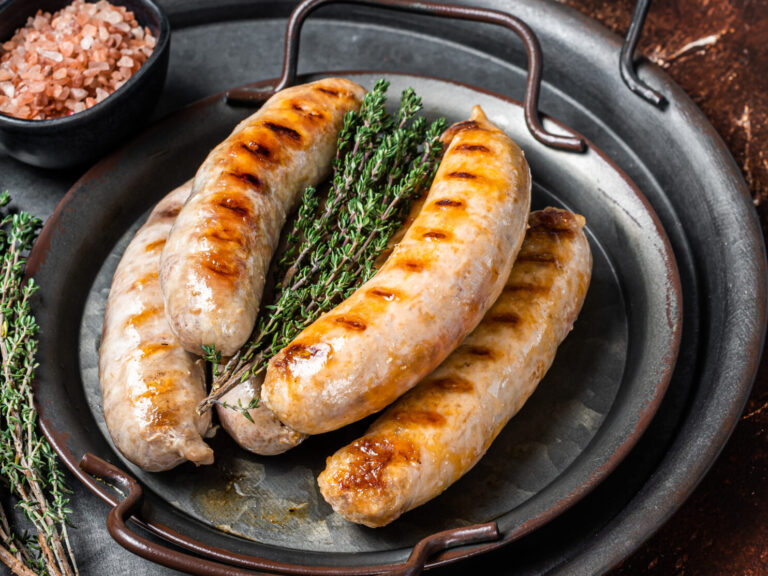
Fresh sausages (Italian, bratwurst, breakfast links) contain raw meat and need to reach 160°F internal temperature. These benefit most from the indirect-then-sear approach because they need thorough cooking without casing failure. Pre-cooked sausages (kielbasa, hot dogs, smoked sausage) only need heating through, so they handle direct heat better since the cook time is shorter.
Thicker sausages (brats, Italian) split more easily than thinner ones (breakfast links, hot dogs) because the larger volume of filling creates more internal pressure. The wider the sausage, the more important it is to use gentle heat and indirect cooking.
Fresh Italian sausage is a common offender. A typical link measures 1 to 1.25 inches in diameter and weighs 3 to 4 ounces. That’s a lot of filling packed into a relatively thin natural casing. Cooked over high direct heat, it splits within minutes. Cooked indirectly at 325°F, it holds together every time.
Bratwurst behaves similarly. Standard brats run 1 to 1.5 inches in diameter and 4 to 5 ounces. The traditional method in Wisconsin is to simmer brats in beer and onions before grilling, which is exactly the simmer-then-sear approach already described. That method became tradition because it works. Understanding the differences between fresh and smoked bratwurst helps you adjust your cooking approach accordingly.
If you’re making your own sausages at home, check out our guide on Homemade Italian Sausage: From Grind to Grill for detailed instructions on getting the casing right from the start.
Breakfast sausages and hot dogs are more forgiving. Breakfast links are typically 0.75 inches in diameter and 1.5 to 2 ounces each. Hot dogs are even thinner at 0.5 to 0.75 inches. Less volume means less internal pressure, and these can be cooked over direct medium heat without splitting as long as you turn them frequently.
Pre-cooked smoked sausages like kielbasa are already at safe temperature, so they only need to be heated through and crisped. Cook time over direct heat is 6 to 8 minutes with frequent turning, not long enough to build the kind of pressure that causes splits.
The Beer Bath Alternative
For bulletproof results, simmer sausages in a pan of beer (or water with sliced onions) on the grill’s side burner or stovetop for 10 to 15 minutes. This brings the internal temperature to 150°F gently and evenly. Transfer to direct heat for 2 to 3 minutes of crisping per side. The sausages are fully cooked from the simmer, so the grill step is purely for color and snap. This method virtually eliminates splitting.
The liquid choice matters less than you’d think. Light lagers, pilsners, and wheat beers all work. Darker beers add a slight malt sweetness. Some cooks swear by hard cider. Water with a quartered onion and a few garlic cloves gives you aroma without the alcohol.
Don’t reuse the simmering liquid for anything else. It’s picked up raw meat juices during the cook, so it’s not safe to drink or serve as a sauce without boiling it down and reducing it to a safe temperature for an extended period. Most people just dump it.
This method also works indoors when grilling outside isn’t an option. Simmer the sausages in a skillet on the stovetop, then transfer to a grill pan or cast iron skillet for the sear. You won’t get smoke flavor, but you’ll get the crisp casing and grill marks.
Common Mistakes That Guarantee Splits
Turning sausages too often doesn’t cause splitting, but it does prevent browning. Let each side sit for 4 to 5 minutes before turning. Constant flipping keeps the surface wet instead of building a crust.
Starting with the grill lid open on a gas grill causes uneven heat. The top of the sausage stays cool while the bottom gets blasted. Close the lid and heat circulates evenly.
Using a fork to turn sausages punctures the casing. Use tongs. Even a small puncture is a weak point where a split can start.
Cooking frozen sausages is a common shortcut that backfires. The frozen core expands as it thaws and heats, while the outer casing is already hot and contracting. That’s maximum thermal shock and almost guaranteed splitting. Thaw in the refrigerator overnight.
Ignoring flare-ups is another mistake. When fat drips onto hot coals or burner flames, it ignites and sends a jet of flame up at the sausage. That localized burst of high heat can cause a split even if your overall grill temperature is correct. Move sausages away from flare-ups immediately.
How to Tell When Sausages Are Done Without Cutting Them Open
An instant-read thermometer is the only reliable method. Insert it into the center of the thickest part of the sausage. Fresh sausages need to hit 160°F. Pre-cooked sausages are safe to eat cold, so they just need to reach your preferred eating temperature, usually 140-150°F for good texture and warmth.

Instant Read Meat Thermometer
Essential for monitoring sausage internal temperature without cutting into the casing
The casing should be taut and firm, not flabby. A properly cooked sausage feels springy when you press it with tongs. If it’s still soft and squishy, it needs more time.
Juices should run clear, not pink. If you do cut into one to check (after cooking), clear juices mean the meat is fully cooked. Pink or red juices mean it needs more time.
Color is a bad indicator. Smoked and cured sausages can stay pink inside even when fully cooked because of curing salts. Don’t rely on visual cues alone. Learn more about