
The Best Cheap Cuts to Inject for Big Flavor
Lean, cheap cuts of meat have a reputation problem. Turkey breast dries out. Pork loin turns chalky. Eye of…

Lean, cheap cuts of meat have a reputation problem. Turkey breast dries out. Pork loin turns chalky. Eye of round becomes shoe leather. Most people blame the cut, but the real culprit is almost always moisture loss during cooking. Injecting changes that equation completely. You get flavor and fat working from the inside out, not just on the surface.
Injection is one of the most underused techniques in home cooking, and it doesn’t take special skills to do it well. A simple marinade injected straight into the meat before cooking can turn a budget cut into something genuinely impressive. Here’s everything you need to know to make it work.
Disclosure: As an Amazon Associate, this site earns from qualifying purchases. Thank you!
Why Injection Works Better Than Marinades for Lean Cuts
Surface marinades do a decent job with thin cuts, but they barely penetrate past the outer few millimeters of meat. With a thick pork loin or turkey breast, you’re flavoring the outside and leaving the center bone dry, literally.
Injection solves this by delivering liquid directly into the muscle tissue. You’re not waiting hours for osmosis to do its thing. The flavor and moisture are already inside when the meat hits the heat. For lean cuts that have almost no internal fat to keep them juicy, this is a critical step.
If you cook budget proteins regularly, especially cuts like pork loin, turkey breast, or eye of round, injection is one of the simplest ways to close the gap between an affordable cut and a premium result. You might also want to check out essential brine formulas for juicy chicken, turkey, and pork if you want to combine both techniques for maximum moisture retention.
The Best Cheap Cuts to Inject

Turkey Breast
Turkey breast is the classic injection candidate. It’s a large, lean muscle with almost no internal fat, and it goes from juicy to dry in minutes if you’re not careful. Injecting with a butter-based mixture before roasting or smoking makes a huge difference in both moisture and flavor depth.
Bone-in turkey breast is especially worth injecting since the thickness of the meat means it takes longer to cook through, which gives more time for moisture to escape. Inject in multiple spots, spacing your needle entry points about an inch apart across the whole breast.
Pork Loin
Pork loin is one of the leanest cuts on a pig and one of the most commonly overcooked. It’s also one of the most affordable roast options at most grocery stores. An injection of apple juice, butter, and a little salt can completely transform a pork loin from dry and bland to something people actually go back for seconds on.
Unlike pork shoulder, which has enough fat and connective tissue to stay moist through a long cook, pork loin needs all the help it can get. Injection is the most direct form of help you can give it. For more ideas on working with budget pork cuts, these pulled pork serving ideas also show how far the right preparation can stretch an affordable cut.
Eye of Round
Eye of round is practically fat-free and has a tight grain that doesn’t respond well to dry heat on its own. Injected with beef broth, Worcestershire, and garlic, then slow-roasted to medium-rare, it becomes a genuinely good roast beef. The injection opens up the muscle and gives it the beefy, savory character it naturally lacks.
For more ideas on making budget beef cuts work hard for you, this guide to the best cheap cuts of beef is worth a read alongside this one.
Chicken Breast
Boneless, skinless chicken breast is the leanest, most overcooked protein in most people’s weekly rotation. Injecting with a simple garlic butter or herb-infused oil before grilling or baking adds moisture you just can’t get any other way. It also speeds up the flavor payoff compared to brining, which is useful when you’re short on time.
What to Put in Your Injector

Injection liquids need to be thin enough to pass through the needle without clogging. Melted butter works. Oils work. Broths and juices work. Thick sauces with chunks, honey without thinning, or undissolved sugar will jam up the needle fast.
Here are four simple injection recipes that actually deliver results:
- Classic Butter Injection (for turkey or chicken): 1/2 cup melted butter, 1/4 cup chicken broth, 1 tsp garlic powder, 1 tsp onion powder, salt to taste. Melt and mix until fully combined.
- Apple Pork Injection: 1/2 cup apple juice, 1/4 cup melted butter, 1 tbsp brown sugar, 1 tsp kosher salt, 1/2 tsp smoked paprika. Stir until sugar dissolves before loading the syringe.
- Beef Broth Injection (for eye of round or chuck): 1/2 cup beef broth, 2 tbsp Worcestershire sauce, 1 tsp garlic powder, 1/2 tsp black pepper, 1/2 tsp onion powder.
- Herb Garlic Oil Injection (for chicken breast): 1/3 cup olive oil, 2 cloves garlic (finely minced), 1 tsp dried Italian herbs, 1/2 tsp salt. Warm gently over low heat to infuse before using.
Strain any injection through a fine mesh strainer before loading your syringe if you’re using anything with minced garlic or herbs, since particles will clog the needle.
How to Inject Properly

A good meat injector makes the process simple and clean. You want a syringe with a sturdy barrel, a sharp needle, and ideally multiple needle sizes for different cuts. Cheap plastic syringes crack under pressure and leak. A stainless steel body holds up much better.
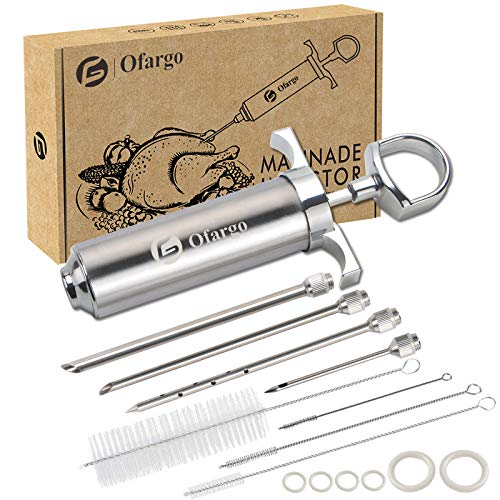
Meat Injector Syringe Kit
A quality stainless steel injector with multiple needle attachments makes the process clean and consistent for all cuts.
To inject effectively, insert the needle deep into the thickest part of the meat and depress the plunger slowly as you pull the needle back toward you. This spreads the liquid along the full path of the needle rather than pooling it in one spot. Repeat across the entire surface, spacing injections about an inch apart.
Work over a rimmed baking sheet or in a roasting pan. Some liquid will seep back out of the injection sites, especially on lean cuts. This is normal. Just let the meat rest for a few minutes before moving it, and pat the surface dry before seasoning.
For smoking, inject the meat at least 30 minutes before it goes on the smoker. This gives the liquid time to distribute through the muscle. The choice of fuel also affects final flavor, and if you’re undecided about your fire, this breakdown of lump charcoal vs briquettes will help you decide what works best for your setup.
Stainless Steel Meat Injector with Marinade Needles
Look for a model with both a standard tip and a perforated needle to handle everything from smooth butter injections to chunkier marinades.
Combining Injection with Other Techniques

Injection is most effective when you layer it with other flavor-building steps. A dry rub on the outside works with the injection on the inside. Brining before injection adds another layer of moisture protection, though for very lean cuts you should typically choose one or the other to avoid oversalting.
For budget beef cuts going into a slow cooker, injection before braising adds extra flavor depth even when you’re cooking in liquid. That approach pairs well with the strategies covered in this guide to cheap beef cuts for slow cooking.
If you’re building out a full cook day with multiple cuts, smoked turkey breast can anchor a spread just as well as a pricier brisket. And if budget shopping is part of your strategy, it’s always worth browsing budget brisket alternatives for the smoker to round out your cook with other affordable options that deliver serious flavor.
Frequently Asked Questions
How far in advance can I inject meat before cooking?
You can inject up to 24 hours ahead for most cuts. Store the injected meat uncovered or loosely covered in the refrigerator so the surface can dry out slightly, which helps rubs and smoke adhere better. For very lean cuts, 30 minutes to 4 hours is the sweet spot to prevent the texture from getting mushy if your injection contains a lot of salt.
Can injection liquids contain alcohol like beer or bourbon?
Yes, and it works well. Beer, apple cider, and bourbon are common additions to injection recipes, especially for pork. The alcohol cooks off during the cook, leaving behind the underlying flavor. Just make sure the liquid is still thin enough to pass through your needle, and combine alcohol-based injections with butter or broth rather than using straight spirits alone.
Why is liquid leaking out after I inject?
Some leakback is inevitable, especially with lean cuts that have tight muscle fibers. If you’re losing a lot of liquid, slow down your plunger pressure and try injecting at a shallower angle so the liquid disperses into more of the surrounding tissue. You can also refrigerate the meat for 15 to 20 minutes after injecting, which allows the muscle fibers to tighten back up and hold the liquid in more effectively before cooking.
This article contains affiliate links. We may earn a small commission at no extra cost to you.


