
Beef Belly: The Overlooked Cut for Cheap Homemade Bacon
Most people walk right past beef belly at the butcher counter, if they even notice it at all. It…

Most people walk right past beef belly at the butcher counter, if they even notice it at all. It sits in the shadow of pork belly, brisket, and short ribs, labeled inconsistently and priced like an afterthought. But for anyone who wants to make homemade bacon without paying premium pork prices, beef belly deserves a serious second look.
This cut can be cured and smoked into what’s often called beef bacon, and the result is something genuinely worth making. It’s beefy, fatty, smoky, and slices up beautifully. If you’ve been curious about it but couldn’t find clear information, this guide breaks down exactly what beef belly is, where to find it, and how it compares to pork belly when you’re ready to start curing.
Disclosure: As an Amazon Associate, this site earns from qualifying purchases. Thank you!
What Is Beef Belly, Exactly?

Beef belly comes from the same anatomical region as pork belly, just on a cow instead of a pig. It’s the underside of the animal, specifically the lower abdominal wall that connects the chest to the rear quarters. On beef, this area is more commonly broken into familiar cuts like brisket (the chest), plate (the mid-section), and flank (the rear lower section). Beef belly typically refers to the plate or a portion of it that includes layered fat and muscle similar in structure to pork belly.
The layering is what makes it useful for bacon. You get alternating bands of fat and lean muscle, which means it renders well during cooking and has that familiar bacon texture when sliced thin after curing and smoking. It’s not identical to pork belly, but the concept is the same.
One thing to know upfront: beef belly is thicker and denser than pork belly. The fat cap can be more uneven, and the muscle fibers are tighter. This affects both the cure time and the final texture, which we’ll get into below.
Where to Find Beef Belly
This is where most people get tripped up. Beef belly isn’t a standard grocery store cut in the United States. Most supermarkets don’t carry it because the plate is typically processed into short ribs, skirt steak, and hanger steak before it ever hits the retail case. What’s left tends to go to food service or processing.
Your best bets for sourcing beef belly:
- A local butcher shop: Ask specifically for “beef plate” or “beef belly.” Many butchers can cut this for you with a few days’ notice. Learning how to use the butcher counter effectively can open up access to cuts you’d never find pre-packaged.
- Asian grocery stores: Korean and Chinese markets often carry beef belly sliced thin for hot pot or BBQ. If you want a whole slab for curing, ask at the meat counter rather than grabbing the pre-sliced packages.
- Online meat retailers: Several online butchers offer beef belly or beef plate in bulk quantities. You’ll usually need to buy a few pounds minimum, which is actually ideal for a curing project.
- Restaurant supply stores: If you have access to a cash-and-carry restaurant supply store, the plate primal often shows up there at competitive prices.
When you’re sourcing, look for a piece with good fat coverage and a relatively even thickness. Skinny, uneven slabs are harder to cure uniformly and won’t slice as cleanly after smoking.
Beef Belly vs. Pork Belly for Curing: What’s Different

Both cuts can be turned into bacon using the same basic curing method, but they’re not interchangeable without a few adjustments.
Fat Content and Distribution
Pork belly typically has a higher fat ratio and more evenly distributed marbling. Beef belly tends to have leaner muscle sections with thicker fat deposits rather than the uniform layering you see in a good pork belly slab. This means beef bacon can be slightly chewier and less consistent in texture from slice to slice.
Cure Time
Because beef belly is denser, cure penetration takes longer. A typical pork belly dry cure runs 5 to 7 days. Beef belly should go at least 7 to 10 days in the cure, especially for thicker slabs over two inches. You want the cure to fully penetrate the center, not just coat the exterior.
Smoke and Flavor Profile
Beef belly takes smoke differently than pork. The beefier flavor base means you can use bolder woods like oak or hickory without the smoke overwhelming the meat. Pork belly is more neutral, so it tends to play nicely with sweeter woods like apple or cherry. With beef belly, a blend of oak and a touch of cherry works really well.
Yield and Sliceability
After curing and smoking, pork belly firms up into a dense slab that slices cleanly on a deli slicer or sharp knife. Beef belly can be a little more unpredictable depending on the fat distribution. Chilling the finished slab thoroughly before slicing, ideally overnight in the refrigerator, helps significantly.
If you’ve ever worked through brine formulas for other proteins, you already understand the basic salt and water ratios that drive curing. Beef belly follows the same principles, just with adjusted timing.
How to Cure Beef Belly at Home

You don’t need a lot of specialized equipment to make beef bacon at home. The core ingredients are kosher salt, sugar, black pepper, and curing salt. Prague Powder No. 1 (also called pink curing salt or Cure #1) is what you want for a smoked product. It contains sodium nitrite, which inhibits bacterial growth and gives cured meat its characteristic color and flavor.
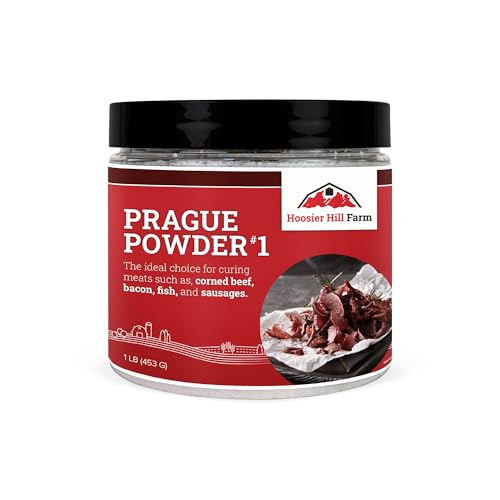
Prague Powder No. 1 Curing Salt
The essential ingredient for any home bacon project, used in small measured quantities mixed into your dry cure.
A basic dry cure ratio for beef belly is roughly 2.5% kosher salt by weight of the meat, 1.5% sugar, and 0.25% Prague Powder No. 1. Weigh your beef belly first, then calculate the cure amounts from there. Eyeballing this is not a good idea, especially with curing salt, where precision matters for both safety and flavor.
Mix the cure ingredients, coat the beef belly thoroughly on all sides, and place it in a zip-lock bag or vacuum-sealed bag. Refrigerate it for 7 to 10 days, flipping the bag once a day so the cure redistributes. When the cure is complete, rinse the slab, pat it dry, and let it air-dry in the fridge uncovered for several hours to develop a pellicle. That tacky surface layer is what helps smoke adhere during the cook.
A kitchen scale that reads in grams is non-negotiable here. You can’t accurately weigh curing salt in teaspoons.

Digital Kitchen Scale for Curing
A precise digital scale that measures in grams is essential for safe curing ratios, especially when working with nitrite-based cures.
For smoking, target a chamber temperature of 200 to 225 degrees Fahrenheit and bring the internal temperature of the beef belly to 150°F. This gives you a fully cooked slab you can slice and pan-fry later, which is the easiest approach for home cooks. Some people cold-smoke beef belly instead, but that method requires more controlled conditions and is better suited to experienced curers.
Once smoked and cooled, slice it thin and cook it like bacon. It’s excellent with eggs, on burgers, or as part of a charcuterie spread alongside cured pork products and pickles.
Is Beef Belly Worth It Compared to Buying Bacon?

From a cost perspective, beef belly is typically priced lower per pound than pork belly at a specialty butcher, and significantly lower than premium pre-made beef bacon, which tends to carry a hefty markup in stores. You’re also getting control over the flavor, the smoke level, and the sodium content, which most commercial bacon can’t offer.
The time investment is real, somewhere between 8 and 12 days from start to finish. But the hands-on work is minimal. Most of that time is the cure sitting quietly in your fridge. If you enjoy other budget-friendly beef projects like smoking chuck roast as a brisket alternative or working through underutilized cheap beef cuts, beef belly fits naturally into that same mindset.
The finished product is something you genuinely can’t buy at most grocery stores. Homemade beef bacon from a well-cured beef belly tastes different from the packaged stuff, in the best way possible.
Frequently Asked Questions
Can I use beef belly without a smoker?
Yes, though the results are different. You can finish a cured beef belly in the oven at a low temperature (around 200°F) until it hits an internal temperature of 150°F. It won’t have the smoke ring or deep smoky flavor, but it will still be cured and slice like bacon. Adding a small amount of smoked paprika to your dry cure can partially compensate.
Is beef belly the same as beef navel?
They’re closely related and often used interchangeably, but technically the navel is a specific section of the plate primal. Beef navel is frequently used to make pastrami. Beef belly is a broader term that can refer to the same area. If a butcher offers you beef navel for this project, it will work well.
How long does homemade beef bacon keep?
After smoking, properly cured beef bacon will keep in the refrigerator for up to two weeks. For longer storage, slice it and freeze portions in vacuum-sealed bags or freezer bags with as much air removed as possible. Frozen, it will keep well for three to four months without noticeable quality loss.
Final Thoughts
Beef belly isn’t a cut you’ll stumble across accidentally, but it’s worth seeking out if you’re interested in home curing. The process is approachable for anyone who’s comfortable with basic kitchen projects, and the payoff is genuinely satisfying. You get a unique product, a better understanding of where your food comes from, and a freezer full of beef bacon that most of your friends have never tasted.
Start with a small slab, three to four pounds, so you can get a feel for the process before committing to a larger batch. Once you’ve done it once, the second cure is easy.
This article contains affiliate links. We may earn a small commission at no extra cost to you.


